
Veterans Benefits by State: Complete 2026 Guide to VA Programs and State-Level Support
Veterans benefits vary significantly depending on where you live. While federal VA programs remain consistent nationwide, individual states offer additional property tax exemptions, income tax breaks, tuition waivers, and other benefits that can save veterans thousands of dollars annually. This guide explains what’s available, who qualifies, and how to claim what you’ve earned.
| Quick Facts | Details |
|---|---|
| Primary Benefit | State-level veterans benefits supplement federal VA programs |
| Eligibility | Honorable discharge; specific ratings vary by state program |
| Application | State veterans affairs offices, county assessors, tax authorities |
| Processing Time | Varies: 30 days to 6 months depending on program |
| Official Agency | U.S. Department of Veterans Affairs (VA.gov) |
| Required Forms | DD-214, VA rating letter, proof of residency |
| Updated For | 2026 |
What Are State Veterans Benefits?
State veterans benefits are programs administered by individual states that provide additional support beyond federal VA benefits. These programs are funded and managed at the state level, meaning eligibility requirements, benefit amounts, and application processes differ significantly from state to state.

VA Disability Combined Rating Calculator
Add each disability rating from your decision letter.

Estimate only. The VA makes the official rating decision. Not legal or financial advice, and not affiliated with the Department of Veterans Affairs.
Every state in the country offers some form of veterans benefit beyond federal programs. These include property tax exemptions, state income tax breaks on military retirement pay, tuition waivers at public colleges, vehicle registration fee reductions, and priority access to state employment.
The key distinction: federal VA benefits remain the same regardless of where you live, but state benefits change dramatically depending on your residency. Veterans who move without researching their new state’s benefits may leave significant money unclaimed.
Veteran Population by State: Where Veterans Live
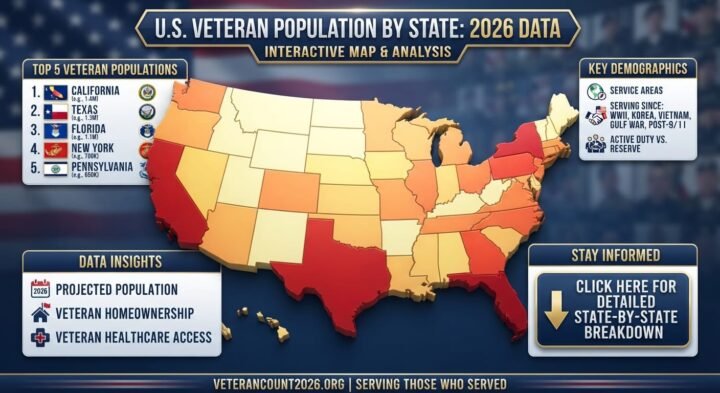
Approximately 15.8 million Americans have served in the military, representing roughly 6% of the U.S. population according to U.S. Census Bureau data. Texas, Florida, and California have the highest total veteran populations, each exceeding 1 million residents who previously served.
Alaska has the largest percentage of veterans relative to its population at approximately 10.5%. Wyoming follows with nearly 9% of residents being former service members. In contrast, New Jersey, New York, and the District of Columbia have veteran populations below 4%.
Army Fitness Test (AFT) Score Calculator
Formerly the ACFT. Five events, 500 points. Enter your results.
Estimate for training only. Points are interpolated from the official Army tables (effective 1 June 2025) and can differ by a few points. Your score of record comes from your unit graders. Official score tables (PDF). Not affiliated with the U.S. Army.
More than 4.4 million veterans are 75 years or older. Over 5.2 million served during the Vietnam era, while roughly 4.4 million served in the post-9/11 period.
States with the Most Veterans:
Texas – nearly 1.4 million
Florida – over 1.5 million
California – over 1.5 million
States with the Highest Veteran Percentage:
Alaska – 10.5%
Wyoming – 8.9%
Virginia – 8.5%
Property Tax Exemptions for Disabled Veterans
Property tax exemptions represent the largest dollar-value state benefit available to disabled veterans. Twenty-two states currently offer a full homestead property tax exemption for veterans rated 100% permanently and totally disabled, resulting in a $0 property tax bill on their primary residence.
Texas exempts the full appraised value of a qualifying veteran’s residence homestead from property taxation for 100% disabled veterans or those receiving Individual Unemployability. Virginia, Florida, Oklahoma, South Carolina, Michigan, Maryland, and New Mexico operate under similar full-exemption frameworks.
California’s basic exemption for 100% disabled veterans is $180,671 in 2026, with a low-income exemption of $271,009 for households earning under $81,131. Starting in 2026, New Mexico expanded eligibility so that any veteran with a VA disability rating qualifies for a proportional property tax exemption based on their rating percentage.
| State | Exemption Type | Eligibility |
|---|---|---|
| Texas | Full homestead exemption | 100% P&T or TDIU |
| Florida | Full homestead exemption | 100% P&T |
| California | $180,671 value reduction | 100% disabled |
| New Mexico | Proportional by rating | Any VA rating |
| Oklahoma | Full property tax exemption | 100% disabled |
| Virginia | Full exemption | 100% P&T |
| North Dakota | Credit based on rating | 50%+ disabled |
The median U.S. property tax bill is approximately $2,795 per year. A full exemption provides substantial annual savings.
Important: Property tax exemptions are not automatic. Veterans must apply through their county assessor or appraisal district with documentation including their VA rating letter and DD-214. Surviving spouses may qualify to continue benefits under defined conditions in many states.
State Income Tax Benefits on Military Retirement
Several states exempt military retirement pay from state income tax entirely, providing significant savings for retired service members. Alabama exempts active-duty pay, retired pay, and Survivor Benefit Plan payments completely.
California now exempts up to $20,000 of military retirement pay for retirees with adjusted gross income under $125,000 (single) or $250,000 (joint). Nine states have no income tax at all, meaning retirement pay is untaxed by default.
According to VA News, numerous states offer favorable tax treatment for military retirement income:
Alabama: Military retirement pay is tax-free
New Mexico: Up to $30,000 of military retirement pay exempt
New York: Retired pay and Survivor Benefit Plan payments are tax-free
North Carolina: Military retirement and SBP payments are tax-free
North Dakota: Active duty, reservist, retired pay and SBP payments are tax-free for residents
Oklahoma: All military pay and retirement pay is tax-free
Pennsylvania: Military retirement pay and SBP payments are tax-free
Veterans receiving military retirement should verify their state’s current tax treatment annually, as legislation changes frequently.
Education Benefits by State
Many states offer tuition waivers or reduced tuition at public colleges and universities for veterans and their dependents. Eligibility rules vary significantly.
Some states require a specific disability rating, while others open benefits to all honorably discharged veterans. Dependents may qualify for tuition waivers in states where the veteran is deceased or permanently disabled.
The federal GI Bill provides education benefits nationwide, but state programs often fill gaps or provide additional support for dependents who don’t qualify for federal transfer benefits.
Common State Education Benefits:
In-state tuition waivers for veterans
Free tuition at public colleges for 100% disabled veterans’ dependents
Reduced tuition for National Guard members
Scholarship programs for veterans’ children
Vehicle Registration and License Benefits
Many states offer reduced or waived vehicle registration and license plate fees for disabled veterans. Some states waive fees entirely for 100% P&T veterans.
Disabled veterans with VA-adapted vehicles may skip highway taxes in states like North Carolina. North Dakota exempts veterans with 100% service-connected disability from fees on two vehicles.
Most states offer specialty license plates for veterans at no additional charge. These plates often include designations for specific conflicts, branches of service, or disability status.
Other Commonly Available State Benefits
Beyond property tax, income tax, and education benefits, states offer numerous other programs that many veterans never claim.
Hunting and Fishing Licenses: The majority of states offer free or discounted hunting and fishing licenses to veterans, particularly those with service-connected disabilities.
Business License Fee Waivers: Several states waive or reduce business license fees for veteran-owned businesses. This benefit is frequently unclaimed because veterans don’t know to ask.
Employment Preference Points: State government employment applications in most states award preference points to veterans in the hiring process. Federal employment operates similarly.
State Cemetery and Burial Benefits: Most states operate veterans cemeteries providing free burial and grave markers for eligible veterans.
State Veterans Homes: There are 161 State Veterans Homes across all 50 states and Puerto Rico, offering nursing home care, domiciliary care, and adult day health care to approximately 20,000 veterans. These facilities are owned and operated by individual states with partial VA funding.
How to Find Your State’s Benefits
Locating your state’s veterans benefits requires checking multiple sources, as no single database contains all available programs.
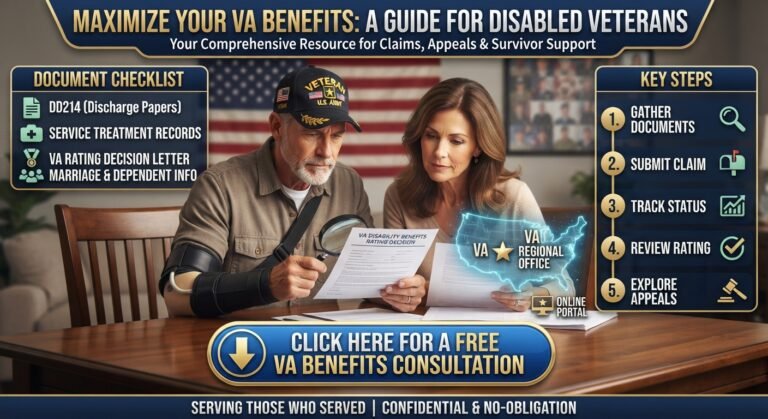
Step 1: Contact Your State Veterans Affairs Office
Every state has a department of veterans affairs. The National Association of State Directors of Veterans Affairs (nasdva.us) links to every state agency in one place.
Step 2: Check the VA’s State Benefits Directory
The VA maintains a state-by-state benefits directory at benefits.va.gov/benefits/offices.asp[citation:5].
Step 3: Contact Your County Assessor
Property tax exemptions are applied through your county assessor or appraisal district, not the VA or state veterans agency. Bring your VA rating letter showing your disability percentage.
Step 4: Review Your State Tax Authority Website
State income tax benefits are administered through state departments of revenue. Check their websites for military retirement exemptions and other tax programs.
Step 5: Consult Veterans Service Organizations
Organizations like the American Legion, VFW, and Disabled American Veterans provide free assistance identifying and claiming state benefits.
Current Legislative Developments Affecting Veterans Benefits
Veterans benefits legislation remains active in Congress, with significant proposals under consideration.
The Take Care of America’s Veterans Act (H.R. 9237) was shelved by House leadership in July 2026 after backlash over provisions changing rating schedules for sleep apnea and tinnitus. The bill would have expanded benefits for combat-injured veterans through the Major Richard Star Act while funding those expansions through cuts to other disability programs.
The legislation would allow approximately 50,000 combat-injured veterans to receive both military retirement pay and VA disability compensation without offsetting reductions. Currently, veterans can receive one but not both.
However, the funding mechanism drew opposition from major veterans organizations including the Veterans of Foreign Wars, Disabled American Veterans, and Iraq and Afghanistan Veterans of America. Critics argued the bill effectively asked one group of veterans to pay for benefits for another by reducing future disability compensation for conditions like tinnitus and sleep apnea.
House Republicans continue discussions about resurrecting the legislation, though VA Secretary Doug Collins has been excluded from recent meetings due to strained relationships with congressional leadership.
Understanding Federal VA Benefits
While this guide focuses on state benefits, understanding federal VA programs is essential because state benefits often supplement or interact with federal programs.
VA Disability Compensation: Tax-free monthly payments to veterans with service-connected disabilities. The disability rating (0% to 100%) determines payment amounts.
VA Healthcare: Comprehensive health coverage through the Veterans Health Administration, including primary care, specialty care, mental health services, and prescriptions.
GI Bill: Education benefits covering tuition, housing, and books for veterans and eligible dependents.
VA Home Loans: Government-backed mortgages with no down payment requirements for eligible veterans.
Survivor Benefits: Dependency and Indemnity Compensation (DIC) and other programs for surviving spouses and dependents.
PACT Act: Expanded VA healthcare and benefits for veterans exposed to toxic substances during military service.
Common Mistakes When Claiming State Veterans Benefits
Mistake 1: Assuming Benefits Are Automatic
State benefits require applications and documentation. Property tax exemptions, in particular, must be claimed through county assessors.
Mistake 2: Not Checking After Moving
Benefits change when you change residency. Veterans who move should immediately research their new state’s programs.
Mistake 3: Missing Annual Deadlines
Many property tax exemptions require annual filing within specific windows. Missing deadlines means waiting another year.
Mistake 4: Overlooking Surviving Spouse Benefits
Many state programs extend to surviving spouses, but they must apply separately and may face different requirements.
Mistake 5: Not Documenting Disability Ratings
Most valuable state benefits require proof of VA disability rating. Keep your VA rating letter accessible.
Mistake 6: Assuming All States Offer the Same Benefits
State benefits vary dramatically. Some states offer full property tax exemptions; others offer none.
Appeals Process for Denied State Benefits
If your application for state veterans benefits is denied, you have options for appeal.
Step 1: Request Written Explanation
Ask the denying agency for a written explanation of the denial and the specific eligibility criteria you failed to meet.
Step 2: Review Your Documentation
Verify that your DD-214, VA rating letter, and other documents are current and accurate. Errors in documentation are a common cause of denials.
Step 3: File a Formal Appeal
Most state agencies have formal appeal processes with specific deadlines. File within the required timeframe.
Step 4: Contact Your State Veterans Affairs Office
State veterans affairs departments often advocate for veterans in benefit disputes.
Step 5: Seek Assistance from Veterans Service Organizations
VSOs provide free assistance with appeals and can help identify what went wrong in your application.
Common Questions
What state has the best veterans benefits?
No single state offers the best benefits across all categories. Texas, Florida, and California offer full property tax exemptions for 100% disabled veterans. States with no income tax automatically exempt military retirement pay. The best state depends on your specific situation, including disability rating, retirement status, and family needs.
Do I have to apply for state veterans benefits?
Yes. State benefits are not automatic. Property tax exemptions require applications through county assessors. Income tax benefits are claimed through state tax returns. Education benefits require applications through individual institutions. Each program has its own application process and deadlines.
Can I receive state benefits and federal VA benefits at the same time?
Generally, yes. State benefits typically supplement rather than replace federal VA benefits. However, some programs may have coordination requirements. For example, state tuition waivers may coordinate with GI Bill benefits to cover different expenses.
How do I prove my veteran status for state benefits?
Your DD-214 (Certificate of Release or Discharge from Active Duty) is the primary document proving military service. For disability-related benefits, you’ll need your VA rating letter showing your disability percentage. Some programs may require additional documentation.
Are state veterans benefits available to National Guard and Reserve members?
Eligibility varies by state and program. Some states extend benefits to National Guard and Reserve members, particularly those who served on active duty. Others limit benefits to active-duty veterans. Check your specific state’s requirements.
Do surviving spouses qualify for state veterans benefits?
Many state programs extend benefits to surviving spouses, including property tax exemptions and education benefits. However, surviving spouses typically must apply separately and may face different eligibility requirements. Some benefits require the veteran to have been rated 100% disabled at time of death.
What is the VA disability rating needed for state property tax exemptions?
Requirements vary by state. Some states offer full exemptions only for 100% permanently and totally disabled veterans. Others offer proportional exemptions based on any disability rating. North Dakota offers credits starting at 50% disability. New Mexico recently expanded eligibility to any veteran with a VA disability rating.
How long does it take to process state veterans benefit applications?
Processing times vary significantly by program and state. Property tax exemptions may take 30-90 days. Education benefits are typically processed within weeks. Complex programs may take several months. Apply early and follow up regularly.
Can I receive benefits from multiple states?
You must be a resident of the state where you claim benefits. If you move, you typically must reapply in your new state. You cannot receive the same type of benefit from multiple states simultaneously.
What if I disagree with a decision on my state benefits application?
Most state agencies have formal appeal processes. Request a written explanation of the denial, review your documentation for errors, and file a formal appeal within the required timeframe. State veterans affairs offices and Veterans Service Organizations can provide free assistance.
Key Takeaways
State benefits vary dramatically: Every state offers veterans benefits beyond federal VA programs, but eligibility and amounts differ significantly.
Property tax exemptions are the largest benefit: Twenty-two states offer full homestead exemptions for 100% disabled veterans, saving thousands annually.
Military retirement tax treatment varies: Several states exempt military retirement pay entirely; others offer partial exemptions or no benefits.
Benefits require applications: No state benefit is automatic. Property tax exemptions require county assessor applications; income tax benefits require tax return claims.
Surviving spouses often qualify: Many state programs extend to surviving spouses, but they must apply separately.
Documentation is essential: DD-214 and VA rating letters are required for most state benefits. Keep these accessible.
Check annually: State legislation changes frequently. Benefits available last year may have changed.
Free assistance is available: State veterans affairs offices and Veterans Service Organizations provide free help identifying and claiming benefits.
Legislation remains active: The Take Care of America’s Veterans Act and other proposals could change federal benefits significantly.
Location matters: Research your state’s specific benefits before assuming what’s available.
Official Resources
U.S. Department of Veterans Affairs
Website: VA.gov
State benefits directory: benefits.va.gov/benefits/offices.asp
Benefits hotline: 1-800-827-1000
State Veterans Affairs Offices
Find your state agency: nasdva.us
Social Security Administration
Website: SSA.gov
Veterans information: SSA.gov/veterans
Internal Revenue Service
Website: IRS.gov
Military tax information: IRS.gov/military
Medicare
Website: Medicare.gov
Veterans with Medicare: Medicare.gov/basics
Medicaid
Website: Medicaid.gov
State programs: Medicaid.gov/about-us
Veterans benefits portal: USA.gov/veterans-benefits
Veterans Service Organizations
American Legion: legion.org
Veterans of Foreign Wars: vfw.org
Disabled American Veterans: dav.org
Iraq and Afghanistan Veterans of America: iava.org
🇺🇸 IMPORTANT DISCLAIMER – Veterans Benefits Information
This site provides general information about U.S. Department of Veterans Affairs (VA) benefits for educational and informational purposes only.
- Not Official: We are NOT affiliated with, endorsed by, or connected to the U.S. Department of Veterans Affairs (VA), the Veterans Benefits Administration (VBA), the Veterans Health Administration (VHA), or any other government agency.
- No Legal/Financial Advice: The content on this website is for informational purposes only and does not constitute legal, financial, or medical advice. VA benefits rules change frequently – always consult with an accredited Veterans Service Officer (VSO) or a qualified professional for your specific situation.
- Official Sources: For official, binding information and to apply for benefits, always visit official .gov websites: VA.gov, Benefits.VA.gov, or SSA.gov.
- No Data Collection: This site does not collect, store, or process any personal information. It does not have login forms, contact forms, or any system to capture user data. We never ask for your Social Security Number, bank details, or any personal information.
- 🚨 Scam Alert: The VA and other government agencies never charge fees for benefit applications. If anyone asks for money to "process" your VA claim, it is a scam. Report it to the VA Office of Inspector General at VA.gov/OIG.
- Advertising: This site uses third-party advertising (Adsterra) to cover operational costs. We do not endorse or guarantee any products or services advertised.
📌 Information provided as of June 2026. Always verify current eligibility and rules with official .gov sources.
This site is not affiliated with the U.S. Department of Veterans Affairs or any government agency. All information is for educational purposes only. Please visit VA.gov for official information.
