
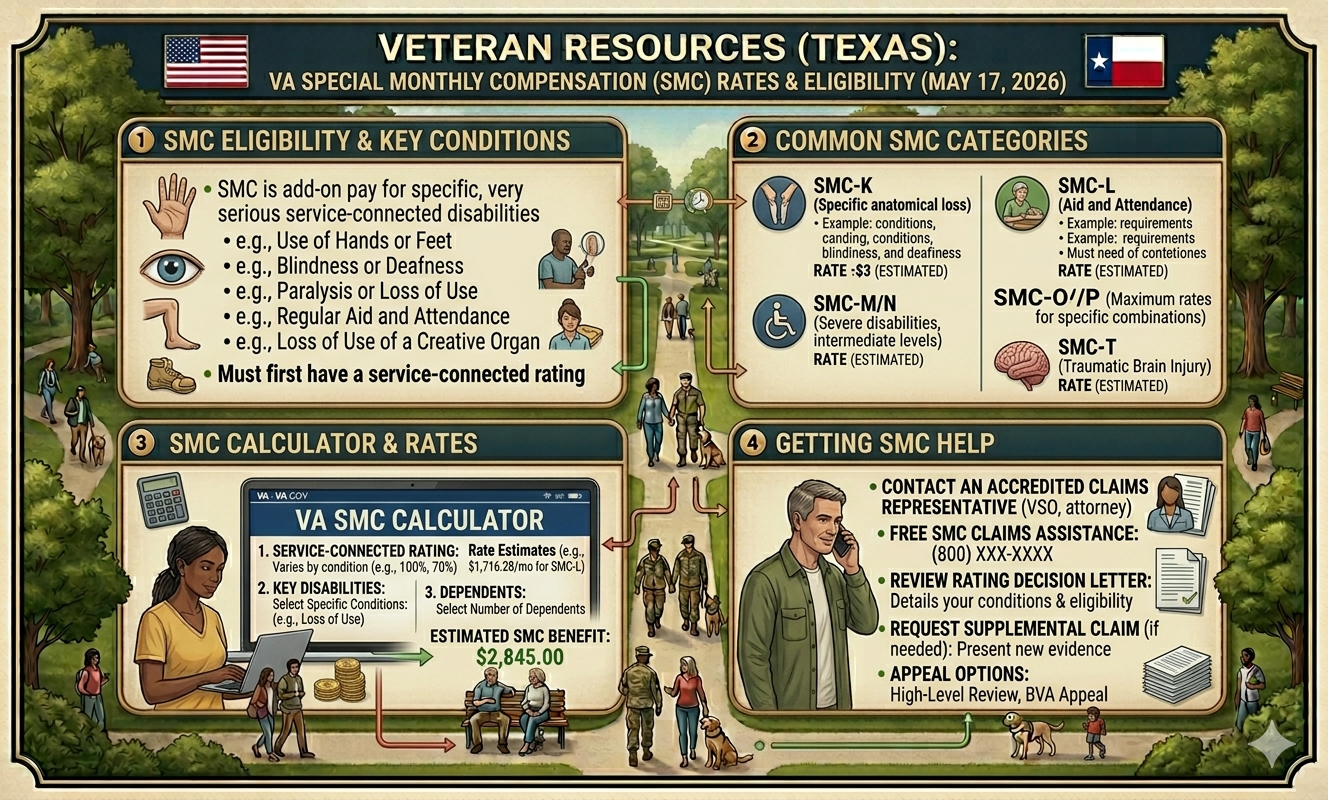
Introduction to VA Special Monthly Compensation (SMC)
VA Special Monthly Compensation (SMC) is a vital program designed to provide additional financial support to veterans who have specific disabilities that severely impact their daily life and living conditions. Unlike standard VA disability compensation, which typically serves to cover general service-connected disabilities, SMC addresses unique situations where the impairment is more pronounced and necessitates enhanced assistance.
The purpose of SMC is to recognize the extraordinary needs of veterans with severe disabilities, such as those requiring the aid and attendance of another person for basic daily activities or those who are housebound due to their conditions. SMC may be awarded to veterans who demonstrate a higher level of disability that goes beyond the criteria for standard compensation. It is significant for veterans who experience a range of debilitating health issues stemming from their service.

Veterans eligible for SMC can include those suffering from conditions that reduce their ability to perform routine functions. The SMC benefits are designed to help veterans maintain a semblance of independence and quality of life despite their enduring challenges. This compensation can also assist with ongoing medical treatment, home care services, or specialized equipment necessary for daily living.

In contrast to standard disability compensation, SMC also offers financial rates that vary depending on the severity of the disability. Understanding these differences is crucial for veterans assessing their eligibility and benefits. Ultimately, VA SMC is an essential resource that plays a critical role in ensuring that veterans receive the support they need to live more comfortably and securely.
VA SMC Rates 2026: Complete Guide to Special Monthly Compensation (Updated Today)
The direct answer: VA Special Monthly Compensation (SMC) rates for 2026 increased by 2.8% , effective December 1, 2025, with the first higher payments arriving December 31, 2025. The highest rate—SMC-R2 or SMC-T—pays $11,271.67 per month for a single veteran with no dependents.
SMC is tax-free money paid to veterans whose service-connected disabilities are so severe that standard VA disability compensation (even 100%) doesn’t fully cover their needs. Think of it as the VA saying: “The regular rates aren’t enough for what you’re going through.”
Quick example: A veteran who needs daily help with bathing, dressing, and eating (SMC-R1) gets $9,826.88/month—that’s over $117,000 a year, tax-free.
Veterans May Qualify for Extra Benefits
Check available financial assistance, healthcare programs and other opportunities that may apply to you.
Check EligibilityHere is everything you need to know about 2026 SMC rates, qualification, and the mistakes that cost veterans thousands.
What Veterans Need to Know Right Now
Stop waiting to apply if you qualify. SMC is not automatic—even though the VA has a legal duty to infer it from your records, they miss it constantly.
The 2026 update: All SMC rates increased by 2.8% on December 1, 2025. If you are already receiving SMC, your January 2026 payment reflected the new rate. If you are still waiting on a claim, the VA may owe you back pay dating to when you first qualified—not when they finally approved you.
Your mission right now: Review your VA decision letters. If you have a 100% rating and need help with daily activities or can’t leave your house, you may qualify for SMC without realizing it.
Complete 2026 VA SMC Rates (Official Tables)
All rates below are effective December 1, 2025 through November 30, 2026, reflecting the 2.8% COLA increase.
What Is SMC-K? (The “Add-On” Rate)
SMC-K is the base “special rate” paid for loss or loss of use of specific body parts or organs. It is often added on top of regular VA disability or other SMC levels.
2026 SMC-K Rate: $139.87 per month
Qualifying conditions for SMC-K (partial list):
- Loss or loss of use of a hand, foot, or arm
- Loss or loss of use of a creative organ (e.g., erectile dysfunction due to service)
- Loss of vision in one eye (blindness)
- Loss of hearing (with specific decibel thresholds)
Real-life impact: If you have a 70% VA disability rating plus SMC-K for loss of use of a foot, you get your 70% rate plus $139.87/month. That adds up to nearly $1,700 extra per year.
SMC-L Through SMC-N (Intermediate Levels)
These levels cover specific severe disabilities and combinations of loss of use.
Basic SMC Rates (No Dependents, No Children)
| SMC Level | 2026 Monthly Rate | What This Level Means |
|---|---|---|
| L | $4,900.83 | Regular Aid & Attendance (needs help with daily tasks) |
| L ½ | $5,154.00 | More severe than L |
| M | $5,408.55 | Loss of use of both feet, one hand and one foot, etc. |
| M ½ | $5,780.00 | Combinations of severe disabilities |
| N | $6,152.64 | Loss of use of both hands or both arms |
| N ½ | $6,514.00 | Severe combinations |
| O/P | $6,877.12 | Highest before Aid & Attendance tiers |
Source: VA.gov official rates and Military.com
SMC-L is the entry point for Aid & Attendance—meaning you need help with basic activities like dressing, bathing, eating, or using the bathroom.
SMC-R and SMC-T (The Highest Payments)
SMC-R is for veterans who need daily personal care from another person. There are two sub-levels:
| Level | Who Provides Care | 2026 Monthly Rate (Veteran Alone) |
|---|---|---|
| SMC-R1 | A non-professional (family member, friend) | $9,826.88 |
| SMC-R2 | A licensed medical professional (nurse, doctor) | $11,271.67 |
| SMC-T | Severe TBI requiring supervision/protection | $11,271.67 (same as R2) |
Source: CCK Law and VA.gov
What this means in real life:
- SMC-R1 ($9,827/month): Your spouse quit their job to take care of you full-time. The VA pays you nearly $10k/month for that help.
- SMC-R2 ($11,272/month): Your condition is so complex that only a trained nurse can safely care for you.
SMC-T is specifically for veterans with traumatic brain injury (TBI) who require regular supervision to protect themselves from hazards. It pays the same as SMC-R2.
SMC-S (Housebound)
SMC-S applies if you are essentially “stuck at home” because of your service-connected disabilities.
2026 SMC-S Rate: $4,408.53 per month (veteran alone)
Two ways to qualify:
- You have a single 100% rating AND additional disabilities that combine to 60% or more (this is called “statutory housebound”)
- Your doctor says you are permanently housebound due to your service-connected disabilities
SMC-S pays less than SMC-L because housebound is generally less severe than needing Aid & Attendance.
SMC Rates With Dependents (Spouse, Children, Parents)
SMC rates increase if you have eligible dependents. Here is what you add to your base rate:
Added Amounts for Dependents (2026)
| Dependent Type | Additional Monthly Amount |
|---|---|
| Spouse (no Aid & Attendance) | $219.59 (approximate, varies by SMC level) |
| Spouse receiving Aid & Attendance | +$201.41 (on top of spouse rate) |
| Each child under 18 | +$109.11 |
| Each child over 18 in school | +$352.45 |
| Each dependent parent | +$95-$176 (approximate, depending on parents) |
Note: Exact spouse rates vary by SMC level. Use VA.gov’s official rate tables for precise calculations.
Example: SMC-L With Family
SMC-L base (veteran alone): $4,900.83
Plus:
- Spouse: +$219.59
- 1 child under 18: +$109.11
- Spouse’s Aid & Attendance: +$201.41
Total monthly payment: $5,430.94
Who Qualifies for SMC? (Eligibility Breakdown)
You do not apply for “SMC” as a separate benefit. Instead, SMC is automatically considered by the VA when your medical records show you meet the criteria. But here is the catch: the VA often misses it.
Basic Requirements for Any SMC
- You must have at least one service-connected disability rated at 100%, OR
- You have multiple disabilities that combine to a high severity level (varies by SMC letter)
Quick Qualification Guide by SMC Level
| SMC Level | Key Qualification |
|---|---|
| K | Loss or loss of use of a hand, foot, creative organ, eye, or specific hearing loss |
| L | Need Aid & Attendance (help with daily activities like bathing, eating, dressing) |
| M | Loss of use of both feet, OR one hand and one foot, OR blindness in both eyes |
| N | Loss of use of both hands or both arms |
| O/P | Combinations requiring higher compensation |
| R | Need regular Aid & Attendance from another person (R1 = non-professional, R2 = professional) |
| S | Housebound (can’t leave home due to SC disabilities) |
| T | Severe TBI requiring supervision/protection |
The “Inferred Claim” Rule (Important!)
Here is something most veterans don’t know: You don’t have to specifically apply for SMC. The VA has a legal duty to review your records and infer SMC if the evidence supports it.
But the VA fails at this constantly. They will grant you 100% but miss that you also need Aid & Attendance. They will see you can’t leave the house but forget SMC-S.
Your job: Read your decision letter. If the evidence is there but SMC isn’t mentioned, file an appeal immediately.
How to Apply for SMC (Or Get the VA to Notice You Qualify)
If You Are Filing a New Disability Claim
Step 1: File your standard VA disability claim (VA Form 21-526EZ).
Step 2: Make sure your medical records clearly document:
- Any loss of use of body parts
- Difficulty with daily activities (bathing, dressing, eating, using the bathroom)
- Need for supervision or help from another person
- Inability to leave home
Step 3: In your personal statement, explicitly say: “I need help with [specific activities] because of my service-connected [condition].” Do not assume the VA will connect the dots.
If You Already Have a VA Rating (But Not SMC)
Step 1: Request an increase or file a supplemental claim.
Step 2: Submit new medical evidence showing your need for Aid & Attendance or housebound status.
Step 3: If the VA denied SMC before, file a Notice of Disagreement. You have one year from the decision date.
What About Aid & Attendance for Mental Health?
Yes, you can get SMC for mental health conditions if they are severe enough. But there is a catch: the VA requires proof that your mental health condition prevents you from performing daily activities—even if you are physically capable.
Example: Severe PTSD with agoraphobia (fear of leaving home) can qualify for SMC-S (housebound). Severe depression that prevents you from bathing or dressing can qualify for SMC-L (Aid & Attendance).
Common Mistakes That Cost Veterans Thousands
Mistake #1: Assuming SMC Is Automatic
The VA is supposed to infer SMC from your records. But veterans advocates agree: the VA misses this constantly. Do not trust them to do the right thing. Review your own records and appeal if SMC is missing.
Mistake #2: Wrong Effective Date (This Is HUGE)
The VA often sets your SMC effective date as the date of their decision—not the date you actually qualified. If your medical records from two years ago show you needed Aid & Attendance, your SMC should start back then.
This mistake costs veterans tens of thousands of dollars. Check your effective date. If it is wrong, appeal immediately.
Mistake #3: Not Adding Dependents
SMC rates increase with dependents. If you get married, have a child, or your parent becomes dependent on you, report it to the VA within one year to get back pay to the qualifying date.
Mistake #4: Confusing SMC-S With SMC-L
Housebound (SMC-S) pays less than Aid & Attendance (SMC-L). If you need help with daily tasks, you qualify for SMC-L, not SMC-S. The VA sometimes puts veterans in the wrong level to save money. Do not accept SMC-S if you truly need A&A.
What This Means Financially for Your Family
SMC changes everything. Here is the financial reality:
- SMC-K ($140/month): An extra car payment or groceries for a family of four for a week.
- SMC-L ($4,901/month): Equivalent to a $58,000/year job (tax-free, so more like a $75,000 taxable salary).
- SMC-R1 ($9,827/month): Equivalent to a $118,000/year tax-free income. Your family can live on this without you working.
- SMC-R2/T ($11,272/month): Equivalent to a $135,000/year tax-free income. This is life-changing money.
The catch: To get these rates, you are dealing with severe disabilities. The money is compensation, not a blessing. But for families struggling financially while caring for a disabled veteran, SMC can mean the difference between bankruptcy and stability.
Back Pay Example
If the VA approves SMC-R1 today but should have approved it 18 months ago based on your medical records:
- Monthly rate: $9,826.88
- 18 months of back pay: $176,883.84 (tax-free, lump sum)
This is why effective dates matter.
Political Context: The 2026 COLA and SMC
The Veterans’ Compensation Cost-of-Living Adjustment Act of 2025 was signed into law on November 25, 2025. It mandated that VA disability and SMC rates increase by the same percentage as Social Security benefits—which was 2.8% for 2026.
What this means for you: Your SMC payment automatically increased starting with the December 31, 2025 deposit. You do not need to do anything.
The bigger picture: SMC rates are tied to Social Security COLA. If inflation stays high, future COLAs may be higher. If inflation drops, COLAs drop. This is one of the few times where veterans are protected from inflation eating their benefits.
FAQ: Veterans’ Most Searched Questions
Q: What is the highest VA SMC rate for 2026?
A: The highest rate is $11,271.67 per month for SMC-R2 or SMC-T (veteran alone, no dependents). With a spouse and children, it goes higher.
Q: Can I get SMC and 100% VA disability at the same time?
A: Yes. SMC is in addition to your regular VA compensation. If you are 100% and qualify for SMC-L, you get the SMC-L rate instead of the 100% rate (and SMC-L pays more).
Q: Is SMC taxable?
A: No. All VA disability compensation and SMC payments are tax-free.
Q: How do I know if I qualify for SMC?
A: Ask yourself:
- Do I need help bathing, dressing, or using the bathroom?
- Do I need someone to prepare my meals or help me eat?
- Am I essentially stuck at home because of my disabilities?
- Have I lost use of a hand, foot, or eye?
- Do I need supervision due to TBI?
If you answered yes to any of these, talk to a VA-accredited representative.
Q: What is the difference between SMC-L and SMC-R?
A: SMC-L is for veterans who need some help with daily activities. SMC-R is for veterans who need regular, around-the-clock help from another person. SMC-R pays roughly double SMC-L.
Q: Can I get SMC for PTSD or other mental health conditions?
A: Yes, if the mental health condition is severe enough to require Aid & Attendance or make you housebound. The VA evaluates functional impairment, not just diagnosis.
Q: How long does SMC take to get approved?
A: The same as any VA claim—often 6-18 months. But if the VA should have granted it earlier, you can get back pay to the date you qualified.
Q: Do I need a lawyer to get SMC?
A: Not necessarily, but SMC claims are complex. A VA-accredited lawyer or claims agent works on contingency (they get 20% of past-due benefits if they win). Many veterans find this worth it given the high dollar amounts involved.
Final Takeaway
SMC is not “bonus money.” It is compensation for the hardest cases—veterans who cannot live independently or have lost use of their bodies.
But the VA will not hand it to you. You have to fight for it.
Your three moves today:
- Review your VA rating decision. Does it mention SMC at all? If not, you may have been underpaid.
- Check your effective date. Does it match when your medical records first showed your need for A&A or housebound status?
- If something is wrong, file a supplemental claim or Notice of Disagreement. Do not let the VA’s mistake cost you thousands.
You earned this compensation. Go get what they owe you.
Overview of VA SMC Rates for 2026
The Special Monthly Compensation (SMC) program administered by the Department of Veterans Affairs (VA) provides additional financial support to eligible veterans with specific disabilities. As we progress into 2026, it is crucial for veterans and their families to understand the adjusted SMC rates, which will come into effect starting December 1, 2025, reflecting a cost-of-living adjustment (COLA) of 2.8%. This adjustment aims to help veterans keep up with changing economic conditions and to ensure their financial well-being.
The SMC rates categorize various levels of compensation based on the severity of disabilities and the need for aid and attendance. In **2026**, the standard rate for the base SMC has been updated, and these increases may have significant implications for veterans receiving these benefits. The structure of the SMC is designed to accommodate different types of disabilities, which may require varying levels of support.
To provide clarity, a detailed table outlining the new SMC rates for 2026 is presented below:
| SMC Level Rate (Monthly) SMC (k) $123 SMC (l) $2,034 SMC (m) $2,186 SMC (n) $2,348 |
|---|
This table illustrates the incremental financial support available to veterans, demonstrating the importance of the VA’s commitment to meet the necessities of those who have served. Understanding SMC rates and their respective adjustments is vital for veterans seeking to navigate their benefits effectively. As we move into 2026, staying informed about these changes will enable better financial planning and support for veterans facing disability challenges.
Who Qualifies for VA SMC Benefits?
Eligibility for Special Monthly Compensation (SMC) benefits through the Department of Veterans Affairs (VA) is primarily determined by several key factors, including the nature and severity of a veteran’s service-connected disabilities. SMC is designed to provide additional compensation for veterans with certain disabilities that are deemed to significantly impact daily functioning.
To qualify, veterans must have a service-connected disability rating of at least 30 percent for one disability. This rating must be established as a result of injuries or conditions sustained during active military service. The veterans eligible for SMC benefits typically experience severe impairments, such as the loss of use of a limb, blindness, or the necessity of aid and attendance from another person. Disabilities must be well-documented through medical evaluations and VA assessments, demonstrating how these conditions affect the veteran’s quality of life.
Apart from the disability ratings, factors such as age and dependency can also influence eligibility. For instance, veterans who are aged 65 or older may receive additional consideration regarding their disabilities and their resulting limitations. Dependency status, which refers to the presence of a spouse, child, or dependent parent, also plays a critical role in determining SMC benefits, as veterans with dependents may receive higher compensation rates.
It is essential for veterans seeking SMC benefits to thoroughly understand the specific eligibility requirements and present all relevant documentation to support their claims. Distinct categories of SMC awards exist, each with its own criteria concerning the nature of disabilities and associated compensable factors. Ultimately, understanding these criteria ensures that eligible veterans can access the support they need for their service-related challenges.
Different Levels of SMC: Understanding the Ratings
Special Monthly Compensation (SMC) refers to significant monetary benefits provided to veterans who have specific disabilities or needs that affect their daily functionality. The VA categorizes these levels of SMC into various ratings, such as K through T, each designated to address different criteria and circumstances based on veterans’ individual needs. Understanding these ratings can significantly impact a veteran’s eligibility for additional support.
The first level, SMC-K, is awarded to veterans with specific disabilities that incur a additional allowance for loss or loss of use of particular organs or extremities. The compensation for SMC-K is a set rate, aimed at providing financial assistance relative to the functional limitations imposed by these conditions.
Moving to SMC-R1, which stands for “Regular Aid and Attendance,” this rating is awarded to veterans who require assistance with daily activities due to their disabilities. For example, veterans diagnosed with severe cognitive impairments or mobility restrictions may qualify for this level. This rating provides additional financial support to cover the costs associated with personal care services.
Next, SMC-R2 and SMC-R3 provide higher levels of compensation depending on varying degrees of assistance needs. SMC-R2 is for veterans who require around-the-clock care, while SMC-R3 is related to more personalized aid scenarios, ensuring that veterans receive sufficient assistance based on their unique challenges.
Finally, SMC-T, or Total, indicates that a veteran requires substantial assistance due to severe disabilities that can significantly impair daily living. The compensation under this rating reflects the heightened level of care needed. Each of these ratings not only represents varying levels of disability and need but also translates to specific compensation rates, reinforcing the VA’s commitment to providing necessary support to veterans.
Benefits Beyond the Monthly Compensation Payments
Special Monthly Compensation (SMC) provided by the Department of Veterans Affairs (VA) extends beyond the monetary payments designed to support veterans with severe disabilities. There exists a multitude of additional benefits that significantly enhance the quality of life for eligible veterans.
One of the primary advantages of SMC is access to comprehensive healthcare services. Veterans qualifying for SMC often receive extended healthcare benefits which include specialized treatment options, necessary medications, and continuous follow-up care. This holistic healthcare approach is crucial for managing disabilities that may require chronic care or specialized medical interventions.
Moreover, veterans receiving SMC are typically eligible for vocational rehabilitation and employment services that aid in reintegration into the workforce. This program is tailored to assist veterans in overcoming barriers to employment resulting from their disabilities. Through assessment, counseling, and training opportunities, veterans can acquire skills that empower them to pursue meaningful careers, improving not only their financial situation but also their mental and emotional well-being.
Additionally, SMC is associated with benefits related to housing modifications. Veterans may access special adaptive housing grants, which allow for significant modifications to residential properties. These modifications make homes more accessible, promoting independence and improving safety for those with mobility challenges. Such grants are pivotal in ensuring that veterans can reside comfortably in environments adjusted to their physical needs, which is vital for their overall quality of life.
In conclusion, the benefits of SMC extend well beyond the monetary compensation payments. Through enhanced healthcare, vocational rehabilitation services, and special adaptive housing grants, veterans with severe disabilities receive comprehensive support, helping them lead fulfilling and manageable lives.
Common Mistakes to Avoid When Applying for SMC
Applying for Special Monthly Compensation (SMC) can be a daunting process for many veterans. It is crucial to navigate this journey carefully, as various pitfalls can hinder the chances of a successful claim. One of the most common mistakes veterans make is related to documentation. Incomplete or inaccurate documentation can lead to delays or denials in claims. It is essential to provide all required supporting documents that clearly outline the extent of service-connected disabilities. Veterans often overlook the significance of medical records, which serve as vital evidence in substantiating their claims.
Another frequent issue arises from misunderstanding the application process itself. Veterans may not be aware of the various types of SMC available or the specific eligibility criteria that must be met. This lack of knowledge can result in applying for a compensation level that does not align with their situation. Seeking clarity on the differences between different SMC levels can be advantageous, as it provides better guidance on what to include in the application. Furthermore, veterans should ensure they are filling out forms correctly, as errors can disproportionately affect approval rates.
Additionally, some veterans mistakenly believe that the VA will reach out to them for missing information. This is not always the case; if supporting information is absent, the claim can be delayed or outright denied. Active engagement in the process is essential. Moreover, many applicants misunderstand the definition of “substantially gainful employment,” which can affect their eligibility for SMC benefits. To maximize approval chances, veterans should seek assistance from accredited representatives who can offer guidance in completing applications effectively and accurately.
The Application Process for SMC Benefits
Applying for Special Monthly Compensation (SMC) benefits from the Department of Veterans Affairs (VA) is a process that involves several important steps. To begin, veterans must determine their eligibility for SMC. This can include having a qualifying service-connected disability that affects daily living activities or results in the need for aid and attendance. Once eligibility is established, the next step involves completing the necessary forms.
The primary form for applying for SMC is the VA Form 21-526EZ, “Application for Disability Compensation and Related Compensation Benefits.” This form can be accessed online through the VA’s website or can be obtained at your local VA office. It is important to fill out this form thoroughly, providing all required information about your military service and medical history. Additional forms, such as the VA Form 21-534EZ, may be necessary for specific situations like widow’s benefits.
In conjunction with the forms, veterans should gather supporting documentation to substantiate their claims. This can include medical records, service records, and statements from healthcare providers that support the assertions made in the application. The more comprehensive the documentation, the smoother the application process will likely be.
Once completed, applications can be submitted electronically via the VA’s website, sent via postal mail to the appropriate regional office, or delivered in person at a VA regional office. Veterans should retain copies of all submitted forms and documentation for their records.
In the event that a claim is denied, veterans have the right to appeal the decision. The appeals process involves submitting a Notice of Disagreement (NOD) and may include additional documentation or hearings. It is crucial for veterans to stay informed and advocate for themselves throughout this process to secure the benefits they deserve.
Impact of Cost-of-Living Adjustments on SMC
Cost-of-living adjustments (COLA) play a crucial role in determining the monthly compensation for veterans receiving Special Monthly Compensation (SMC). These adjustments are designed to ensure that the benefits keep pace with inflation, thereby preserving the purchasing power of veterans’ monthly payments. For many veterans and their families, understanding how COLA impacts SMC rates is essential for effective financial planning.
The calculation of COLA is based on the Consumer Price Index for Urban Wage Earners and Clerical Workers (CPI-W), which measures price changes in a predetermined basket of goods and services. Each year, the U.S. Department of Veterans Affairs evaluates the rate of inflation and if there is a substantial increase, a COLA may be instituted. This adjustment can provide a significant boost in financial support, particularly for those veterans dependent on SMC payments due to disabilities or other qualifying factors.
Historically, COLA adjustments have varied year by year. For instance, following economic recessions, veterans may find that SMC payments have increased at different rates compared to living costs, affecting their financial security. Furthermore, understanding the historical trends of COLA adjustments can help veterans anticipate their monthly income adjustments and manage their budgets more effectively. In addition, these COLA increases provide an avenue for veterans to negotiate and advocate for their financial needs, especially when dealing with changes in their living circumstances.
In summary, cost-of-living adjustments significantly influence SMC rates and thereby impact veterans’ financial planning. By staying informed about these adjustments, veterans can ensure that their compensation aligns with the cost of living, improving overall financial health and stability.
Conclusion and Key Takeaways
In conclusion, understanding the VA Special Monthly Compensation (SMC) rates for 2026 is vital for veterans and their families. This guide has outlined the various categories of SMC, their eligibility requirements, and the significance of these benefits for those who have served in the military. The SMC rates not only provide financial support but also recognize the sacrifices and disabilities endured by veterans, underlining the government’s commitment to their well-being.
As emphasized throughout this blog post, the 2026 SMC rates reflect adjustments that take into account inflation and the evolving needs of veterans. Staying informed about these changes is essential for veterans who might be eligible for these compensation benefits. Regularly checking for updates on SMC rates ensures that veterans do not miss out on potential assistance they may require, particularly if their health conditions have worsened or their circumstances have changed.
Moreover, it is crucial for veterans to seek assistance from qualified professionals or organizations if they believe they meet the eligibility criteria for SMC. These professionals can guide them through the application process, helping to ensure that they receive the compensation they need to support their quality of life. Whether it’s reaching out to veteran service organizations, accessing online resources, or connecting with other veterans, support is available and should be utilized.
Ultimately, the 2026 VA SMC rates play a significant role in the financial security of veterans with service-related disabilities. Staying informed about these rates and seeking assistance are essential steps towards maximizing the benefits available to them and ensuring a dignified and comfortable life post-service.




🇺🇸 IMPORTANT DISCLAIMER – Veterans Benefits Information
This site provides general information about U.S. Department of Veterans Affairs (VA) benefits for educational and informational purposes only.
- Not Official: We are NOT affiliated with, endorsed by, or connected to the U.S. Department of Veterans Affairs (VA), the Veterans Benefits Administration (VBA), the Veterans Health Administration (VHA), or any other government agency.
- No Legal/Financial Advice: The content on this website is for informational purposes only and does not constitute legal, financial, or medical advice. VA benefits rules change frequently – always consult with an accredited Veterans Service Officer (VSO) or a qualified professional for your specific situation.
- Official Sources: For official, binding information and to apply for benefits, always visit official .gov websites: VA.gov, Benefits.VA.gov, or SSA.gov.
- No Data Collection: This site does not collect, store, or process any personal information. It does not have login forms, contact forms, or any system to capture user data. We never ask for your Social Security Number, bank details, or any personal information.
- 🚨 Scam Alert: The VA and other government agencies never charge fees for benefit applications. If anyone asks for money to "process" your VA claim, it is a scam. Report it to the VA Office of Inspector General at VA.gov/OIG.
- Advertising: This site uses third-party advertising (Adsterra) to cover operational costs. We do not endorse or guarantee any products or services advertised.
📌 Information provided as of June 2026. Always verify current eligibility and rules with official .gov sources.
This site is not affiliated with the U.S. Department of Veterans Affairs or any government agency. All information is for educational purposes only. Please visit VA.gov for official information.
