
Introduction to Military Energy Procurement
Energy procurement within the military context, specifically for the UK Armed Forces, encompasses the processes and strategies involved in acquiring energy resources necessary for operational readiness and sustainability. The significance of efficient energy procurement cannot be overstated, particularly given the increasing complexity of military operations that necessitate a reliable and resilient energy supply. In the UK, energy procurement is not merely a logistical function but a strategic imperative that influences mission success.
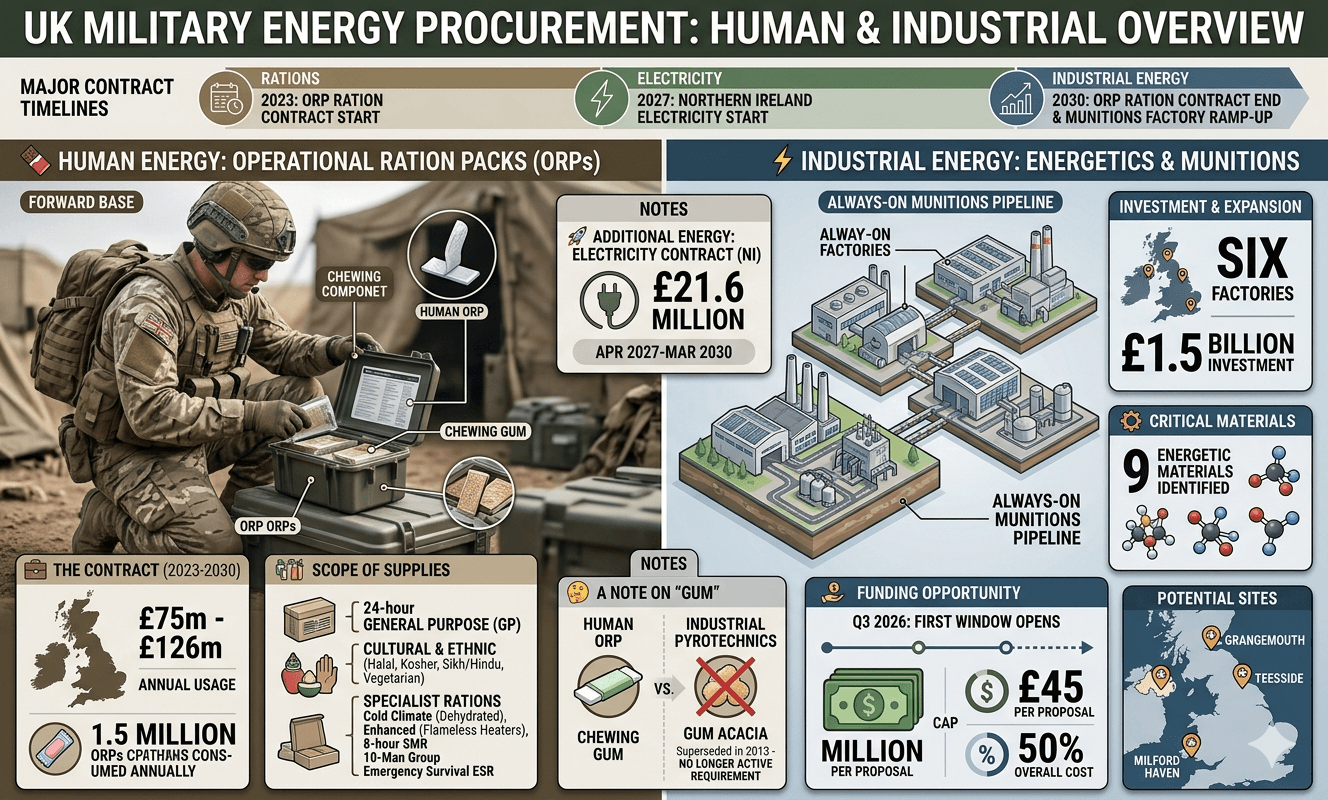
Here is an overview of the UK military’s current “energy” procurement—which is split between human energy (ration packs) and industrial energy (munitions and explosives).

🍫 Human Energy: Operational Ration Packs
When the UK Armed Forces talk about “energy” in the field, they are referring to Operational Ration Packs (ORPs). The key contract for these is currently active.
- The Contract: A 7-year framework agreement for the supply of ration packs, running from April 1, 2023, to March 31, 2030, valued between £75 million and £126 million .
- The Scope: This contract covers a huge volume of food, including:
- 24-hour General Purpose (GP) Rations: Approximately 1.5 million consumed annually. These include a “spork,” matches, wet wipes, and specifically, chewing gum .
- Cultural and Ethnic Rations: Halal, Kosher, Sikh/Hindu, and vegetarian options .
- Specialist Rations: Cold Climate (dehydrated), Enhanced (with flameless heaters), 8-hour Single Meal Rations (SMR), 10-Man Group Feeding rations, and Emergency Survival Rations (ESR) .
⚡ Industrial Energy: Energetics & Munitions

The UK is undergoing a major industrial expansion to secure its supply of “energetics”—a term for propellants, explosives, and pyrotechnics.
- The Investment: The MOD has committed £1.5 billion of additional defence investment to create an “always-on” munitions pipeline, including building at least six new factories this parliament .
- Key Deadlines: Construction on the first factory is expected to begin within the next year, with production ramping up this Parliament .
- The Materials: The MOD has specifically identified nine energetic materials as critical for the UK’s supply chain .
- The Funding Opportunity: The MOD is opening investment windows where companies can apply for capital grants. Funding is capped at £45 million per proposal or 50% of the overall cost, whichever is smaller. The first window opens in Q3 2026 .
- Potential Sites: Identified locations include Grangemouth (Scotland), Teesside (North East England), and Milford Haven (Wales) .
🚀 Additional Energy: Electricity Contract (2027-2030)
Beyond rations and explosives, the Defence Infrastructure Organisation (DIO) is also preparing a tender to supply electricity to MOD sites in Northern Ireland. This £21.6 million contract is scheduled to run from April 2027 to March 2030 .
🤔 A Note on “GUM”
If your interest in “energy gum” was literal rather than metaphorical (as in the ingredient Gum Acacia), I did find a historical standard for Gum Acacia used in pyrotechnics: DEFSTAN 68-44/2 . However, this standard was superseded in 2013, meaning it is no longer an active UK military requirement .
The main ration contract (2023-2030) currently lists “chewing gum” as a component, but it does not specify a separate “energy gum” standard.
Veterans May Qualify for Extra Benefits
Check available financial assistance, healthcare programs and other opportunities that may apply to you.
Check EligibilityAre you interested in the specific breakdown of the 9 energetic materials the MOD has classified as critical, or the pre-qualification requirements for the ration contract?
The procurement process involves various considerations including the types of energy used—ranging from traditional fuels to renewable energy sources. The UK military has recognized the need to modernize its energy strategies in response to evolving operational demands and environmental challenges. A diversified energy portfolio is essential to ensure that forces are not only well-supported in their immediate operations but are also contributing to broader governmental objectives of sustainability and carbon reduction.
Moreover, the context of military energy procurement extends beyond the battlefield. It reflects wider geopolitical realities and the necessity of maintaining energy independence. Establishing robust procurement frameworks allows the military to secure energy supplies amid fluctuating global markets and rising energy costs, thus ensuring operational effectiveness. In recent years, the UK military has increasingly focused on leveraging innovative technologies and partnerships to enhance its energy resilience.
In summary, understanding military energy procurement is crucial for appreciating its role within the wider defense landscape. The strategies employed for procuring energy resources are foundational to the UK’s military operations, enabling forces to achieve their missions while adhering to strategic goals related to sustainability and energy security.
Human Energy: Ration Packs in the UK Military
In the context of military operations, the concept of human energy is paramount, particularly regarding the sustainability and effectiveness of soldiers in the field. One crucial component of this energy provision is the ration packs utilized by the UK military. These packs are specifically designed to meet the intense caloric and nutritional requirements of personnel during prolonged missions, often in challenging environments.
The UK military employs several types of rations, primarily categorized into the Operational Ration Packs (ORP) and the Combat Ration Packs (CRP). The ORP is tailored for soldiers engaged in operations requiring high energy expenditure, while the CRP caters to personnel in combat scenarios, where quick and easy consumption of food is essential. Each pack is carefully formulated to provide a balanced intake of carbohydrates, proteins, fats, and essential vitamins, crucial for maintaining optimal performance levels.
The development of these ration packs involves thorough research and testing to ensure that they meet the nutritional standards necessary for military personnel. Nutritionists and food technologists collaborate to formulate meals that can withstand diverse weather conditions while maintaining taste and convenience. Pack contents are also designed to fulfill dietary requirements and preferences, accommodating restrictions due to religious or health reasons.
Moreover, the role of ration packs extends beyond mere sustenance; they serve as a morale booster during missions. Proper nutrition enhances physical performance while also contributing to psychological well-being. As such, the UK military continues to innovate and adapt its ration procurement strategies to ensure that soldiers receive the best possible support in their operational endeavors.
Industrial Energy: Munitions and Explosives
The procurement of munitions and explosives is a critical element of the UK military’s industrial energy strategy. This aspect includes the assessment and acquisition of various types of ordnance that are essential for operational readiness and effectiveness in military engagements. The processes involved in the production of munitions are multifaceted and require meticulous planning, coordination with suppliers, and adherence to strict safety and quality standards.
Manufacturing munitions entails various stages, including research and development, design, production, and testing. One key focus of the procurement strategy is ensuring that all munitions meet the evolving requirements of modern warfare. The UK military stocks a diverse range of munitions—this includes conventional ammunition, guided missiles, and specialty explosives. Each type serves distinct operational needs and is categorized based on its intended use, effectiveness, and deployment mode.
In military engagements, the significance of reliable munitions cannot be overstated. They not only ensure the capabilities of armed forces but also act as deterrents in conflict situations. The integration of cutting-edge technology in munitions, such as precision-guided systems, heightens the effectiveness and efficiency of military operations. Furthermore, maintaining a robust supply chain is essential to support frontline units, thereby requiring strategic partnerships with manufacturers and suppliers to ensure the availability of essential ordnance.
Through a meticulous approach to the procurement of munitions and explosives, the UK military is better prepared to meet both current threats and future challenges. This comprehensive strategy not only streamlines logistics but also ensures that the forces are equipped with the necessary tools to excel in diverse operational environments.
Sustainability in Energy Procurement
The UK military has made significant strides in adopting sustainability measures within its energy procurement strategies. Acknowledging the urgent need to mitigate environmental issues, the military is now prioritizing renewable energy sources in both human and industrial energy procurement processes. This shift not only aims to minimize carbon footprints but also supports the transition to a more sustainable operational framework.
One of the key strategies involves the integration of renewable energy technology, such as solar and wind power, into military operations. By harnessing these resources, the UK military can significantly reduce its dependence on fossil fuels, thereby diminishing greenhouse gas emissions associated with traditional energy consumption. Projects are being implemented to equip military bases with renewable energy installations, which enhance self-sufficiency and resilience against fossil fuel supply disruptions.
Furthermore, the military is actively engaging with supply chain partners to promote sustainable practices throughout its procurement processes. This includes adopting guidelines that define robust environmental criteria for supplier selection, which encourages adherence to sustainability standards. By working closely with vendors who prioritize environmentally friendly operations, the UK military is not only ensuring reliable procurement but is also fostering a culture of sustainability within the supply chain.
In addition to environmental criteria, efforts toward energy efficiency are being emphasized in procurement decisions. This encompasses investment in advanced technologies that enhance energy productivity and reduce waste. Initiatives such as energy audits and assessments are performed regularly, ensuring that practices remain in alignment with sustainability goals.
By embedding sustainability deeply into energy procurement strategies, the UK military seeks to lead by example, demonstrating its commitment to reducing environmental impacts while ensuring operational effectiveness. This strategic approach aligns with broader governmental objectives aimed at achieving net-zero emissions by 2050, showcasing the military’s proactive role in addressing climate change challenges.
Challenges in Energy Procurement
Energy procurement within the UK military faces a multitude of challenges that can significantly hinder the overall effectiveness of its strategies. One of the primary logistical issues is the geographical dispersion of military operations. The requirement to deploy energy resources across various locations, often in remote areas, complicates the supply chain and may lead to delays and increased costs. Furthermore, this logistical complexity necessitates careful planning to ensure energy needs are met without compromising operational readiness.
Technological limitations also pose significant challenges. The military relies on advanced energy solutions, including renewable sources, to enhance sustainability. However, the integration of these technologies into existing systems can be fraught with difficulties. Compatibility issues, limited infrastructure, and insufficient research and development investments can impede the effective adoption of innovative energy solutions.
Government regulations add another layer of complexity to energy procurement processes. The military is subject to various public procurement laws that aim to ensure transparency, Fairness, and accountability. The extensive regulatory framework can lead to protracted procurement cycles, making it difficult for the military to act swiftly in securing energy resources, particularly in rapidly changing operational environments. Additionally, compliance with stringent environmental regulations can limit options for coal and fossil fuel procurement, accelerating the shift to greener alternatives, yet often at a higher upfront cost.
Moreover, budget constraints are crucial factors shaping energy procurement strategies. The military must operate within finite budgets that allocate limited funds not only to energy procurement but also to many other essential areas. This financial pressure can lead to prioritization of immediate operational needs over long-term energy investments, ultimately impacting the military’s overall energy efficiency and sustainability. Addressing these challenges is essential for ensuring that the UK military can effectively procure the energy it requires to fulfill its mission while navigating the complexities of the modern operational landscape.
Technological Innovations in Energy Supply
The contemporary landscape of energy procurement within the UK military has been significantly shaped by various technological advancements. Innovations in energy supply not only enhance operational efficiency but also contribute to sustainability goals. Among these advancements, the integration of renewable energy sources stands out as a crucial strategy. The military is increasingly leveraging solar, wind, and biofuels, allowing for a reduction in reliance on traditional fossil fuels, which aligns with broader environmental considerations.
Another notable innovation is the implementation of advanced energy storage technologies. Energy storage systems, including lithium-ion batteries and other next-generation solutions, enable the military to store renewable energy for use during peak demand times. This technological approach not only optimizes energy usage but also enhances mission operational readiness by ensuring that energy is available when needed, regardless of external conditions. Furthermore, smart energy management systems are being deployed to monitor and control energy consumption in real-time, allowing for more efficient allocation of resources.
Moreover, the military is also exploring alternative energy generation methods such as portable microgrids. These systems enable rapid deployment of energy solutions in forward operating bases, thus ensuring that personnel have immediate access to power without the need for extensive logistical support. Innovations in energy efficiency technologies are equally significant, as they reduce overall consumption and waste within operations. For example, cutting-edge energy-efficient technologies applied in infrastructure and equipment lead to reduced energy demands while maintaining operational capabilities.
The confluence of these technological innovations is pivotal for enhancing the UK military’s energy procurement strategies. By effectively utilizing advanced technologies, the military can improve its energy resilience and sustainability, thereby ensuring that it is well-equipped to meet both current and future challenges in the dynamic field of military operations.
Future Trends in Military Energy Procurement
As military operations evolve in complexity and context, the significance of energy procurement within the UK military is poised to increase substantially. Future trends will be shaped by a confluence of global military strategies, technological advancements, and shifting geopolitical landscapes. Understanding these dynamics is essential in predicting how the UK military will adapt its energy procurement practices in the coming years.
One of the fundamental shifts influencing military energy procurement will be the increased focus on renewable energy sources. As global discussions on climate change intensify, militaries, including that of the UK, are striving to reduce their carbon footprints. This green energy transition aims not only at environmental stewardship but also at ensuring energy security. Renewables such as solar and wind power are emerging as viable options, capable of providing sustainable energy solutions for military installations and operations.
Emerging technologies will further refine energy procurement methods. Innovations such as smart grids, energy storage systems, and artificial intelligence are expected to enhance the efficiency and resilience of military energy infrastructures. The integration of these technologies will enable better management of energy resources, allowing for real-time adjustments based on operational demands. This capability not only improves energy efficiency but also enhances mission readiness, a critical element for modern military engagements.
Geopolitical factors will also play a crucial role in influencing energy procurement strategies. As global power dynamics shift, the need for securing energy sources that are not only reliable but also strategically advantageous will become paramount. The UK military may seek partnerships with nations that hold promising energy potential, fostering collaboration that can support their operational needs while reinforcing international ties.
In essence, the UK military’s approach to energy procurement will advance toward greater sustainability and resilience, driven by emerging technologies and a complex geopolitical landscape. The interplay of these elements will dictate how effectively the military responds to current and future energy challenges.
Case Studies: Successful Energy Procurement Strategies
The UK military has demonstrated effective energy procurement strategies that serve as exemplary case studies for other organizations seeking to optimize their energy management. One notable instance is the implementation of the Defence Infrastructure Organisation’s (DIO) energy procurement framework. Through careful planning and strategic partnerships with energy suppliers, the DIO achieved significant cost savings while ensuring a reliable energy supply. This initiative involved a comprehensive assessment of various energy sources, allowing the military to diversify their procurement approach by integrating renewable resources alongside traditional energy methods.
Another remarkable case is the UK Army’s participation in a pioneering solar energy project at their estate in Salisbury Plain. This project features the installation of solar photovoltaic systems, which not only provide renewable energy but also serve as a model for reducing the carbon footprint of military installations. The emphasis on solar energy highlights the UK military’s commitment to sustainable energy practices while demonstrating the practical implications of energy procurement within military operations.
Additionally, the Royal Navy has excelled in adopting energy-efficient technologies aboard its vessels. By integrating advanced energy management systems and optimizing fuel usage, the Navy has successfully decreased operational costs. This success stems from a well-articulated energy procurement strategy that focuses on aligning energy consumption with operational requirements. Through these tactical approaches, the Royal Navy illustrates how innovative energy procurement can enhance operational readiness and sustainability.
These case studies reflect the UK military’s commitment to implementing effective energy procurement strategies that take into account economic, environmental, and operational factors. By leveraging diverse energy sources and technologies, the military not only enhances its operational capabilities but also paves the way for other sectors to follow suit in pursuit of sustainable energy solutions.
Conclusion: The Importance of Energy in Military Operations
In contemporary military operations, energy procurement represents a foundational component that significantly impacts overall effectiveness and readiness. The challenges faced by the UK military, amidst the evolving landscape of threats and operational demands, necessitate a strategic approach to energy acquisition and management. The integration of advanced technologies and renewable energy sources has become paramount in ensuring that the forces remain agile and prepared to respond to various contingencies.
Throughout this discussion, we have highlighted the essential role of energy logistics in supporting military operations. The transition towards sustainable energy solutions not only enhances the resilience of logistical frameworks but also aligns with broader governmental objectives regarding environmental sustainability. Moreover, as military operations increasingly rely on advanced technologies that demand consistent and reliable energy supplies, the UK military’s ongoing procurement strategies are critical for maintaining operational superiority.
Future outlooks for energy procurement in the UK military suggest an increasing emphasis on innovation and adaptation to ensure energy security in all operational theatres. Engaging with private-sector advancements in energy technology and infrastructure will be vital for the military. The establishment of robust partnerships in energy procurement could lead to enhanced capabilities, allowing the armed forces to meet both current and future challenges effectively.
Ultimately, the focus on energy enables the UK military not only to enhance its operational capabilities but also to ensure the safety and welfare of personnel. Therefore, continuous evaluation and adaptation of energy strategies will be crucial as the military navigates the complexities of modern warfare. This multidimensional approach to energy procurement highlights its importance in securing the future of military readiness and effectiveness in a demanding global environment.


🇺🇸 IMPORTANT DISCLAIMER – Veterans Benefits Information
This site provides general information about U.S. Department of Veterans Affairs (VA) benefits for educational and informational purposes only.
- Not Official: We are NOT affiliated with, endorsed by, or connected to the U.S. Department of Veterans Affairs (VA), the Veterans Benefits Administration (VBA), the Veterans Health Administration (VHA), or any other government agency.
- No Legal/Financial Advice: The content on this website is for informational purposes only and does not constitute legal, financial, or medical advice. VA benefits rules change frequently – always consult with an accredited Veterans Service Officer (VSO) or a qualified professional for your specific situation.
- Official Sources: For official, binding information and to apply for benefits, always visit official .gov websites: VA.gov, Benefits.VA.gov, or SSA.gov.
- No Data Collection: This site does not collect, store, or process any personal information. It does not have login forms, contact forms, or any system to capture user data. We never ask for your Social Security Number, bank details, or any personal information.
- 🚨 Scam Alert: The VA and other government agencies never charge fees for benefit applications. If anyone asks for money to "process" your VA claim, it is a scam. Report it to the VA Office of Inspector General at VA.gov/OIG.
- Advertising: This site uses third-party advertising (Adsterra) to cover operational costs. We do not endorse or guarantee any products or services advertised.
📌 Information provided as of June 2026. Always verify current eligibility and rules with official .gov sources.
This site is not affiliated with the U.S. Department of Veterans Affairs or any government agency. All information is for educational purposes only. Please visit VA.gov for official information.
