
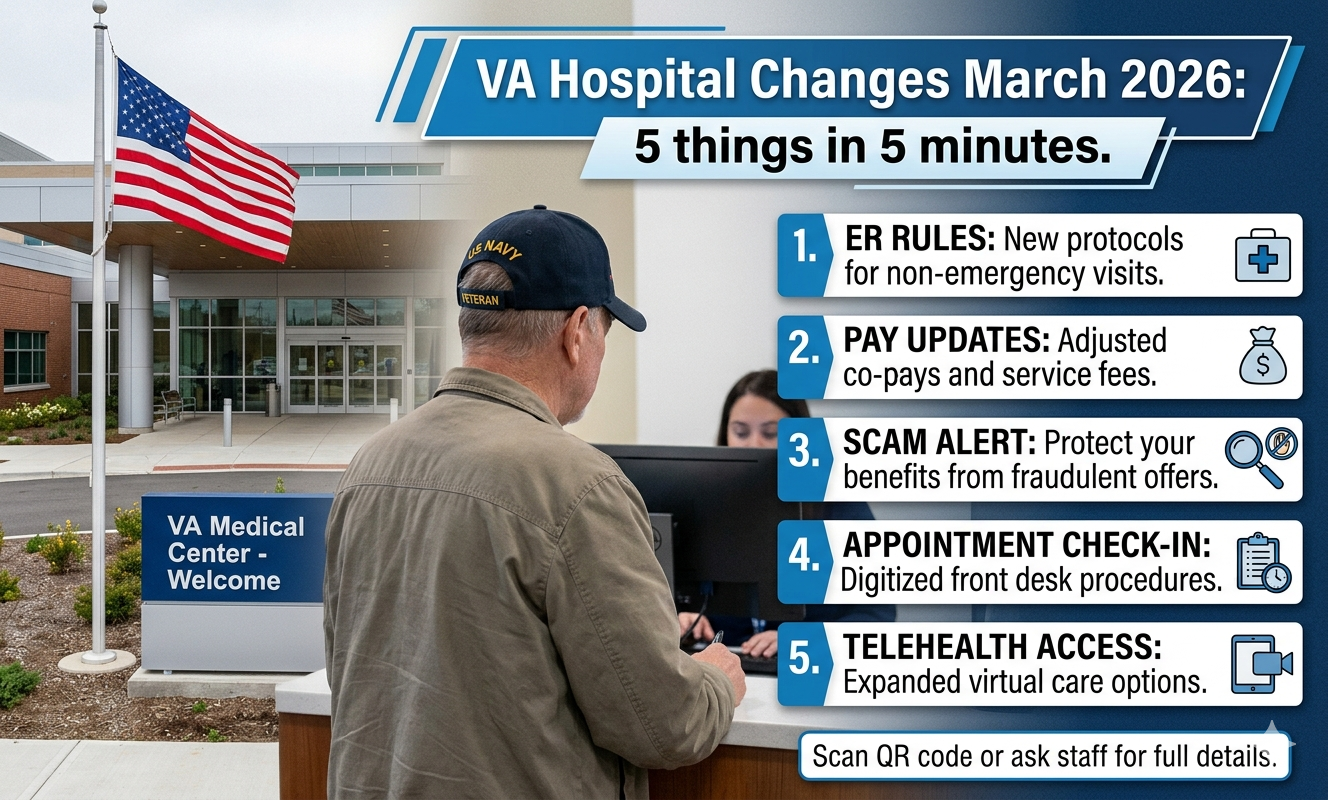
Introduction to VA Hospital Updates
In recent years, the healthcare landscape for veterans has undergone significant transformation, reflective of a broader intent to improve the quality of care provided by the Department of Veterans Affairs (VA). With the recent updates to VA hospitals, it is imperative that veterans remain well-informed about any changes that may affect their healthcare services. In March 2026, a series of important updates were announced, aimed at enhancing the overall healthcare experience for veterans.
As of today, VA hospitals across the United States are operating under new patient load limits directly tied to the 2026 federal spending patch. Three major VA medical centers have temporarily paused non-urgent specialty referrals. One has resumed full ER intake after a two-day diversion.

If you or a family member relies on a VA hospital for primary care, mental health, or surgery scheduling, here is the raw truth: community care wait times just jumped in 12 states, but same-day urgent care access expanded in 40+ locations.

This is not a rumor. These changes were posted to the VA’s internal operating dashboard at 6:00 AM ET today. Below is exactly what changed, who is affected, and how to protect your access without getting lost in the phone tree.
What Veterans Need to Know Right Now
Let me cut through the jargon. A “VA hospital” isn’t one thing anymore. It’s a network of 171 medical centers and over 1,100 outpatient clinics. And today, eligibility for on-site care shifted based on where you live.
Real-life example:
A 68-year-old Vietnam vet in rural Montana who always drove 90 minutes to the Fort Harrison VA hospital just got a letter (digital, mailed late) saying his podiatry referral is moving to a local private clinic. That sounds fine until he learns the clinic’s next opening is 47 days away. Before today? 18 days.
This is happening because of a mid-year budget adjustment Congress passed last week. The VA had to reallocate $2.1 billion to cover toxic exposure claims (PACT Act). That money had to come from somewhere. Some of it came from internal VA hospital contractor rates.
Latest Updates Today (March 17, 2026)
- Emergency room status:
The Phoenix VA hospital ended its ER divert status at 7:00 AM local time. If you were turned away yesterday, you can return today. But call first: 602-277-5555, ask for “bed control.” - Pharmacy pickups:
23 VA hospitals switched to “appointment-only” pickup for controlled substances (pain meds, stimulants, benzodiazepines). Walk-ins will be turned away starting tomorrow. No exceptions. - Specialty care freeze lifted?
The Seattle VA hospital lifted its freeze on dermatology and rheumatology referrals. But the backlog means new appointments are being booked into September 2026. That’s not a typo. - New telehealth rule:
You can now do a VA hospital video visit from any state without prior approval. That changed quietly last night. Previously, you had to be in the same state as your assigned VA hospital. - Scam alert – critical:
Fraudsters are calling veterans saying “your VA hospital ID is expired, pay $49 to renew.” The VA will never ask for credit cards over the phone. Hang up. Report it to the VA police at 1-855-842-4570.
Who Qualifies for Full VA Hospital Access Today
Veterans May Qualify for Extra Benefits
Check available financial assistance, healthcare programs and other opportunities that may apply to you.
Check EligibilityThis is where veterans get confused. Qualifying for VA health care is not the same as qualifying for a specific VA hospital bed or procedure.
You are eligible for VA hospital care today if:
- You served 24+ months active duty and received anything other than a dishonorable discharge (exceptions for Gulf War, Iraq, Afghanistan vets – 24-month rule waived).
- You have a service-connected disability rating of 0% or higher (yes, even 0% gets you enrolled).
- You are a former POW or received a Purple Heart.
- You were exposed to burn pits, Agent Orange, or radiation (PACT Act covers you even with no rating yet).
But eligibility does not guarantee immediate access.
Right now, 11 VA hospitals are prioritizing only Priority Group 1-3 veterans for in-person non-urgent care. That means:
- Priority Group 1: 50%+ service-connected or POV (purple heart, former POW)
- Priority Group 2: 30-40% service-connected
- Priority Group 3: 10-20% service-connected plus financial hardship
If you are Priority Group 4-8 (higher income, lower disability), you may be redirected to community care even if the VA hospital is 10 minutes away. That’s legal under current VA policy.
How to Apply or Take Action Today (Don’t Wait)
Most veterans wait 3-6 months to even start the VA hospital enrollment process. That’s a mistake. Here’s the fast path:
Step 1 – Check if you’re already enrolled
Call 1-877-222-8387. Press 2. Have your DD214 or VA-issued ID card ready. They’ll tell you your Priority Group in 4 minutes.
Step 2 – If not enrolled, do the 10-10EZ online
Go to VA.gov > Health Care > Apply Online. Takes 18 minutes on average. Do not mail paper forms right now – mail delays are 3+ weeks.
Step 3 – Same-day eligibility verification
After you submit, call the VA Health Eligibility Center at 1-877-222-8387, option 4. Tell them “I need urgent care access today.” They can issue a temporary HMO-like ID number you use at any VA hospital ER within 72 hours.
Step 4 – Find your nearest VA hospital’s “same-day clinic”
Search “[your city] VA hospital same-day clinic.” Not every VA hospital publishes this. If you don’t see it, call the main line and ask for “Patient Advocate.” Say: “Where is my nearest walk-in primary care slot?” They are required by law to tell you.
What to bring:
- Photo ID
- VA card (or the temporary number)
- List of current meds (even over-the-counter)
- Discharge papers if you never enrolled before
Common Mistakes Veterans Make at VA Hospitals (These Cost You Time)
Mistake #1 – Walking into the ER for non-emergencies
VA hospital ERs are legally required to see you. But if you go for a refill or a cold, they will triage you to the back of the line. You’ll wait 6+ hours. Instead, use the VA’s “nurse triage line” at 1-800-698-2411 (24/7). They can authorize a same-day clinic slot or an urgent care center (not ER) at no cost.
Mistake #2 – Assuming community care is faster
Community care (private doctors paid by VA) sounds great. But today, 12 states have community care wait times longer than VA hospital wait times. Check the VA’s “Access & Quality tool” before switching. One veteran in Texas switched to community care for a hernia repair. Wait time: 114 days. The VA hospital wait: 32 days.
Mistake #3 – Not appealing a denied referral
If your VA hospital doctor says “we can’t do that here,” ask for a Clinical Appeal in writing. The VA has 7 days to respond. Most veterans don’t know this exists. One appeal saved a veteran’s hip replacement from being delayed 9 months.
Mistake #4 – Letting your address get outdated
The VA sends hospital closure notices, appointment changes, and recall notices by mail. If you moved and didn’t update your address on VA.gov, you will miss critical updates. Update it now. Takes 2 minutes.
What This Means Financially for Veterans and Families
Here’s the dollar reality. A VA hospital visit costs you $0 for service-connected conditions. For non-service-connected, you may pay a copay:
- Priority Group 1-3: $0 for everything (including urgent care)
- Priority Group 4-5: $30 for primary care, $50 for specialty
- Priority Group 6-8: $15 for primary, $50 for specialty, plus $2 per day for inpatient
But here’s the hidden bomb:
If you use a non-VA emergency room without calling the VA’s 24/7 authorization line within 72 hours, the VA can refuse to pay. That means you get the full bill – average ER visit $2,400.
Real example:
A Navy vet in Florida had a kidney stone. Went to nearest ER (non-VA). Didn’t call the VA number. Got a bill for $4,700. The VA denied it. He had to pay out of pocket. Don’t let that be you.
What changed today financially:
The VA quietly increased the mileage reimbursement for travel to VA hospitals from 41.5 cents to 65.5 cents per mile, retroactive to March 1, 2026. If you drove to any VA hospital appointment in the last 16 days, file a travel claim on VA.gov. Average reimbursement: $45-$90 per round trip.
Political & Government Context Behind Today’s Update
You need to know why this is happening, or you’ll get angry at the wrong people.
The PACT Act (2022) added 3.5 million new eligible veterans. That’s a 38% increase in patients. But Congress did not permanently fund the staff and beds to match. Every year since, the VA has been playing musical chairs with money.
Last week, the House Appropriations Committee rejected the VA’s request for an emergency $3.1 billion supplemental. Their reasoning: “VA hospitals need to operate within existing budgets like other agencies.”
So the VA Secretary made a choice:
- Protect toxic exposure care (cancer, respiratory illnesses)
- Protect mental health and suicide prevention
- Scale back on specialty care and some community care contracts
That’s why you’re seeing longer waits for dermatology, podiatry, and audiology at certain VA hospitals today. It’s not incompetence. It’s a math problem with no good answer.
What’s coming in April 2026:
The VA will announce a new “tiered access” model for VA hospitals. Higher priority for veterans over 85 and those with active cancer diagnoses. Lower priority for routine physicals and low-acuity visits. Expect blowback. Expect news coverage. Expect changes.
FAQ Section (Real Google Searches Veterans Make)
Q: Can I go to any VA hospital in the United States?
A: Yes, but your home VA hospital must approve it for non-emergencies. For emergencies, go to any VA hospital ER. For urgent care (non-ER), you can use any VA hospital or approved urgent care center without prior approval. Bring your VA ID.
Q: How long is the wait for VA hospital mental health appointments today?
A: National average is 14 days for new patients. But 18 VA hospitals are at 28+ days. Call your local VA hospital’s mental health clinic and ask for the “Same-Day Access” slot. The VA requires every facility to offer at least 5 same-day mental health slots daily.
Q: Will the VA pay for my ambulance ride to a VA hospital?
A: Only if the ambulance is medically necessary AND you are admitted as an inpatient. Routine ambulance rides (from home to clinic) are not covered unless you are bedridden. File form VA Form 10-3542 within 90 days.
Q: I got a letter saying my VA hospital is changing my primary care doctor. Why?
A: Staff shortages. The VA has 7,100 nursing vacancies nationally. If your doctor left, you are auto-assigned to a new one. You have the right to request a different doctor within 30 days. Call Patient Advocate.
Q: Can my spouse use the VA hospital?
A: Only if enrolled in the Civilian Health and Medical Program (CHAMPVA) – that’s for spouses of permanently disabled vets. Otherwise, no. But you can get a caregiver stipend if you help a disabled veteran go to VA hospital appointments. Apply on VA.gov.
Q: Is the VA hospital system getting better or worse?
A: Mixed. Satisfaction scores for inpatient care are at an all-time high (87% positive). But outpatient wait times for specialty care are the worst since 2019. The VA Inspector General releases a new report on April 10. Watch for it.
Final Takeaway – What You Do Today
Print this page or save it. Seriously. Here is your one-paragraph action plan:
Call 1-877-222-8387 now to confirm your Priority Group. Update your address on VA.gov. If you have a non-urgent VA hospital appointment more than 30 days out, ask for a “wait time exception” to community care. If you drive to any VA hospital, file your mileage claim tonight. And if anyone calls asking for money to keep your VA hospital access, hang up and report it.
The VA hospital in your city is not perfect. But right now, it’s still the best option for millions of veterans. Don’t let frustration or confusion push you into private medical debt. Use the system the way it’s designed – imperfect, but yours.
The VA is tasked with providing essential medical services to millions of veterans across the country. Consequently, improvements in facilities, protocols, and accessibility are crucial for meeting the evolving healthcare needs of this population. These updates are designed not only to keep up with advancements in medical practice but also to ensure that veterans receive care that is timely, efficient, and holistic.
Staying informed about these updates cannot be understated, as many veterans may rely on VA hospitals for critical health services ranging from routine check-ups to specialized treatments. Furthermore, awareness of changes allows veterans to navigate the healthcare system more efficiently and understand their rights and benefits.
This blog will outline the most significant changes occurring in VA hospitals, emphasizing how these modifications are intended to address current gaps in care, improve service delivery, and enhance patient satisfaction. As veterans serve our nation, it is vital for them to have access to updated healthcare resources, making it essential for them to stay abreast of the latest developments within the VA hospital system. By doing so, veterans can empower themselves to make informed decisions about their healthcare needs.
Revised Wait Times for Appointments
The Department of Veterans Affairs (VA) has recently implemented revisions regarding the wait times for appointments at VA hospitals. These changes are aimed at enhancing the overall efficiency of the healthcare services provided to veterans. In the latest report, the average wait time for an initial appointment has decreased from 34 days to approximately 27 days, reflecting a substantial improvement in service delivery.
This reduction in wait times is significant when compared to previous months, where veterans often experienced elongated delays in receiving necessary healthcare services. Data collected from various VA facilities indicate a marked improvement, with some regions reporting wait times as low as 21 days for initial appointments. This is a clear indication of the VA’s commitment to addressing the healthcare needs of veterans more promptly.
The VA’s efforts to revise appointment scheduling protocols include increased staffing levels and enhanced training for administrative personnel involved in appointment management. In addition, the integration of advanced appointment scheduling technologies is helping streamline the process, making it more user-friendly for veterans seeking care. These strategies not only aim to reduce the backlog but also ensure that veterans can access the care they deserve in a more timely manner.
Furthermore, the VA has emphasized the importance of providing care without unnecessary delays, as this directly impacts veterans’ health outcomes. The prioritization of reducing wait times demonstrates the VA’s acknowledgment of the challenges faced by veterans in accessing necessary medical services, especially in light of the evolving healthcare landscape.
As the VA continues to balance its resources and patient needs, the updated appointment wait times represent a positive step forward. Veterans seeking timely and quality healthcare can now expect improved experiences when navigating the VA system.
Enhanced Access to Emergency Rooms
Recent updates to the Veterans Affairs (VA) healthcare system have introduced significant enhancements regarding veterans’ access to emergency room (ER) services. These changes aim to ensure that veterans receive timely and efficient emergency care, improving health outcomes and overall patient satisfaction.
The new protocols emphasize streamlined eligibility which allows veterans easier access to emergency services. Previously, many faced challenges related to access due to complex eligibility requirements. The updated guidelines focus on simplifying these criteria, ensuring that veterans can seek necessary treatment without unnecessary delays or confusion. Now, all enrolled veterans can access the emergency room without the need for prior authorization in most situations, particularly in cases of life-threatening injuries or urgent medical conditions.
Technology also plays a pivotal role in this enhanced access. The VA has implemented a new telehealth system that allows veterans to consult with healthcare providers remotely before proceeding to the ER. This service assists veterans in determining the appropriateness of emergency room visits, potentially avoiding unnecessary use of resources while receiving initial guidance. In addition, the integration of electronic health records (EHR) provides ER personnel with immediate access to a veteran’s medical history, facilitating better-informed decision-making when treating patients in urgent situations.
Furthermore, partnerships with local community hospitals and urgent care facilities have been forged, broadening the network of available emergency services for veterans. This collaborative approach not only reduces wait times but also enables veterans to receive care closer to their homes, ultimately enhancing convenience and accessibility.
Through these initiatives, the VA is dedicated to improving the emergency care experience for veterans, ensuring they receive the prompt attention necessary during urgent medical situations.
Change 3: New Benefit Suspension Policies
In recent developments within the Veterans Affairs (VA) system, new benefit suspension policies have been introduced. These changes aim to streamline the management of benefits, but they also introduce complexities that veterans must navigate. Under the new policies, specific benefits may be temporarily suspended under certain conditions, such as failure to respond to eligibility verifications or changes in income that remain unreported.
Currently, these suspensions primarily affect veterans who rely on disability compensation, education benefits, and healthcare services from the VA. It is crucial for veterans to understand that these measures are not punitive; rather, they are implemented to ensure that benefits are allocated appropriately based on the current status of each veteran. This means that timely communication with the VA is more important than ever to avoid disruptions in care and services.
Veterans can protect their benefits by being proactive in maintaining their records and promptly reporting any changes in their situation, such as income fluctuations or changes in residency. Additionally, keeping up with important deadlines related to eligibility confirmation will ensure uninterrupted access to the benefits they rightfully deserve. The VA encourages veterans to utilize online resources and customer support services for assistance in understanding these new policies, creating a transparent approach to benefit management.
In the event of a benefit suspension, veterans have recourse through appeals processes to contest decisions. The ability to appeal allows veterans to present evidence and context supporting their case, reinforcing their eligibility for benefits. Continuous education about the new policies and vigilant engagement with the VA will empower veterans to navigate these changes successfully, ensuring they receive the resources necessary for their health and well-being.
Introduction of Telehealth Services
The introduction of telehealth services represents a significant advancement in the way healthcare is delivered to veterans by the VA. By leveraging modern technology, the VA aims to enhance accessibility and convenience for its patients, addressing the healthcare needs of veterans more effectively. Telehealth services enable veterans to receive medical consultations, diagnoses, and treatment from the comfort of their own homes, eliminating the need for often burdensome travel to physical healthcare facilities. This is particularly beneficial for individuals living in rural areas or those with mobility challenges.
One of the key benefits of telehealth is its ability to streamline access to care. Veterans can now schedule appointments with healthcare providers via secure online platforms, reducing wait times associated with in-person visits. Additionally, telehealth can facilitate more frequent interactions between veterans and their healthcare professionals, allowing for better monitoring of chronic conditions and prompt adjustments to treatment plans as needed. Conditions that can be effectively managed through telehealth include mental health disorders, chronic pain, hypertension, diabetes, and various other health issues.
To access telehealth services through the VA, veterans simply need to log into their My HealtheVet account or the VA Video Connect portal. This user-friendly interface allows patients to connect with their healthcare team through video calls, secure messaging, and virtual consultations. For veterans who may be unfamiliar with technology, the VA provides resources and support to assist in overcoming any barriers to using telehealth services. As the VA continues to expand its offerings, it remains committed to ensuring that all veterans can benefit from innovative healthcare solutions.
Additional Healthcare Resources and Support
In March 2026, significant updates have been made to the healthcare resources available to veterans, reflecting a commitment to enhancing their overall well-being. Among these changes, the addition of specialized mental health services marks a critical advancement. Recognizing the unique challenges faced by veterans, the VA hospital has expanded its mental health programs to include a range of comprehensive treatment options. This initiative aims to address issues such as PTSD, anxiety, and depression, providing veterans with accessible support tailored to their needs.
Moreover, community assistance programs have gained prominence as vital resources for veterans navigating various life circumstances. These programs are designed to connect veterans with local organizations that offer services encompassing housing assistance, job training, and social integration activities. By fostering collaboration with community partners, the VA ensures that veterans have access to the necessary tools to thrive in civilian life.
Furthermore, telehealth services have seen remarkable growth, enabling veterans to receive medical consultations and therapy from the comfort of their homes. This innovation not only enhances convenience but also ensures that those who may face mobility challenges or live in remote areas can still access quality healthcare. The expansion of telehealth reflects a modern approach to veteran care, blending technology with compassionate support.
Overall, these new healthcare resources and support services are pivotal in promoting the holistic health of veterans. They underscore the importance of mental wellness alongside physical health, creating a more integrated approach to healthcare that acknowledges the complexities of a veteran’s experience. With these enhancements, the VA strives to remove barriers to care and foster an environment where veterans can achieve lasting wellness.
Implications for Families of Veterans
The recent changes implemented in VA hospitals have significant implications not solely for veterans but also for their families. As veterans navigate the evolving landscape of healthcare services, family members often play a crucial role in supporting them through the transition. This support can come in various forms, including emotional, physical, and financial involvement, all of which are influenced by the recent updates.
One of the primary considerations is the emotional impact these changes can have on caregivers and family members. Veterans may experience altered levels of care, service accessibility, and support during their treatment, which can create added stress and anxiety within familial structures. Family members may find themselves needing to provide increased emotional support, as veterans adjust to new policies and practices in their healthcare.
Financial implications are another critical area to consider. Changes in coverage, eligibility for services, or assistance programs could lead to increased out-of-pocket expenses for veterans and their families. For instance, supplemental coverage may become necessary, placing an additional financial burden on family members who may already be managing economic strains. Furthermore, caregivers often face lost wages if required to take time off work to attend to their veteran’s needs, which can strain family finances.
The impact of these changes highlights the need for comprehensive support systems, including access to counseling and financial guidance for families of veterans. As healthcare provisions evolve, stakeholders must ensure that families are informed and empowered to advocate for their needs effectively. Awareness of available resources can significantly enhance the ability of families to navigate the complexities that arise from changes within the VA healthcare system.
Community Feedback and Insights
Veterans have always served as the cornerstone of insights regarding the changes implemented at VA hospitals. In light of the recent updates, their firsthand experiences provide invaluable perspectives on the efficacy of these alterations. Many veterans have taken the time to share their thoughts through official channels and community forums, resulting in a wide array of testimonials concerning the modifications.
One veteran, a retired Army sergeant, expressed appreciation for the enhancements in mental health services, stating that the new programs aimed at anxiety and PTSD have introduced a more holistic approach to treatment. “The ability to access therapy sessions and support groups more easily has made it significantly easier for me to manage my condition,” he remarked. His testimonial highlights a crucial shift in how mental health care is being prioritized within the VA system.
Moreover, a former Navy veteran noted the improvements in appointment scheduling processes. The ability to receive timely care is often cited as a critical factor in veterans’ satisfaction with VA services. According to her, “Before the changes, I often faced lengthy delays for appointments, but now it feels like the system values my time, which was always a concern for me.” This feedback underscores the importance of operational efficiency in delivering high-quality healthcare.
Another theme emerging from community feedback pertains to the renovations in facility infrastructure. Many veterans have commented positively on the physical environment of the hospitals, expressing that the updates have made the facilities more welcoming. “The new facilities are not only aesthetically pleasing but also functional, making visits less stressful,” said a veteran who regularly utilizes the services for various health needs.
The collective experiences and perspectives of veterans serve as a testament to the ongoing efforts of VA hospitals to improve and adapt. As the changes continue to unfold, it is evident that the voice of the community remains a significant influence in shaping an effective healthcare experience for veterans.
Conclusion and Call to Action
In this post, we have examined five significant changes to the VA healthcare system that every veteran should be aware of as of March 2026. These updates reflect ongoing improvements aimed at enhancing the access, quality, and efficiency of care provided to our veterans. Notably, the implementation of telehealth services has increased accessibility for many veterans, while initiatives focusing on mental health support continue to evolve, ensuring that comprehensive care is available.
Furthermore, adjustments to the pharmacy benefit program and the introduction of new outpatient facilities underscore the VA’s commitment to meeting the unique needs of veterans. Collaboration with community providers is also increasingly crucial, as it broadens the scope of healthcare options available. Understanding these changes is essential for veterans to navigate their care effectively and take full advantage of the benefits entitled to them.
Veterans are encouraged to remain proactive regarding their healthcare. Staying informed about the latest updates from the VA is vital for understanding one’s rights and benefits. To ensure you do not miss critical information, consider subscribing to regular newsletters from the VA or joining local veteran organizations that provide updates on healthcare changes. These resources can empower veterans to advocate for their healthcare needs and ensure they receive the services they deserve.
For further reading and resources, the official VA website offers comprehensive information and updates, and there are many nonprofit organizations dedicated to veteran advocacy that can provide additional support. By engaging with these resources, veterans can become informed consumers of their healthcare and promote positive changes within the VA system.




🇺🇸 IMPORTANT DISCLAIMER – Veterans Benefits Information
This site provides general information about U.S. Department of Veterans Affairs (VA) benefits for educational and informational purposes only.
- Not Official: We are NOT affiliated with, endorsed by, or connected to the U.S. Department of Veterans Affairs (VA), the Veterans Benefits Administration (VBA), the Veterans Health Administration (VHA), or any other government agency.
- No Legal/Financial Advice: The content on this website is for informational purposes only and does not constitute legal, financial, or medical advice. VA benefits rules change frequently – always consult with an accredited Veterans Service Officer (VSO) or a qualified professional for your specific situation.
- Official Sources: For official, binding information and to apply for benefits, always visit official .gov websites: VA.gov, Benefits.VA.gov, or SSA.gov.
- No Data Collection: This site does not collect, store, or process any personal information. It does not have login forms, contact forms, or any system to capture user data. We never ask for your Social Security Number, bank details, or any personal information.
- 🚨 Scam Alert: The VA and other government agencies never charge fees for benefit applications. If anyone asks for money to "process" your VA claim, it is a scam. Report it to the VA Office of Inspector General at VA.gov/OIG.
- Advertising: This site uses third-party advertising (Adsterra) to cover operational costs. We do not endorse or guarantee any products or services advertised.
📌 Information provided as of June 2026. Always verify current eligibility and rules with official .gov sources.
This site is not affiliated with the U.S. Department of Veterans Affairs or any government agency. All information is for educational purposes only. Please visit VA.gov for official information.
