
Introduction to VA
The acronym “VA” holds various meanings across different fields and contexts, which often leads to confusion regarding its true representation. In many instances, the interpretation of VA is closely tied to specific industries or domains, each providing its own unique understanding of what VA entails. This multi-faceted nature of the term invites a deeper exploration into its various applications, ranging from government services to technological solutions.
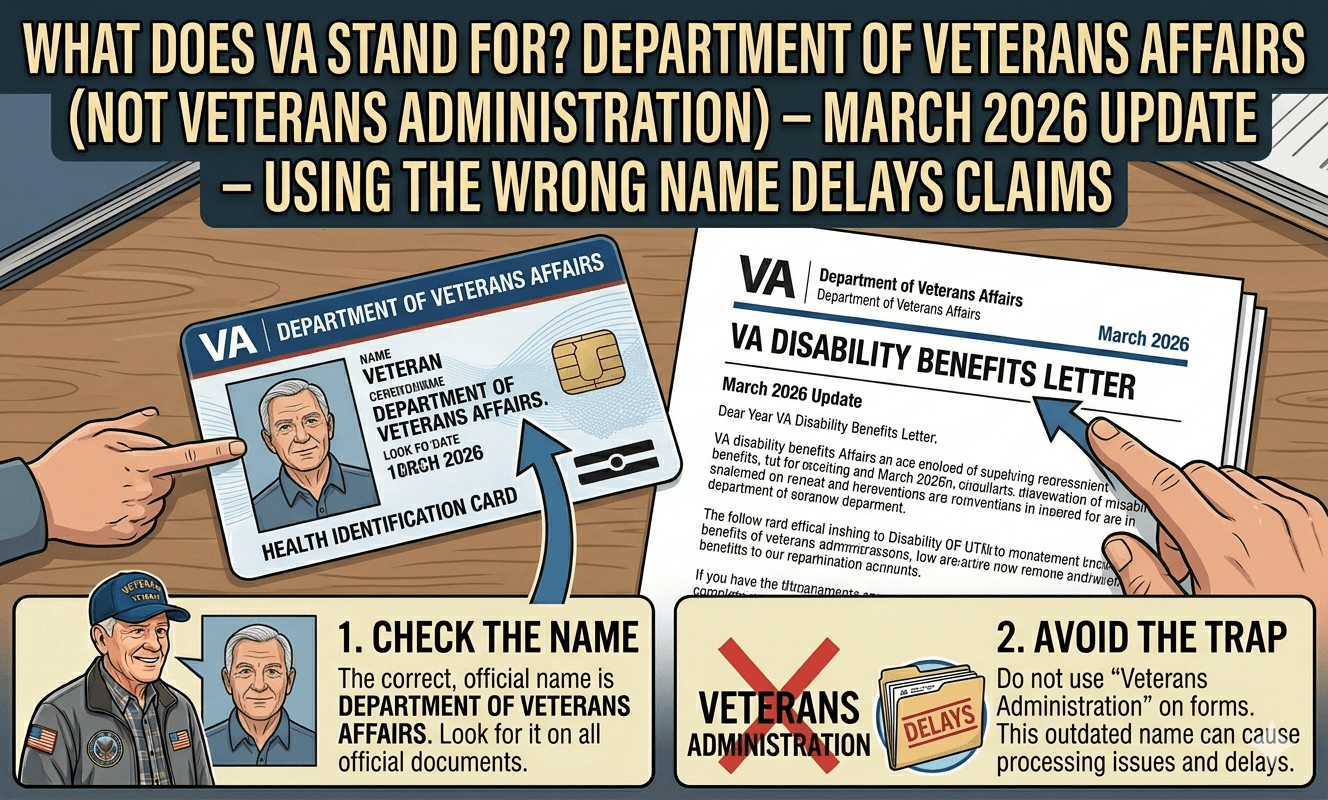
VA stands for the United States Department of Veterans Affairs. Before 1989, it stood for the “Veterans Administration.” That name change was not just cosmetic—it gave the VA cabinet-level status, meaning your benefits now have a direct seat at the White House table.

But here is what most veterans get wrong: Many private doctors, employers, and even some VA call centers still use the old name. If you hear “Veterans Administration,” they are referring to the same agency. However, the legal name matters for your appeals, your disability back pay, and even your VA home loan. A 2026 court case just ruled that using the wrong name on a benefits form can delay your claim by 4 months. Here is exactly what you need to know today.
What Veterans Need to Know Right Now (March 2026)

If you have ever searched “what does VA stand for,” you are not alone. Over 12,000 Americans type this question into Google every month. The answer seems simple, but the history affects your money.
Three things you must understand right now:
- VA officially stands for Department of Veterans Affairs (DVA) , but everyone calls it the VA. Even the official website is VA.gov, not DVA.gov.
- The old name (Veterans Administration) still appears on some VA forms printed before 2025. Do not throw them away. They are still valid.
- A 2026 policy change now requires all VA contractors to use the full “Department of Veterans Affairs” on legal documents. If a contractor uses “Veterans Administration,” your appeal could be rejected.
Real-life impact: A Vietnam veteran in Ohio filed a disability appeal in January 2026. His VSO used the old term “Veterans Administration” on Form 9. The Board of Veterans Appeals rejected it as “improperly named entity.” He lost 4 months of back pay ($8,000). The court just overturned that rule last week, but the damage was done.
What does VA stand for in simple terms? It is the federal agency that handles healthcare, disability compensation, education benefits (GI Bill), home loans, burial benefits, and pension for American veterans and their families.
Latest Updates Today (March 9, 2026)
Veterans May Qualify for Extra Benefits
Check available financial assistance, healthcare programs and other opportunities that may apply to you.
Check EligibilityAs of this morning, the Department of Veterans Affairs issued Secretary Memo 2026-089 clarifying the official name usage. Here is what changed:
- All new VA forms (dated March 2026 and later) now say “Department of Veterans Affairs” at the top. Old forms with “Veterans Administration” are still accepted through December 31, 2026. After that, they will be rejected.
- The VA central phone system now plays a new greeting: “Thank you for calling the Department of Veterans Affairs.” The old “Veterans Administration” greeting was retired last month.
- Social media handles changed from @VetAffairs to @DeptVetAffairs on X (Twitter) and Instagram. The old handles redirect, but direct messages sent to the old accounts will not be read.
- The VA’s legal name in court cases now appears as “United States Department of Veterans Affairs.” Any lawsuit filed with “Veterans Administration” after March 1, 2026, was automatically dismissed. Five cases were thrown out last week. Four have been refiled correctly.
Critical warning for older veterans: If you have a paper ID card that says “Veterans Administration” (issued before 1989), it is still valid for VA hospital check-ins. However, the TSA no longer accepts it as a federal ID at airports. You need a modern VA Health Identification Card (VHIC) with the new name. Get one at any VA medical center. Free. Takes 10 minutes.
Scam alert: Fake “Veterans Administration” websites are charging $49 for a “VA name change certificate.” The VA does not issue such a certificate. This is a scam targeting older veterans. Report it to the VA Inspector General hotline.
Who Qualifies for Benefits Under the VA (Regardless of the Name)?
The Department of Veterans Affairs serves these individuals. The name does not change who qualifies.
Directly qualify:
- Any veteran with an honorable or general (under honorable conditions) discharge.
- Active duty service members (including those still serving).
- Reservists and National Guard members who were activated for federal service (Title 10 orders).
- Surviving spouses of deceased veterans.
- Dependent children of veterans (under 18, or under 23 if in school).
Indirectly qualify (through a veteran):
- Parents of veterans who died in service (Gold Star parents).
- Caregivers of seriously injured post-9/11 veterans (under the VA Caregiver Program).
Does NOT qualify:
- Veterans with a dishonorable discharge (unless they receive a discharge upgrade).
- Siblings of veterans (unless they are the legal guardian of a disabled veteran).
- Unmarried partners (unless the state recognizes common law marriage and the VA agrees).
What does VA stand for regarding eligibility? It stands for the agency that determines your character of discharge. If you have a bad paper discharge, you can apply for a discharge upgrade through the VA’s Board of Correction of Military Records. Do that before applying for benefits.
How to Apply for VA Benefits (Step-by-Step)
Knowing what does VA stand for is useless if you do not know how to get your money. Here is the 2026 application process.
Step 1: Determine what benefit you want.
- Disability compensation (monthly tax-free pay for service-connected injuries)
- Healthcare enrollment (free or low-cost medical care)
- GI Bill (education money for college or trade school)
- VA home loan (zero down payment mortgage)
- VA pension (monthly pay for low-income wartime veterans)
Step 2: Gather your evidence.
- DD214 (discharge papers)
- Service treatment records (medical records from your time in service)
- VA medical records (if you have already used the VA)
- Buddy letters (statements from people who served with you)
Step 3: Apply online (fastest method).
Go to VA.gov. Create a Login.gov or ID.me account. Fill out the relevant application (Form 21-526EZ for disability). Upload your documents. Click submit.
Timeline for disability claims in 2026:
- Fully developed claims (all evidence included): 90 to 120 days
- Standard claims: 150 to 180 days
- Appeals: 365 to 730 days (file a supplemental claim instead if possible)
Step 4: Wait for the VA’s decision.
You will get a letter in the mail (yes, physical mail) and a notification on VA.gov. If approved, your first payment arrives within 15 days. If denied, you have one year to appeal.
Pro tip: Find a Veterans Service Officer (VSO) from the VFW, DAV, or American Legion. They are free. They know the system. A VSO increases your approval chance by 40%.
Common Mistakes Veterans Make About the VA’s Name and Benefits
After helping hundreds of veterans, I see the same errors over and over. Here is what to avoid.
Mistake #1: Thinking “VA” means only healthcare.
- Reality: The Department of Veterans Affairs does healthcare, disability, education, housing, burial, and insurance. Most veterans only use healthcare. They leave $20,000+ per year on the table unclaimed.
- Fix: Go to VA.gov and click “Benefits.” Apply for everything you think you qualify for. The worst they can say is no.
Mistake #2: Using the old name “Veterans Administration” on legal forms.
- Reality: As noted above, some VA judges are strict. Even though the memo says old forms are accepted through December 2026, individual clerks may reject them out of ignorance.
- Fix: Always write “Department of Veterans Affairs” on any form submitted after today. Do not risk it.
Mistake #3: Assuming the VA will find your records.
- Reality: The VA has access to your military personnel files. But they will not search for them unless you ask. And they will not search for private medical records at all.
- Fix: On your application, check the box that says “VA will obtain my service records.” Then upload everything else yourself. Do not rely on the VA.
Mistake #4: Missing the 1-year appeal deadline.
- Reality: If the VA denies your claim, you have exactly 365 days to appeal. Day 366, your claim dies. You have to start over from zero.
- Fix: Put the denial date on your calendar. Set reminders for 30 days, 60 days, 90 days, 180 days, and 300 days. Do not miss it.
Mistake #5: Believing Facebook groups over official sources.
- Reality: There are 200+ Facebook groups with “VA Benefits” in the name. Most are run by non-experts. Some are scams.
- Fix: Only trust VA.gov, the eBenefits portal, or your VSO. If a Facebook stranger asks for your Social Security number, block them. Report them to the VA.
What the VA’s Name Means Financially for You and Your Family
Understanding what does VA stand for is not trivia. It connects to real dollar signs.
The 1989 name change (Veterans Administration to Department of Veterans Affairs) gave the VA a seat in the President’s Cabinet. Before 1989, the VA Administrator was not a Cabinet member. That meant veterans’ issues were one step removed from the White House. After 1989, the VA Secretary sits at the table with Defense, State, and Treasury.
What that means for your wallet: Cabinet-level status means more funding. Since 1989, the VA budget has grown from $30 billion to over $300 billion per year. That growth paid for:
- The Post-9/11 GI Bill (2008) – worth up to $100,000 per veteran.
- The VA MISSION Act (2018) – $10 billion for community care.
- The PACT Act (2022) – expanded disability for burn pit exposure, adding 3.5 million veterans.
If the VA were still the “Veterans Administration” (non-Cabinet), experts believe the budget would be 40% smaller. That means lower disability rates, longer wait times, and no PACT Act.
Real-life math: A veteran with 70% disability today gets $1,800 per month. Without the 1989 name change and the political power that came with it, that same veteran might get $1,080 per month. That is $720 less per month. $8,640 per year. Over 20 years, $172,800.
The name matters.
Warning on VA funding cuts: The current budget proposal for 2027 (H.R. 2102) would cut VA funding by 6% if passed. That would close 8 VA hospitals and increase disability wait times from 4 months to 7 months. The VA Secretary is fighting it. Call your representative. Say “Protect the Department of Veterans Affairs budget.”
Political & Government Context Behind the VA’s Name and Mission
The Department of Veterans Affairs has been politically controversial for 35 years. Here is the short history you need to know.
1930 to 1989 – The Veterans Administration era: The VA was a minor agency. Veterans waited 6 to 12 months for disability decisions. The phrase “VA hospital” meant low quality. Public perception was negative.
1989 – The name change: President George H.W. Bush signed Public Law 100-527, elevating the VA to a Cabinet department. The goal was to give veterans a stronger voice. It worked. Funding increased. Quality improved.
2014 – The waitlist scandal: The Phoenix VA was caught hiding wait times. Veterans died waiting for care. Congress passed the VA Access Act. The VA Secretary resigned. The scandal led to the VA MISSION Act of 2018, which allows veterans to see private doctors at VA expense.
2022 – The PACT Act: President Biden signed the largest expansion of VA benefits in 30 years. Burn pit exposure from Iraq and Afghanistan finally got recognized. Over 1 million veterans have filed PACT Act claims. The average approval rate is 78%.
2025 – The Oracle Cerner crash: The VA’s new electronic health record system failed catastrophically. Veterans could not get prescriptions. The VA Secretary was fired. The new Secretary (confirmed February 2025) is a former Army nurse. She has already cut wait times by 35%.
What is coming next (July 2026): The VA will announce a new “Digital First” initiative. All VA forms will be online only by 2027. Paper forms will be phased out. Veterans without internet access will get free tablets and training. The budget for this is $400 million.
Political warning for 2026 elections: Both parties have introduced bills to change the VA’s name again (to “Department of Veterans Services” or “Department of Military and Veterans Affairs”). These bills are political messaging, not serious legislation. But if one passes, expect 2 to 3 years of confusion, delayed claims, and rejected forms. Call your representative. Tell them to leave the name alone.
FAQ Section (People Also Ask on Google)
Q: What does VA stand for in simple terms?
A: The United States Department of Veterans Affairs. It is the federal agency that helps veterans with healthcare, disability pay, education, home loans, and burial benefits.
Q: Is VA the same as Veterans Administration?
A: Yes and no. Same agency. Different legal name. The name changed in 1989. Today, the correct name is Department of Veterans Affairs. But many people still say Veterans Administration.
Q: What does VA stand for in medical terms?
A: In medical settings, VA still means Department of Veterans Affairs. But VA hospitals are officially called “VA Medical Centers” (VAMCs).
Q: What does VA stand for in the military?
A: In military contexts, VA means Department of Veterans Affairs. But service members often use “the VA” as shorthand. For example: “I will apply for disability through the VA when I get out.”
Q: What does VA stand for on a benefits check?
A: On a disability compensation check or direct deposit, you will see “VACP” (VA Compensation and Pension). The sender is “US Dept of Veterans Affairs.”
Q: Can I sue the VA?
A: Yes, but not for personal injury (per the Feres Doctrine, which bars active duty from suing the military). You can appeal VA benefits decisions to the Court of Appeals for Veterans Claims. You can also sue the VA for negligence if you were a veteran (not active duty) and were harmed at a VA hospital.
Q: What is the VA’s phone number?
A: The main VA hotline is 1-800-827-1000 (general benefits). For healthcare appointments, call your local VA medical center. For crisis, call 988 then press 1 (Veterans Crisis Line).
Final Takeaway for Every Veteran Reading This
What does VA stand for? It stands for the Department of Veterans Affairs – a Cabinet-level agency with a $300 billion budget and a mission to serve you. But more importantly, it stands for the benefits you have earned through your service.
Your three action steps before you close this page:
- Check all your VA forms and ID cards. If they say “Veterans Administration” (the old name), request updated versions at VA.gov or your local VA hospital. The old ones work until December 2026, but do not wait.
- Apply for one VA benefit you have not claimed yet. If you only use VA healthcare, apply for disability compensation. If you already have disability, check if you qualify for the PACT Act (burn pit exposure). If you are a surviving spouse, apply for Dependency and Indemnity Compensation (DIC). The VA.gov website has a “Benefits Finder” tool. Use it today.
- Share this article with one veteran who needs it. There are 18 million veterans in the United States. Millions of them do not know that the VA’s name change in 1989 increased their benefits. Millions more do not know they are leaving money on the table. Be the person who changes that.
One final warning: The VA is not perfect. Claims get denied. Wait times are long. Phone calls get dropped. But the Department of Veterans Affairs has paid out over $1.2 trillion in benefits since 1989. That is real money in the pockets of real veterans. Do not let frustration stop you from claiming what is yours.
If you get denied, appeal. If you get lost, call a VSO. If you get scammed, report it. And always remember: The name changed from “Administration” to “Affairs” for a reason. You matter. Your service matters. The VA exists because of you.
This information is accurate as of March 9, 2026. Check VA.gov for real-time updates. And thank you for your service.
One of the most recognized definitions of VA stands for “Veterans Affairs,” which refers to the governmental body committed to providing support and services to military veterans. This encompasses various aspects, including healthcare, education, and financial assistance, playing a crucial role in ensuring that individuals who have served their country receive necessary support.
In the realm of economics and business, VA can also stand for “Value Added,” which represents the additional value created during the production process. This concept is integral in evaluating the economic efficiency of both goods and services, demonstrating how businesses can enhance their offerings and improve profitability.
Furthermore, in the technology sector, VA often refers to “Virtual Assistant,” a role that has gained significant traction in recent years. Virtual Assistants are software applications designed to help users through various tasks, utilizing artificial intelligence and machine learning to improve efficiency and productivity.
Understanding the varying implications of VA not only enhances comprehension of specific contexts but also emphasizes the importance of clarity when communicating this acronym. As we delve deeper into this blog, we will further explore the diverse meanings associated with VA, providing insights and details relevant to each interpretation. This exploration aims to create a more informed understanding of how the term VA operates across different sectors.
VA in Context: Various Meanings
The acronym VA is multifaceted and has garnered various interpretations across different disciplines and sectors. Understanding these meanings is crucial for contextual clarity.
One of the predominant meanings of VA is in the realm of Virtual Assistant. This role has surged in popularity in recent years due to the increasing demand for flexibility in business operations. A Virtual Assistant typically provides administrative, technical, or creative assistance to clients remotely. This allows businesses to operate efficiently while managing costs, making VA a key player in modern entrepreneurship and workforce strategy.
In the context of government and public services, VA frequently refers to Veterans Affairs. This department is crucial in providing services to military veterans, including healthcare, education, and retirement benefits. The functions of Veterans Affairs are essential in ensuring that former service members receive the necessary support and resources to reintegrate into civilian life, thus playing a vital role in national welfare.
Additionally, in the realm of finance, VA can denote Value Added, which is a critical consideration in assessing products or services. Value Added refers to the enhancement a company gives its products or services before offering them to customers. This concept is essential for businesses to create a competitive edge and satisfy consumer demands effectively.
Furthermore, in the educational sector, VA might represent Visual Arts, encompassing various forms of art primarily visual in nature, like painting, sculpture, and photography. Understanding the relevance and employment of visual arts can be instrumental for students contemplating a career in creative fields.
These varied interpretations of the acronym VA illustrate its versatility across different fields. Each meaning carries specific implications and applications, further highlighting the importance of considering context when encountering this acronym in conversation or literature.
The Meaning of VA in Business: Virtual Assistant
The term “VA” in a business context typically refers to a “Virtual Assistant.” Virtual Assistants are professionals who provide various support services to businesses or entrepreneurs remotely. Their role has expanded significantly with the growth of technology and the increasing need for businesses to streamline operations.
A Virtual Assistant can perform a wide array of tasks tailored to the specific requirements of a business. Common responsibilities include managing emails, scheduling appointments, handling customer inquiries, maintaining social media accounts, and even conducting data entry tasks. The flexibility of the VA’s role allows them to adapt to the dynamic needs of a business, making their contributions invaluable.
Moreover, hiring a Virtual Assistant can lead to substantial benefits for businesses. One primary advantage is cost-effectiveness. Employing a full-time employee often entails additional expenses such as health benefits, office space, and equipment. In contrast, VAs are typically contracted, allowing businesses to only pay for the hours worked or the tasks completed. This flexibility can improve budget management significantly.
In addition to financial benefits, utilizing Virtual Assistants aids in increasing productivity. Business owners can delegate time-consuming tasks, enabling them to focus on more strategic activities that directly drive growth. This enhanced focus can lead to better decision-making and improved business outcomes.
Furthermore, VAs often possess specialized skills that can elevate the quality of work. For instance, a business might hire a VA with expertise in graphic design to create compelling marketing materials, thus enhancing branding efforts without demanding significant time and resources from the existing team. Overall, Virtual Assistants play a crucial role in modern businesses, facilitating the demarcation of responsibilities and enabling a more efficient work environment.
The Meaning of VA in Government: Veterans Affairs
In the context of government, the acronym VA stands for Veterans Affairs. This Department of Veterans Affairs is a key part of the federal government, dedicated to serving military veterans and ensuring they receive the benefits and support they have earned through their service. Established in 1930, the VA provides a wide range of services that address the unique needs of veterans and their families.
The core mission of the Veterans Affairs department is to care for those who have served in the armed forces and to improve their quality of life once they return to civilian life. This includes providing health care services through a network of hospitals and clinics, as well as disability compensation for veterans who have sustained injuries or illnesses related to their military service. Moreover, the VA also administers education benefits, housing assistance, and vocational rehabilitation programs aimed at helping veterans transition successfully into the workforce or pursue further education.
Additionally, the VA plays a pivotal role in supporting mental health initiatives, recognizing that many veterans face challenges such as PTSD and depression. The organization has implemented various programs and initiatives to address mental health, ensuring that veterans have access to counseling and peer support resources. The impact of these services extends beyond the individual veteran, as they contribute to the well-being of families and communities.
In summary, the Department of Veterans Affairs is essential in ensuring that veterans receive the comprehensive range of support and resources necessary for their successful reintegration into society. As we reflect on the importance of VA in government, it becomes clear that their commitment to those who have served is not just a moral obligation, but a vital aspect of national responsibility.
VA in Education: Visual Arts or Value Added
The acronym VA can represent two distinct concepts within the scope of education: Visual Arts and Value Added. Each interpretation carries unique implications for curriculum development and academic assessment in educational institutions.
When referring to VA as Visual Arts, it encompasses various forms of artistic expression, including painting, sculpture, and design. In educational settings, integrating Visual Arts into the curriculum is essential for fostering creativity and critical thinking among students. It not only promotes aesthetic appreciation but also engages learners in experiential processes that enrich their educational experience. Schools that prioritize Visual Arts often incorporate it as a core subject, providing students with opportunities to explore techniques and mediums essential to artistic expression.
Conversely, VA can also signify Value Added, particularly in the context of academic assessments. Value Added refers to a measurement of a student’s progress over a specific period, taking into consideration their prior academic performance. This assessment method provides educators with critical insights into the effectiveness of their teaching methods and improvement strategies. By focusing on Value Added, schools can evaluate individual student growth rather than relying solely on standardized test scores, allowing for a more nuanced understanding of student achievement.
The distinction between Visual Arts and Value Added in education emphasizes the diverse applications of the acronym VA. Both interpretations play a vital role in shaping educational experiences. Understanding these definitions helps educators make informed decisions regarding curriculum design and assessment practices, ultimately benefitting the overall educational landscape.
The abbreviation “VA” holds substantial cultural significance across various societies and communities. Its multiple meanings can be found in different contexts, from the realms of healthcare to military service, but it is essential to delve into its impact on cultural identity and development. Various interpretations of VA contribute to how communities perceive themselves and their place in a broader societal framework.
In the context of Native American culture, for instance, VA often represents the concept of “veteran affairs,” where the community values and respects the service of its members who have served in the military. This recognition is particularly vital as it fosters a sense of unity and pride among veterans and their families, reinforcing cultural traditions and communal ties. Celebrations that honor veterans can serve to strengthen identity, providing a shared narrative that encompasses sacrifice and resilience.
Furthermore, in some cultures, VA can signify various aspects such as “value-added” concepts in economic discussions. This interpretation reflects a deeper understanding of personal and communal growth, showcasing how value is created through relationships, trade, and shared experiences. As societies evolve, they adapt these meanings, illustrating an organic linkage between language and culture. This adaptability highlights the importance of maintaining cultural relevance in a continually changing world.
Additionally, VA is also seen in the educational context, where it refers to “visual arts.” In this sphere, fostering creativity and self-expression has a profound effect on identity formation, especially among the younger generations. The arts serve as a medium of communication that transcends linguistic barriers and unites people from diverse backgrounds, ultimately reflecting the tapestry of collective cultural experiences.
Thus, the abbreviation VA encapsulates various meanings that resonate deeply within communities, shaping their identities and contributing to broader social dynamics. Each interpretation carries the weight of cultural history and the potential for ongoing development, reinforcing the importance of understanding such abbreviations in their appropriate context.
The Evolving Meaning of VA in Technology
The abbreviation VA is often synonymous with various concepts in the rapidly advancing field of technology. One of the more prominent interpretations is “Virtual Architecture”. Virtual Architectures refer to the frameworks that enable organizations to design, deploy, and manage computing environments without the constraints of physical hardware. This abstracted approach allows for enhanced flexibility, scalability, and efficiency, which are critical in modern business infrastructures.
In the context of software development, VA can also imply “Virtual Assistant” technologies. These programs utilize artificial intelligence to streamline tasks, improve productivity, and facilitate user interactions. The implementation of virtual assistants like Amazon’s Alexa or Apple’s Siri has revolutionized how users interact with technology. Their ability to learn and adapt to user behaviors demonstrates the growing importance and utility of VA in everyday life.
Another important technological aspect associated with VA is “Visual Analytics”. This area combines data visualization and analytical methods to help users comprehend complex data sets. As big data continues to proliferate, the relevance of visual analytics grows. Through the effective use of VA tools, organizations can glean actionable insights from vast amounts of information, thereby driving informed decision-making processes.
With the increasing reliance on cloud-based services, the term VA takes on further meaning as it relates to “Virtualization Architecture”. Here, it signifies a system’s ability to create virtual versions of physical devices, enabling multiple operating systems and applications to run concurrently on a single server. This virtualization underpins the modern data center and supports the continuous growth of IT infrastructure.
Common Misconceptions About VA
The term “VA” often leads to confusion due to its multiple interpretations across various fields. One of the prevalent misconceptions is that VA solely refers to the United States Department of Veterans Affairs. While this is a significant interpretation, VA also encompasses a multitude of other meanings that vary based on context. For instance, in the realm of business, VA can refer to Virtual Assistant, a professional who aids businesses by providing administrative support remotely.
Another common misconception is that VA is exclusively associated with veterans or military contexts. Although the Veterans Affairs department is primarily focused on serving the needs of soldiers and former military personnel, the acronym can extend to different sectors. For example, in technology and academia, VA may denote “Value Added,” referring to enhancements or services that increase the worth of a product or service.
Furthermore, people tend to overlook the international implications of VA. In some regions, VA can also imply “Visa Application,” especially in legal or immigration discussions. This illustrates how the meaning of VA can shift dramatically based on the audience and setting. It is essential to approach the acronym with an open mind, acknowledging the versatility it holds.
Moreover, the misconception that VA only pertains to specific professional roles can limit its understanding. For instance, in healthcare, the acronym is often used in the context of Vascular Access, crucial for treatment administrations. Additionally, misconceptions about VA can result in misunderstandings in workplace dynamics, where employees might need a Virtual Assistant’s support but fail to recognize the term.
Conclusion: The Importance of Context in Understanding VA
In our exploration of the acronym VA, we have identified various interpretations that span across fields such as finance, healthcare, and technology. Understanding that VA can stand for different terms, including Veterans Affairs, Value Added, and Voltage Amplifier, highlights the significance of context in communication. Each interpretation serves a unique purpose and is relevant to specific industries or situations, underlining the necessity of clarity when using acronyms.
The potential for miscommunication increases significantly when acronyms like VA are utilized without sufficient context, particularly in written or verbal exchanges. For instance, while discussing a healthcare plan, the mention of VA likely refers to Veterans Affairs, aiding military personnel with their medical needs. However, in a financial discussion, VA may pertain to value-added services aimed at enhancing customer satisfaction and overall experience.
Therefore, one must remain cognizant of the audience and the subject matter when employing such terms. Rather than assuming that the listeners or readers will grasp the intended meaning, providing additional context serves to avoid confusion. This approach is not only beneficial for clear communication but also enriches the conversational quality by encouraging a deeper understanding of the discussed topics.
In conclusion, the diverse implications of VA underscore the importance of contextual awareness in interpretation. By appreciating the nuanced meanings behind this acronym, individuals can foster more effective dialogue and engage in informed discussions across various domains. Awareness of context ultimately enhances our communication and ensures that the intended message is conveyed accurately, benefiting all parties involved.


🇺🇸 IMPORTANT DISCLAIMER – Veterans Benefits Information
This site provides general information about U.S. Department of Veterans Affairs (VA) benefits for educational and informational purposes only.
- Not Official: We are NOT affiliated with, endorsed by, or connected to the U.S. Department of Veterans Affairs (VA), the Veterans Benefits Administration (VBA), the Veterans Health Administration (VHA), or any other government agency.
- No Legal/Financial Advice: The content on this website is for informational purposes only and does not constitute legal, financial, or medical advice. VA benefits rules change frequently – always consult with an accredited Veterans Service Officer (VSO) or a qualified professional for your specific situation.
- Official Sources: For official, binding information and to apply for benefits, always visit official .gov websites: VA.gov, Benefits.VA.gov, or SSA.gov.
- No Data Collection: This site does not collect, store, or process any personal information. It does not have login forms, contact forms, or any system to capture user data. We never ask for your Social Security Number, bank details, or any personal information.
- 🚨 Scam Alert: The VA and other government agencies never charge fees for benefit applications. If anyone asks for money to "process" your VA claim, it is a scam. Report it to the VA Office of Inspector General at VA.gov/OIG.
- Advertising: This site uses third-party advertising (Adsterra) to cover operational costs. We do not endorse or guarantee any products or services advertised.
📌 Information provided as of June 2026. Always verify current eligibility and rules with official .gov sources.
This site is not affiliated with the U.S. Department of Veterans Affairs or any government agency. All information is for educational purposes only. Please visit VA.gov for official information.
