
Understanding Veteran Disability Benefits
Veteran disability benefits are crucial financial support systems established to assist those who have served in the military and have sustained injuries or illnesses due to their service. These benefits can significantly improve the quality of life for veterans, providing them with the necessary resources to manage their health care and improve their overall well-being.
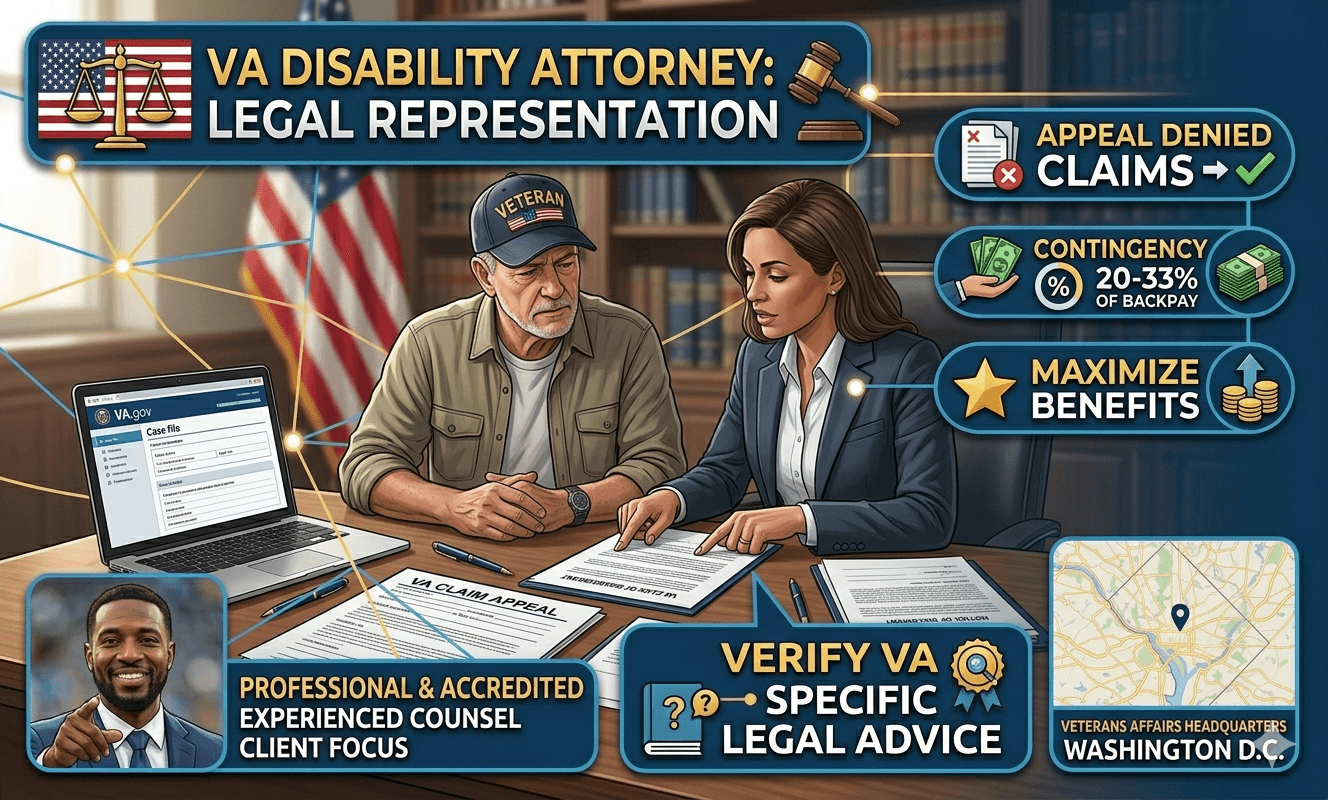
Yes, you can hire a veteran disability attorney to help with your VA claim—but only after the VA makes an initial decision on your case. By law, attorneys cannot charge you for filing an initial claim. They only get paid if you win an appeal, and the fee is typically 20-33% of your backpay .

Here is what changed in 2026: The VA just released unprecedented data showing it paid accredited attorneys and agents nearly $400 million in 2025 from veteran backpay . That money came out of veterans’ pockets before they ever saw a dime. Before you hire anyone, you need to understand exactly how this works—and when you are better off using a free Veterans Service Organization (VSO).

This guide breaks down when you need a lawyer, what it costs, and how to avoid getting ripped off.
What Veterans Need to Know Right Now
The VA disability claims process is brutal. The average wait time for a decision is months. Denial rates are high. And the rules are written in language that confuses even experienced advocates.
But here is the truth most veterans do not know: You probably do not need a lawyer for your initial claim.
The VA only allows three types of representatives to help you:
- Accredited Veterans Service Organization (VSO) representatives (free)
- Accredited attorneys (paid, typically only on appeals)
- Accredited claims agents (paid, similar to attorneys)
Veterans May Qualify for Extra Benefits
Check available financial assistance, healthcare programs and other opportunities that may apply to you.
Check EligibilityVSOs like the DAV, VFW, and American Legion have representatives in every VA regional office. Their services cost you nothing. They are funded by donations and grants. And they handle thousands of claims every year.
So when do you actually need a lawyer? When the VA denies you.
Real-life example: Army veteran Mark filed for sleep apnea connected to his service. His VSO helped him file the initial claim. The VA denied it, saying there was no “nexus” (link) between his service and his condition. Mark hired an accredited attorney. The attorney found a medical expert to write a nexus letter, submitted a Supplemental Claim, and won. Mark got $40,000 in backpay. The attorney took 30% ($12,000). Mark kept $28,000 he would not have gotten otherwise .
That is the math veterans need to understand.
Latest Updates Today (May 2026)
Here is what is new in the world of veteran disability attorneys:
VA fee data now public (January 2026) : The VA started publishing monthly attorney fee reports. The numbers are eye-opening:
- Last 12 months (as of March 2026): $396.8 million paid to attorneys and agents
- Monthly average: $33.1 million
- March 2026 alone: $26.5 million
- February 2026: $29.7 million
New Jersey pro bono law (effective July 1, 2026) : New Jersey just passed a bill requiring the state to contract with law firms to provide free appellate representation to disabled veterans with a net worth under $2 million. If you are a New Jersey veteran and the Board of Veterans Appeals denies you, you may qualify for free legal help at the Court of Appeals for Veterans Claims .
The 20% cap rule: By law, VA-accredited attorneys cannot charge more than 20% of your backpay for representation at the agency level. However, some law firms charge up to 33 1/3% . The VA considers anything over 33 1/3% “unreasonable.” Always ask for the exact percentage in writing before signing anything.
Warning about the fee cap loophole: The 20% cap applies to fees VA withholds from your backpay. But some attorneys ask veterans to pay directly, which is not subject to the same cap. The VA recommends veterans use the withholding system so the fee is automatically capped at 20% . If an attorney asks you to pay directly, ask why.
Who Qualifies to Hire a Veteran Disability Attorney
Here are the eligibility rules you need to know:
You can hire an attorney if:
- The VA has made an initial decision on your claim (approval or denial)
- You have filed a Notice of Disagreement (appeal)
- Your claim is at the Supplemental Claim, Higher-Level Review, or Board of Veterans Appeals level
- You have been denied multiple times and need to go to the Court of Appeals for Veterans Claims
You CANNOT hire an attorney to charge you for:
- Filing your initial claim (this is illegal under VA rules)
- Helping you gather evidence before you file (some attorneys do this for free to build a relationship, but they cannot charge)
- Any service before the VA makes a decision
The accreditation requirement: The person helping you must be VA-accredited. You can verify anyone’s accreditation on the VA’s Office of General Counsel website. Do not hire anyone who is not accredited. They cannot legally help you, and they may be scamming you .
Who can be accredited:
- Attorneys (must pass a background check and VA exam)
- Claims agents (non-attorney professionals who pass the VA exam)
- VSO representatives (trained volunteers and employees of service organizations)
How to Find and Hire a Veteran Disability Attorney (Step-by-Step)
If you have been denied and you are ready to hire a lawyer, follow these steps.
Step 1: Get your denial letter
The VA sends a rating decision letter explaining why they denied you. This letter is your roadmap. It tells you exactly what evidence is missing. An attorney needs this to evaluate your case.
Step 2: Search for VA-accredited attorneys
Use these resources:
- VA Office of General Counsel’s accreditation search (official list)
- National Organization of Veterans’ Advocates (NOVA) directory
- Word of mouth from other veterans in your community
Step 3: Interview at least three attorneys
Ask every potential attorney these questions:
- “What percentage of your practice is VA disability law?” (You want someone who does this full-time, not a general practice lawyer dabbling in VA cases)
- “What is your fee percentage?” (Should be 20-33% of backpay, never more)
- “Do you use the VA fee withholding system?” (Yes is the right answer)
- “How many cases like mine have you won?”
- “Who will actually work on my case?” (Some firms assign junior attorneys or paralegals)
Step 4: Sign a fee agreement
The VA requires a written fee agreement. Read it carefully. It should state:
- The exact percentage the attorney will take
- That the fee comes from past-due benefits only (not future benefits)
- That VA must approve the fee
- That you can fire the attorney at any time
Step 5: File VA Form 21-22a (Appointment of Representative)
This form officially appoints your attorney as your representative. The VA will only talk to your attorney after you file this form. Keep a copy for your records.
Step 6: Let your attorney work
Once appointed, your attorney will:
- Request your complete VA claims file (called the “C-file”)
- Review the file for errors
- Gather additional evidence (medical records, buddy statements, nexus letters)
- Submit appeals to the appropriate level (Supplemental Claim, Higher-Level Review, or Board)
Veteran Disability Attorney vs. VSO: Which One Do You Need?
This is the most important decision you will make. Choose wrong and you waste time or money.
Use a Free VSO For:
| Situation | Why |
|---|---|
| Your first-time claim | VSOs are free and experienced with initial filings |
| A straightforward claim (PTSD, hearing loss, knee injury) | These claims have clear evidence requirements |
| You are organized and have your medical records | VSOs can help you submit without legal complexity |
| You just need someone to check your work | VSOs can review your application before submission |
Hire an Attorney For:
| Situation | Why |
|---|---|
| The VA denied you (any denial) | Attorneys know the appeal rules and deadlines |
| Your claim is complex (multiple conditions, toxic exposure, MST) | These require expert medical opinions and legal arguments |
| You have been fighting the VA for years | Attorneys have resources VSOs lack |
| You need to go to the Court of Appeals for Veterans Claims | VSOs cannot practice in federal court |
| The VA keeps losing your paperwork | Attorneys have legal tools to force the VA to respond |
The Hard Truth About VSOs
VSO representatives are well-meaning. They serve veterans honorably. But they are overwhelmed. The average VSO representative handles more than 1,000 claims at any one time . They do not have the bandwidth to give your case individual attention.
Attorneys, by contrast, typically handle 50-100 active cases. They can spend hours on your file. They can argue legal nuances that VSOs miss.
But: Attorneys are expensive. VSOs are free. For an initial claim that is likely to be approved, use the VSO. For a denied claim that has been dragging on for years, hire the attorney.
Common Mistakes Veterans Make (That Cost Them Money)
These mistakes cost veterans real money and years of delays.
Mistake #1: Hiring an attorney for an initial claim
The cost: An attorney cannot charge you for this. But if you hire one anyway, they may find creative ways to bill you. Avoid this entirely. Use a VSO for initial claims.
Mistake #2: Not checking accreditation
The cost: You could hire a non-accredited “consultant” who cannot legally represent you. They take your money and disappear. Always verify accreditation on VA.gov.
Mistake #3: Signing a fee agreement without reading it
The cost: Some fee agreements include hidden language about “administrative fees” or “case expenses” that are not subject to the 20% cap. You could end up paying 40-50% of your backpay in total.
Fix: Ask the attorney to explain every single line of the fee agreement. If they refuse or get defensive, walk away.
Mistake #4: Waiting too long to appeal
The cost: You have one year from the date of your denial letter to file a Notice of Disagreement. Miss this deadline, and you lose your right to appeal. You have to start over with a new claim, losing years of potential backpay.
Fix: As soon as you get a denial, mark your calendar. Set a reminder for 10 months. Do not wait until the last week.
Mistake #5: Firing your VSO too early
The cost: Some veterans hear “you should get a lawyer” and immediately fire their VSO. But a VSO can help you through the first denial. Many cases are won at the Supplemental Claim or Higher-Level Review level without an attorney. Only fire your VSO if the case gets truly complex or goes to the Board.
Mistake #6: Not understanding the difference between backpay and future benefits
The cost: Your attorney takes a percentage of BACKPAY only. Future monthly benefits go entirely to you. Some attorneys try to structure fees as a percentage of all future benefits. That is illegal under VA rules. Walk away from any attorney who suggests this.
What This Means Financially (Real Dollar Examples)
Let us get specific about what hiring an attorney actually costs you.
Scenario 1: Low-dollar claim
- Condition: Tinnitus (10% rating)
- Monthly benefit: $171.23 (2026 rate for 10% alone, no dependents)
- Backpay for 2 years: Approximately $4,109
- Attorney fee at 20%: $822
- Attorney fee at 33%: $1,356
- Verdict: For a small claim like tinnitus, the math rarely justifies an attorney. Use a VSO.
Scenario 2: Mid-range claim
- Condition: PTSD rated at 50%
- Monthly benefit: $1,075 (50% with spouse)
- Backpay for 3 years: Approximately $38,700
- Attorney fee at 20%: $7,740
- Attorney fee at 30%: $11,610
- Verdict: An attorney may be worth it here, especially if the VA denied you initially and the case is complex. You keep $27,000-$31,000 after fees.
Scenario 3: High-dollar claim
- Condition: TDIU (Total Disability Individual Unemployability) rated at 100%
- Monthly benefit: $3,737 (100% with spouse)
- Backpay for 5 years: Approximately $224,220
- Attorney fee at 20%: $44,844
- Attorney fee at 30%: $67,266
- Verdict: This is where attorneys earn their keep. A good attorney can mean the difference between a denial and $224,000. Even after paying $45,000-$67,000 in fees, you walk away with $157,000-$179,000 you would not have had.
The big picture: In the last 12 months, the VA paid attorneys and agents $396.8 million from veteran backpay . That means veterans collectively received roughly $1.2-1.6 billion in backpay before fees (assuming 20-33% average fees). Attorneys are not the enemy. They are a tool. Use them when the math works.
Political and Government Context (What Is Changing)
Several developments affect veteran disability attorneys right now.
The VA transparency push (2026) : For the first time, the VA is publishing monthly attorney fee data by state and congressional district . This transparency is designed to help veterans see exactly how much money flows from their backpay to attorneys. Lawmakers want veterans to make informed choices.
New Jersey’s free legal program (effective July 1, 2026) : New Jersey just passed S4949, requiring the state to contract with law firms to provide free appellate representation to eligible disabled veterans . To qualify, veterans must have a net worth under $2 million and be appealing a Board of Veterans Appeals denial to the Court of Appeals for Veterans Claims.
This matters because: Other states are watching New Jersey. If this program succeeds, expect similar laws in New York, California, Illinois, and other states with large veteran populations. Free legal help for complex appeals could become a standard state benefit.
The accreditation backlog: The VA Office of General Counsel processes accreditation applications for attorneys and agents. As of early 2026, processing times have increased due to higher application volume. If you are considering becoming accredited, expect a 3-6 month wait.
Pending federal legislation: Several bills in Congress would expand attorney representation to earlier stages of the claims process. The VSO community opposes these bills (they want to keep initial claims free). Attorney groups support them. Watch for movement in late 2026.
FAQ (What Veterans Ask Google About Disability Attorneys)
Do I need a lawyer for VA disability?
No, not for initial claims. Use a free VSO first. Hire a lawyer only if the VA denies you and the case becomes complex .
How much does a VA disability lawyer cost?
Typically 20-33% of your backpay. By law, lawyers cannot charge for initial claims. They only get paid if you win an appeal .
Can a VA disability lawyer help me get 100%?
Yes, especially if the VA under-rated your condition or denied service connection incorrectly. Lawyers can gather medical evidence and argue for higher ratings .
What is the difference between a VSO and a VA disability lawyer?
VSOs are free and best for initial claims. Lawyers charge fees but have more legal training and resources for complex appeals. VSOs cannot represent you in federal court; lawyers can .
How do I find a VA-accredited attorney?
Search the VA Office of General Counsel’s accreditation database, check the NOVA directory, or ask for referrals from local VSOs .
Can a veteran disability lawyer help with TDIU?
Yes. TDIU (Total Disability Individual Unemployability) claims are often complex and benefit from legal representation, especially if the VA denied your initial claim .
How long does a VA disability appeal take with a lawyer?
Appeals can take 6 months to 3 years depending on the complexity and the appeal lane (Supplemental Claim, Higher-Level Review, or Board of Veterans Appeals). Lawyers cannot speed up the VA’s processing time, but they can help avoid mistakes that cause delays .
What is the VA fee withholding system?
The VA automatically withholds your attorney’s fee from your backpay before sending you the rest. The fee is capped at 20% of the withheld amount under this system. This is the safest way to pay your attorney .
Can I fire my VA disability lawyer?
Yes, at any time. You must file VA Form 21-22a to revoke their appointment. If you fire them before they win your case, they typically cannot collect a fee. Read your fee agreement for details.
What is the Court of Appeals for Veterans Claims?
The federal court that hears appeals from the Board of Veterans Appeals. Only VA-accredited attorneys can represent you here—VSOs cannot .
Red Flags: How to Avoid Veteran Disability Scams
Sadly, scams targeting disabled veterans are common. Watch for these warning signs.
Red Flag #1: “Guaranteed approval”
No one can guarantee VA approval. The VA denies valid claims all the time. Any attorney who guarantees approval is lying.
Red Flag #2: Upfront fees
VA-accredited attorneys cannot charge you for initial claims. Some scammers ask for “retainers” or “consultation fees.” Legitimate VA disability attorneys work on contingency (only paid if you win).
Red Flag #3: Pressure to sign immediately
Legitimate attorneys want you to read the fee agreement carefully. Scammers pressure you to sign without reading.
Red Flag #4: Not VA-accredited
Check accreditation before you sign anything. Unaccredited “consultants” have no legal standing to help you. They can take your money and disappear.
Red Flag #5: Promising to “expedite” your claim
No attorney can expedite your claim. The VA processes claims in order. Some scammers claim they have “inside connections.” They do not.
What to do if you are scammed: Report the person to the VA Office of General Counsel (202-461-7070) and your state’s bar association.
Final Takeaway (Actionable Summary)
Veteran disability attorneys are powerful allies—but only when you need them. Do not hire one for an initial claim. Use a free VSO first. If the VA denies you, then start looking for a lawyer.
Here is your action plan:
If you have NOT filed yet:
- Find your local VSO (DAV, VFW, American Legion)
- Bring your DD214 and medical records
- File your initial claim for free
- Wait for the VA’s decision
If you were JUST denied:
- Do not panic. You have one year to appeal.
- Get your denial letter and read it carefully.
- Decide if the denial was simple (missing evidence) or complex (legal error).
- For simple denials, try a Supplemental Claim with new evidence first. Use your VSO.
- For complex denials, start interviewing VA-accredited attorneys.
If you have been fighting the VA for years:
- Hire an accredited attorney today.
- Sign a fee agreement with a clear percentage (20-33% of backpay only).
- File VA Form 21-22a to appoint them.
- Let them work while you focus on your health and family.
If you are in New Jersey:
Check your eligibility for the new free appellate program effective July 1, 2026 . You may qualify for free representation at the Court of Appeals for Veterans Claims.
The VA system is broken in many ways. It is slow. It is confusing. It denies deserving veterans every single day. But you do not have to fight alone. Use the right tool for the right job: VSOs for initial claims, attorneys for complex appeals.
And never, ever pay for a service you could get for free.
Eligibility for these benefits typically depends on several factors, including the nature of the service-related condition, duration of service, and discharge status. Generally, veterans must have served in active military, naval, or air service and have a disability that is connected to their service. The Department of Veterans Affairs (VA) plays a pivotal role in adjudicating claims for disability benefits, ensuring that veterans receive fair evaluations based on criteria outlined in various regulations.
There are different types of veteran disability benefits available. The primary form is compensation benefits, which are monthly payments awarded based on the severity of the individual’s service-connected disabilities. Additionally, veterans may access disability pensions, which are designed for those with low income and who have a permanent and total disability, irrespective of service connection. Moreover, certain veterans may qualify for Vocational Rehabilitation and Employment (VR&E) services aimed at helping them transition into meaningful employment post-service.
Another noteworthy program is the Special Monthly Compensation (SMC), intended for veterans requiring special assistance due to the severity of their disabilities. Understanding the scope and nuances of these benefits is essential for veterans seeking help, as these resources can profoundly impact their lives. Adequate knowledge allows veterans to navigate the application process more effectively and secure the benefits they rightfully deserve.
The Role of a Veteran Disability Attorney
A veteran disability attorney plays a critical role in assisting veterans navigate the complexities of the claims process with the Department of Veterans Affairs (VA). Their primary function is to represent veterans seeking benefits due to service-related injuries or disabilities. This involves a comprehensive understanding of VA regulations, the evidence required for successful claims, and the various forms of support available to veterans.
When initiating a claim, veterans often face challenges such as gathering appropriate medical documentation and understanding the specific criteria that the VA utilizes to evaluate claims. A qualified veteran disability attorney provides guidance on how to effectively present evidence, ensuring that the claims are thoroughly substantiated. This initial phase is essential, as it sets the groundwork for a potential successful outcome.
On the other hand, the appeals process comes into play when a claim has been denied. The complexity of this stage can be daunting, as it involves a detailed review of the initial evidence and, often, the submission of additional documentation. A veteran disability attorney’s expertise is pivotal here, as they can help develop a strong argument for the appeal, address any weaknesses in the original claim, and present new evidence that may support the veteran’s case. In such instances, their experience can significantly affect the likelihood of a favorable outcome for the veteran.
Importantly, veterans should also consider the attorney’s accreditation. Engaging a properly certified veteran disability attorney ensures that they are well-versed in the particulars of veterans’ law. This can provide peace of mind, knowing their case is being handled by a professional with the requisite credentials and experience.
When Should You Hire a Veteran Disability Attorney?
Hiring a veteran disability attorney can significantly influence the outcome of your claim for benefits. Determining the right moment to enlist their services is crucial, particularly after you have received an initial decision from the Department of Veterans Affairs (VA). At this stage, if your claim has been denied or if you are dissatisfied with the proposed benefits, consulting an attorney with expertise in veteran disability law is highly advisable.
The appeals process can be intricate and daunting, involving various procedural rules and legal standards that can be challenging for individuals to navigate on their own. A veteran disability attorney possesses a deep understanding of these complexities. They can craft a tailored appeal that addresses the specific reasons for your claim’s denial, thereby enhancing your chances of a favorable outcome.
Moreover, it is essential to consider hiring an attorney if you experience delays or confusion regarding your claim status. Legal representation can expedite resolution, as veteran disability attorneys often have established relationships within the VA and knowledge of best practices to ensure your case moves forward efficiently.
While Veterans Service Officers (VSOs) provide valuable assistance, there are instances where an attorney’s expertise is more beneficial—especially when handling complex medical evidence or legal arguments. If your case involves contested medical opinions or requires additional evidence to support your claim, the intervention of a knowledgeable attorney could prove invaluable.
Ultimately, the decision to hire a veteran disability attorney should be influenced by the uniqueness of your case, the complexity of issues involved, and your comfort level with the claims process. Prioritizing legal assistance can pave the way for a stronger claim and provide peace of mind during what can be a lengthy and challenging process.
Understanding Legal Fees and Costs
When navigating the complex process of securing veteran disability benefits, understanding the financial implications of hiring a veteran disability attorney is crucial. The costs associated with legal representation can vary significantly, largely depending on the specific type of case and the fee structure employed by the attorney.
Most veteran disability attorneys typically operate on a contingency fee basis. This means that the attorney only collects fees if they successfully secure a favorable outcome on behalf of their client. The fee is usually a percentage of the backpay awarded, which commonly hovers around 20% of the total amount. It is important to clarify the exact percentage and any additional costs during the initial consultation.
In addition to contingency fees, there may be other expenses involved in the legal process, such as filing fees, costs associated with collecting medical records, and charges for any additional expert testimonies. These costs can impact the overall amount paid out of the awarded benefits, making it essential for potential clients to inquire about the estimated expenses in advance.
Furthermore, the complexity of the case can influence legal costs. Cases that require extensive documentation, involve multiple appeals, or demand expert evaluations may incur higher fees than simpler cases. For example, a straightforward application for disability benefits generally incurs lower attorney fees compared to seeking benefits post-discharge where there may be more dispute or complicated medical history.
Ultimately, potential clients should openly discuss their financial concerns with their attorney and seek an understanding of all associated costs. By being informed about the typical fee structures and potential expenses involved, veterans can make better choices regarding legal representation, ensuring they are well-prepared for the financial aspects that accompany the pursuit of disability benefits.
How to Evaluate a Veteran Disability Attorney
When considering hiring a veteran disability attorney, it is crucial to undertake a thoughtful evaluation process to ensure the best fit for your unique needs. One of the primary factors to consider is the attorney’s experience in handling veteran disability cases. Attorneys who have a robust background in veterans’ law will generally have a more nuanced understanding of the claims process, relevant legislation, and the nuances that can significantly impact the outcome of a case.
In addition to experience, reviewing the attorney’s success rates can provide valuable insight. Success rates typically reflect the attorney’s capability in winning cases and obtaining favorable outcomes for their clients. Requesting statistics on prior cases can help gauge an attorney’s efficacy, yet it is equally important to consider the context of these successes.
Client reviews and testimonials can also play a significant role in evaluating potential attorneys. Online review platforms, legal directories, and personal referrals can yield information about past client experiences. Positive reviews can indicate a reliable and competent attorney, while multiple negative reviews may act as a red flag.
Moreover, transparent communication is pivotal. A competent attorney should be approachable and ready to explain complicated legal terms and procedures in a manner that clients can easily grasp. Such communication fosters trust and facilitates a better working relationship, essential in navigating the complexities of veteran disability claims.
Lastly, watch for any red flags during initial consultations. If an attorney guarantees success, downplays the complexity of your case, or hesitates to answer questions, it may indicate potential issues. Thoroughly evaluating these criteria will help veterans make informed decisions when seeking qualified legal assistance for their disability claims.
Free vs. Paid Legal Help: Making the Right Choice
Veterans seeking assistance with disability claims may face the crucial decision of choosing between free legal help offered by Veterans Service Organizations (VSOs) and the services of paid attorneys specializing in veteran disability law. Understanding the differences between these options is essential for making an informed choice that aligns with individual needs and circumstances.
Veterans Service Organizations provide complimentary support to veterans navigating the often-complex procedures associated with securing disability benefits. These organizations, which are typically non-profit entities, employ trained representatives who can help veterans file claims, gather necessary documentation, and prepare for hearings. While many veterans find the services of VSOs to be beneficial, it is important to recognize that these representatives may have limited resources and may not provide the same level of personalized attention that one might expect from a dedicated attorney.
In contrast, hiring a paid attorney can offer distinct advantages, particularly in more complicated cases or appeals. Experienced disability attorneys are well-versed in the intricacies of the law, ensuring that veterans receive the comprehensive representation required to navigate the often challenging legal landscape. Furthermore, many attorneys operate on a contingency fee basis, which means that they are only paid if the veteran successfully secures benefits. This can provide a safety net for those who may be concerned about upfront legal expenses.
Ultimately, the decision to seek assistance from a VSO or a paid attorney should take into account the complexity of the case, the potential for a favorable outcome, and the individual’s comfort level with navigating the legal system. For relatively straightforward claims, free resources may suffice, while significant claims or appeals may warrant the expertise of a specialized attorney to enhance the chances of success.
Important Changes in the VA System for 2026
As we move into 2026, significant updates and changes to the Veterans Affairs (VA) claims process and payment structures emerge. Following an unprecedented expenditure of $396 million to attorneys in 2025, the VA has reevaluated its approaches to handling claims. Veterans seeking compensation and benefits should be aware of these developments, as they can profoundly impact their ability to receive the assistance they need.
One of the most notable changes is the introduction of streamlined processes aimed at expediting the claims. The VA has implemented a new digital platform which will allow veterans to file and track their claims online more efficiently. This system is designed to reduce the backlog of cases and improve the overall experience for veterans using the services. With this digital transformation, veterans may find themselves having quicker access to the resources they require, thereby alleviating some of the long-standing challenges associated with VA claims.
Additionally, the payment structures concerning attorney fees have also experienced modification. The VA has established clearer guidelines to ensure that veterans understand the costs associated with hiring a disability attorney. As part of the 2026 changes, veterans will be provided with information on what to expect regarding legal fees, including potential caps on certain types of claims. These changes aim to increase transparency and help veterans make more informed decisions when selecting legal representation.
Understanding these changes is crucial for veterans contemplating hiring a disability attorney. The refinements in the VA claims process alongside updated fee structures may alleviate some concerns veterans may have had regarding the financial implications of legal assistance. Ultimately, as the VA continues to evolve, veterans can expect more tailored support in navigating their claims effectively.
Common Misconceptions About Hiring an Attorney
When considering the need for a veteran disability attorney, some individuals may hold misconceptions that can prevent them from seeking the legal assistance they require. One prevalent belief is that hiring an attorney is an unnecessary expense that can be avoided. Many veterans assume that they can navigate the complexities of disability claims on their own, especially when faced with the U.S. Department of Veterans Affairs (VA) bureaucracy. However, the reality is that the disability claims process is often convoluted and rife with legal nuances that can significantly impact the outcome of a claim.
Moreover, there is a misconception that hiring a veteran disability attorney will guarantee quicker benefits. While an attorney can provide expertise and guidance, it is important to understand that they cannot expedite the processing of claims, as this is ultimately under the control of the VA. Instead, an experienced attorney can help ensure that applications are properly completed, that all necessary evidence is submitted, and that veterans are aware of their rights throughout the process.
Another myth surrounds the idea that all attorneys charge exorbitant fees, which leads many to forgo legal assistance. In reality, many veteran disability attorneys work on a contingency fee basis, meaning they only get paid if they successfully secure benefits for their clients. This arrangement alleviates the financial burden on veterans seeking representation. Furthermore, competent attorneys will ensure that their clients understand the fee structure upfront, fostering a transparent relationship. Thus, by dispelling these misconceptions, veterans can make informed decisions regarding their legal representation.
Next Steps: How to Proceed If You Decide to Hire an Attorney
Deciding to hire a veteran disability attorney is a significant step in seeking the benefits you deserve. The initial consultation is crucial, as it lays the groundwork for your working relationship. During this meeting, take the opportunity to discuss your case in detail. Prepare to articulate your experience and why you believe you are entitled to disability benefits. A clear and concise overview of your medical history, service record, and any previous claims will be beneficial.
Prior to the consultation, it is advisable to compile important documents that may support your claim. These include your discharge papers (DD-214), medical records, any correspondence with the VA regarding your disability claims, and previous decisions if applicable. Having these documents organized and readily accessible can streamline the process and provide the attorney with the necessary information to evaluate your case effectively.
During the consultation, it is important to ask targeted questions to ensure that the attorney is a good fit for your needs. Inquire about their experience with cases similar to yours, their approach to handling appeals, and their familiarity with VA regulations. Understanding their fee structure is also crucial; most veteran disability attorneys work on a contingency basis, where they only get paid if you win your claim. Clarifying costs upfront can help alleviate any financial concerns and avoid misunderstandings later on.
To maximize the chances of a successful appeal, maintain open communication with your attorney. Provide any additional information promptly and follow their guidance closely. Be proactive by staying informed about your case status and actively participating in the appeal process. By taking these steps, you increase your chances of receiving the benefits you have earned through your service.



🇺🇸 IMPORTANT DISCLAIMER – Veterans Benefits Information
This site provides general information about U.S. Department of Veterans Affairs (VA) benefits for educational and informational purposes only.
- Not Official: We are NOT affiliated with, endorsed by, or connected to the U.S. Department of Veterans Affairs (VA), the Veterans Benefits Administration (VBA), the Veterans Health Administration (VHA), or any other government agency.
- No Legal/Financial Advice: The content on this website is for informational purposes only and does not constitute legal, financial, or medical advice. VA benefits rules change frequently – always consult with an accredited Veterans Service Officer (VSO) or a qualified professional for your specific situation.
- Official Sources: For official, binding information and to apply for benefits, always visit official .gov websites: VA.gov, Benefits.VA.gov, or SSA.gov.
- No Data Collection: This site does not collect, store, or process any personal information. It does not have login forms, contact forms, or any system to capture user data. We never ask for your Social Security Number, bank details, or any personal information.
- 🚨 Scam Alert: The VA and other government agencies never charge fees for benefit applications. If anyone asks for money to "process" your VA claim, it is a scam. Report it to the VA Office of Inspector General at VA.gov/OIG.
- Advertising: This site uses third-party advertising (Adsterra) to cover operational costs. We do not endorse or guarantee any products or services advertised.
📌 Information provided as of June 2026. Always verify current eligibility and rules with official .gov sources.
This site is not affiliated with the U.S. Department of Veterans Affairs or any government agency. All information is for educational purposes only. Please visit VA.gov for official information.
