
Introduction to VA Telehealth
VA Telehealth is a pivotal system designed to enhance the delivery of medical services to veterans across the United States. Established within the U.S. Department of Veterans Affairs, the concept of telehealth emerged from the need to improve access to care for those who have served in the military. Historical challenges faced by veterans, particularly those residing in rural areas or with mobility issues, prompted the VA to seek innovative solutions to bring healthcare resources closer to them.
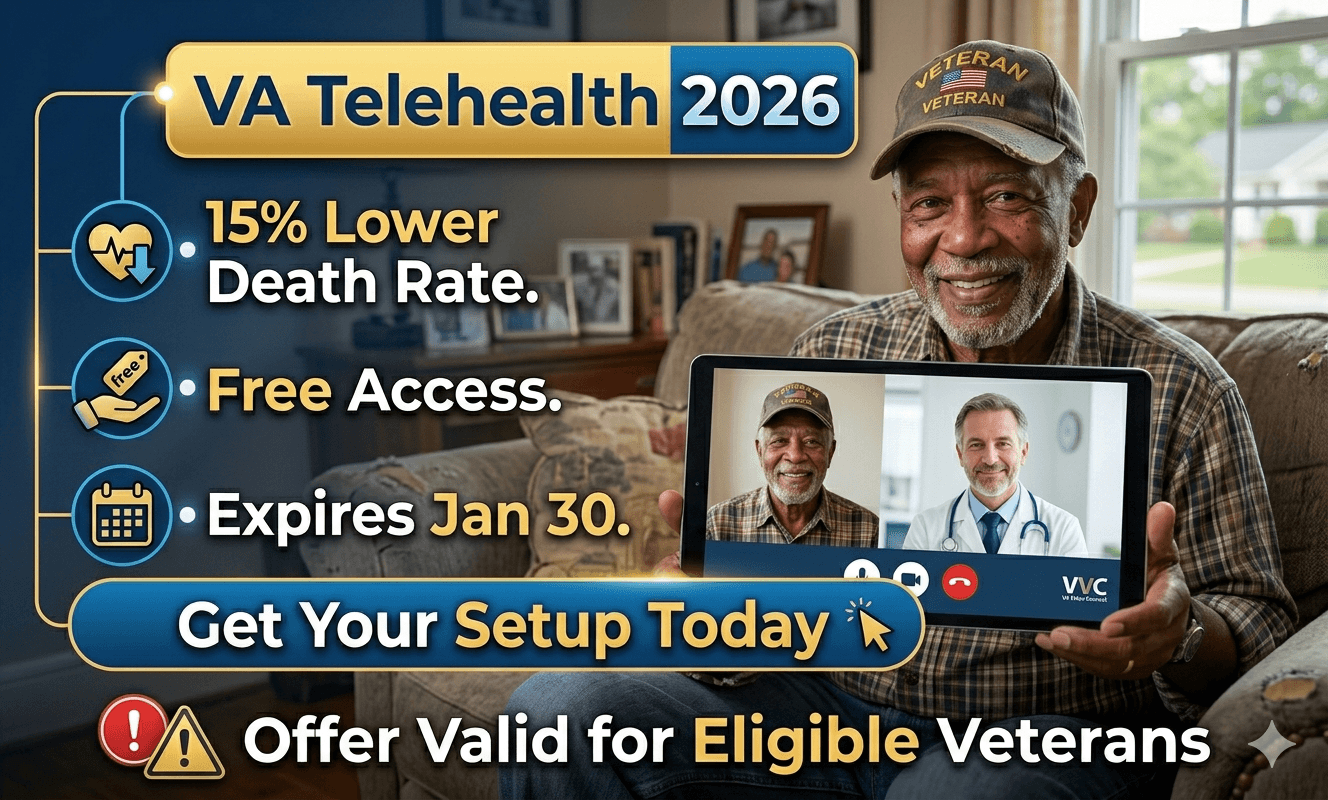
If you are a veteran using your phone or computer to see a VA doctor, listen up: A brand-new government study just proved that VA telehealth saves lives—specifically, it lowers the risk of death by 15% for those with kidney disease .

But here is the urgent warning no one is talking about. Major telehealth flexibilities that allow you to see a doctor from your living room—no matter where you live—are set to expire on January 30, 2026 . If Congress doesn’t act, millions of veterans could be forced to drive hours to a VA hospital just for a 15-minute check-up.

This is the latest information today on VA telehealth for veterans in the United States. No medical jargon. No fluff. Just the hard facts on how to keep your virtual care and avoid losing it.
What Veterans Need to Know Right Now
The VA is currently the largest integrated health care system in the country using telehealth. In 2022 alone, over 2.3 million veterans used it . Right now, thanks to pandemic-era rules, you can be sitting in your kitchen in downtown Chicago or on your porch in rural Montana, and the VA can treat you.
The “Cliff” : Those rules are temporary. The government just extended them through January 30, 2026 . If they expire, the old rules snap back. That means you might have to drive to a VA clinic or hospital just to sit in a room with a laptop (which defeats the purpose), and audio-only phone calls for check-ups might be banned.
Real-life impact: A veteran with PTSD in rural Alaska currently gets weekly counseling via phone. If the waivers expire, he might have to fly to Anchorage. That flight costs $500 and takes a whole day.
Latest Updates Today (May 2026)
Veterans May Qualify for Extra Benefits
Check available financial assistance, healthcare programs and other opportunities that may apply to you.
Check EligibilityHere is the raw intelligence on the state of VA virtual health right now:
- Life-saving data released: A study of 12,000 veterans just published shows that those using “telenephrology” (kidney care via video) had a 15% lower mortality rate than those who didn’t . This is huge. It proves virtual care isn’t just convenient; it keeps you alive.
- Occupational Therapy goes virtual: The VA launched “Integrated TeleOT,” bringing occupational therapy into your home to help with daily living skills .
- TelePharmacy is expanding: If you live in a “pharmacy desert,” you can now use VA TelePharmacy to talk to a specialist and get meds mailed via the My HealtheVet app .
- Warning: The “Text Message” Scam is spiking: Scammers are texting veterans pretending to be the VA asking you to “update your insurance” or “verify your password” via a link . Do not click. The VA never asks for personal info via random text. Report it to (866) 842-4357 .
Who Qualifies for VA Telehealth
The short answer: Almost every veteran enrolled in VA health care qualifies for some form of telehealth.
You can use it if:
- You live in a big city or a rural area (currently, no geographic restrictions apply) .
- You need mental health counseling (this is the #1 use case).
- You have a chronic condition like diabetes, high blood pressure, or kidney disease.
- You just need a prescription refill or a quick follow-up.
The massive change coming:
Currently, thanks to the waivers, you can be anywhere (even your car) to have a visit. After January 30, 2026, if the rules sunset, you may have to drive to a specific medical building (a “rural health clinic” or “physician’s office”) to be eligible . You wouldn’t be allowed to just sit at home.
How to Access VA Telehealth Right Now
You have three tools. Use them before the potential deadline hits.
Tool 1: VA Video Connect (The App)
- This is the main video platform. Your doctor sends you a text link.
- Action: Download the app on your smartphone now. Test your camera. Do not wait until you are sick.
Tool 2: My HealtheVet (The Website)
- Use this for secure messaging. It is like emailing your doctor.
- Action: Send a message to your primary care team today asking: “Am I eligible for TelePharmacy or remote monitoring?”
Tool 3: The “Phone Only” Option
- Right now, audio-only (just a phone call) counts as a visit for many things. After Jan 30, that might end .
- Action: If you only have a landline, call the VA at 1-800-698-2411 and ask for a “Telehealth Readiness Assessment.”
Common Mistakes Veterans Make
Mistake #1: Assuming you need a fancy computer
You don’t. You can do VA Video Connect on a $50 smartphone or even a standard telephone call (for now).
Mistake #2: Ignoring the consent forms
When you log into the VA portal, there is a “Telehealth Consent” form. Many veterans skip it. If you don’t sign it, the VA legally cannot treat you virtually. Go sign it right now.
Mistake #3: Not having a backup plan
Internet goes out. Batteries die.
Fix: Always ask your VA doctor, “If the video fails, can we switch to a phone call?” Get that verbal agreement before the appointment starts.
**Mistake #4: Falling for the scam texts **
Scammers know veterans are worried about losing benefits. They send texts saying “Your VA Telehealth is expiring, click here to renew.” Stop. Block the number. Report it to the VA police.
What This Means Financially
Let’s do the math on what losing telehealth costs you.
If you keep current access:
- Cost per visit: $0 (covered by VA benefits).
- Travel cost: $0.
- Time lost: 30 minutes.
If the waivers expire on Jan 30:
- Cost per visit: $0 (still free).
- Travel cost: Gas, tolls, wear and tear. Average round trip for a rural vet? 80 miles. At $0.70/mile (IRS rate), that’s $56 per visit.
- Time lost: 2-4 hours of driving + waiting room time.
The Human Cost: Veterans miss appointments when they can’t get a ride. Missed appointments mean missed meds. Missed meds mean hospital visits. It is a vicious, expensive cycle. Telehealth breaks that cycle.
Political Context: Why Is This Happening?
This is a game of congressional hot potato.
Back in the COVID pandemic, the government waived a ton of rules to let hospitals use Zoom and phone calls. Everyone loved it. Care got better.
However, there is a law called the Public Health Emergency. That emergency ended. Now, the “temporary waivers” are stuck in political limbo.
The Good News: The VA actually passed a permanent rule in October 2025 allowing VA doctors to practice across state lines via telehealth . That is a win.
The Bad News: The patient rules (where you can sit, and using audio-only) are still temporary. They were attached to a budget bill that is currently deadlocked .
Current status: The government is funded through Jan 30, 2026. If they don’t pass another extension before then, the “Telehealth Cliff” hits. You lose the ability to do audio-only calls and home-based video in some cases .
FAQ: Veterans Ask These Questions Every Day
Q: Is VA Telehealth actually free?
A: Yes, 100%. No co-pays for video or phone visits if you are enrolled in VA health care.
Q: What if I don’t have internet at home?
A: The VA has a “Digital Divide” program. Some VA medical centers will loan you an iPad or a cell phone hotspot for free. Ask your social worker for a “Connected Care Device.”
Q: Can I use VA Telehealth if I live overseas?
A: Usually no. VA telehealth is generally restricted to patients located in U.S. states and territories due to licensing laws.
Q: I heard about the kidney study. Does that apply to me?
A: If you have Chronic Kidney Disease (CKD), yes. Ask your primary care doctor for a referral to the “Telenephrology” program. The study showed it drastically lowers your risk of death .
Q: Will the VA text me?
A: Yes, they send appointment reminders. But they will never ask for your Social Security number, bank info, or password via text .
Final Takeaway
VA Telehealth is the single best innovation in veterans’ health care in the last decade. It saves lives (proven by data) and saves time (proven by experience).
Here is your action plan for today:
- Call your VA provider. Ask, “If the rules change on Jan 30, how will my care be affected?”
- Download VA Video Connect. Get it set up now, not during a crisis.
- Warn a buddy. Tell one other veteran about the Jan 30 deadline and the text message scam.
- Check your address. Make sure the VA has your correct physical address and phone number in the system. If they don’t know where you are, they can’t route you to the right virtual clinic.
You served your country. The VA has the technology to serve you back, no matter where you live. Don’t let a bureaucratic deadline take that away.
Initially, the VA’s telehealth services focused on providing consultations through phone calls and, subsequently, video conferencing. This evolution marked a significant step towards integrating technology into healthcare, aiming to bridge the gap caused by geographical and logistical barriers. Over the years, advancements in technology have allowed these services to expand, encompassing a wide array of specialties and enabling veterans to receive comprehensive care remotely.
The purpose of VA Telehealth is not only to facilitate remote consultations but also to enhance continuity of care, allowing veterans to manage their health more effectively. By incorporating telehealth, the VA has improved the timeliness of medical advice, increased patient engagement, and reduced the need for veterans to travel long distances for routine check-ups or follow-up care.
As we move forward to 2026, the significance of telehealth in the VA system continues to grow. Its ability to adapt and respond to veterans’ needs demonstrates a commitment to leveraging technology to deliver high-quality healthcare. Understanding the foundations of VA Telehealth and its ongoing evolution is crucial as stakeholders work to refine and expand these services to better serve the veteran population.
Current State of VA Telehealth (2023)
As of 2023, the Department of Veterans Affairs (VA) has made significant advancements in telehealth services, optimizing care for military veterans across the United States. Telehealth initiatives have expanded to encompass a variety of healthcare services, ensuring that veterans have access to essential medical support without the barriers posed by distance or mobility issues.
Data indicates that the participation rate among veterans utilizing VA Telehealth services has surged dramatically. For instance, over 1.5 million veterans accessed telehealth services in 2022, representing a 25% increase compared to the previous year. This uptick highlights a growing acceptance and reliance on remote healthcare solutions, especially during and post-pandemic.
Currently, VA Telehealth encompasses a wide array of services, including but not limited to mental health evaluations and treatments, primary care consultations, and specialty health counseling. Mental health remains a focal point, with dedicated programs aimed at PTSD, depression, and anxiety disorders. By integrating teletherapy options into standard care, veterans can now receive timely support, which is critical for their overall well-being.
Technologically, VA Telehealth employs various tools that enhance the patient experience. Video conferencing platforms provide secure environments for consultations, while mobile health applications facilitate symptom tracking and communication with healthcare providers. Moreover, remote monitoring systems allow clinicians to keep track of patients’ health metrics in real-time, enabling proactive care. Such innovations exemplify how the VA is effectively leveraging technology to improve service delivery and patient satisfaction.
Overall, the current state of VA Telehealth in 2023 reflects a robust network of services that prioritize accessibility and efficiency in catering to the healthcare needs of veterans. As the landscape of telehealth continues to evolve, the VA remains committed to utilizing technology to ensure that high-quality care is readily available to all those who have served.
The Role of Technology in VA Telehealth
The evolution of technology has been pivotal in transforming VA Telehealth services, emphasizing the importance of continuous advancement in patient care. Digital tools and applications have emerged as essential components of telehealth, enhancing communication between healthcare providers and veterans. These innovations ensure that medical attention is not limited by geographical barriers and significantly improve access to care.
Video conferencing technologies have been at the forefront of this transformation. They allow for real-time consultations, enabling healthcare professionals to conduct appointments virtually, thus maintaining continuity of care for veterans regardless of their location. This ease of access has been particularly beneficial for individuals living in rural areas who may otherwise face challenges in obtaining necessary medical services. By integrating video conferencing into their practice, the Department of Veterans Affairs (VA) has effectively optimized the healthcare experience for many veterans.
Moreover, mobile health applications have also gained prominence within the VA Telehealth framework. These applications facilitate self-management of health conditions, providing veterans with easy access to their medical records and treatment plans. They often include reminder systems for medication, routine check-ups, and customized health tips to encourage proactive health management. As telehealth continues to evolve, such applications will likely play a crucial role in enhancing patient engagement and empowerment.
Integrating artificial intelligence (AI) into telehealth services is another promising development. AI can assist in predictive analytics, helping healthcare providers anticipate the needs of patients and modify treatment plans accordingly. This data-driven approach not only enhances the quality of care provided but also allows for a more personalized patient experience.
In conclusion, the technological advancements in VA Telehealth have fundamentally reshaped patient-provider interactions, promoting an inclusive and efficient healthcare system. The strategic implementation of digital tools, video conferencing, and mobile health applications is critical in meeting the evolving needs of veterans and ensuring they receive timely and effective care.
Impact of VA Telehealth on Patient Outcomes
The implementation of VA Telehealth services has markedly enhanced patient outcomes for veterans seeking medical care. Through the expansion of telehealth technologies, access to care has become significantly more convenient, especially for those residing in remote or underserved areas. A comprehensive analysis indicates that patients utilizing telehealth services have reported higher accessibility, with many claiming that distance no longer serves as a barrier to receiving timely medical interventions.
Data from recent studies highlight that veterans who engaged with VA Telehealth demonstrated an increase in follow-up care adherence by up to 20%. This improvement is largely attributed to the greater flexibility telehealth appointments offer, enabling veterans to schedule consultations that fit their personal lives without the need for travel. Additionally, the reduction in travel time has been shown to enhance overall patient satisfaction, as expressed in numerous testimonials.
Many veterans have shared their positive experiences with VA Telehealth. For instance, one veteran remarked, “Using telehealth services allowed me to see my doctor regularly without the hurdles of long commutes and waiting rooms. It has truly changed the way I manage my health.” Such sentiments are echoed by a substantial number of veterans, suggesting that telehealth not only improves access but also fosters greater proactive health management.
Furthermore, VA Telehealth has proven effective in managing chronic conditions, with patients experiencing significant improvements in health metrics such as blood pressure and glucose levels. The integration of remote monitoring tools enables healthcare providers to maintain close contact with patients, facilitating timely interventions based on real-time data.
In essence, the positive impact of VA Telehealth on patient outcomes underscores the role of technology in modern healthcare delivery, paving the way for an enhanced patient experience and better health results for the veteran population.
VA Telehealth has made significant advancements in recent years, yet it grapples with several challenges that complicate its implementation and effectiveness. One of the primary concerns involves privacy issues surrounding the security of patient information. Veterans’ sensitive health data is often stored and transmitted electronically, raising fears of data breaches and unauthorized access. The VA must continually invest in robust cybersecurity measures to safeguard this information, ensuring that veterans can access telehealth services without jeopardizing their privacy.
Another challenge pertains to technology access disparities among veterans. While telehealth offers convenience and improved access to care, not all veterans possess the necessary technology or internet connectivity to utilize these services effectively. Rural veterans, in particular, may face significant barriers due to limited broadband access. The digital divide can inhibit full participation in telehealth programs, creating inequalities in health service availability. To address this issue, targeted initiatives aimed at expanding internet access in underserved regions are essential.
Furthermore, legislative support is critical for the continued expansion of VA Telehealth services. Existing regulations may limit the scope of services available remotely, potentially hindering a veteran’s ability to receive comprehensive care. Ongoing advocacy for policy reforms is necessary to enhance telehealth capabilities, including cross-state licensure for healthcare providers and funding for telehealth initiatives. Collaborative efforts with policymakers can help mitigate existing regulatory obstacles, fostering an environment where VA Telehealth can thrive.
Overall, addressing these challenges is crucial for the effective implementation of VA Telehealth services. By prioritizing privacy, expanding technology access, and advocating for legislative reform, the VA can enhance the telehealth experience for veterans, ultimately leading to better health outcomes.
Future Projections for VA Telehealth (2026 and Beyond)
The future of VA Telehealth is poised for significant evolution by 2026, propelled by both technological advancements and shifts in policy. As healthcare continues to embrace digital solutions, the Department of Veterans Affairs (VA) is likely to implement a more integrated approach to telehealth services, expanding accessibility for veterans across diverse geographic locations.
One forecasted advancement is the enhancement of virtual care technologies. Expect cutting-edge tools, such as telepresence robots and augmented reality applications, which will facilitate more efficient and engaging interactions between healthcare providers and veterans. These innovations aim to address challenges associated with physical consultations, such as travel limitations, thereby ensuring timely care delivery.
Moreover, changes in legislation could play a pivotal role in shaping the trajectory of VA Telehealth. Proposals for improved reimbursement models for telehealth services are anticipated, which would incentivize healthcare providers to adopt and expand these offerings. This potential shift in legislation could lead to greater funding allocations for telehealth infrastructure, ultimately translating into improved resources and services for veterans.
In addition to technological and legislative advancements, VA Telehealth is expected to broaden its range of service offerings. Tailored mental health services, chronic disease management programs, and preventative care initiatives are likely to expand through telehealth platforms. This diversification will enable the VA to address a wider spectrum of veteran health needs, fostering a more holistic approach to care.
As we look forward to 2026, it is clear that the commitment to innovate and improve VA Telehealth will significantly impact the health outcomes of veterans. With an increasing reliance on technology, streamlined legislation, and broader service programs, a more robust telehealth landscape lies ahead, promising to enhance the overall quality and accessibility of healthcare for our veterans.
Integration of Telehealth with Traditional Care
The integration of VA Telehealth services with traditional in-person care represents a transformative approach to healthcare delivery for veterans. This hybrid model of care combines the convenience and accessibility of telehealth with the personal touch of face-to-face interactions, ensuring that veterans receive comprehensive medical attention tailored to their unique needs. By facilitating seamless communication between healthcare providers and patients, VA Telehealth is enhancing overall veteran health services.
In this hybrid model, virtual consultations are often utilized for routine follow-ups, medication management, and mental health assessments, reducing the need for veterans to travel long distances to appointments. This capability is particularly beneficial for those in remote areas or with mobility challenges. By merging telehealth with traditional methods, healthcare providers can offer timely interventions, ensuring that veterans do not miss critical care due to logistical barriers.
Moreover, the integration fosters a collaborative environment where in-person healthcare providers can access real-time data from telehealth consultations. This immediate exchange of information enables providers to make informed decisions quickly, thereby improving clinical outcomes. For instance, if a veteran discusses new symptoms during a telehealth session, the information can be instantly relayed to their primary care team, facilitating prompt follow-up care.
As veterans transition between telehealth and in-person visits, they can benefit from a continuous health management approach. This hybrid system not only accommodates the diverse preferences and medical needs of veterans but also encourages proactive health engagement. Overall, the collaboration between VA Telehealth services and traditional care is a significant leap towards delivering high-quality, patient-centered healthcare to veterans, ensuring they receive the comprehensive support they deserve.
Veteran Feedback and Experience
Veterans who have utilized VA Telehealth services have shared a variety of personal experiences that shed light on both the advantages and challenges associated with this innovative healthcare approach. Many veterans report significant benefits, primarily in terms of accessibility and convenience. For instance, individuals living in rural areas often find it challenging to travel long distances to access healthcare facilities. Telehealth has mitigated this issue, enabling veterans to consult with healthcare professionals from the comfort of their homes, thus saving valuable time and resources.
Moreover, several veterans have praised the ability to receive regular check-ups and follow-ups by using their personal devices. This feature not only promotes continuity of care but also allows for routine monitoring of chronic conditions without the need for in-person visits. As one veteran articulated, “Telehealth has changed my life; I can now see my doctor without the stress of a lengthy drive.” Such statements highlight how telehealth services can lead to improved physical and mental health outcomes for veterans.
However, it is essential to acknowledge some of the challenges reported by veterans regarding telehealth services. Technical issues, such as poor internet connectivity or difficulties with digital platforms, pose significant barriers for certain users. A veteran shared their frustration, stating, “Sometimes my connection drops, and I miss critical parts of the conversation with my doctor.” This underscores the importance of addressing technology-related hurdles to maximize the potential of telehealth services.
Furthermore, veterans have expressed concerns about the personal touch in healthcare delivery when using telehealth. Some individuals feel that in-person consultations foster stronger relationships between patients and healthcare providers. Hence, while VA Telehealth has been life-saving for many, it is imperative to consider such feedback to continually enhance the quality and effectiveness of these services.
Conclusion: The Future of VA Telehealth
As we analyze the trajectory of VA telehealth services, it becomes evident that this innovative approach has drastically altered the landscape of veteran care. The extensive data collected from various telehealth initiatives provide substantial insight into its efficacy and influence on health outcomes. Veterans benefit not only from increased accessibility to healthcare providers but also from the continuity of care that telehealth facilitates, especially in remote or underserved areas.
The integration of technology in healthcare delivery offers numerous advantages, such as reduced wait times, lower transportation costs, and improved management of chronic conditions. With telehealth, veterans have the opportunity to engage in their health care more actively, fostering an environment of accountability and empowerment. Additionally, the collection of critical data on veteran health trends allows for the tailored development of services that meet their unique needs.
Looking ahead, the future of VA telehealth appears promising. Continued advancements in telecommunication technologies are expected to enhance virtual care delivery, ensuring that veterans receive timely and effective treatment. The focus moving forward will likely include expanding the variety of services available through telehealth platforms, further integrating mental health support and specialized care, which is essential for addressing the complete scope of veterans’ health needs.
Ultimately, VA telehealth represents an essential progression towards comprehensive and equitable care for veterans. By leveraging technology, the VA can not only improve health outcomes but also contribute to stronger, more resilient communities of veterans. As new data emerges, the commitment to optimizing these telehealth services will be critical in advancing the health and well-being of those who have served the nation.



🇺🇸 IMPORTANT DISCLAIMER – Veterans Benefits Information
This site provides general information about U.S. Department of Veterans Affairs (VA) benefits for educational and informational purposes only.
- Not Official: We are NOT affiliated with, endorsed by, or connected to the U.S. Department of Veterans Affairs (VA), the Veterans Benefits Administration (VBA), the Veterans Health Administration (VHA), or any other government agency.
- No Legal/Financial Advice: The content on this website is for informational purposes only and does not constitute legal, financial, or medical advice. VA benefits rules change frequently – always consult with an accredited Veterans Service Officer (VSO) or a qualified professional for your specific situation.
- Official Sources: For official, binding information and to apply for benefits, always visit official .gov websites: VA.gov, Benefits.VA.gov, or SSA.gov.
- No Data Collection: This site does not collect, store, or process any personal information. It does not have login forms, contact forms, or any system to capture user data. We never ask for your Social Security Number, bank details, or any personal information.
- 🚨 Scam Alert: The VA and other government agencies never charge fees for benefit applications. If anyone asks for money to "process" your VA claim, it is a scam. Report it to the VA Office of Inspector General at VA.gov/OIG.
- Advertising: This site uses third-party advertising (Adsterra) to cover operational costs. We do not endorse or guarantee any products or services advertised.
📌 Information provided as of June 2026. Always verify current eligibility and rules with official .gov sources.
This site is not affiliated with the U.S. Department of Veterans Affairs or any government agency. All information is for educational purposes only. Please visit VA.gov for official information.
