
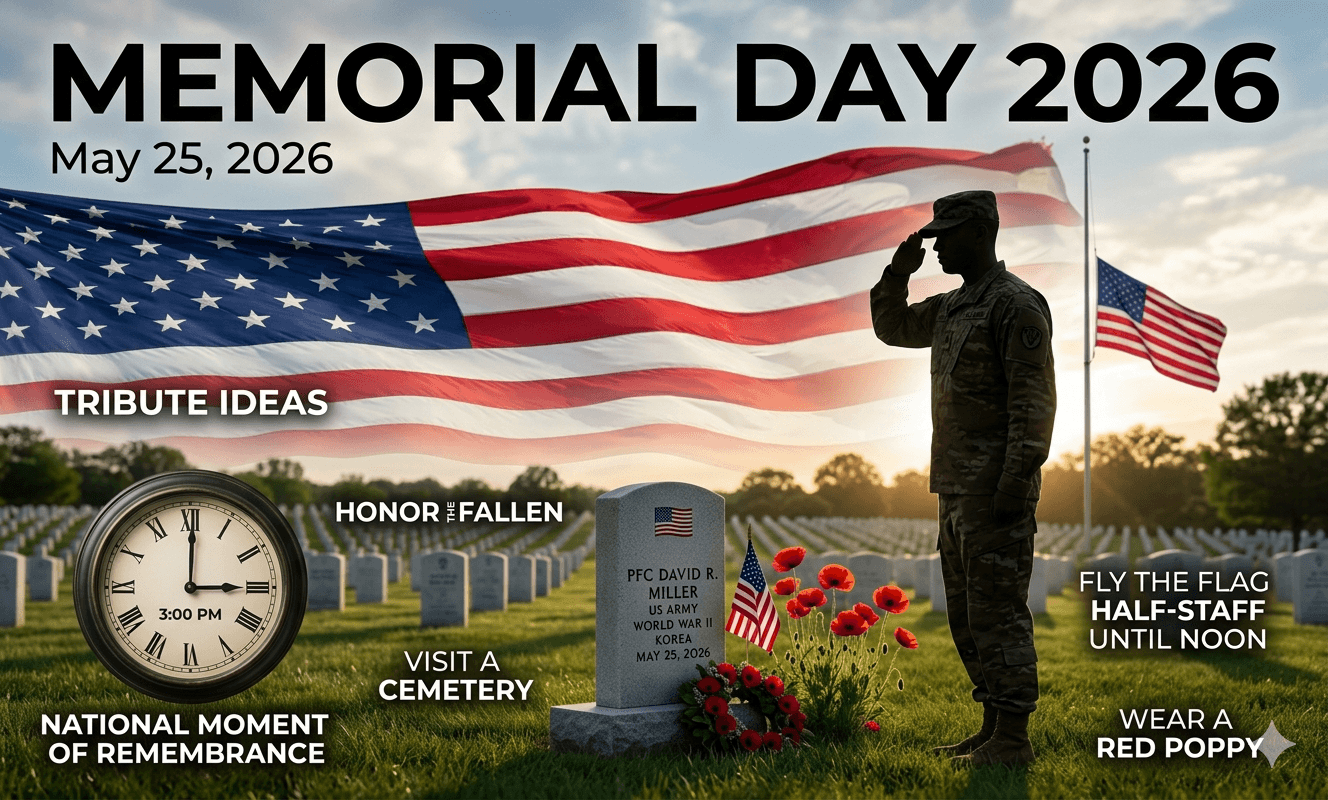
The Essence of Memorial Day
Memorial Day, observed in the United States on the last Monday of May, serves as a pivotal occasion for honoring and remembering those who have lost their lives while serving in the military. This day is not only a public holiday; it embodies a profound sense of gratitude and reverence for the sacrifices made by countless individuals throughout the nation’s history. The essence of Memorial Day lies in its dual focus: both commemorating the fallen and reinforcing the collective memory of their service to the nation.
Historically, Memorial Day arose in the aftermath of the Civil War as a means to honor Union soldiers who perished in battle. Over the decades, its observance broadened to include all American military personnel who have died in the line of duty. This evolution highlights the importance of acknowledging the enduring impact of conflict on families, communities, and the country as a whole. While parades and barbecues are prevalent in modern celebrations, the core purpose remains rooted in remembrance.

Active participation in Memorial Day activities is crucial. It fosters a spirit of community and connection, encouraging individuals to reflect on the sacrifices of servicemen and women. By engaging in acts of remembrance—such as visiting cemeteries, attending remembrance services, and sharing stories of fallen heroes—participants reinforce the collective memory and ensure that their sacrifices are not forgotten. Such observances invite reflection and gratitude, serving to educate younger generations about the weight of service and sacrifice.

In essence, Memorial Day is a reminder of the cost of freedom and the tears shed by families left behind. It serves as a call to honor the brave individuals who dedicated their lives to protect the values and ideals that define the nation. As we approach Memorial Day, it is essential to remember its true significance and to actively partake in recognizing the contributions of those who served and sacrificed.
Memorial Day Tribute Ideas 2026: 18 Meaningful Ways to Honor the Fallen
Memorial Day tribute ideas for 2026 – from visiting cemeteries and flying the flag to using QR codes on headstones, hosting Gold Star dinners, and observing the 3:00 p.m. Moment of Remembrance.
The best Memorial Day tribute doesn’t require a parade permit or a podium. It requires intention.
You can honor a fallen service member in 30 seconds or an entire afternoon. You can do it alone at a graveside or with a hundred neighbors at a community ceremony. You can do it with nothing but silence or with handmade wreaths and handwritten letters.
Veterans May Qualify for Extra Benefits
Check available financial assistance, healthcare programs and other opportunities that may apply to you.
Check EligibilityThe only requirement is that you actually do something. Memorial Day was never meant to be passive. It was meant to be observed—with flowers, with flags, with names spoken aloud.
Here are 18 Memorial Day tribute ideas for 2026—from simple acts you can do in 5 minutes to larger commitments that will carry through the whole weekend. Use one. Use several. Just use something.
What Veterans and Families Need to Know Right Now
Memorial Day 2026 is Monday, May 25.
The National Moment of Remembrance is at 3:00 p.m. local time —one minute of silence observed across the country. This is an official act of Congress. Set an alarm on your phone for 2:55 p.m. right now.
The VA’s 157 national cemeteries will host public ceremonies. Volunteers are needed to place flags on gravesites before the holiday and remove them after. Over 70,000 volunteers are expected to participate in “Memorial May” activities .
2026 legislative context: Recent Gold Star family legislation is advancing, but the most immediate tribute you can offer is presence—showing up, remembering, and saying their names.
Here’s how to do it.
Quick Tributes (5–30 Minutes)
These take almost no time. Do them between the barbecue and the pool.
1. Observe the National Moment of Remembrance
At exactly 3:00 p.m. local time on May 25, stop what you’re doing. Put down your phone. Stand if you can. Bow your head. Observe one minute of silence.
That’s it. That’s the entire tribute. Sixty seconds of nothing but remembrance.
Why it matters: Congress established this moment to “reclaim Memorial Day as a sacred national occasion.” It’s the one thing every single American can do, regardless of age, ability, or location.
Set the alarm now: 2:55 p.m. on May 25. Don’t miss it.
2. Fly the Flag Correctly
On Memorial Day, the U.S. flag should be flown at half-staff from sunrise until noon, then raised to full-staff from noon to sunset.
The half-staff period honors the fallen. Raising it at noon symbolizes the nation’s resolve to carry on their work. Flying it incorrectly isn’t just bad etiquette—it misses the meaning of the day.
If you don’t have a flag: Buy one. A simple cotton flag from any hardware store costs under $20. Fly it with pride—and correctly.
3. Send a Text to a Gold Star Family
You don’t need a long letter. You don’t need the perfect words. Send a short text to a family you know who lost someone in service:
“Thinking of [name] today. We remember.”
That’s enough. More than enough.
If you don’t know a Gold Star family: Post on social media: “If you are a Gold Star family member, I am holding you in my thoughts today. Please comment or message me the name of your loved one. I want to say it aloud.”
4. Post a Tribute on the Veterans Legacy Memorial Website
The Veterans Legacy Memorial (VLM) is the nation’s largest online memorial space dedicated to veterans. It has over 10.5 million interactive pages—one for every veteran interred in a VA national cemetery.
Go to the website. Search for a fallen service member. Leave a tribute. Upload a photo. Write a biography. It takes 5 minutes. It lasts forever.
5. Wear a Red Poppy
The red poppy is the official Memorial Day flower, inspired by John McCrae’s poem “In Flanders Fields.” Wear one on your shirt, your hat, or your bag.
The American Legion Auxiliary distributes poppies each Memorial Day in exchange for donations that support veterans, active-duty military, and their families. If you see a volunteer with poppies, stop. Give a dollar. Wear the flower.
What the poppy means: “The poppy is our most visible symbol of support and honor for our nation’s veterans and military” —American Legion Auxiliary.
Half-Day Tributes (1–4 Hours)
These take more time but create deeper impact.
6. Visit a VA National Cemetery
Find your nearest VA national cemetery using the VA’s cemetery locator. Walk the rows. Read the names. Say them out loud if you’re alone. Leave a coin on a headstone.
Coin meanings on military graves:
- Penny – You visited
- Nickel – You trained with the deceased
- Dime – You served together
- Quarter – You were there when they died
Leave a penny if nothing else. It tells the family someone came.
2026 fact: The National Cemetery Administration received the highest customer satisfaction rating of any public or private organization for the eighth consecutive year . These grounds are immaculate. Your visit will be meaningful.
7. Attend a Local Memorial Day Ceremony
Every VA national cemetery hosts a public ceremony on Memorial Day. Wreaths are placed on every gravesite. Speeches are given. Taps is played.
Check with your local VFW post, American Legion hall, or VA medical center for ceremony times. Most start at 10:00 or 11:00 a.m.
What to expect: Color guard, rifle volley (21-gun salute), playing of taps, wreath-laying, and a keynote speaker—often a veteran or Gold Star family member.
8. Volunteer to Place Flags on Gravesites
The National Cemetery Administration expects over 70,000 volunteers to place flags on gravesites during “Memorial May.”
How it works: Before Memorial Day (usually the Saturday before), volunteers gather at a VA national cemetery. Each grave receives a small U.S. flag. By the end of the day, the entire cemetery is transformed—row after row of flags waving in the wind.
Call your local VA cemetery to ask about flag placement schedules. Or visit www.cem.va.gov/volunteer/.
After Memorial Day: Volunteers are also needed to remove flags (usually the Tuesday after). Both acts are acts of honor.
9. Host a Gold Star Family Dinner
If you know a Gold Star family—someone who lost a spouse, child, or parent in service—invite them to dinner. Not on Memorial Day itself (that day is often heavy with grief), but on the Saturday or Sunday before.
What to serve: Whatever they want. The point isn’t the food. The point is the company. Let them talk about their loved one if they want. Let them be silent if they don’t. Just be present.
If you don’t know a Gold Star family: Contact your local VFW or American Legion. They can connect you with families who would welcome a meal and company.
10. Create a Memorial Display in Your Front Yard
Plant a small garden of red poppies. Hang a banner that says “We Remember.” Line your walkway with small American flags.
What it costs: A dozen small flags costs about $15 at any hardware store. A “Remember Our Fallen” banner costs $10-20 online. Poppy seeds cost $5.
What it says: To every veteran, active-duty service member, and Gold Star family who drives past your house: someone in this neighborhood remembers.
11. Watch a Memorial Day Concert or Documentary
If you can’t get to a cemetery or ceremony, bring the tribute into your living room.
PBS’s National Memorial Day Concert airs the Sunday before Memorial Day. It features performances, readings, and tributes to fallen service members and Gold Star families.
Documentaries to watch:
- Taking Chance (HBO) – A true story of a Marine escorting a fallen soldier home
- We Were Soldiers – Based on the Battle of Ia Drang
- The Vietnam War (Ken Burns) – The full 10-part series is a commitment, but individual episodes are powerful
Watch with intention. Don’t scroll your phone. Pay attention.
Weekend-Long Tributes (One Day to the Full Weekend)
These take significant time. They also leave the deepest marks.
12. Volunteer for Carry The Load
Carry The Load volunteers will march in 75 locations across the country, including three VA national cemeteries (Tahoma, Los Angeles, and Jefferson Barracks).
The signature Dallas Memorial March along the historic Katy Trail on May 24 is open to anyone. Carry signs, banners, or American flags honoring fallen friends or family members.
Find a march near you: CarryTheLoad.org.
13. Request a Fallen Heroes Visit (Travis Manion Foundation)
The Travis Manion Foundation’s The Honor Project will visit over 30 VA national cemeteries over Memorial Day weekend.
Gold Star families can submit a Fallen Heroes request online. A foundation volunteer will visit the gravesite, lay a hand-crafted commemorative token, and pause for a moment of reflection—on your behalf, if you cannot be there yourself.
How to request: TravisManionFoundation.org/honor-project.
14. Clean or Adopt a Neglected Veterans Memorial
Not every veterans memorial is maintained. Some are small stone markers in forgotten parks. Some are plaques in overgrown traffic triangles.
Find one. Bring gloves, a bucket, soapy water, and a scrub brush. Clean the stone. Pull the weeds. Leave it better than you found it.
If you want to go further: “Adopt” the memorial. Commit to cleaning it before Memorial Day, July 4th, and Veterans Day every year.
15. Write Letters to Gold Star Families
You don’t need to know them personally. Contact your local VFW or American Legion and ask: “Do you know any Gold Star families who would appreciate a letter?”
What to write:
- “I don’t know your loved one’s name, but I want to say it anyway.”
- “I spent this Memorial Day thinking about the families behind the headstones.”
- “Thank you for your sacrifice. I will not forget.”
Keep it short. Keep it sincere. Don’t ask for anything. Just give.
16. Host a Memorial Day Reading
Gather friends, family, or neighbors in your backyard or living room. Read aloud:
- “In Flanders Fields” by John McCrae
- “For the Fallen” (fourth stanza) by Robert Laurence Binyon
- “The Unknown Soldier” (original—see above)
- The names of local fallen service members (available through your VFW or American Legion)
Pass the printed pages around. Let everyone read a line. End with a moment of silence.
This is not sad. It is solemn. There’s a difference.
17. Donate to a Veteran or Gold Star Family Organization
Money is not a substitute for presence. But it is a form of support.
Organations to consider:
- Folds of Honor – Educational scholarships for spouses and children of fallen or disabled service members
- Children of Fallen Patriots Foundation – College scholarships for children of fallen service members
- Mighty Oaks Foundation – PTSD and spiritual recovery programs for veterans
- Travis Manion Foundation – Character development and service programs
Blaze Pizza is donating $1 for every 11-inch pizza sold on Memorial Day to Folds of Honor. Buy a pizza. Help a Gold Star child go to college.
18. Plant Something Living
A tree. A bush. A bed of red poppies. Something that will be there next year, and the year after, and the year after that.
What to plant:
- Red poppies – The official Memorial Day flower
- Oak tree – Symbolizes strength and endurance
- Rose bush – Plant a “Gold Star” rose variety if available
Where to plant: In your yard. At a community garden. With permission, near a veterans memorial.
Add a marker: A small stone or plaque that says: “Planted in memory of those who gave all. Memorial Day 2026.”
What Not to Do on Memorial Day
These are not tribute ideas. These are warnings.
Don’t Say “Happy Memorial Day”
This is a day of solemn remembrance. “Happy” is for birthdays and holidays. Memorial Day is neither.
Say instead: “We remember them.” “Have a meaningful Memorial Day.” “Honor the fallen today.”
Don’t Thank Living Veterans for Their Service (on This Day)
Save that for Veterans Day (November 11). On Memorial Day, the focus is on the dead, not the living. If you see a veteran, a nod of acknowledgment is fine. But “thank you for your service” misses the point entirely.
Don’t Treat It as Just a Three-Day Weekend
The barbecue is allowed. The pool is allowed. The beach trip is allowed. Just do something—one thing—that acknowledges the sacrifice before you enjoy the freedom.
Don’t Post a Generic “Happy Memorial Day” on Social Media
If you’re going to post, post with purpose. A poem. A photo of a grave marker. The name of a fallen service member. A reminder about the 3:00 p.m. Moment of Remembrance.
Generic posts are worse than no posts. They water down the meaning.
Don’t Forget the Gold Star Families
Behind every headstone is a mother who never stopped waiting. A child who grew up without a parent. A spouse who rebuilt a life around absence.
If you know a Gold Star family, reach out. If you don’t, hold them in your thoughts. But don’t forget they exist.
The 3:00 p.m. Moment of Remembrance – Your Anchor
Every tribute on this list is optional except one.
The National Moment of Remembrance at 3:00 p.m. local time is the single most important thing you can do on Memorial Day.
It costs nothing. Takes 60 seconds. Requires no preparation. And it unites you with millions of other Americans doing exactly the same thing at exactly the same moment.
Set the alarm on your phone right now: 2:55 p.m. on May 25, 2026. Label it “Moment of Remembrance.”
When the alarm goes off, stop. Stand. Bow your head. Remember the fallen. Say their names if you know them. Say nothing if you don’t.
Then go back to your barbecue. Your beach. Your family. Your life.
That’s the tribute. That’s the whole point.
FAQ – Memorial Day Tribute Ideas
Q: What is the most meaningful Memorial Day tribute?
A: The National Moment of Remembrance at 3:00 p.m. – one minute of silence. It’s simple, universal, and powerful.
Q: Can I honor a specific fallen service member if I didn’t know them?
A: Yes. Visit the Veterans Legacy Memorial website. Search for a veteran interred at a VA national cemetery. Leave a tribute. Say their name out loud. That’s honoring them.
Q: What should I say to a Gold Star family on Memorial Day?
A: Short and sincere: “Thinking of [name] today. We remember.” Don’t ask how they’re doing. Don’t say “he’s in a better place.” Just acknowledge their loved one by name.
Q: Is it okay to barbecue on Memorial Day?
A: Yes. The fallen died to protect the American way of life, which includes gathering with family and enjoying freedom. Just do something of remembrance first. Then fire up the grill.
Q: What’s the proper flag etiquette on Memorial Day?
A: Half-staff from sunrise until noon. Full-staff from noon to sunset.
Q: Can I visit a VA national cemetery on Memorial Day?
A: Yes. Every VA national cemetery is open to the public. Most host public ceremonies. Check the VA’s cemetery locator for times.
Q: How do I find a Memorial Day ceremony near me?
A: Visit www.cem.va.gov/find-cemetery/ or contact your local VFW post or American Legion hall.
Q: What’s the difference between Memorial Day and Veterans Day?
A: Memorial Day honors those who DIED in service. Veterans Day honors ALL who served (living and dead). Don’t mix them up.
Q: Can children participate in Memorial Day tributes?
A: Absolutely. Have them help place flags on gravesites. Teach them the proper flag etiquette. Read them “In Flanders Fields.” The earlier they learn, the deeper the meaning lasts.
Q: What if I can’t get to a cemetery or ceremony?
A: Observe the 3:00 p.m. Moment of Remembrance. Post a tribute on social media. Donate to Folds of Honor or Children of Fallen Patriots. Send a text to a Gold Star family. You don’t need to leave your house to honor the fallen.
Final Takeaway
Memorial Day is not complicated. It does not require a parade permit, a public speech, or a large donation. It requires only that you remember.
Here’s your Memorial Day 2026 action plan:
- Set the alarm now – 2:55 p.m. on May 25. Label it “Moment of Remembrance.”
- Choose one tribute from this list – not ten. One. Visiting a cemetery. Writing a letter. Flying the flag. Volunteering to place flags. Something doable.
- Do that thing on May 23, 24, or 25.
- At 3:00 p.m. on May 25, stop. Stand. Bow your head. Remember the fallen for 60 seconds.
- Then go enjoy your barbecue, your beach, your family. They died so you could.
That’s not forgetting. That’s honoring.
The best tribute is the one you actually do. So do one.
Visiting Local Cemeteries
Visiting local cemeteries on Memorial Day is a profound way to honor and remember those who have sacrificed their lives for their country. This solemn observance allows individuals to connect with the past and recognize the significance of the sacrifices made for freedom. Engaging in the act of paying respects at gravesites not only reflects personal gratitude but also reinforces the collective memory of those who have served.
When planning a visit to a cemetery, it is essential to approach the experience with respect and reverence. Maintaining a quiet demeanor, dressing appropriately, and following cemetery rules are crucial to honoring the solemnity of the occasion. Before your visit, consider researching the history of the cemetery and its notable interments, as this can enrich the experience and deepen the emotional connection to the site.
One meaningful practice during Memorial Day is the placement of flowers or flags at the gravesites of fallen soldiers. These acts symbolize honor and remembrance, creating a visual representation of gratitude. Fresh flowers, artificial arrangements, or small American flags can brighten a gravesite while also serving as a reminder of the ultimate sacrifice made by the individual. In some areas, veterans’ organizations may organize volunteer events where community members come together to ensure every grave is acknowledged, emphasizing a shared sense of responsibility in honoring the deceased.
Additionally, taking a moment to reflect or share stories about the individuals interred can foster a deeper emotional connection. If possible, encourage family members and friends to join you in this honorable act, as collective remembrance can strengthen bonds and cultivate a shared appreciation for the sacrifices endured. Ultimately, visiting local cemeteries on Memorial Day serves not only as a tribute to the fallen but also as a reminder of the values of courage, service, and sacrifice that underpin our national identity.
Displaying the National Flag
On Memorial Day, one of the most prominent customs is the display of the American flag, which serves as a poignant tribute to those who have made the ultimate sacrifice in defense of the nation. This solemn observance is marked by flying the flag at half-mast from sunrise until noon, symbolizing a period of mourning for fallen heroes. The act of lowering the flag to half-mast has historical significance and acts as a visual representation of collective grief, allowing citizens to pause and reflect on the valor of those who have given their lives for the country.
The American flag itself is imbued with symbolism. Each element—the stars, stripes, and colors—carries meanings that reflect the ideals of freedom, unity, and sacrifice. By displaying the flag on Memorial Day, individuals and communities alike honor the legacy of the soldiers who died while serving in the armed forces. The flag symbolizes not only the sacrifices of these servicemen and women but also the values they fought to protect.
In addition to the half-mast display, several etiquette guidelines should be observed when showcasing the flag on Memorial Day. For instance, it is important to ensure that the flag is clean and in good condition. The flag should be displayed from a pole or staff, preferably outdoors, but can also be appropriately exhibited indoors. Furthermore, it should not be allowed to touch the ground, as a sign of respect. Other accompanying gestures, such as folding the flag properly or observing a moment of silence, enhance its significance and deepen the tribute to those who were lost.
Creating Handmade Wreaths
Handmade wreaths serve as a heartfelt tribute to honor the fallen, particularly during memorial occasions. Crafting these wreaths allows for personal expression and connection to those they commemorate. When selecting materials, consider traditional choices like fresh flowers, greenery, or dried floral arrangements, which symbolize life and remembrance. Alternatively, you may opt for artificial materials, such as silk flowers or fabric, ensuring durability for prolonged display.
Styles of wreaths can vary widely, catering to different aesthetic preferences. A classic circular design is timeless, representing the eternal cycle of life. For a more contemporary approach, consider asymmetrical shapes, which can reflect the unique personality of the individual being honored. Incorporating elements such as ribbons, personal photographs, or military insignias can add a significant layer of meaning to your wreath, making it not just decorative but deeply personal.
Personal touches are also important when crafting a wreath. You might choose to include a handwritten note or a small tag with the name and service details of the loved one being remembered. Seasonal elements can also enhance the wreath’s appeal; using autumn leaves in the fall or pinecones during winter can connect the tribute to the time of year. Furthermore, adding symbolic items such as small flags or medallions can honor specific military branches and convey respect.
Moreover, engaging family members or friends in creating these wreaths can foster a sense of community and shared remembrance. Organizing a wreath-making gathering not only enriches the creative process but also serves as a supportive space where stories can be shared, further honoring those who have made significant sacrifices for the nation. Ultimately, handmade wreaths can become a powerful symbol of appreciation, love, and remembrance, reflecting the legacies of our fallen heroes.
Hosting Gold Star Dinners
Hosting Gold Star Dinners is a poignant way to honor the families of fallen service members. These gatherings can serve as a powerful tribute, providing a space for remembrance, connection, and support. The term “Gold Star Family” designates those who have lost a loved one in military service, and such dinners can help foster community and collective healing.
When planning a Gold Star Dinner, inviting families requires sensitivity and thoughtfulness. It is essential to reach out personally, explaining the intent to create a supportive environment where they can share memories of their loved ones. Invitations can be designed to reflect this sentiment, perhaps incorporating military colors or symbols that resonate with the theme of support and remembrance.
Themed dinners can add depth to the experience. Consider organizing the event around specific branches of the military or focusing on the stories of individual service members. Each table can represent a different facet of military life, showcasing memorabilia, photographs, or personal anecdotes that attendees can explore. This not only honors the lives lost but also allows families to connect through shared experiences.
As the evening unfolds, facilitate meaningful dialogue by suggesting dialogue starters that encourage sharing stories, memories, and emotions. Questions such as, “What is a cherished memory you have of your loved one?” or “How has your life changed since their passing?” can stimulate conversation and help build connections among attendees. Additionally, providing a platform for storytelling can create a profound sense of community in a space where everyone understands the intimate loss of a family member.
Ultimately, hosting Gold Star Dinners enables communities to unite in remembrance while offering a supportive framework for grieving families. By honoring the fallen and their loved ones through thoughtful gatherings, we keep their memories alive and foster a sense of togetherness that extends beyond the event itself.
Observing a Moment of Silence at 3:00 PM
On Memorial Day, a significant tradition in honoring the fallen is the observance of a moment of silence at exactly 3:00 PM. This practice is a profound way for individuals and communities to pause from their daily activities and reflect on the sacrifices made by the men and women of the armed forces. This moment serves as an opportunity for collective remembrance, allowing people to join together in honoring those who have given their lives in service to the nation.
The moment of silence at 3:00 PM was established through the National Moment of Remembrance Act, which was enacted in 2000. The purpose of this initiative is to unify the nation in its respect and gratitude for the fallen heroes, creating a shared space for reflection. During this solemn minute, individuals across the country stop what they are doing, whether at home, in schools, or in workplaces, to honor the memory of the brave souls who made the ultimate sacrifice.
This practice not only fosters individual reflection but also cultivates a sense of community and connectedness among those participating. As clocks strike 3:00 PM, the nation momentarily aligns in a shared experience reminiscent of a profound grace amid their daily routines. Observing this minute encourages a dialogue about the significance of Memorial Day, reaffirming the importance of remembering and commemorating those who have served.
Participating in this moment of silence demonstrates respect and acknowledgment of the struggles faced by service members both past and present. As the nation honors these individuals, it reinforces a collective commitment to remembering their legacy and the values they fought to protect. This small act carries deep meaning, acting as a bridge between generations in the ongoing tribute to our country’s heroes.
Writing Letters to the Fallen
Writing letters to fallen service members serves as a profound tribute that allows individuals to process their emotions and express heartfelt sentiments. Many people find that putting pen to paper not only offers a channel for gratitude but also enhances the healing process. By addressing these letters to those who made the ultimate sacrifice, individuals can articulate their thoughts, appreciation, and remembrance for the lives lost in service to their country.
This practice encourages reflection on personal experiences with the fallen or on the broader impact of their sacrifices. It provides an opportunity to acknowledge their courage and commitment while also allowing for deep personal contemplation. Writing letters can feel therapeutic; it helps authors cope with grief and loss, nurturing the connection that persists even after a loved one has departed. Many scholars suggest that expressive writing has emotional benefits, which reinforces the value of this tribute.
The content of these letters can vary greatly; individuals might share cherished memories, express what they wish they could say, or simply convey their admiration. Additionally, placing these letters at memorial sites or during personal reflections at home further elevates the experience, creating a tangible connection to the memories of those lost. As Memorial Day approaches, the act of writing letters emerges as an impactful way to honor their legacy while fostering a unique bond between generations. By participating in this poignant practice, individuals not only pay homage to the fallen but also cultivate an environment of memory and respect for the sacrifices made by so many.
Incorporating Technology with QR Codes
The integration of technology into memorial practices has revolutionized the way individuals honor and remember fallen service members. One innovative approach is the use of QR codes on headstones, which serve as a modern method for keeping memories alive. By scanning these unique codes with a smartphone, visitors can access a wealth of information and heartfelt tributes dedicated to the individual represented.
Creating a QR code is straightforward and offers a powerful way to enrich the memorial experience. Families can set up dedicated websites or pages containing stories, photographs, and videos that celebrate the life and sacrifices of the fallen. This digital tribute not only provides a personal touch but also creates an interactive experience for those who come to pay their respects. As individuals scan the QR code, they gain insights into the military career, family anecdotes, and personal achievements, fostering a deeper connection with the memorialized service member.
Moreover, the use of QR codes bridges generational gaps in commemoration practices. Younger generations, who are more accustomed to technology, may find QR codes particularly appealing, as they align with their tech-savvy lifestyles. This seamless incorporation of digital storytelling ensures that memories are preserved for future generations, allowing descendants the opportunity to understand the legacy of their ancestors better.
In essence, utilizing technology, particularly QR codes, is a meaningful way to honor fallen heroes. It not only enriches the act of remembrance but also ensures that their stories continue to resonate through time, connecting past sacrifices with present acknowledgments. As we embrace such innovative memorial ideas, we can keep the memories of those who served close to our hearts in impactful ways.
Organizing Community Candlelight Vigils
Candlelight vigils stand as a poignant means for communities to come together and honor the memory of fallen heroes, particularly on significant occasions such as Memorial Day. These gatherings create an atmosphere of solidarity and reflection, allowing participants to express their grief and respect in a dignified manner. The soft glow of candles symbolizes hope and remembrance, making the vigil a powerful tribute.
When organizing a candlelight vigil, the selection of a suitable location is paramount. Ideally, the venue should be accessible to the public and hold sentimental value, such as a local park, veterans’ memorial, or community center. It is crucial to consider the expected number of attendees to ensure that the chosen site can accommodate them comfortably. Furthermore, checking for required permits or permissions with local authorities is an important step in the planning process.
Once the location is secured, inviting speakers who can share their stories or insights about the fallen is essential. These speakers can range from local military personnel to family members of the deceased, and their narratives can provide a deeper, personal connection to the event. Coordination with these speakers beforehand will ensure they have the opportunity to prepare their remarks in a manner that is respectful and impactful.
Additionally, coordinating participants is vital for the smooth flow of the event. Providing clear instructions regarding the vigil’s schedule, the significance of the candlelight moment, and any planned readings or music will help foster an environment of respect and unity. Utilizing social media and community bulletins for promotion can increase awareness and boost attendance.Overall, a community candlelight vigil serves as a heartfelt tribute, bringing individuals together to honor the sacrifices made by those who have served, allowing their legacies to shine brightly in the hearts of many.
Engaging in Charity and Volunteer Work
One of the most impactful ways to honor the fallen on Memorial Day is by engaging in charity and volunteer work. This act not only serves as a tribute but also provides essential support to veterans and their families who have made sacrifices for their country. By participating in charity, individuals can help address various needs within the community and reinforce a sense of gratitude and remembrance towards those who have served.
There are numerous organizations dedicated to aiding veterans and their families, and volunteering for these causes can make a tangible difference. For instance, the Wounded Warrior Project offers a range of programs designed to empower wounded veterans. Volunteers can assist with events, help spread awareness, or donate to help fund the necessary resources for these heroes.
Additionally, local shelters and food banks often welcome volunteers, especially around Memorial Day, as many communities conduct tribute events. These institutions frequently support veterans who may be facing homelessness or food insecurity. By dedicating your time to these altruistic initiatives, you can actively contribute to uplifting vulnerable veterans and their families.
Better yet, consider organizing a community service project in memory of fallen service members. Team up with local organizations or schools to create a day of service that encourages others to volunteer. Encourage participants to share their experiences, fostering a culture of remembrance and gratitude. Ultimately, giving back through charity and volunteer work aligns perfectly with the spirit of Memorial Day, turning personal reflections into meaningful actions that honor those who have given the ultimate sacrifice.

🇺🇸 IMPORTANT DISCLAIMER – Veterans Benefits Information
This site provides general information about U.S. Department of Veterans Affairs (VA) benefits for educational and informational purposes only.
- Not Official: We are NOT affiliated with, endorsed by, or connected to the U.S. Department of Veterans Affairs (VA), the Veterans Benefits Administration (VBA), the Veterans Health Administration (VHA), or any other government agency.
- No Legal/Financial Advice: The content on this website is for informational purposes only and does not constitute legal, financial, or medical advice. VA benefits rules change frequently – always consult with an accredited Veterans Service Officer (VSO) or a qualified professional for your specific situation.
- Official Sources: For official, binding information and to apply for benefits, always visit official .gov websites: VA.gov, Benefits.VA.gov, or SSA.gov.
- No Data Collection: This site does not collect, store, or process any personal information. It does not have login forms, contact forms, or any system to capture user data. We never ask for your Social Security Number, bank details, or any personal information.
- 🚨 Scam Alert: The VA and other government agencies never charge fees for benefit applications. If anyone asks for money to "process" your VA claim, it is a scam. Report it to the VA Office of Inspector General at VA.gov/OIG.
- Advertising: This site uses third-party advertising (Adsterra) to cover operational costs. We do not endorse or guarantee any products or services advertised.
📌 Information provided as of June 2026. Always verify current eligibility and rules with official .gov sources.
This site is not affiliated with the U.S. Department of Veterans Affairs or any government agency. All information is for educational purposes only. Please visit VA.gov for official information.
