

Introduction to 2026 VA Benefits Update
The year 2026 brings significant updates for veterans regarding their benefits through the Department of Veterans Affairs (VA). Among the most notable changes is the implementation of a 2.8% cost-of-living adjustment (COLA), which is expected to have a substantial impact on veterans’ compensation rates. This adjustment is designed to align benefits with inflationary trends, thereby ensuring that veterans receive adequate support as living expenses increase.
Staying abreast of these updates is crucial, as they directly affect the financial well-being of many veterans and their families. The COLA adjustment is particularly important for those relying on disability compensation and pension payments to meet their day-to-day needs. It is pertinent to emphasize that this increase aims to support veterans’ purchasing power in an ever-changing economic landscape.

Aside from the COLA adjustment, the 2026 VA Benefits Update also highlights various changes in eligibility criteria, new programs, and legislation affecting veterans. Awareness of these changes is critical not only for current benefit recipients but also for those who may be considering applying for VA benefits in the future. By understanding the comprehensive adjustments being made, veterans can better navigate the resources available to them.

In light of these updates, it becomes essential for veterans and their families to review their current benefit status and make any necessary adjustments according to the new regulations. As the VA continues to evolve in response to the needs of veterans, staying informed plays a vital role in optimizing the support and resources available. Therefore, it is recommended that veterans regularly check official VA communications and engage with community resources to maximize their benefits.
Understanding the COLA Increase and Its Impact
The 2.8% Cost of Living Adjustment (COLA) for veterans’ benefits plays a significant role in enhancing financial stability for service members who depend on these benefits. Effective from December 31, 2025, the increase aims to provide a responsive measure to inflation and rising living costs, directly impacting the monthly benefits that veterans receive. This adjustment is especially pertinent as it affects different disability ratings, reflecting the necessity to address economic changes faced by veterans.
For those rated at 100%, the monthly compensation will rise to approximately $3,615, an increase that underscores the ongoing commitment to support our most vulnerable veterans. Veterans rated at 90% will see an elevation in their benefits to about $2,839, while a 70% rating will yield around $1,632 monthly. Moreover, lower ratings will also benefit, with those at 50% receiving close to $1,056 and those rated at 30% obtaining about $616. This structure demonstrates a standard approach to ensuring that veterans with varying disabilities receive commensurate increases in their benefits, thereby aligning with the rising costs they encounter.
The significance of this 2.8% COLA adjustment cannot be understated. It not only aids in maintaining the purchasing power of veterans but also contributes to their overall quality of life. In a context where inflation continues to put pressure on household budgets, this raise serves as a critical lifeline. From covering essential needs such as healthcare, housing, and other basic living expenses, the increase transforms into a safety net that enables veterans to navigate post-service life with a measure of financial relief. The adjustment reflects broader economic trends while ensuring that our veterans receive the support they rightfully deserve.
Detailed Breakdown of VA Disability Rates
Veterans May Qualify for Extra Benefits
Check available financial assistance, healthcare programs and other opportunities that may apply to you.
Check EligibilityThe Department of Veterans Affairs (VA) has recently announced updates to the disability compensation rates for 2026, reflecting adjustments due to inflation and changes in the cost-of-living adjustments (COLA). These increases are crucial for veterans who depend on these benefits for their livelihood, especially in a climate where inflation continues to impact daily expenses.
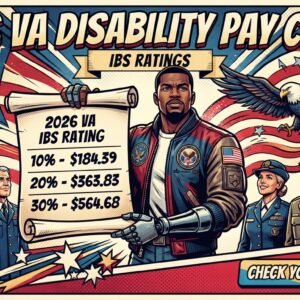
For veterans rated at 100% disability, the new monthly compensation rate has risen to $3,621.95, an increase from the previous year’s amount of $3,670.98. This increment underscores the VA’s commitment to aligning benefits with economic conditions, ensuring that veterans can meet their basic needs without undue financial strain.
Veterans rated at 70% will see their rates adjust to $1,644.11 per month, up from $1,516.41. This increase highlights the VA’s acknowledgment of the unique challenges faced by those with significant disabilities, allowing for a more supportive financial environment for these individuals and their families.
For a 50% disability rating, the monthly compensation will now amount to $1,083.39, increasing from $1,006.08, while those rated at 30% and below will also observe increments, although smaller in scale. For instance, the 30% rating will now receive $665.00, a necessary adjustment that aids in alleviating the rising costs veterans face.
An essential aspect of these changes is the general increase due to COLA adjustments, which are primarily designed to keep pace with inflation. Over the years, these adjustments have played a significant role in protecting the purchasing power of veterans’ benefits, signifying a continuing effort by the VA to ensure that economic changes do not adversely affect those who have served our nation.
New Debt Waiver Rules for Veterans
The Department of Veterans Affairs (VA) has recently established new debt waiver rules aimed at assisting veterans who find themselves in financial distress. These revisions are particularly crucial for disabled veterans, who may face added challenges that affect their financial stability. The primary objective of these updated rules is to offer a safety net, enabling veterans to manage their debts without the fear of losing essential resources.
Under the newly instituted regulations, eligibility criteria have been clarified to ensure that more veterans can benefit from the program. Veterans seeking debt waivers are now required to demonstrate financial hardship. This can involve proving a significant reduction in income due to unforeseen circumstances, such as medical emergencies or job loss. Additionally, the VA has made the application process more straightforward to facilitate access for veterans. Veterans must submit their claims through the VA’s official channels, and they will be evaluated based on income, debts, and overall financial situation.
The implications of these new debt waiver rules are substantial, particularly for those disabled veterans who may be under significant financial pressure. These regulations not only provide a pathway to alleviate existing debts but also promote better financial management practices. Veterans can benefit from having unpaid debts waived, thus protecting their benefits from potential garnishments or collections. By alleviating the burden of debt, the VA hopes to allow veterans to focus on their recovery and reintegration into civilian life.
Overall, the introduction of these debt waiver rules represents a critical step in supporting veterans who are struggling financially. As eligibility features and application processes evolve, it is essential for veterans to stay informed on these developments, ensuring they can adequately leverage available resources.
Special Monthly Compensation (SMC) Rates
Special Monthly Compensation (SMC) is a crucial benefit provided by the Veterans Affairs (VA) to veterans who face particular challenges related to their service-connected disabilities. This program is designed to compensate the individual for the additional hardships they may endure due to their condition. As of 2026, SMC rates have been updated, and it is essential for veterans to be aware of these changes to effectively navigate their benefits.
Eligibility for SMC varies, but generally, veterans with specific severe disabilities, such as the loss or loss of use of limbs, certain types of blindness, or the need for aid and attendance, qualify for SMC. It is important for veterans to fully understand the different levels of compensation available, as there are multiple tiers within the SMC program. Each tier corresponds to the severity of the disability and the accompanying challenges the veteran faces, with higher tiers offering increased compensation rates.
Currently, the SMC compensation rates are structured in a tiered format which assesses not only the physical disabilities but also the functional limitations caused by these conditions. The percentage of disability determines the respective tier, with rates reflecting the needs for additional support, such as in-home care or specialized medical assistance. Applying for these benefits can involve a detailed process, requiring documentation of service-connected disabilities and medical evidence supporting the claim. Veterans seeking SMC benefits should ensure they utilize the online VA portal or contact their local VA office for assistance with the application process.
Staying informed about the updated SMC rates and the eligibility requirements is critical for veterans and their families, as it directly affects the support and care they receive. Ensuring that all applications are thoroughly completed and submitted timely can enhance the opportunity for successful benefit reception.
Scams Targeting Veterans in 2026
In recent years, veterans have increasingly become targets for a variety of scams ranging from fraudulent calls to manipulative emails. The unique circumstances surrounding many veterans, including their eligibility for benefits and often trusting nature, are exploited by scammers. As of 2026, there is a marked rise in scams specifically targeting veterans, emphasizing the need for heightened awareness and protective strategies.
Common tactics utilized by scam artists include impersonating official government representatives, such as those from the Department of Veterans Affairs (VA). These impostors often claim to be offering direct assistance with benefits, only to ultimately seek sensitive information or fees in return. Some schemes involve fake charities purporting to support veterans, where contributions do not actually benefit those in need. Additionally, veterans may receive unsolicited calls regarding advances on claims or confirmation of benefits that often result in identity theft.
To guard against these scams, veterans should adopt several precautionary measures. First, it is crucial to verify the identity of any individual or organization requesting personal information. This can include calling back a number obtained from an official website or using search engines to find legitimate contact information. Remember, the VA will not ask for sensitive data through unsolicited calls or emails. Furthermore, veterans should remain skeptical of offers that seem too good to be true, such as guarantees of benefits or requests for upfront payments.
Reporting fraudulent activity is essential to combating these schemes. Veterans should utilize the resources available through the Federal Trade Commission (FTC) and the VA’s Office of the Inspector General (OIG). Both agencies provide ways to report scams and suspicious activities aimed at veterans, thus helping to protect others from falling victim to similar tactics.
Additional Resources for Veterans
Veterans seeking information regarding their benefits may find a multitude of resources available to them. The United States Department of Veterans Affairs (VA) serves as the primary source of information regarding services, benefits, and updates for veterans. Through their official website, veterans can access various tools, forms, and guides tailored to assist them in understanding and applying for their benefits.
In addition to the VA, local veterans service organizations (VSOs) are invaluable resources. These organizations provide support for navigating the complexities of the VA system, assisting veterans in claims and benefits applications. Prominent VSOs include the American Legion, Veterans of Foreign Wars (VFW), and Disabled American Veterans (DAV). They often have representatives available to help veterans in person, ensuring comprehensive and personalized support.
For veterans seeking emotional support or immediate assistance, there are hotlines and support groups available. The Veterans Crisis Line (1-800-273-8255) is a confidential resource where veterans can speak with trained crisis counselors 24/7. Additionally, organizations like Give an Hour provide free mental health services to veterans, active duty members, and their families.
Online platforms and forums also serve as communal spaces for veterans to share experiences and seek advice. Websites such as RallyPoint foster a sense of camaraderie among veterans while providing information on benefits and services. Social media groups can also be a means for veterans to connect with one another and stay informed about recent updates. Finally, government resources, such as Benefits.gov and the VA’s eBenefits portal, give a comprehensive overview of eligibility, application processes, and the breadth of available benefits, ensuring that veterans have the necessary information to access what they are entitled to.
Frequently Asked Questions about VA Benefits in 2026
As veterans navigate their entitlements, several common inquiries arise regarding the latest updates on VA benefits for the year 2026. One frequently asked question pertains to the Cost of Living Adjustment (COLA) increase. For 2026, the COLA is set to provide veterans with a substantial increase in their monthly benefits, reflecting the rise in inflation and cost of living. It is important for veterans to stay informed about these adjustments, as they significantly impact financial planning.
Another area of concern revolves around the debt waiver rules. Many veterans may find themselves in situations where they need clarification about the guidelines for debt waivers within the VA system. In 2026, the VA has implemented more streamlined processes which make it easier for veterans to apply for and receive waivers on certain types of debts. These changes are aimed at reducing financial burdens, ensuring veterans can focus on their well-being rather than accumulating debt.
Additionally, veterans often question how changes in policies affect specific benefits such as housing assistance, education grants, and disability compensation. Understanding the updated eligibility criteria and application processes is crucial for taking full advantage of these benefits. The VA has made strides in improving accessibility to information and services, but it remains vital for veterans to remain proactive in seeking updates.
Lastly, concerns related to scams targeting veterans are unfortunately prevalent. Veterans should be vigilant and informed about potential scams that seek to exploit their benefits. The VA offers resources for reporting fraud and educating veterans on how to protect themselves. In 2026, additional measures will be enforced to combat fraudulent activities.
Understanding these key aspects of VA benefits in 2026 can help veterans effectively manage their entitlements and protect their interests.
Conclusion and Call to Action
The Veterans Affairs updates for 2026 highlight the continual evolution of VA benefits, crucial for veterans and their families. Understanding these changes is vital, as they can significantly impact financial stability and overall quality of life. The adjustments made this year reflect ongoing efforts by the Department of Veterans Affairs to address the needs of those who have served in the military.
As veterans, staying informed about benefits is essential not only to take full advantage of the available resources but also to navigate potential barriers or scams that may arise. With the increasing prevalence of fraudulent schemes targeting veterans, awareness and vigilance are more important than ever. The VA provides tools and resources to help veterans differentiate between legitimate services and potential scams aimed at exploiting their needs.
To ensure you are receiving the most accurate and personalized information regarding your VA benefits, it is highly recommended to check the official VA website regularly. They provide updates on benefits, eligibility, and specific rates that have changed. Additionally, visiting your local VA office can provide invaluable assistance tailored to your particular situation. Engaging directly with VA representatives can clarify any uncertainty you may have and ensure you are equipped to make informed decisions about your benefits.
In conclusion, being proactive about understanding your VA benefits not only empowers you but also serves to protect your rights as a veteran. Make it a priority to stay informed and take the necessary steps to secure the support available to you in 2026 and beyond.

🇺🇸 IMPORTANT DISCLAIMER – Veterans Benefits Information
This site provides general information about U.S. Department of Veterans Affairs (VA) benefits for educational and informational purposes only.
- Not Official: We are NOT affiliated with, endorsed by, or connected to the U.S. Department of Veterans Affairs (VA), the Veterans Benefits Administration (VBA), the Veterans Health Administration (VHA), or any other government agency.
- No Legal/Financial Advice: The content on this website is for informational purposes only and does not constitute legal, financial, or medical advice. VA benefits rules change frequently – always consult with an accredited Veterans Service Officer (VSO) or a qualified professional for your specific situation.
- Official Sources: For official, binding information and to apply for benefits, always visit official .gov websites: VA.gov, Benefits.VA.gov, or SSA.gov.
- No Data Collection: This site does not collect, store, or process any personal information. It does not have login forms, contact forms, or any system to capture user data. We never ask for your Social Security Number, bank details, or any personal information.
- 🚨 Scam Alert: The VA and other government agencies never charge fees for benefit applications. If anyone asks for money to "process" your VA claim, it is a scam. Report it to the VA Office of Inspector General at VA.gov/OIG.
- Advertising: This site uses third-party advertising (Adsterra) to cover operational costs. We do not endorse or guarantee any products or services advertised.
📌 Information provided as of June 2026. Always verify current eligibility and rules with official .gov sources.
This site is not affiliated with the U.S. Department of Veterans Affairs or any government agency. All information is for educational purposes only. Please visit VA.gov for official information.
