
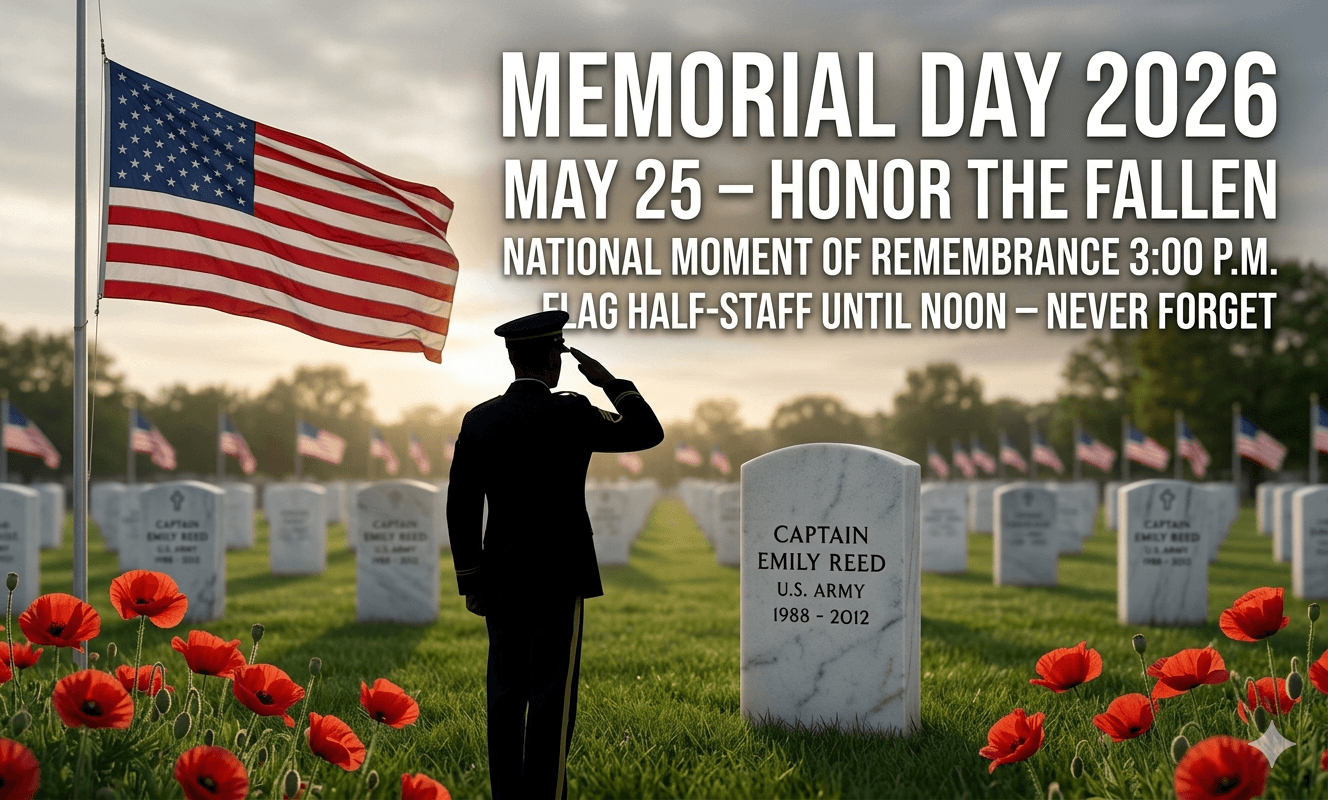
Introduction to Memorial Day
Memorial Day is a significant observance in the United States, dedicated to honoring military personnel who have died in the performance of their military duties. While many may confuse Memorial Day with Veterans Day, it is essential to recognize that the former is a solemn occasion meant specifically to remember those who made the ultimate sacrifice, rather than honoring all veterans.
The origins of Memorial Day date back to the post-Civil War era, particularly to May 30, 1868, when General John A. Logan proclaimed it as Decoration Day, a day to decorate the graves of the fallen soldiers. Over the years, the name transitioned to Memorial Day, reflecting its broader significance in commemorating American servicemen and servicewomen of all wars. The observance has continued to evolve, now formally recognized as a national holiday celebrated on the last Monday of May.

This article aims to clarify the meaning of Memorial Day and highlight its importance in the collective remembrance of those who served the country and paid the highest price. Through this exploration, we will delve into the history of the day, its traditions, and how citizens can participate in honoring the fallen. It is crucial to appreciate the observance with the respect it deserves, recognizing the profound nature of sacrifice made by these individuals who significantly contributed to the nation’s freedoms and ideals.

As we approach Memorial Day, let us remember that this day serves not only as a reminder of loss but also as a celebration of courage and commitment to the freedom we enjoy today. To honor these fallen heroes is to uphold the values of bravery, dedication, and sacrifice they embodied.
Memorial Day for Veterans: The Meaning, History, and Honoring the Fallen in 2026
Memorial Day honors U.S. military members who died in service. Learn the difference from Veterans Day, 2026 ceremonies, ways to honor fallen heroes, and the true meaning behind the holiday.
Memorial Day is not a day to thank living veterans for their service. It is a day to mourn and remember those who never came home.
This single distinction is the most important thing to understand. Veterans Day (November 11) honors all who served—living and dead. Memorial Day (the last Monday in May) is exclusively for those who made the ultimate sacrifice: the men and women who died while serving in the U.S. armed forces .
Veterans May Qualify for Extra Benefits
Check available financial assistance, healthcare programs and other opportunities that may apply to you.
Check EligibilityIf you take away only one thing from this article, let it be that. Mixing them up is not just incorrect—it diminishes what each day is meant to honor.
Here’s everything you need to know about Memorial Day 2026: the history, the ceremonies, the proper ways to honor the fallen, and how to observe the day with the respect it deserves.
What Veterans Need to Know Right Now
Memorial Day 2026 is Monday, May 25 .
The holiday is a federal holiday, which means government offices, banks, and many businesses are closed. It is often considered the unofficial start of summer, marked by barbecues, beach trips, and family gatherings.
But here’s what the cookout commercials won’t tell you: The day was created for a much heavier purpose.
Originally called “Decoration Day,” Memorial Day began after the Civil War as a tradition of decorating the graves of fallen soldiers with flowers, wreaths, and flags . The first widely observed Decoration Day was on May 30, 1868, proclaimed by General John A. Logan of the Grand Army of the Republic .
After World War I, the holiday expanded to honor those who died in all of America’s wars. In 1971, Congress passed the Uniform Monday Holiday Act, establishing Memorial Day as a federal holiday to be observed on the last Monday of May .
The 2026 context: This year, Memorial Day carries the additional weight of honoring service members killed during the current Iran war operations . The reality of ongoing conflict makes the holiday’s purpose immediate, not historical.
Memorial Day vs. Veterans Day: The Critical Difference
This confusion happens every single year. Here’s the simple breakdown:
| Holiday | Date | Honors | Who |
|---|---|---|---|
| Memorial Day | Last Monday in May | Those who DIED while serving | Fallen service members |
| Veterans Day | November 11 | ALL who served (living and dead) | All veterans |
What this means for you: If you post “Happy Memorial Day” or “Thank you for your service” to a living veteran on Memorial Day, you have missed the point entirely. Memorial Day is a day of mourning, not celebration. Veterans Day is for gratitude and thanks .
The Farmers’ Almanac puts it clearly: “This focus on those who made the ultimate sacrifice sets it apart from Veterans’ Day, which honors all military veterans, living and dead” .
Memorial Day 2026 Ceremonies Across America
Communities across the country are holding ceremonies to honor the fallen. Here are some of the major observances for 2026.
National Cemetery Ceremonies
The U.S. Department of Veterans Affairs hosts Memorial Day services at national cemeteries nationwide. Among them:
- Golden Gate National Cemetery (San Bruno, California) – 11 a.m. ceremony
- San Francisco National Cemetery (Presidio, California) – 11 a.m. ceremony
Milwaukee, Wisconsin – Wood National Cemetery
The VA is hosting a Memorial Day ceremony at Wood National Cemetery on the Milwaukee VA campus. This year’s theme is “Fulfilling Lincoln’s Promise”—a reference to President Abraham Lincoln’s words: “To care for him who shall have borne the battle and for his widow, and his orphan” .
Event details:
- Pre-ceremony concert: 9 a.m. (Milwaukee American Legion Band)
- Official ceremony: 9:25 a.m.
- Flyover: Approximately 10 a.m. (Commemorative Air Force Wisconsin Wing, vintage military aircraft, weather permitting)
- Features: Wreath-laying, balloon release, rifle volley, playing of taps, performance of “God Bless America” by Milwaukee Children’s Choir
- Keynote speaker: Retired U.S. Army Maj. Gen. Brian Winski
Volunteer opportunity: Volunteers are needed to place flags on gravesites on Saturday, May 23 at 9 a.m., and to remove flags on Tuesday, May 26 at 8:30 a.m. .
San Jose, California – Oak Hill Memorial Park
Oak Hill Memorial Park is holding its 100th-plus Memorial Day observance featuring:
- Keynote address by U.S. Marine Corps Col. Jerome Greco
- Flyover by the 129th Air Rescue Wing
- Special tribute to Vietnam War veterans
- Historical re-enactment of a wartime trench
- Music from the U.S. Air Force Band
- Military vehicle display
- Main ceremony: 11 a.m. in the veterans section
Alameda, California – USS Hornet Museum
The USS Hornet Sea, Air and Space Museum is partnering with the C4 Foundation and the Daughters of the American Revolution for a commemoration starting at 11 a.m.
Special feature: The C4 Foundation’s “Operation Charlie” will honor Navy SEAL Charlie “Chuck” Keating IV, who was killed in northern Iraq in 2006.
- Admission: Free for veterans and active-duty military; $25 for adults, $15 for seniors/students, $12 for children 7-17
- Museum hours: 10 a.m. to 5 p.m.
Meridian, Mississippi – East Mississippi Veterans Park
The annual Memorial Day program begins at 10:30 a.m. and will feature:
- Flyover
- 21-gun salute
- Reading of the names of the fallen
- Guest speaker: U.S. Army Chaplain Lt. Col. Jason Bird
Note from organizers: “You don’t have to have some kind of military connection. We want everybody to come out” .
Additional Bay Area Ceremonies
- Danville: 10:30 a.m. at All Wars Memorial (Oak Hill Park), followed by evening lighting of Mt. Diablo Beacon at 8:20 p.m.
- Los Gatos: 10-11 a.m. concert by San Jose Metropolitan Band, 11 a.m. ceremony with dove release
- Walnut Creek: 11 a.m. at Civic Park, keynote by (Ret.) Lt. Col. Karl Davis
- Redwood City: 10-11:30 a.m. at Union Cemetery, featuring traditional anvil firing
How to Properly Honor Fallen Veterans on Memorial Day
You don’t need to attend a formal ceremony to observe Memorial Day meaningfully. Here are appropriate ways to honor the fallen.
Attend a Local Ceremony
Check with your local VA medical center, national cemetery, VFW post, or American Legion hall. Most communities hold some form of observance. The VA National Cemetery Administration maintains a list of ceremonies at www.cem.va.gov/Memorial-Day/ .
Visit a National Cemetery or Veterans Memorial
If there’s a cemetery near you, go. Walk among the headstones. Read the names. The act of being present—of bearing witness—is itself a form of honor.
Place Flags or Flowers on Graves
Many cemeteries organize volunteer flag-placement events. In Milwaukee, for example, volunteers are placing flags on gravesites on May 23 . Contact your local VA cemetery to see if volunteers are needed.
Observe the National Moment of Remembrance
At 3:00 p.m. local time on Memorial Day, pause for one minute of silence. This is an official act of Congress, established to unify the nation in remembrance. No barbecues. No phone scrolling. Just silence .
Fly the Flag at Half-Staff
On Memorial Day, the U.S. flag should be flown at half-staff from sunrise until noon, then raised to full-staff from noon to sunset. The half-staff period honors the fallen. Raising it at noon symbolizes the nation’s resolve to carry on their work.
Share a Poem or Reflection
Read a short poem aloud. Share it on social media. Speak the names of the fallen. The act of saying their names out loud keeps their memory alive.
A few lines to consider:
“They shall not grow old, as we that are left grow old:
Age shall not weary them, nor the years condemn.
At the going down of the sun and in the morning
We will remember them.”
— Robert Laurence Binyon, “For the Fallen”“In Flanders fields the poppies blow
Between the crosses, row on row”
— John McCrae, “In Flanders Fields”
What Not to Do on Memorial Day
Don’t Say “Happy Memorial Day”
This is not a happy holiday. It is a day of solemn remembrance. “I hope you have a meaningful Memorial Day” or “We remember and honor the fallen today” are appropriate alternatives.
Don’t Thank a Living Veteran for Their Service on Memorial Day
Save that for Veterans Day. If you see a veteran on Memorial Day, a simple nod or “We remember your brothers and sisters who didn’t come home” is more appropriate.
Don’t Treat It as Just a Day Off
The three-day weekend is a privilege made possible by those who died. Acknowledge that before you fire up the grill. Take a moment of silence. Then enjoy your time with family—because that’s exactly what they died to protect.
Don’t Forget the Gold Star Families
Behind every fallen service member is a parent, spouse, child, or sibling who carries that loss every day. If you know a Gold Star family, reach out. A simple “I’m thinking of [name] today” means more than you know.
Don’t Fly the Flag Improperly
The flag should be flown at half-staff until noon, then raised to full-staff. Flying it incorrectly is not just a violation of flag etiquette—it misses the symbolism of the day .
The History of Memorial Day
Understanding the origins of Memorial Day helps ground its meaning.
Decoration Day (1868)
The holiday began after the Civil War, which claimed more American lives than any conflict before or since. Communities across the North and South began holding springtime tributes to the fallen, decorating graves with flowers and flags.
On May 5, 1868, General John A. Logan, commander-in-chief of the Grand Army of the Republic (an organization of Union veterans), issued General Order No. 11, designating May 30, 1868, as “Decoration Day” .
On that first Decoration Day, approximately 5,000 people gathered at Arlington National Cemetery to decorate the graves of more than 20,000 Union and Confederate soldiers.
Expansion to All Wars
After World War I, the holiday evolved from honoring only Civil War dead to honoring all Americans who died in any war. By the mid-20th century, “Memorial Day” became the more common name.
Uniform Monday Holiday Act (1971)
In 1968, Congress passed the Uniform Monday Holiday Act, which moved several federal holidays to designated Mondays to create three-day weekends. The act took effect in 1971, officially establishing Memorial Day as a federal holiday observed on the last Monday of May .
Memorial Day in 2026: Unique Considerations
This year’s Memorial Day carries specific weight.
Ongoing Conflict in Iran
Operations in Iran have resulted in American casualties. The Altoona Mirror notes that Memorial Day 2026 “is grasping the unwanted reality of having to honor brave military personnel killed during the current Iran war operations” .
For Gold Star families grieving losses from this conflict, the holiday is not abstract. It is raw.
2026 Ceremony Themes
The VA’s theme for 2026 is “Fulfilling Lincoln’s Promise,” drawn from President Lincoln’s second inaugural address: “To care for him who shall have borne the battle and for his widow, and his orphan” .
This theme emphasizes the ongoing duty of the nation—and each citizen—to care for those who served and the families of those who died.
Continued Evolution of the Holiday
Discussions continue about restoring Memorial Day to its original date of May 30 (rather than the last Monday) to refocus attention on remembrance rather than recreation. No legislative changes have been made as of 2026.
Memorial Day and Veterans Day: Your Simple Guide
One more time, because it bears repeating:
| Memorial Day (May 25, 2026) | Veterans Day (November 11, 2026) |
|---|---|
| Honors those who DIED in military service | Honors ALL who served (living and dead) |
| A day of mourning and remembrance | A day of gratitude and celebration |
| “We remember the fallen” | “Thank you for your service” |
| Flags at half-staff until noon | Flags at full-staff |
| National Moment of Remembrance at 3 p.m. | Parades and ceremonies nationwide |
If you only take away one distinction: Memorial Day is for the ones who didn’t come home. Veterans Day is for all who did (or are still serving).
How You Can Participate in 2026
Before Memorial Day (May 23-24)
- Volunteer to place flags at your local VA national cemetery. In Milwaukee, flag placement begins at 9 a.m. on May 23 .
- Check with your local VFW or American Legion about other volunteer opportunities.
- Plan your observance—decide which ceremony you’ll attend or how you’ll mark the moment.
On Memorial Day (May 25)
- Attend a local ceremony. Find one using the VA’s national cemetery locator or your local news.
- Observe the National Moment of Remembrance at 3:00 p.m. Pause for one minute of silence wherever you are.
- Fly the flag correctly. Half-staff from sunrise to noon. Full-staff from noon to sunset.
- If you visit a cemetery, walk the rows. Read the names. Say them out loud.
- Post with purpose on social media. Share a photo of a fallen hero. Share a poem. Don’t just post “Happy Memorial Day.”
- Enjoy your time with family—but pause first. Acknowledge the sacrifice before the barbecue.
After Memorial Day (May 26)
- Volunteer to remove flags if your local cemetery needs help. In Milwaukee, flag removal begins at 8:30 a.m. on May 26 .
- Stay connected with Gold Star families beyond the holiday weekend.
Common Misconceptions About Memorial Day
“Memorial Day is for all veterans.”
False. Memorial Day is specifically for those who died in service. Veterans Day is for all veterans.
“Memorial Day has always been a three-day weekend.”
False. Memorial Day was originally observed on May 30 regardless of the day of the week. The Uniform Monday Holiday Act of 1968 (effective 1971) moved it to the last Monday in May to create a three-day weekend .
“It’s just the start of summer.”
Hard false. That’s marketing. The holiday’s purpose is remembrance. The unofficial start of summer is a secondary (and less important) cultural association.
“You’re supposed to be sad all day.”
Not exactly. The day is for solemn remembrance, but enjoying time with family is not disrespectful. The fallen died to protect the American way of life, which includes gathering with loved ones. The key is to pause and acknowledge the sacrifice before you celebrate.
“Only veterans can attend ceremonies.”
False. Ceremonies are open to the public. As one Mississippi organizer said, “You don’t have to have some kind of military connection. We want everybody to come out” .
FAQ – Memorial Day for Veterans
Q: Is Memorial Day only for veterans who died in war?
A: Memorial Day honors all U.S. military members who died while serving, whether in combat or during peacetime .
Q: What is the difference between Memorial Day and Veterans Day?
A: Memorial Day honors those who DIED in service. Veterans Day honors ALL who served, living and dead .
Q: When is Memorial Day 2026?
A: Monday, May 25, 2026 .
Q: Is it appropriate to say “Happy Memorial Day”?
A: No. It is a day of solemn remembrance, not celebration. “Have a meaningful Memorial Day” or “We remember the fallen” are more appropriate.
Q: Can I thank a veteran for their service on Memorial Day?
A: It’s not incorrect, but it’s better suited for Veterans Day. Memorial Day is specifically for remembering those who died. If you see a veteran on Memorial Day, acknowledging the fallen is more appropriate.
Q: What is the National Moment of Remembrance?
A: At 3:00 p.m. local time on Memorial Day, Americans are asked to pause for one minute of silence to honor the fallen .
Q: How should the flag be flown on Memorial Day?
A: Half-staff from sunrise until noon. Full-staff from noon to sunset .
Q: What was the original name of Memorial Day?
A: Decoration Day, named for the tradition of decorating soldiers’ graves with flowers and flags .
Q: Are there ceremonies open to the public?
A: Yes. Most VA national cemeteries, VFW posts, and American Legion halls host public ceremonies. Check with local organizations for details .
Q: How can I honor a fallen veteran if I can’t attend a ceremony?
A: Observe the 3:00 p.m. moment of silence. Fly the flag correctly. Visit a local veterans memorial. Post a tribute on social media. Call a Gold Star family you know. Read the name of a fallen hero aloud.
Final Takeaway
Memorial Day is not about barbecues. It’s not about sales. It’s not about the unofficial start of summer.
Memorial Day is about the thousands of Americans who put on the uniform, kissed their families goodbye, and never came home.
It is about the graves in Arlington and in small-town cemeteries across the country. It is about the names on the Vietnam Wall and the newest casualties from ongoing conflicts. It is about the parents who will visit their child’s grave on Monday and the children who will grow up without a parent.
Here’s how you can honor them on May 25, 2026:
- Understand the meaning – This is for the fallen, not the living.
- Observe the 3:00 p.m. moment of silence – One minute. No phones. No talking. Just silence.
- Attend a ceremony – Find one near you. Show up. Listen.
- If you can’t attend, visit a cemetery – Walk among the headstones. Read the names.
- Fly the flag correctly – Half-staff until noon. Full-staff after.
- Post with purpose – Share a poem. Share a name. Don’t just post a generic “Happy Memorial Day.”
- Then, enjoy your time with family – Laugh. Eat. Swim. That’s what they died to protect. Just don’t forget why you have the day off.
They gave their today for your tomorrow. The least we can do is remember them.
The Historical Background of Memorial Day
The observance of Memorial Day has roots that extend back to ancient practices of honoring those who have lost their lives in military service. Various cultures, including the Greeks and Romans, held ceremonies honoring fallen warriors, showcasing a deep respect for the sacrifices made by individuals during warfare. Additionally, the various forms of remembrance reflected a societal recognition of the grief associated with loss in battle.
In the United States, the origins of Memorial Day can be traced to the aftermath of the Civil War. Following this devastating conflict, which claimed the lives of an estimated 620,000 to 750,000 soldiers, communities began organizing memorial services to commemorate those who died. One of the earliest known observances took place in May 1865, in Waterloo, New York, where residents decorated the graves of soldiers with flowers, thus initiating formal recognition of the day.
The practice evolved, gaining official recognition during the late 19th century. In 1868, General John A. Logan, the commander of the Grand Army of the Republic, issued General Order No. 11, which established Decoration Day on May 30. The intent was to decorate the graves of fallen soldiers with flowers, reflecting both remembrance and respect. Over the years, this observance expanded, and increasingly, it came to include all American service members who had died in various conflicts.
Following World War I, the focus of Memorial Day transitioned from honoring only Civil War soldiers to commemorating all U.S. military personnel who lost their lives in service to the nation. The day was officially named Memorial Day in 1971, and it was legislated to be observed on the last Monday in May, marking a solemn occasion dedicated to remembering the sacrifices made by those who served and died for their country.
Understanding the Difference between Memorial Day and Veterans Day
Memorial Day and Veterans Day are two significant observances that honor the contributions and sacrifices of those who have served in the military, yet they serve distinctly different purposes. Understanding these differences is crucial for proper observance and respect.
Memorial Day is observed on the last Monday of May each year. Its primary focus is on commemorating the men and women who died while serving in the United States Armed Forces. This solemn occasion is marked by various ceremonies, including memorial services, parades, and the placing of flags and flowers on gravesites of the fallen. The day provides a moment for reflection on the ultimate sacrifice made by these individuals in the name of freedom and national security. It is a time for honoring their memory and recognizing the significant impact their loss has had on families and communities.
On the other hand, Veterans Day is celebrated on November 11, commemorating all military veterans, both living and deceased. Originally known as Armistice Day, it marks the end of World War I and serves as a day to honor all those who have served in the United States military. While it encourages appreciation for the service of veterans, it also calls attention to the ongoing support they may need following their service. Veterans Day celebrations often include parades, public ceremonies, and various events aimed at recognizing the contributions of veterans to society.
In summary, while both Memorial Day and Veterans Day are dedicated to honoring those in military service, Memorial Day specifically remembers those who lost their lives, while Veterans Day celebrates all veterans. Understanding this vital distinction enhances the significance of each observance and ensures that proper respect is given to those who have served. Awareness of these differences also encourages deeper appreciation for the sacrifices made by both the fallen and living veterans.
Memorial Day Ceremonies in 2026
Memorial Day in 2026 will be marked by a series of solemn and respectful ceremonies that honor the sacrifices made by veterans and fallen servicemen and women. Across the nation, official government ceremonies will take place, featuring speeches by dignitaries, military displays, and the traditional laying of wreaths at memorials and cemeteries. These events will serve as a reminder of the bravery displayed by members of the armed forces throughout history.
One of the highlights of the ceremonies will be the National Memorial Day Observance at Arlington National Cemetery. This event will include a wreath-laying ceremony at the Tomb of the Unknown Soldier, attended by government officials and military leaders. During this ceremony, a moment of silence will be observed, providing attendees an opportunity to reflect on the sacrifices of those who gave everything for their country.
In addition to national observances, local communities will host various Memorial Day ceremonies. Many towns and cities will organize parades involving local veterans’ organizations, high school bands, and community groups. These parades will culminate in events where veterans share stories of their experiences, helping to educate younger generations on the significance of this day.
Veterans’ organizations play a crucial role in organizing Memorial Day events, creating opportunities for camaraderie and support among those who have served. Activities such as flag-raising ceremonies, vigils, and picnics are planned to foster community spirit while honoring the memory of those who made the ultimate sacrifice. It is essential for individuals to participate and engage in these ceremonies, as they serve both as a tribute to the fallen and as a catalyst for national reflection on the cost of freedom.
Ways to Honor Fallen Heroes on Memorial Day
Honoring fallen heroes on Memorial Day is a profound way to pay tribute to those who have made the ultimate sacrifice for their country. Engaging in meaningful activities not only commemorates their memory but also fosters a sense of unity among communities. Here are several ways individuals and groups can honor these courageous men and women.
One of the most heartfelt gestures is to visit local cemeteries where veterans are laid to rest. Placing flags or fresh flowers on their graves signifies respect and remembrance. Many communities organize events where volunteers come together to decorate veterans’ graves, reinforcing the commitment to honor those who served.
Participating in parades is another significant way to celebrate Memorial Day. Many towns host parades that include veterans, military personnel, and floats honoring the fallen. These public displays offer a chance to express gratitude and solidarity, while also educating younger generations about the significance of the day.
Community service projects present a unique opportunity to pay tribute by giving back. Organizing events like neighborhood clean-ups at local memorial sites or partnering with veterans’ organizations to support those in need can be impactful ways of honoring fallen heroes. Such initiatives not only preserve the legacy of the deceased but also help support living veterans and their families.
Modern technology also plays a role in remembrance. Utilizing social media platforms to share stories, images, and quotes about fallen heroes can reach a wide audience. Using designated hashtags helps to create a collective space for reflection and tribute, inviting others to join in honoring the fallen.
These activities represent just a few of the many meaningful approaches to honor those who have served and sacrificed. Each act of remembrance contributes to a greater understanding of the significance of Memorial Day and the ongoing appreciation for our veterans.
Traditional Symbols of Memorial Day
Memorial Day, observed in the United States, is a day of remembrance for those who have died in military service to the nation. Various symbols associated with this day hold significant meaning, helping to convey the profound respect and honor afforded to the fallen. One of the most recognizable symbols is the red poppy flower, which has become an emblem of remembrance for veterans and active military personnel alike. The origins of the poppy as a Memorial Day symbol can be traced back to the famous World War I poem “In Flanders Fields” by John McCrae. This poignant connection emphasizes the sacrifices made by servicemen and women and inspires individuals to reflect on their bravery.
Another poignant symbol of Memorial Day is the tradition of flying flags at half-mast. This act serves as a powerful reminder of the loss of life and the sacrifices made for the freedoms enjoyed by citizens. When flags are lowered in this manner, it represents mourning and respect, creating a solemn atmosphere conducive to reflection and honoring those who made the ultimate sacrifice. Communities across the nation participate in this practice, reinforcing the shared responsibility of remembrance.
Additionally, the playing of the national anthem on Memorial Day further reinforces the day’s reverence. The anthem not only evokes national pride but also serves as a tribute to those who have fought for the liberties enshrined within it. Such symbols and practices help frame Memorial Day not merely as a holiday, but as a vital observance that fosters unity and gratitude for the sacrifices committed by members of the armed forces.
The Role of Families and Communities in Memorial Day Observances
Memorial Day serves as an essential occasion for families and communities to commemorate and honor the service members who have made the ultimate sacrifice for their country. Across the nation, this holiday prompts gatherings that reaffirm the values of remembrance and gratitude. Families take the initiative to pay homage to their loved ones, visiting cemeteries where they place flowers and flags at the graves of fallen heroes. This act not only honors the memories of those lost but also reinforces familial bonds as shared stories and experiences are recounted.
Communities also play a significant role in these observances, often organizing events that invite participation from all members. From parades to memorial services, the collective act of remembrance strengthens community ties. By coming together to reflect on the sacrifices of veterans, local citizens foster a sense of unity and support. Public gatherings provide a platform for individuals to share personal stories and acknowledge the profound impacts of loss on families and neighborhoods alike.
The importance of these observances cannot be overstated; they create a space for healing and reflection while promoting awareness about the sacrifices made by military personnel. The integration of communal activities, such as memorial runs or volunteer opportunities, allows individuals to engage actively with the spirit of Memorial Day, transitioning from personal grief to collective acknowledgment. This unity serves not only to honor the fallen but also to educate younger generations about the significance of this day.
Ultimately, the contributions of families and communities in commemorating Memorial Day highlight the shared responsibility of remembering those who served. Through collective remembrance, they ensure that the legacy of fallen heroes endures and that their sacrifices are never forgotten.
The Importance of Proper Observance and Respect on Memorial Day
Memorial Day serves as a solemn reminder of the sacrifices made by military personnel who have fought and died in the line of duty. It is a day dedicated to honoring veterans and acknowledging their immense contributions to the freedom that citizens enjoy. However, the significance of Memorial Day is sometimes overshadowed by misconceptions and superficial celebrations that fail to reflect the weight of its meaning.
The significance of approaching Memorial Day with respect cannot be overstated. Many people mistakenly view it as merely the beginning of summer or as a day for leisure activities such as barbecues and shopping. This perspective can detract from the day’s primary purpose, which is to reflect on and pay tribute to those who made the ultimate sacrifice. Engaging in activities that trivialize Memorial Day can be viewed as a lack of respect for the fallen, as it may divert attention from the true essence of the occasion.
To properly observe Memorial Day, individuals are encouraged to engage in activities that truly honor the sacrifices of service members. This can include visiting cemeteries to lay flowers on veterans’ graves, participating in memorial services, or engaging in community events that emphasize remembrance. Moreover, those attending these activities should adopt a respectful demeanor, acknowledging that their presence is not just a tradition but a tribute to those who paid the ultimate price. Sharing stories, listening to the experiences of surviving family members, and educating oneself about the history behind Memorial Day can enrich one’s understanding of the day’s profound significance.
Proper observance of Memorial Day is about ensuring the day remains a true representation of remembrance and respect. By consciously choosing to engage in respectful activities and educating ourselves about the sacrifices made by our military, we honor the memory of those who have served. Such observance cultivates a culture of respect and appreciation, which is essential in maintaining the dignity that Memorial Day represents.
Conclusion: Reflecting on the True Meaning of Memorial Day
As we approach Memorial Day, it is essential to reflect on its significance and the profound impact it holds for veterans and their families. This day, dedicated to honoring the men and women who made the ultimate sacrifice in service to our country, transcends mere celebration. It serves as a poignant reminder of the courage and dedication exhibited by those in the armed forces, who risked everything to protect our freedoms.
The history of Memorial Day is intertwined with our nation’s journey, tracing back to the aftermath of the Civil War when the need to commemorate fallen soldiers became evident. Over time, this solemn occasion has evolved into a national observance, allowing us to pay tribute not only to those from past conflicts but also to contemporary heroes. The observances and traditions surrounding Memorial Day create a collective space for gratitude and remembrance, further emphasizing the importance of recognizing the sacrifices made by countless individuals.
In acknowledging Memorial Day, we must foster a culture of remembrance that extends beyond a single day each year. By participating in community events, visiting memorials, or simply taking time to reflect, individuals can contribute to a collective commitment to honor our fallen soldiers. Encouraging discussions about the significance of this day and the values that it upholds can inspire future generations to appreciate the cost of freedom.
Ultimately, Memorial Day is not only about mourning those lost but also about celebrating their lives and the values they fought to protect. By committing to meaningful observance of this day, we can ensure that the legacy of our veterans lives on. Let us carry forth the spirit of memorialization, recognizing that every act of remembrance contributes to a brighter future grounded in respect and gratitude.

🇺🇸 IMPORTANT DISCLAIMER – Veterans Benefits Information
This site provides general information about U.S. Department of Veterans Affairs (VA) benefits for educational and informational purposes only.
- Not Official: We are NOT affiliated with, endorsed by, or connected to the U.S. Department of Veterans Affairs (VA), the Veterans Benefits Administration (VBA), the Veterans Health Administration (VHA), or any other government agency.
- No Legal/Financial Advice: The content on this website is for informational purposes only and does not constitute legal, financial, or medical advice. VA benefits rules change frequently – always consult with an accredited Veterans Service Officer (VSO) or a qualified professional for your specific situation.
- Official Sources: For official, binding information and to apply for benefits, always visit official .gov websites: VA.gov, Benefits.VA.gov, or SSA.gov.
- No Data Collection: This site does not collect, store, or process any personal information. It does not have login forms, contact forms, or any system to capture user data. We never ask for your Social Security Number, bank details, or any personal information.
- 🚨 Scam Alert: The VA and other government agencies never charge fees for benefit applications. If anyone asks for money to "process" your VA claim, it is a scam. Report it to the VA Office of Inspector General at VA.gov/OIG.
- Advertising: This site uses third-party advertising (Adsterra) to cover operational costs. We do not endorse or guarantee any products or services advertised.
📌 Information provided as of June 2026. Always verify current eligibility and rules with official .gov sources.
This site is not affiliated with the U.S. Department of Veterans Affairs or any government agency. All information is for educational purposes only. Please visit VA.gov for official information.
