
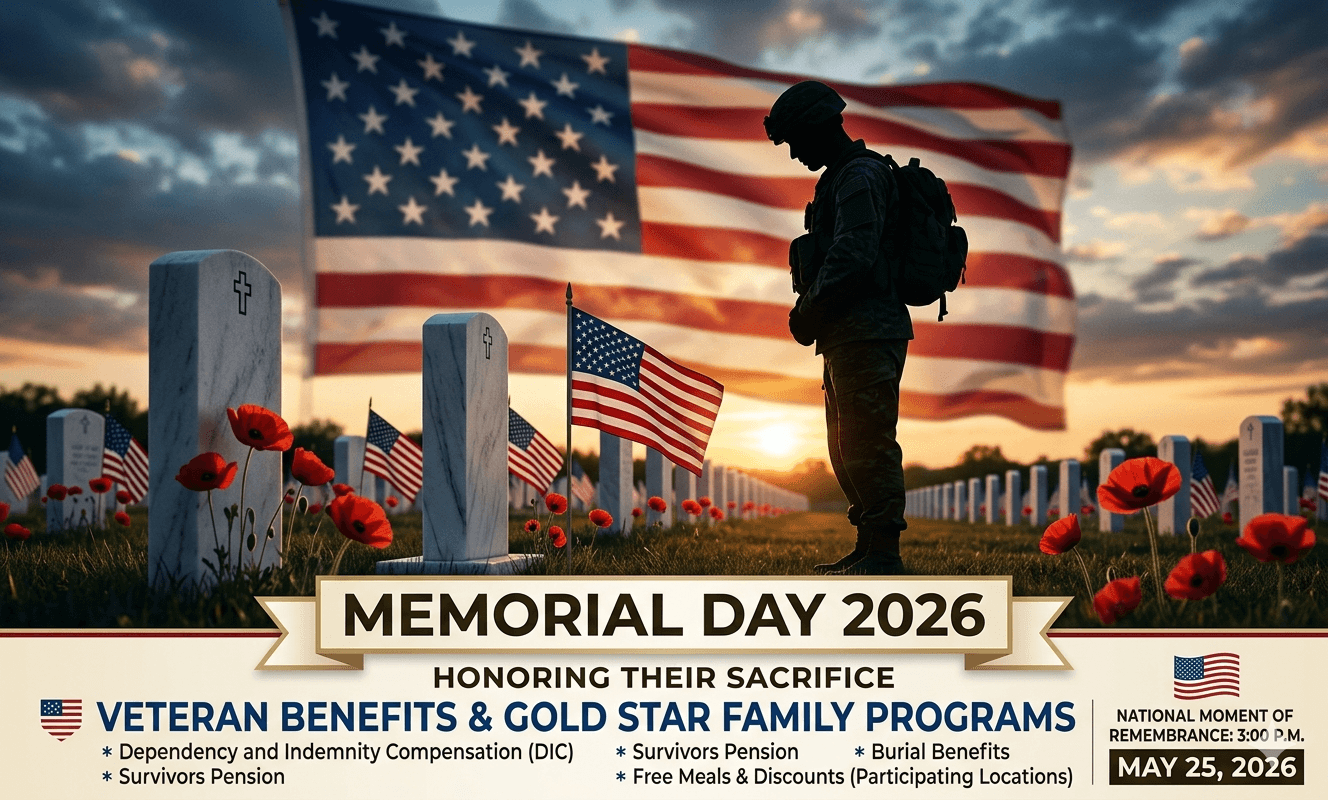
Introduction to Memorial Day and Its Significance
Memorial Day, observed annually on the last Monday in May, serves as a solemn occasion dedicated to honoring and remembering the men and women who made the ultimate sacrifice while serving in the United States Armed Forces. Initially commemorated as Decoration Day following the Civil War, the observance of Memorial Day has evolved over the years, intertwining itself with American culture and history, making it an essential part of national remembrance.
The significance of Memorial Day transcends its position as a federal holiday marked by parades, barbecues, and retail sales. It is a poignant reminder of the sacrifices made by military personnel who have fought and died in defense of freedom and democracy. On this day, citizens are encouraged to reflect not only on those who served but on the impact of these sacrifices on their families and communities. In this context, the day serves as a time for gratitude, recognition, and remembrance.

While it is commendable to acknowledge the discounts and complimentary meals often offered to living veterans during Memorial Day, it is crucial to recognize the day’s true essence. The focus should pivot towards honoring the deceased service members and their families who bear the enduring weight of loss. As we gather with friends and family, it is vital to remember the ultimate price paid by these heroes, understanding that the benefits available to their families are an essential aspect of the legacy that Memorial Day commemorates. This holiday prompts us to consider the broader implications of sacrifice and support for those who continue to bear the impact of loss.
VA Survivor Programs Overview

As of 2026, the Department of Veterans Affairs (VA) offers several vital programs tailored to support the families of deceased service members. These programs are essential in ensuring that the surviving family members can navigate the difficult times following the loss of their loved ones. The primary VA survivor programs include Dependency and Indemnity Compensation (DIC), the VA Survivors Pension, and various burial benefits.
Dependency and Indemnity Compensation (DIC) is a monthly benefit paid to eligible survivors of service members who died in the line of duty or from service-related injuries or diseases. This benefit supports widows, widowers, and children, providing financial assistance to help them maintain a standard of living after the loss of their primary wage earner. Eligibility criteria for DIC include the need for evidence of the service member’s death being connected to their military service, as well as the survivor’s relationship to the deceased.
The VA Survivors Pension is another critical financial aid program designed for low-income surviving spouses and children. This pension aims to ensure that eligible survivors who face economic hardship receive necessary support to meet their basic needs. The computation of the pension amount considers the survivor’s income and the number of dependents, ensuring it acts as a safety net for families in financial distress.
In addition to these compensation programs, the VA also provides burial benefits for eligible veterans, which can include reimbursement for burial costs, headstones, and burial flags. These benefits not only alleviate some financial burdens but also honor the service of deceased veterans. Together, these VA survivor programs form a comprehensive framework aimed at supporting the families of those who served, ensuring that they have access to financial assistance and recognition in their time of need.
Memorial Day Veteran Benefits 2026: VA Survivor Programs, Food Deals, and Legislative Changes
Veterans May Qualify for Extra Benefits
Check available financial assistance, healthcare programs and other opportunities that may apply to you.
Check EligibilityMemorial Day veteran benefits for 2026 include VA burial benefits, DIC payments, Survivors Pension, special Hazlewood Act tuition, and free meals at restaurants like Benihana and Fogo de Chão. Updated May 23, 2026.
Memorial Day isn’t about free meals for living veterans. It’s about the benefits owed to the families of those who never came home.
If you are a Gold Star family member—a surviving spouse, child, or parent of a service member who died in the line of duty—there are specific VA benefits designed to help you. And if you’re a living veteran, the best way to observe Memorial Day is to know what benefits exist for the families of the fallen, and to help them access those benefits.
Here’s what’s available in 2026: Dependency and Indemnity Compensation (DIC), VA Survivors Pension, burial benefits, and—in Texas—special Hazlewood Act tuition exemptions for surviving dependents. Plus, several restaurant chains are offering free meals to veterans and active-duty military over the Memorial Day weekend, but remember: those deals are for the living. The real purpose of the day is to honor the dead.
Here’s everything you need to know about Memorial Day benefits in 2026.
What Veterans and Families Need to Know Right Now
Memorial Day 2026 is Monday, May 25 .
This holiday is specifically for honoring those who died in military service—not for thanking living veterans. If you are a surviving family member, your sacrifice is what this day is about.
The VA’s National Cemetery Administration manages 157 national cemeteries across 44 states and Puerto Rico, along with dozens of soldiers’ lots and monument sites. On Memorial Day, every VA national cemetery will place a wreath on every gravesite, and staffed locations will host public ceremonies .
New for 2026: Legislation is advancing in Congress to increase Special Monthly Compensation (SMC) for severely disabled veterans by $10,000 annually and to increase Dependency and Indemnity Compensation (DIC) payments for Gold Star families over the next two years .
If you are a surviving spouse or dependent of a fallen service member, read the benefits section below carefully. You may be entitled to monthly tax-free payments, education benefits, burial benefits, and health care.
Benefits for Gold Star Families and Surviving Dependents
Memorial Day is first and foremost about the families of the fallen. Here are the benefits available to surviving spouses, children, and dependent parents.
Dependency and Indemnity Compensation (DIC)
DIC is a tax-free monthly benefit paid to eligible survivors of:
- Service members who died in the line of duty
- Veterans whose death resulted from a service-connected injury or illness
- Veterans who were totally disabled from a service-connected condition at the time of death
Who qualifies:
- Surviving spouse (if not remarried before age 57)
- Unmarried dependent children under 18 (or up to age 23 if in school)
- Dependent parents (income-based)
2026 legislative update: H.R. 6047, the “Sharri Briley and Eric Edmundson Veterans Benefit Expansion Act,” would increase DIC payments for Gold Star families over the next two years. The bill passed the House in May 2026 and is awaiting Senate action .
VA Survivors Pension
The VA Survivors Pension is a monthly payment to qualified surviving spouses and unmarried dependent children of wartime veterans who meet certain income requirements .
Eligibility:
- The veteran must have served at least 90 days of active duty, with at least one day during a designated war period
- The surviving spouse must not have remarried (or remarried after age 57)
- The survivor’s annual income must be below a certain threshold
This is separate from DIC. Some survivors may qualify for both.
Burial Benefits
The VA provides burial benefits for eligible veterans and their family members at no cost to the family .
Benefits include:
- Burial in a VA national cemetery (157 locations nationwide)
- A government-furnished headstone or marker
- A burial flag to drape over the casket
- Presidential Memorial Certificate
- Military funeral honors (at least two uniformed service members, including the playing of Taps)
2026 fact: The National Cemetery Administration received the highest customer satisfaction rating from the American Customer Satisfaction Index of any organization—public or private—for the eighth year in a row .
VA Health Care for Family Members
Eligible surviving spouses and children may qualify for CHAMPVA (Civilian Health and Medical Program of the Department of Veterans Affairs), which covers a portion of medical costs. The Civilian Health and Medical Program of the Department of Veterans Affairs (CHAMPVA) is a comprehensive health care program .
Hazlewood Act (Texas Only)
If you are the surviving spouse or dependent child of a Texas veteran who:
- Died in the line of duty
- Died from a service-connected injury or illness
- Was 100% totally and permanently service-connected disabled
You may qualify for 150 hours of tuition exemption at Texas public colleges and universities—per eligible dependent, not shared among the family .
“If the whole family wanted to go to the same school at the same time on the same day, that is permissible.” — Marcela Clay, Air Force Veteran and Hazlewood specialist
This is one of the most generous state-level education benefits for Gold Star families in the country.
2026 Legislative Updates Affecting Veterans and Gold Star Families
Two bills recently passed the House of Representatives with bipartisan support .
H.R. 1041 – Veterans 2nd Amendment Protection Act
This bill protects veterans from losing their Second Amendment rights without due process simply because they need help managing their VA benefits.
Background: For decades, VA bureaucrats have blocked more than 250,000 veterans with fiduciaries from exercising their constitutional rights by automatically reporting them to the National Instant Criminal Background Check System (NICS), often without a judicial ruling .
H.R. 6047 – Sharri Briley and Eric Edmundson Veterans Benefit Expansion Act
This bill would expand support for veterans with catastrophic service-connected disabilities and surviving military families by:
- Increasing Special Monthly Compensation (SMC) payments for severely disabled veterans by $10,000 annually
- Increasing Dependency and Indemnity Compensation (DIC) payments for Gold Star families over the next two years
These changes would provide meaningful relief to more than 500,000 veterans and their families .
Free Meals for Veterans on Memorial Day 2026 (Living Veterans)
If you are a living veteran or active-duty service member, several restaurants are offering free or discounted meals on Memorial Day. Remember: These deals honor the living, but the day itself honors the fallen. Enjoy the meal, but take a moment to remember why you have the day off.
What you need: Most offers require proof of service—a military ID, veteran ID, or DD214. Keep it with you.
Benihana – Free Hibachi Entrée (with appetizer purchase)
Veterans, active-duty military, reserves, first responders, and Gold Star families can get a complimentary five-course teppanyaki entrée (steak, chicken, tofu, shrimp, or salmon) with the purchase of an appetizer or starter. Valid May 22–25, dine-in only .
Fogo de Chão – 50% Off Full Churrasco
Military veterans and active-duty personnel get 50% off the Full Churrasco or Indulgent Churrasco (all-you-can-eat meats served tableside). Accompanying guests get 10% off. Valid May 22–25 .
Perkins Restaurant & Bakery – Free Magnificent Seven Breakfast
Military personnel can receive a free Magnificent Seven breakfast on Memorial Day (May 25 only) with valid military ID .
Kona Grill – Free Entrée with Appetizer Purchase
Veterans, active-duty military, reserves, and first responders get a complimentary entrée from a select menu (pad Thai, mac nut chicken, stir fry, or penne) with appetizer purchase. Valid May 22–25, dine-in only .
RA Sushi – Free Entrée with Appetizer Purchase
Complimentary entrée from select menu (teriyaki chicken, yakisoba, salmon poke, or cray monkey roll) with appetizer purchase. Valid May 22–25, dine-in only .
STK Steakhouse – Free Entrée
Complimentary entrée from select menu (steak frites, maple-rubbed salmon, mushroom truffle tagliatelle, or free-range chicken). Valid May 22–25, dine-in only .
Small Sliders – 10% Discount
Show valid military ID for 10% off on Memorial Day .
Murdoch’s – 15% Off In-Store
Active and veteran military get 15% off most items, an additional 15% off clearance clothing and accessories, and 10% off firearms, optics, and ammunition. Valid May 23–25, in-store only .
Ways to Give Back on Memorial Day
Memorial Day isn’t just about receiving—it’s about honoring. Here are ways to participate in remembrance .
Volunteer at a VA National Cemetery
The National Cemetery Administration expects more than 70,000 volunteers to participate in memorial activities in more than 100 VA national cemeteries throughout “Memorial May” .
Opportunities include:
- Placing flags on gravesites
- Assisting with wreath-laying ceremonies
- Helping with public events
Find volunteer opportunities at www.cem.va.gov/volunteer/ .
Attend a Memorial Day Ceremony
VA national cemeteries nationwide are hosting public ceremonies on May 25. Find one near you through the VA’s cemetery locator.
Example: The National Memorial Cemetery of Arizona in Phoenix will host an annual Memorial Day Ceremony and outreach on May 25 from 8:00-9:00 a.m. .
Participate in Carry The Load
Carry The Load volunteers will march in 75 locations across the country, including three VA national cemeteries (Tahoma, Los Angeles, and Jefferson Barracks). The signature May 24 Dallas Memorial March along the historic Katy Trail is open to all who want to carry signs, banners, and American flags honoring fallen friends or family members .
Submit a Fallen Heroes Request (Travis Manion Foundation)
The Travis Manion Foundation’s The Honor Project will visit over 30 VA national cemeteries over Memorial Day weekend. Families can submit a Fallen Heroes request, and a foundation volunteer will visit the gravesite, lay a hand-crafted commemorative token, and pause for a moment of reflection .
Use the Veterans Legacy Memorial Website
VLM is the nation’s largest online memorial space dedicated to Veterans, with more than 10.5 million interactive pages where family, friends, and others can submit written tributes, photos, biographies, documents, and other information. Over 5.75 million decedents—from the Revolutionary War to current conflicts—are interred in VA national cemeteries .
Donate Through Restaurant Promotions
Blaze Pizza will donate $1 for every 11-inch pizza sold on Memorial Day to Folds of Honor, which funds educational scholarships for spouses and children of fallen or disabled service members and first responders .
In-N-Out Burger is inviting loved ones to share memories of fallen heroes at inosalutes.com. One Gold Star family will receive 365 meal cards—free food for an entire year. The promotion spotlights the Mighty Oaks Foundation (veteran PTSD support) and the Children of Fallen Patriots Foundation (college scholarships for children of fallen service members) .
The National Moment of Remembrance
At 3:00 p.m. local time on Memorial Day, Americans are asked to pause for one minute of silence. This is an official act of Congress, established to unify the nation in remembrance .
How to observe: Stop what you’re doing. Put down your phone. Stand if you can. Bow your head. Remember the fallen.
Common Mistakes Veterans and Families Make
Mistake #1: Confusing Memorial Day with Veterans Day
This is the most common mistake. Memorial Day is for the fallen. Veterans Day (November 11) is for all who served—living and dead. If you post “Happy Memorial Day” or thank a living veteran for their service on Memorial Day, you have missed the point.
Mistake #2: Not Applying for DIC or Survivors Pension
Many surviving spouses don’t know they qualify for monthly benefits. The VA Survivors Pension and DIC can provide tax-free income. If you lost a loved one who served, apply. The Texas Veterans Commission and Veteran County Service Officers can help with claims .
Mistake #3: Assuming Burial Benefits Are Only for Combat Deaths
Burial in a VA national cemetery is available to all eligible veterans, active-duty service members, and eligible family members—regardless of how they died .
Mistake #4: Not Knowing About Hazlewood for Gold Star Families
In Texas, surviving spouses and children of fallen or 100% disabled veterans may each qualify for 150 hours of tuition exemption at public colleges and universities—not shared among the family .
Mistake #5: Forgetting the Moment of Remembrance
The 3:00 p.m. moment of silence takes 60 seconds. Most people forget it exists. Set an alarm on your phone for 2:55 p.m. on May 25. Don’t miss it.
FAQ – Memorial Day Veteran Benefits 2026
Q: What benefits are available for surviving spouses of fallen veterans?
A: Dependency and Indemnity Compensation (DIC, tax-free monthly payments), VA Survivors Pension (income-based), burial benefits, CHAMPVA health care, and in Texas, Hazlewood Act tuition exemption .
Q: Can I get a free meal as a veteran on Memorial Day?
A: Yes. Benihana, Perkins, Kona Grill, RA Sushi, STK Steakhouse, and others offer free or discounted meals with proof of military service. See the list above .
Q: Do I need to bring my military ID for restaurant deals?
A: Yes. Most offers require a military ID, veteran ID, or DD214. Call ahead to confirm your local restaurant is participating .
Q: What is DIC for Gold Star families?
A: Dependency and Indemnity Compensation is a tax-free monthly benefit paid to eligible surviving spouses, children, and dependent parents of service members who died in the line of duty or veterans whose death was service-connected .
Q: Can surviving children get education benefits?
A: Yes. DIC provides benefits for unmarried children under 18 (or up to 23 if in school). In Texas, surviving children of fallen or 100% disabled veterans may qualify for 150 hours of Hazlewood Act tuition exemption .
Q: Are there Memorial Day ceremonies at VA national cemeteries?
A: Yes. Every VA national cemetery hosts ceremonies on Memorial Day. Wreaths are placed on every gravesite. Find a location at www.cem.va.gov .
Q: How can I honor a fallen veteran if I can’t attend a ceremony?
A: Observe the 3:00 p.m. National Moment of Remembrance. Post a tribute on the Veterans Legacy Memorial website. Volunteer to place flags at a local cemetery. Reach out to a Gold Star family you know.
Q: Is the Hazlewood Act available outside Texas?
A: No. Hazlewood is a Texas-specific benefit for Texas veterans and their families. Check with your state’s VA office for similar benefits in your state .
Final Takeaway
Memorial Day is not about free meals. It’s not about barbecues. It’s not about the unofficial start of summer.
Memorial Day is about the 1.1 million Americans who died serving this country —and the families they left behind .
If you are a surviving spouse or dependent, you may be entitled to VA benefits that can help you rebuild your life: DIC, Survivors Pension, burial benefits, health care, and in Texas, tuition exemptions. Apply for them. You earned them through your sacrifice.
If you are a living veteran, enjoy the free meal at Benihana or Perkins—but before you take the first bite, pause. Remember the ones who never came home. Say their names if you know them. Observe the 3:00 p.m. moment of silence.
And if you’re looking for the most meaningful way to spend the day, volunteer at a VA national cemetery. Place a flag on a grave. Attend a ceremony. Visit the Veterans Legacy Memorial website and leave a tribute.
Here’s your action plan for May 25, 2026:
- If you’re a Gold Star family member: Contact the VA or your county Veterans Service Officer to apply for DIC, Survivors Pension, and burial benefits you may be owed. In Texas, apply for Hazlewood Act tuition exemption.
- If you’re a living veteran: Take advantage of free meal deals if you wish—but remember why the day exists. Take a moment of silence at 3:00 p.m.
- For everyone: Attend a Memorial Day ceremony at your local VA national cemetery. Or volunteer to place flags on gravesites. Or visit the Veterans Legacy Memorial website and write a tribute.
- Never say “Happy Memorial Day.” Say “We remember them.”
They gave their lives. The least we can do is remember.
Understanding Dependency and Indemnity Compensation (DIC)
Dependency and Indemnity Compensation (DIC) is a vital benefit provided by the Department of Veterans Affairs (VA) designed to offer financial support to the surviving spouses, children, and dependent parents of deceased veterans. The aim of DIC is to assist these family members in coping with the financial impact of the loss of their loved one, especially when the death is linked to the veteran’s military service.
To qualify for DIC, the death of the veteran must generally be a result of a service-related disability or an injury sustained during active duty. Additionally, certain criteria must be met, including the veteran’s service duration and the nature of their discharge. Surviving spouses must have been legally married to the veteran at the time of death; children must be unmarried and under the age of 18, and dependent parents may also be eligible based on their dependency status.
The compensation amount is determined by factors such as the veteran’s prior service ratings and the circumstances surrounding their death. DIC payments are adjusted annually to account for the cost of living, ensuring that they remain relevant for the financial demands faced by the survivors. Currently, the standard monthly rate for DIC is established by the VA, but additional allowances may apply depending on specific situations, such as the number of dependents or a need for aid and attendance.
To apply for DIC benefits, eligible family members must submit a claim through the VA. The application process involves completing various forms and providing necessary documentation, including documentation of the veteran’s service and proof of the relationship to the deceased. It is advisable to seek assistance from a VA representative or a veterans service organization to navigate the application efficiently.
Exploring VA Survivors Pension Benefits
The VA Survivors Pension is a financial assistance program designed to support low-income surviving spouses and children of veterans. This benefit aims to provide a stable source of income for those who have lost their military family member, recognizing the sacrifices made by service members and their families. Unlike Dependency and Indemnity Compensation (DIC), which is based on the service member’s disability or death related to military service, the Survivors Pension is primarily income-based and serves to assist those facing financial hardship.
Eligibility for the VA Survivors Pension hinges on several factors including the veteran’s service duration, the widow or widower’s income, and the presence of dependent children. Specifically, the veteran must have served a minimum period during war time, and their surviving spouse or children must meet strict income limits to qualify. Current benefits can vary based on several variables, and the VA periodically updates the income thresholds, thus keeping the program accessible for those in need.
The application process for the VA Survivors Pension can be multifaceted. Surviving spouses or children must complete an application form, which can be submitted online via the VA’s website or by mail. Supporting documents such as marriage certificates, birth certificates for children, and evidence of the veteran’s military service are typically required to process the application efficiently. After submission, applicants may face a waiting period while their paperwork is reviewed; this can take several months depending on the complexity of the case.
In summary, the VA Survivors Pension provides crucial assistance to low-income surviving spouses and children of veterans, setting itself apart from DIC through its focus on income qualifications and financial need rather than military-casualty-related issues. Understanding these benefits is essential for those who are eligible and can significantly improve their financial situations during a difficult time.
VA Burial Benefits in 2026
The Department of Veterans Affairs (VA) provides significant burial benefits designed to help support the survivors of service members. These benefits are crucial during a time of loss, addressing the various costs associated with burial expenses. In 2026, veterans’ families may access two primary types of burial allowances: the burial allowance and the plot allowance, both of which aim to ease the financial burden during this difficult period.
The VA burial allowance provides a direct reimbursement for expenses incurred in the burial of eligible veterans. This allowance can cover a range of costs, including the funeral service, transportation of remains, and a portion of the burial plot. Specifically, the monetary amount for the burial allowance may vary based on the circumstances of the veteran’s death and the date of burial. As of 2026, survivors can expect updates in the maximum allowance amounts, reflecting the increasing costs of funeral services.
Another critical aspect of VA burial benefits is the option for a burial in a national cemetery. Eligible veterans can be interred at no charge, which includes the gravesite, opening and closing of the grave, and a headstone or marker. Facilities that provide military honors may also be available, ensuring the veteran receives due recognition for their service. In 2026, it is essential for survivors to be aware of any legislative changes that may affect available burial options or services.
Overall, the VA burial benefits program serves as an integral part of the assistance provided to the families of veterans, ensuring they can honor their loved ones while also receiving financial support in managing burial arrangements. Staying informed of any updates is vital for those navigating these benefits in 2026 and beyond.
Special Hazlewood Act Tuition Exemptions
The Special Hazlewood Act is a significant legislative measure in Texas that offers educational benefits to the dependents of service members who lost their lives while on active duty. This program is designed to ease the financial burdens that surviving family members often encounter when pursuing higher education. By utilizing this exemption, eligible dependents have the opportunity to attend public colleges or universities in Texas without being burdened by the cost of tuition.
To qualify for the benefits under the Special Hazlewood Act, certain eligibility requirements must be met. It is imperative that the applicant demonstrate their relationship to the veteran or service member whose death was service-related. Generally, this benefit extends to the children of eligible service members, and in some cases, to spouses. The applicant must also meet specific age criteria, and must not have previously used other educational benefits through programs like the GI Bill.
One of the most compelling aspects of the Hazlewood Act is that it covers tuition and mandatory fees, making higher education more accessible for dependents during a challenging time. This exemption can significantly reduce the financial burden associated with higher education, thereby allowing the survivors to focus on their studies rather than the strain of mounting debt. Additionally, the program showcases the state’s commitment to honoring the sacrifices made by service members and their families.
In conclusion, the benefits provided under the Special Hazlewood Act offer crucial support to the dependents of service members who paid the ultimate sacrifice. By understanding the eligibility criteria and the application process, surviving family members can effectively utilize these educational opportunities to secure a brighter future.
Memorial Day Food Deals for Veterans and Active Duty Military
During Memorial Day weekend in 2026, veterans and active duty military personnel can take advantage of a variety of food deals and discounts offered by several prominent restaurants. This special occasion not only serves as a time of remembrance but also as an opportunity for eateries to honor the brave individuals serving in the military. Notably, restaurants such as Benihana and Fogo de Chão are among the establishments extending their gratitude through exclusive discounts.
Benihana, a popular Japanese steakhouse chain, typically offers veterans a discount on meals during this commemorative weekend. This provides a chance for veterans and active duty members to enjoy their unique teppanyaki dining experience at a reduced cost. Meanwhile, Fogo de Chão, known for its Brazilian steakhouse concept, often features discounts for military personnel, inviting them to delve into a sumptuous array of meats and extensive salad bar options at a more advantageous price. These establishments recognize the sacrifices made by veterans and active duty military members, making it easier for them to enjoy a delicious meal with family and friends.
It is important to remember that these food deals generally apply to living veterans and active duty members. The intention is to acknowledge and appreciate their service, thereby fostering a supportive community. Additionally, throughout the Memorial Day weekend, readers are encouraged to support Gold Star families, ensuring that the focus extends beyond just the living veterans to those who have lost family members while serving. This holistic approach emphasizes the importance of honoring all who have served, making the Memorial Day celebrations more meaningful.
Legislative Changes Impacting Veteran Benefits
In recent years, several notable legislative changes have been introduced to enhance veteran benefits, particularly those impacting families of deceased service members. One significant piece of legislation is the Veterans Benefits and Transition Act (VBTA), which has undergone amendments to better support grieving families. These changes aim to streamline the process for survivors seeking benefits, thereby reducing the bureaucratic obstacles that often hinder timely access to support.
Additionally, the newly enacted provisions provide increased funding for mental health services aimed at veterans and their families. This funding is critical as it acknowledges the emotional and psychological challenges faced by families following the loss of a loved one in military service. The allocation of these resources intends to bolster community-based support systems, connecting survivors with necessary counseling and advocacy services.
Another key aspect of recent legislation is the expansion of programs designed to provide financial assistance to families of veterans who died due to service-related conditions. Enhanced eligibility criteria allow an increased number of applicants to receive benefits, ensuring that more widows, children, and dependents can access necessary financial aid. Moreover, initiatives aimed at improving outreach and education about these benefits have been introduced, helping affected families to better understand their rights and the benefits available to them.
Overall, these legislative changes represent an ongoing commitment to improving the support structure for families of deceased service members. By addressing funding, accessibility, and educational initiatives, the government aims to create a more responsive and empathetic system that acknowledges the sacrifices made by service members and their families.
Resources for Surviving Family Members
The journey of navigating the benefits available to surviving family members of veterans can often be complex and overwhelming. Fortunately, numerous resources are available to assist in accessing these vital services. One of the primary resources is the official U.S. Department of Veterans Affairs (VA) website, which provides comprehensive information about survivor benefits, eligibility, and how to apply. This site is an essential starting point for families seeking to understand their rights and benefits effectively.
In addition to the VA website, several advocacy groups specialize in assisting surviving family members with the claims process. Organizations such as the American Legion and Veterans of Foreign Wars (VFW) offer dedicated support, helping families navigate the application process, answer questions, and advocate for their rights. These organizations can provide crucial assistance in ensuring that families receive the benefits they are entitled to.
For immediate support, veterans and their families can utilize hotlines such as the VA’s Veterans Crisis Line at 1-800-273-8255 to access confidential support and resources 24/7. Additionally, the National Military Family Association (NMFA) provides a wealth of information and support tools, enabling families to connect with one another and share experiences.
To ensure that families receive the benefits they are entitled to, it is crucial to maintain organized records of service documentation and any prior communication with the VA. Keeping copies of all submitted applications and correspondence is essential as well, consequently allowing for a smoother process in managing claims. By utilizing these resources, surviving family members can more effectively access the benefits designed to support them during difficult times.


🇺🇸 IMPORTANT DISCLAIMER – Veterans Benefits Information
This site provides general information about U.S. Department of Veterans Affairs (VA) benefits for educational and informational purposes only.
- Not Official: We are NOT affiliated with, endorsed by, or connected to the U.S. Department of Veterans Affairs (VA), the Veterans Benefits Administration (VBA), the Veterans Health Administration (VHA), or any other government agency.
- No Legal/Financial Advice: The content on this website is for informational purposes only and does not constitute legal, financial, or medical advice. VA benefits rules change frequently – always consult with an accredited Veterans Service Officer (VSO) or a qualified professional for your specific situation.
- Official Sources: For official, binding information and to apply for benefits, always visit official .gov websites: VA.gov, Benefits.VA.gov, or SSA.gov.
- No Data Collection: This site does not collect, store, or process any personal information. It does not have login forms, contact forms, or any system to capture user data. We never ask for your Social Security Number, bank details, or any personal information.
- 🚨 Scam Alert: The VA and other government agencies never charge fees for benefit applications. If anyone asks for money to "process" your VA claim, it is a scam. Report it to the VA Office of Inspector General at VA.gov/OIG.
- Advertising: This site uses third-party advertising (Adsterra) to cover operational costs. We do not endorse or guarantee any products or services advertised.
📌 Information provided as of June 2026. Always verify current eligibility and rules with official .gov sources.
This site is not affiliated with the U.S. Department of Veterans Affairs or any government agency. All information is for educational purposes only. Please visit VA.gov for official information.
