
Rehab for Veterans: Complete 2026 Guide to VA Rehabilitation Programs
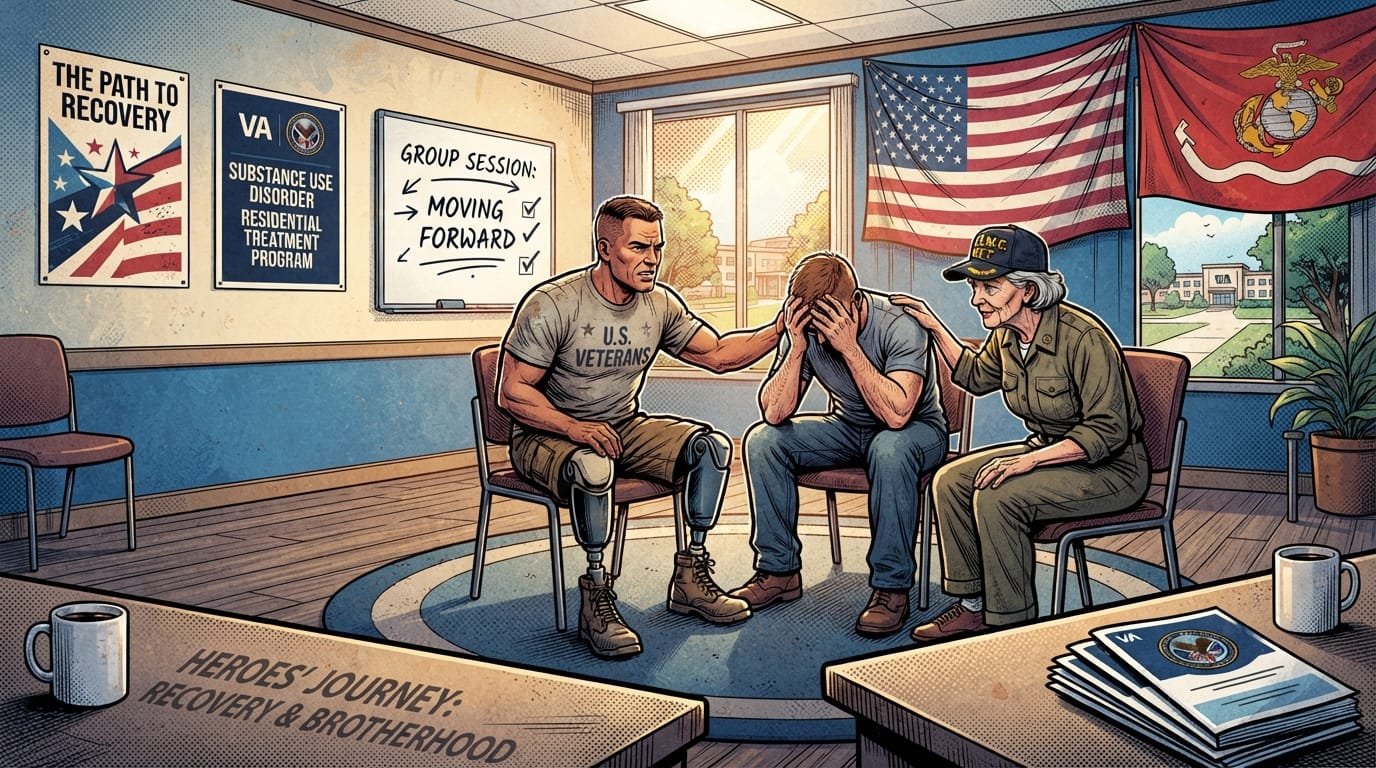
Rehab for veterans refers to VA rehabilitation programs that treat mental health conditions, substance use disorders, and physical injuries through residential and outpatient care. VA operates about 250 programs at roughly 120 residential rehab sites nationwide, with beds for more than 6,500 Veterans. Programs address PTSD, depression, military sexual trauma, addiction, and co-occurring disorders.
Quick Facts What Is Rehab for Veterans?
| Item | Details |
|---|---|
| Benefit | Residential and outpatient rehabilitation treatment |
| Eligibility | Veterans enrolled in VA health care |
| Application | Referral from VA provider; self-referral accepted at many programs |
| Processing Time | Varies; intake evaluation typically within 1–2 weeks |
| Official Agency | Veterans Health Administration (VHA), U.S. Department of Veterans Affairs |
| Required Forms | No universal form; referral and medical clearance required |
| Updated For | 2026 |
What Types of Rehab Programs Does VA Offer?
VA offers several types of rehabilitation programs, including Mental Health Residential Rehabilitation Treatment Programs (MH RRTPs), substance use disorder treatment, PTSD-specific programs, and vocational rehabilitation. The right program depends on the Veteran’s diagnosis, severity of symptoms, and treatment goals.

Mental Health Residential Rehabilitation Treatment Programs (MH RRTPs)
MH RRTPs provide 24/7 care in a structured, supportive residential environment. VA operates about 250 programs at around 120 residential rehab sites across the country, with enough beds to accommodate more than 6,500 Veterans. Programs take a whole health approach, addressing medical concerns and social needs such as employment and housing.

Key features:
24/7 care in a structured residential environment
Treatment for PTSD, depression, substance use disorder, and military sexual trauma
Separate and secured units for women Veterans at many programs
Individualized, evidence-based treatment plans
Whole health approach addressing employment and housing needs
Substance Use Disorder (SUD) Treatment
VA provides residential and outpatient treatment for substance use disorders and co-occurring mental health conditions. Programming includes evidence-based interventions such as cognitive behavioral therapy, motivational interviewing, and relapse prevention.
Residential SUD programs:
Average stay of 28–35 days, depending on the program
Structured, supportive housing environment
Group therapy, psychiatry, and counseling
Individualized treatment plans
Random drug and alcohol screening
24/7 nursing staff
Intensive Outpatient Programs (IOP):
8-week SUD programming
Group therapy and case management
In-person, virtual, or hybrid options
Allows Veterans to live at home while receiving intensive treatment
Veterans May Qualify for Extra Benefits
Check available financial assistance, healthcare programs and other opportunities that may apply to you.
Check EligibilityAftercare:
13-week SUD maintenance programming after residential treatment
Group therapy and access to other services
In-person, virtual, or hybrid options
PTSD-Specific Rehabilitation Programs
VA offers residential and outpatient PTSD treatment programs using evidence-based trauma therapies.
Residential PTSD programs:
5–8 week programs depending on the facility
Individual PTSD therapy three times per week
Group therapy and psychoeducational groups
Prolonged Exposure (PE)
Written Exposure Therapy
Outpatient PTSD programs:
Trauma Recovery Program (TRP)
PTSD Clinical Teams (PCT)
Individual and group therapy
Medication management
Domiciliary Care
VA domiciliaries provide rehabilitative and long-term health maintenance care for Veterans who require some medical care but do not need the full services of a nursing home. Domiciliary care emphasizes rehabilitation and a return to the community.
Domiciliary programs include:
Homeless domiciliary for Veterans experiencing homelessness
PTSD domiciliary residential treatment programs
Substance use disorder domiciliary programs
Vocational rehabilitation and employment support
Vocational Rehabilitation (VR&E – Chapter 31)
Veteran Readiness and Employment (VR&E), also known as Chapter 31, helps Veterans with service-connected disabilities explore employment options and address education or training needs. The program provides vocational rehabilitation services to help Veterans prepare for, obtain, and maintain suitable employment.
VR&E services include:
Vocational counseling and planning
Education and training
Job placement assistance
Independent living services
Self-employment support
Compensated Work Therapy (CWT)
Compensated Work Therapy is a VA clinical vocational rehabilitation program that provides evidence-based vocational rehabilitation services and employment supports to Veterans with physical and mental health challenges. CWT programs are located within all VA medical centers.
CWT components:
Transitional Work (TW)
Transitional Residence (TR) – a 12-bed community-based residential program
Individual Placement and Support (IPS)
Community-Based Employment Services (CBES)
Supported Education
Vocational Assistance
Who Qualifies for VA Rehab Programs?
Veterans enrolled in VA health care qualify for rehabilitation programs based on clinical need. Eligibility varies by program type.
General Eligibility
To qualify for VA rehabilitation programs, Veterans must generally:
Be enrolled in VA health care
Have a diagnosis that the program treats (PTSD, SUD, mental health condition, or physical injury)
Be medically and psychiatrically stable for the level of care
Agree to participate in treatment and follow program rules
Not be at significant risk of harm to self or others
Eligibility for Specific Programs
| Program Type | Key Eligibility Requirements |
|---|---|
| MH RRTP (general) | Enrolled in VA health care; clinical need for residential treatment |
| SUD Residential | Diagnosis of substance use disorder; medically and psychiatrically stable; not in acute withdrawal |
| PTSD Residential | Diagnosis of PTSD; trauma must be military-related; able to remain free of alcohol and substances |
| Homeless Domiciliary | Veteran experiencing homelessness; enrolled in VA health care |
| VR&E (Chapter 31) | Service-connected disability rating of at least 10% with an employment handicap, or 20% or more with an employment handicap |
| CWT | Eligible for VA services; signed referral from a VA provider; medical clearance |
Can Veterans Without a VA Disability Rating Get Rehab?
Yes, for many programs. Eligibility for MH RRTPs, SUD treatment, and PTSD programs is based on clinical need and VA health care enrollment, not on having a VA disability rating. Veterans without a service-connected disability can receive these services if they are enrolled in VA health care.
VR&E (Chapter 31) does require a service-connected disability rating of at least 10%.
How to Apply for VA Rehab Programs
Applying for VA rehab starts with a referral from a VA provider or self-referral at many programs. The process varies by program type.
Step-by-Step Application Process
Talk to your VA primary care provider or mental health provider. Ask for a referral to the appropriate rehabilitation program.
Complete an intake evaluation. VA will assess your clinical needs, treatment history, and goals.
Get medical clearance. A VA medical provider must confirm you are medically stable for the level of care.
Receive a treatment plan. The treatment team develops an individualized plan based on your needs.
Begin treatment. Admission timing depends on bed availability and program schedule.
Self-Referral
Many MH RRTP programs accept self-referrals. Veterans can contact the program directly to request an intake evaluation. This is especially common for SUD and PTSD programs.
Required Documentation
DD-214 or separation documents
VA health care enrollment information
Medical records documenting the condition being treated
Current medication list
Insurance information (Medicare, Medicaid, private insurance)
How to Apply for VR&E
Complete the online VR&E orientation.
Submit VA Form 28-1900 (Application for VR&E Benefits).
Attend an initial evaluation with a Vocational Rehabilitation Counselor (VRC).
Develop an individualized rehabilitation plan.
Begin services based on the approved plan.
What to Expect During VA Rehab
VA rehab programs vary in length and intensity depending on the type of treatment. Most residential programs last 28 days to 8 weeks.
Program Length by Type
| Program Type | Typical Length |
|---|---|
| SUD Residential | 28–35 days |
| PTSD Residential | 5–8 weeks |
| Homeless Domiciliary | 1–6 months |
| Intensive Outpatient (IOP) | 8 weeks |
| Aftercare (SUD) | 13 weeks |
| VR&E | Varies by plan |
Daily Schedule
Residential programs typically include:
Individual therapy sessions
Group therapy and psychoeducational groups
Medication management
Recreation therapy and physical activity
Vocational and educational programming
Meals and structured free time
What to Bring
Comfortable clothing for 1–2 weeks
Personal hygiene items
Current medications (in original containers)
Insurance cards and ID
Cell phone and charger (allowed in many programs)
Notebook and pen
What Not to Bring
Alcohol or illicit drugs
Weapons
Gaming systems (Xbox, PlayStation)
Valuable items
Visitation
Visitation policies vary by program. At the Salem VA Domiciliary, visitation is allowed 4–7 p.m. Monday through Friday, 2–8 p.m. Saturday, and 2–5 p.m. Sunday. No visitors are allowed on the unit.
VA Rehab Programs by Location
VA operates rehabilitation programs at medical centers across the country. Below are examples of major programs by state.
California
| Program | Location | Services |
|---|---|---|
| San Diego VA Domiciliary (Aspire Center) | 2121 San Diego Avenue, San Diego | Extended care and rehabilitation |
| VA San Diego Healthcare System | 3350 La Jolla Village Drive, San Diego | Alcohol and drug treatment program |
| VA Long Beach Healthcare System | 5901 E 7th St, Long Beach | Comprehensive outpatient rehabilitation |
| VA Palo Alto Health Care System | Palo Alto and Menlo Park | Community Living Center and rehabilitation |
Texas
| Program | Location | Services |
|---|---|---|
| Dallas VA Medical Center | 4500 S. Lancaster Road, Dallas | 56-bed Psychiatric RRTP; 40-bed domiciliary; polytrauma/TBI rehabilitation |
| Michael E. DeBakey VA Medical Center | 4320 Old Spanish Trail, Houston | 48-bed domiciliary |
| VA Texas Valley | Harlingen | Community Living Center; home-based primary care |
| Valor Ranch | Bowie, TX | 12-month residential program for female Veterans |
Florida
| Program | Location | Services |
|---|---|---|
| James A. Haley Veterans’ Hospital | Tampa | Polytrauma Rehabilitation Center |
| Temple Terrace VA Clinic | Tampa | Domiciliary, PTSD treatment, psychosocial rehabilitation |
| Orlando VA Healthcare System | Lake Nona and Lake Baldwin | 60-bed and 58-bed MH RRTP/Domiciliary |
| Miami VA Healthcare System | Miami | Rehabilitation hospital unit |
Other Notable Locations
Salem VA Domiciliary (Virginia): DOM SUD (28-day) and DOM PTSD (5-week) programs
Central Arkansas Veterans Healthcare System: Homeless domiciliary, SUD Dom (28-day), PTSD Dom (8-week)
Minneapolis VA: Veterans Bridge to Recovery (VBR) psychosocial rehabilitation program
How Long Does VA Rehab Take?
VA rehab program length varies by type and individual needs. Residential programs typically last 28 days to 8 weeks, while domiciliary programs can last 1–6 months.
| Program | Typical Length |
|---|---|
| SUD Residential | 28–35 days |
| PTSD Residential | 5–8 weeks |
| Homeless Domiciliary | 1–6 months |
| IOP | 8 weeks |
| SUD Aftercare | 13 weeks |
| VR&E | Varies by plan |
Factors That Affect Length of Stay
Severity of symptoms
Progress in treatment
Housing stability after discharge
Availability of outpatient support
Individual treatment goals
Common Mistakes to Avoid
1. Waiting Until Crisis to Seek Help
Many Veterans wait until symptoms become unmanageable before seeking rehab. Early intervention leads to better outcomes. If you are struggling, contact your VA provider.
2. Not Following Through with Aftercare
Aftercare is critical for maintaining gains made in residential treatment. The 13-week SUD aftercare program and outpatient PTSD treatment help prevent relapse.
3. Assuming You’re Not Eligible
Many Veterans assume they need a VA disability rating to access rehab. MH RRTPs, SUD treatment, and PTSD programs are available to any Veteran enrolled in VA health care.
4. Not Preparing for Admission
Bring comfortable clothing, medications in original containers, and a list of emergency contacts. Leave valuables at home.
5. Ignoring Co-Occurring Conditions
Many Veterans have both PTSD and substance use disorder. VA programs treat co-occurring conditions together, which improves outcomes.
6. Not Asking About Women-Specific Programs
Many VA rehab programs have separate and secured units for women Veterans. If you are a woman Veteran, ask about women-specific programming.
7. Skipping the Intake Evaluation
The intake evaluation determines your treatment plan and ensures you are placed in the right program. Take it seriously and be honest about your symptoms and history.
Common Questions
What is VA rehab for veterans?
VA rehab refers to residential and outpatient programs that treat mental health conditions, substance use disorders, and physical injuries. VA operates about 250 programs at roughly 120 residential rehab sites nationwide, with beds for more than 6,500 Veterans.
How do I get into a VA rehab program?
Talk to your VA primary care or mental health provider for a referral. Many programs also accept self-referrals. You must be enrolled in VA health care and clinically appropriate for the level of care.
Does VA rehab cost anything?
VA rehab programs are part of the VHA Standard Medical Benefits Package. There are no copays for most rehab services. Some Veterans may have copays for outpatient medications.
How long does VA rehab last?
Residential SUD programs average 28–35 days. PTSD residential programs last 5–8 weeks. Domiciliary programs can last 1–6 months. Outpatient programs (IOP, aftercare) last 8–13 weeks.
Can I get rehab without a VA disability rating?
Yes. Most VA rehab programs, including MH RRTPs, SUD treatment, and PTSD programs, do not require a VA disability rating. You only need to be enrolled in VA health care.
What is the difference between residential rehab and outpatient rehab?
Residential rehab provides 24/7 care in a structured facility. Outpatient rehab (IOP) allows you to live at home while attending treatment several days per week.
Does VA rehab treat PTSD?
Yes. VA offers residential and outpatient PTSD treatment using evidence-based therapies including Cognitive Processing Therapy, Prolonged Exposure, and EMDR.
What is a domiciliary?
A VA domiciliary is a residential rehabilitation program for Veterans who need some medical care but do not require nursing home services. Domiciliary care emphasizes rehabilitation and return to the community.
Can women Veterans attend VA rehab?
Yes. Many VA rehab programs have separate and secured units for women Veterans. Some programs are exclusively for women. Ask about women-specific programming when you apply.
What is VR&E (Chapter 31)?
Veteran Readiness and Employment (VR&E), also known as Chapter 31, is a vocational rehabilitation program for Veterans with service-connected disabilities. It helps Veterans prepare for, obtain, and maintain suitable employment.
What is Compensated Work Therapy?
Compensated Work Therapy (CWT) is a VA vocational rehabilitation program that helps Veterans with job barriers from mental health or physical disabilities. Programs are located at all VA medical centers.
What should I bring to VA rehab?
Bring comfortable clothing for 1–2 weeks, personal hygiene items, current medications in original containers, insurance cards, ID, and a cell phone charger.
How long is the wait for VA rehab?
Wait times vary by program and location. Intake evaluations are typically scheduled within 1–2 weeks. Bed availability affects admission timing.
Can I work while in VA rehab?
Some programs allow part-time work. Residential programs typically require full-time participation in treatment. Discuss employment with your treatment team.
What happens after VA rehab?
After discharge, VA provides aftercare and outpatient support to help maintain gains. This may include group therapy, individual counseling, and medication management.
Does VA rehab help with housing?
Homeless domiciliary programs provide housing during treatment and help Veterans secure permanent housing after discharge. HUD-VASH provides permanent housing support for homeless Veterans.
Is VA rehab voluntary?
Yes. VA rehab programs are voluntary. You can leave at any time, though treatment teams encourage completion for best outcomes.
What if I have both PTSD and substance use issues?
VA programs treat co-occurring conditions together. Look for programs that address both PTSD and SUD simultaneously.
How do I find a VA rehab program near me?
Visit VA.gov/find-locations or ask your VA provider for a referral to the nearest program.
Does TRICARE cover rehab?
TRICARE covers substance use disorder treatment for active-duty service members and retirees. Veterans should use VA benefits for rehab.
Can I use community care for rehab?
If VA cannot provide rehab within access standards (20 days for IOP or 30-minute drive), you may be eligible for community care. Ask your VA provider about a referral.
What is the Veterans Crisis Line?
The Veterans Crisis Line provides 24/7 support for Veterans in crisis. Call 988 and press 1, text 838255, or chat online at VeteransCrisisLine.net.
Key Takeaways
VA operates about 250 rehabilitation programs at roughly 120 residential sites nationwide, with beds for more than 6,500 Veterans.
Rehab programs treat PTSD, substance use disorders, depression, military sexual trauma, and co-occurring conditions.
Residential programs provide 24/7 care in structured environments. Outpatient programs (IOP) allow Veterans to live at home.
Most VA rehab programs do not require a VA disability rating. Enrollment in VA health care is the primary requirement.
SUD residential programs average 28–35 days. PTSD residential programs last 5–8 weeks.
VR&E (Chapter 31) provides vocational rehabilitation for Veterans with service-connected disabilities.
Compensated Work Therapy helps Veterans with job barriers from mental health or physical disabilities.
Many programs have separate and secured units for women Veterans.
Aftercare is critical for maintaining gains made in residential treatment.
Contact your VA provider or call the Veterans Crisis Line at 988 (press 1) for immediate support.
Official Resources
VA Mental Health Residential Rehabilitation: mentalhealth.va.gov/RRTP
VA Substance Use Disorder Treatment: va.gov/health-care/health-needs-conditions/substance-use-problems
VA PTSD Treatment: ptsd.va.gov
Veteran Readiness and Employment (VR&E): va.gov/careers-employment/vocational-rehabilitation
Compensated Work Therapy: department.va.gov/vha/compensated-work-therapy
VA Domiciliary Programs: va.gov/find-locations
Veterans Crisis Line: 988 (press 1) or VeteransCrisisLine.net
VA Health Care Enrollment: va.gov/health-care/how-to-apply
VA Form 28-1900 (VR&E Application): va.gov/forms/28-1900
VA Caregiver Support: caregiver.va.gov

🇺🇸 IMPORTANT DISCLAIMER – Veterans Benefits Information
This site provides general information about U.S. Department of Veterans Affairs (VA) benefits for educational and informational purposes only.
- Not Official: We are NOT affiliated with, endorsed by, or connected to the U.S. Department of Veterans Affairs (VA), the Veterans Benefits Administration (VBA), the Veterans Health Administration (VHA), or any other government agency.
- No Legal/Financial Advice: The content on this website is for informational purposes only and does not constitute legal, financial, or medical advice. VA benefits rules change frequently – always consult with an accredited Veterans Service Officer (VSO) or a qualified professional for your specific situation.
- Official Sources: For official, binding information and to apply for benefits, always visit official .gov websites: VA.gov, Benefits.VA.gov, or SSA.gov.
- No Data Collection: This site does not collect, store, or process any personal information. It does not have login forms, contact forms, or any system to capture user data. We never ask for your Social Security Number, bank details, or any personal information.
- 🚨 Scam Alert: The VA and other government agencies never charge fees for benefit applications. If anyone asks for money to "process" your VA claim, it is a scam. Report it to the VA Office of Inspector General at VA.gov/OIG.
- Advertising: This site uses third-party advertising (Adsterra) to cover operational costs. We do not endorse or guarantee any products or services advertised.
📌 Information provided as of June 2026. Always verify current eligibility and rules with official .gov sources.
This site is not affiliated with the U.S. Department of Veterans Affairs or any government agency. All information is for educational purposes only. Please visit VA.gov for official information.
