
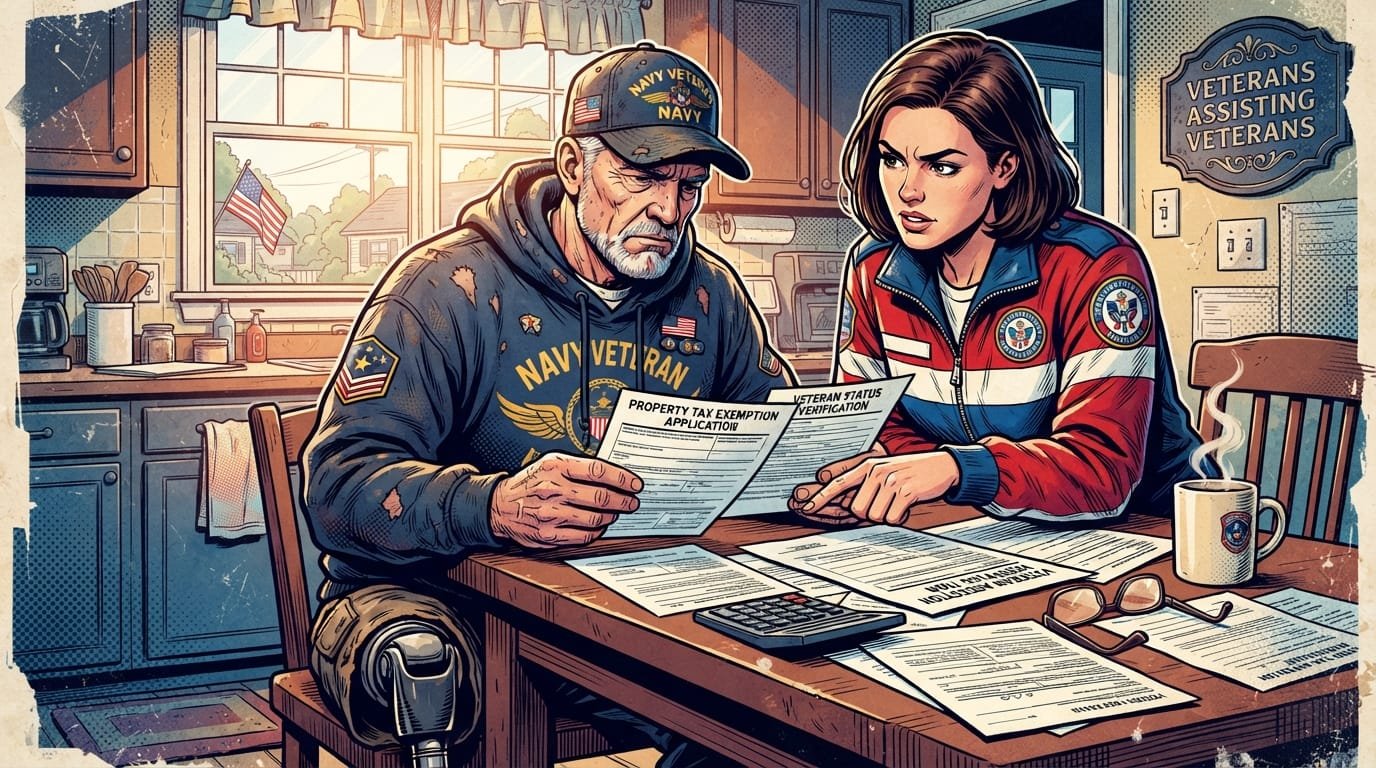
Understanding Veteran Property Rights: Protections and Benefits for Disabled Veterans
Disabled veterans hold specific legal protections and financial benefits tied to property ownership, including VA home loans with no funding fee, state property tax exemptions, specially adapted housing grants, and Servicemembers Civil Relief Act foreclosure safeguards. Eligibility varies by VA disability rating, state of residence, and service status. Most benefits require separate applications through VA or local tax offices.
| Item | Details |
|---|---|
| Benefit | Property tax exemptions, VA home loans, housing grants, foreclosure protections |
| Eligibility | Service-connected disability rating (varies by program); honorable discharge generally required |
| Application | VA Form 26-4555 (housing grants); county assessor (tax exemptions); VA lender (loans) |
| Processing Time | Tax exemptions: 30–90 days; grants: 3–6 months; VA loans: 30–45 days |
| Official Agency | U.S. Department of Veterans Affairs (VA); state/county tax authorities |
| Required Forms | VA Form 26-4555; VA disability rating letter; DD-214; property deed; photo ID |
| Updated For | 2026 benefit year |
What Are Veteran Property Rights?
Veteran property rights are the legal protections and financial benefits that help disabled veterans buy, own, modify, and keep a home. These rights come from federal law, VA regulations, and state statutes.

They fall into four main categories:
VA Home Loan Guaranty — a federal program that helps veterans buy homes with no down payment and no private mortgage insurance.
State Property Tax Exemptions — reductions or eliminations of local property taxes for disabled veterans.
Housing Adaptation Grants — VA funds to modify a home for disability-related needs.
Foreclosure and Financial Protections — legal safeguards that delay or prevent foreclosure during and after military service.

Each program has its own eligibility rules. A veteran may qualify for one, several, or all of them. The sections below explain each in detail.
VA Home Loan Guaranty for Disabled Veterans
The VA home loan guaranty lets eligible veterans buy, build, or refinance a home with no down payment and no monthly mortgage insurance. The VA does not lend money directly (except in limited cases); instead, it guarantees a portion of the loan, which reduces risk for private lenders.
What the VA Loan Offers Disabled Veterans
$0 down payment for most borrowers.
No private mortgage insurance (PMI), saving hundreds per year compared to conventional loans.
Competitive interest rates because the loan is federally guaranteed.
No prepayment penalty.
Reusable benefit — the VA loan can be used multiple times over a lifetime.
Funding Fee Exemption
The VA charges a funding fee on most loans. For 2026, that fee ranges from 1.25% to 3.3% of the loan amount, depending on down payment and whether it is a first or subsequent use.
Disabled veterans are fully exempt from the VA funding fee if they receive VA disability compensation at any percentage. This includes veterans receiving compensation, veterans who would receive it but for retirement pay, and active-duty Purple Heart recipients. A 10% disability rating is enough to waive the fee entirely.
Veterans May Qualify for Extra Benefits
Check available financial assistance, healthcare programs and other opportunities that may apply to you.
Check EligibilityIf you paid the funding fee before your disability rating was finalized, you may be entitled to a refund if your effective date for benefits predates your loan closing date.
Who Qualifies for a VA Home Loan
| Eligibility Category | Requirement |
|---|---|
| Wartime veterans | 90 consecutive days of active service |
| Peacetime veterans | 181 consecutive days of active service |
| National Guard/Reserve | 6 years of service, or 90 days of active duty (30 consecutive) |
| Surviving spouses | Unremarried spouse of veteran who died in service or from service-connected causes |
Next step: Get your Certificate of Eligibility (COE) through VA.gov or your lender. Inform your lender of your disability rating to ensure the funding fee is waived at closing.
State Property Tax Exemptions for Disabled Veterans
All 50 states offer some form of property tax relief for disabled veterans. The amount, eligibility threshold, and application process vary significantly by state.
How Property Tax Exemptions Work
A property tax exemption reduces the taxable value of your home. A full exemption eliminates the tax entirely. A partial exemption reduces it by a set dollar amount or percentage.
Key point: The VA does not issue property tax exemptions. Your local county assessor or tax office administers them. You must apply separately in your state.
States with Full Exemptions for 100% Disabled Veterans
| State | 100% P&T Exemption | Income Test | Surviving Spouse Continuation |
|---|---|---|---|
| Texas | Full homestead exemption | No | Yes |
| Florida | Full homestead exemption | No | Yes |
| Virginia | Full primary residence exemption | No | Yes, with conditions |
| New Jersey | Full exemption | No | Yes |
| Michigan | Full exemption | No | Yes |
| Oklahoma | Full exemption | No | Yes |
Texas exempts the full appraised value of a qualifying veteran’s residence homestead for 100% disabled or Individual Unemployability veterans. Florida provides a complete homestead exemption for veterans with total and permanent service-connected disabilities, with no cap on home value and no income test.
Virginia fully exempts the primary residence for veterans rated 100% permanent and total, with no income test. Virginia also exempts one vehicle from local personal property tax for qualifying disabled veterans.
States with Tiered or Partial Exemptions
Most states scale the exemption by disability rating. For example, Illinois reduces equalized assessed value by set amounts for 30%–49% and 50%–69% ratings, then exempts EAV entirely up to a cap for 70% or higher. Indiana uses stackable deductions tied to disability and service.
Arizona offers a full exemption at 100% from tax year 2026, but income limits still apply even at the 100% tier. The 2026 Arizona exemption amount is $4,873 with income limits of $39,865 and $47,826.
How to Apply for a Property Tax Exemption
Confirm your state’s eligibility rules. Check your state’s department of revenue or veterans affairs website.
Gather documents: VA disability rating letter (showing combined rating), DD-214, property deed, photo ID, and proof of residency.
Contact your county assessor or tax office for the correct form.
Submit by the deadline. Most states require filing between January and April. Some require annual refiling.
Keep a copy of everything you submit.
Common mistake: Submitting a compensation letter instead of a rating letter. Arizona assessors explicitly refuse the full-exemption tier when a veteran paid at 100% through Individual Unemployability has a lower combined rating. Always provide the document showing your combined VA rating.
VA Housing Adaptation Grants for Disabled Veterans
The VA offers three grants to help disabled veterans modify or acquire a home suited to their disability. These are separate from the home loan program and do not need to be repaid.
Specially Adapted Housing (SAH) Grant
What it is: A grant to buy, build, or remodel a home to be barrier-free for severe disabilities.
2026 maximum: $126,526.
Who qualifies: Veterans with specific service-connected conditions, including loss of use of both legs, blindness plus loss of one leg, severe burns, or certain other catastrophic disabilities. Eligibility is based on the specific condition, not a percentage rating, though most eligible veterans are rated at high levels.
What it covers: Wheelchair ramps, widened doorways, roll-in showers, accessible kitchens, and other structural modifications.
Special Home Adaptation (SHA) Grant
What it is: A smaller grant for home modifications when SAH-level changes are not required.
2026 maximum: $25,350.
Who qualifies: Veterans with permanent and total disabilities including loss or loss of use of both hands, or severe burn injuries.
Can be used multiple times — up to six times, as long as the total stays within the lifetime maximum.
Temporary Residence Adaptation (TRA) Grant
What it is: A grant for veterans temporarily living in a family member’s home that needs adaptation.
2026 maximum: $50,961 for SAH-eligible veterans; $9,100 for SHA-eligible veterans.
Home Improvements and Structural Alterations (HISA) Grant
What it is: A VA health-care benefit for medically necessary home improvements.
2026 maximum: $6,800 for service-connected conditions; $2,000 for non-service-connected conditions.
Who qualifies: Veterans enrolled in VA health care. The higher amount applies to veterans with a service-connected disability rated at least 50% disabling.
How to apply: Submit a HISA application through your VA medical center. A VA physician must prescribe the improvement.
Housing Grant Comparison Table
| Grant | 2026 Maximum | Primary Use | Rating Requirement |
|---|---|---|---|
| SAH | $126,526 | Buy, build, or remodel adapted home | Specific severe conditions |
| SHA | $25,350 | Home modifications | Specific conditions (hands, burns) |
| TRA | $50,961 / $9,100 | Adapt family member’s home | SAH or SHA eligibility |
| HISA | $6,800 / $2,000 | Medically necessary improvements | VA health care enrollment |
How to apply for SAH, SHA, or TRA: Submit VA Form 26-4555 to your nearest VA regional office. Processing typically takes 3–6 months.
Servicemembers Civil Relief Act (SCRA) Protections
The SCRA is a federal law that protects active-duty servicemembers, Reservists, and National Guard members from certain financial and legal actions during military service. Some protections extend to veterans transitioning out of service.
Foreclosure Protection
What it does: The SCRA prohibits foreclosure, sale, or seizure of real estate for pre-service mortgages during military service and for 9 months after service ends, unless the creditor obtains a court order.
Who qualifies: Active-duty servicemembers, Reservists on federal active duty, and National Guard members activated for more than 30 consecutive days under Title 32 for a national emergency.
Why it matters: This prevents lenders from foreclosing without judicial review while a servicemember is deployed or recently separated.
Important change: Recent guidance extends foreclosure protection to one year after release from active duty in certain cases.
6% Interest Rate Cap
What it does: Caps interest at 6% per year on pre-service debts, including mortgages, credit cards, car loans, and student loans.
For mortgages: The 6% cap applies during military service and one year after service ends.
How to request: Send a written request to your lender with a copy of your military orders. There is no required form, but written notice is recommended.
Eviction Protection
The SCRA bars landlords from evicting a servicemember or dependents from their primary residence without a court order if monthly rent is $1,200 or less (adjusted annually for inflation).
SCRA Quick Reference
| Protection | Duration | Applies To |
|---|---|---|
| Foreclosure protection | Active duty + 9 months | Pre-service mortgages |
| 6% interest cap (mortgages) | Active duty + 1 year | Pre-service mortgage debt |
| 6% interest cap (other debts) | Active duty only | Pre-service consumer debt |
| Eviction protection | Active duty | Primary residence, rent under threshold |
VA Loan Loss Mitigation and Foreclosure Alternatives
If you fall behind on a VA-guaranteed mortgage, the VA requires servicers to evaluate you for loss mitigation options before proceeding to foreclosure. A new VA Loss Mitigation Waterfall took effect in 2026.
The VA Loss Mitigation Waterfall
Servicers must review borrowers through a set sequence of options before foreclosure:
Repayment Plan — catch up on missed payments over up to 24 months.
Special Forbearance — temporary payment reduction for short-term hardship.
Traditional VA Modification — adjust loan terms to reduce monthly payment.
30-Year Modification — extend the loan term.
40-Year Modification — further extend for severe hardship.
VA Partial Claim — VA advances funds to cure delinquency, repaid later.
VA Partial Claim Program
What it is: VA purchases a portion of the defaulted loan balance, allowing the veteran to bring the loan current without a lump-sum payment.
Key limit: The amount advanced generally cannot exceed 25% of the unpaid principal balance.
How it works: Missed payments are repaid when the home is sold, refinanced, or the loan matures. No interest accrues on the partial claim amount.
Implementation: The program opened for submissions June 15, 2026. Servicers must fully implement it by November 28, 2026.
What veterans should do: If you are behind on a VA loan, contact your servicer immediately and ask to be reviewed for all loss mitigation options, including the partial claim. Do not wait for foreclosure proceedings.
Common Mistakes Disabled Veterans Make with Property Benefits
Mistake 1: Assuming the VA handles property tax exemptions. The VA does not administer property tax relief. You must apply through your county or state.
Mistake 2: Using the wrong VA letter. For property tax exemptions, submit your combined rating letter, not your compensation letter. A veteran paid at the 100% rate through Individual Unemployability with a lower combined rating may be refused the full exemption in some states.
Mistake 3: Missing application deadlines. Most states require property tax exemption applications between January and April. Some require annual refiling. Set a calendar reminder.
Mistake 4: Not requesting the funding fee waiver. If you have any VA disability rating and receive compensation, you are exempt from the VA funding fee. Tell your lender before closing. If you already paid it, request a refund.
Mistake 5: Failing to explore all loss mitigation options. If you are behind on payments, you have multiple options beyond foreclosure. Ask your servicer for a full review.
Mistake 6: Assuming one grant covers everything. SAH, SHA, TRA, and HISA are separate programs with different eligibility rules. You may qualify for more than one.
State-by-State Differences: What Veterans Should Know
Property rights for disabled veterans are not uniform across the country. Two veterans with identical ratings in different states may receive vastly different benefits.
Key Variations
| Factor | Variation |
|---|---|
| Exemption type | Full, partial, tiered by rating, or fixed dollar amount |
| Income limits | Some states have none; others cap income even at 100% |
| Application deadline | Ranges from January to May; some require annual refiling |
| Surviving spouse | Some states continue the exemption; others do not |
| Vehicle exemptions | Some states exempt one vehicle from personal property tax |
| Disability threshold | Some states start at 10%; others require 70% or 100% |
How to Find Your State’s Rules
Visit your state department of veterans affairs website.
Search for “disabled veteran property tax exemption” plus your state name.
Contact your county assessor’s office for the specific form and deadline.
Ask whether the exemption is automatic or requires annual filing.
Important: Some states offer a property tax credit or reimbursement rather than an upfront exemption. You may pay the full tax bill and receive relief later. Understand the timing to manage your cash flow.
Latest Rule Changes for 2026
Arizona: From tax year 2026, veterans with a 100% service-connected rating receive a full property tax exemption, but income limits still apply.
New Mexico: Starting in 2026, any veteran with a VA disability rating — not just 100% — qualifies for a proportional property tax exemption based on rating percentage.
VA Home Loan Program Reform Act (P.L. 119-31): Created the partial claim program to assist veterans who defaulted on VA loans during and after the pandemic.
VA Loss Mitigation Waterfall: Finalized in 2026, this new sequence requires servicers to evaluate all options before foreclosure.
Texas: Veterans with a 100% disability rating or 100% unemployability rating continue to qualify for a total homestead exemption.
Funding fee extension: Current VA funding fee rates were extended through September 30, 2036. Disabled veterans remain exempt.
Common Questions
Do disabled veterans pay property taxes?
It depends on your state and disability rating. Many states offer full exemptions for veterans rated 100% permanent and total, including Texas, Florida, and Virginia. Others offer partial exemptions scaled by rating. You must apply through your county assessor.
Can a 100% disabled veteran get a property tax exemption in any state?
All 50 states offer some form of property tax relief for disabled veterans, but the amount and eligibility rules vary. Some states require 100% P&T; others start at 10%. Some have income limits even at 100%. Check your state’s rules.
What is the VA funding fee, and do I have to pay it?
The VA funding fee is a one-time charge on most VA loans. Veterans receiving VA disability compensation at any percentage are fully exempt. Purple Heart recipients on active duty are also exempt. Tell your lender before closing.
How do I apply for a VA housing grant?
Submit VA Form 26-4555 to your nearest VA regional office. You can also apply online through VA.gov. Processing takes 3–6 months. You may need to provide plans and cost estimates for the proposed modifications.
What is the difference between SAH and SHA grants?
SAH is for severe mobility losses (both legs, blindness plus leg loss, severe burns) and can fund building or buying an adapted home. SHA is smaller and covers conditions like loss of both hands. Both can be used up to six times within lifetime limits.
Does the SCRA protect me from foreclosure after I leave the military?
Yes. The SCRA prohibits foreclosure on pre-service mortgages during military service and for 9 months after. Recent guidance extends protection to one year after release from active duty in certain cases.
Can I get a property tax exemption if I have a 50% disability rating?
Many states offer partial exemptions starting at 10% or 30%. The amount is usually scaled by rating. Some states reserve full exemptions for 100% P&T. Check your specific state’s rules.
What happens if I fall behind on my VA loan?
Contact your servicer immediately. VA requires servicers to review you for loss mitigation options, including repayment plans, forbearance, loan modifications, and the VA Partial Claim. Do not wait for foreclosure.
Can my surviving spouse keep my property tax exemption?
Many states allow surviving spouses to continue the exemption under defined conditions, including remaining unmarried and occupying the home. Rules vary by state. Contact your county assessor for specifics.
Do I need a 100% rating to get a VA housing grant?
No. SAH and SHA eligibility is based on specific service-connected conditions, not a percentage rating. However, most eligible veterans are rated at high levels. HISA requires VA health care enrollment.
Key Takeaways
Disabled veterans are exempt from the VA funding fee at any disability rating if they receive VA compensation.
Property tax exemptions are administered by states and counties, not the VA. You must apply separately.
Texas, Florida, and Virginia offer full property tax exemptions for 100% P&T veterans with no income test.
SAH grants up to $126,526 help veterans with severe disabilities buy or modify a home.
The SCRA caps pre-service mortgage interest at 6% and prevents foreclosure during service plus 9 months.
The VA Partial Claim program helps veterans behind on VA loans by advancing funds to cure delinquency.
Application deadlines vary by state, typically January through April. Some states require annual refiling.
Submit your combined VA rating letter, not your compensation letter, for property tax exemptions.
Loss mitigation options exist if you fall behind on a VA loan. Contact your servicer before foreclosure.
Surviving spouses may continue exemptions in many states under defined conditions.
Official Resources
VA Home Loans: https://www.va.gov/housing-assistance/home-loans/
Specially Adapted Housing Grants: https://www.va.gov/housing-assistance/disability-housing-grants/
VA Form 26-4555: https://www.va.gov/find-forms/about-form-26-4555/
Servicemembers Civil Relief Act (SCRA): https://www.justice.gov/crt/servicemembers-civil-relief-act-scra
VA Loss Mitigation: https://www.benefits.va.gov/homeloans/servicers_loss_mitigation.asp
State Veterans Affairs Offices: https://www.va.gov/statedva.htm
USA.gov Veterans Benefits: https://www.usa.gov/veterans-benefits
Disabled Veteran Property Tax Exemptions & VA Benefits
Veteran property rights represent a vital aspect of the broader legal framework designed to safeguard the interests of individuals who have served in the military. Understanding these rights is particularly significant for disabled veterans, who may face unique challenges in property ownership and management. The recognition of property rights is foundational, as it grants veterans the freedom to own, utilize, and protect their real estate possessions without undue interference.
For disabled veterans, these property rights can profoundly influence their quality of life and provide varying forms of financial security. The ability to own a home not only offers a sense of stability but also enables veterans to cultivate a supportive environment conducive to their rehabilitation and well-being. These rights encompass various legal protections that ensure equal treatment under the law, allowing veterans to navigate real estate transactions on fair terms.
Moreover, veteran property rights are intertwined with several benefits specifically tailored to support disabled individuals. These benefits may include property tax exemptions, loan guarantees, and assistance programs aimed at easing the financial burden associated with home ownership. It is crucial for disabled veterans to comprehend these options as they can significantly enhance their economic prospects and living situations.
Additionally, understanding veteran property rights plays an essential role in preventing potential legal disputes. Knowledge of these rights empowers veterans to advocate for themselves and seek justice in instances of violation or discrimination. From comprehension of federal laws such as the Servicemembers Civil Relief Act (SCRA) to state-level regulations, being informed is a powerful tool for ensuring proper protection.
In summary, embracing an awareness of veteran property rights can offer invaluable benefits for disabled veterans, fostering an environment where they feel secure in their ownership status and empowered to pursue opportunities for improved livelihoods.
Legal Protections for Disabled Veterans
Disabled veterans are afforded several legal protections that ensure their property rights are upheld, primarily through key legislation such as the Americans with Disabilities Act (ADA). This act plays a crucial role in safeguarding the rights and entitlements of individuals with disabilities, including veterans. Under the ADA, disabled veterans have the right to access and enjoy their properties without discrimination. This includes provisions for modifications to residences, allowing for necessary adaptations to make living spaces accessible and comfortable.
Additionally, the Fair Housing Act prohibits discrimination in housing based on disability, further reinforcing the property rights of disabled veterans. These legal frameworks not only ensure that disabled veterans can secure housing but also provide them with the necessary resources to modify their living environments according to their needs. This is particularly significant for veterans who may require specialized equipment or alterations in order to navigate their homes safely.
Moreover, state and local laws might offer additional protections for disabled veterans regarding property rights. Many jurisdictions have instituted programs aimed at assisting veterans in property ownership through tax exemptions or reductions, further easing their financial burden. These initiatives reflect a broader commitment to honoring the sacrifices made by veterans and ensuring they receive equitable treatment in their quest for homeownership.
In recognizing the unique challenges faced by disabled veterans, these legal protections are essential. They create a framework that not only defends the rights of veterans but also fosters an environment of inclusivity and accessibility within the community. By understanding these laws and the rights afforded to them, disabled veterans can better advocate for themselves and fully benefit from the protections designed to uphold their property rights. Ultimately, these legal safeguards serve as a vital mechanism for promoting equity and justice in the realms of property ownership for our veterans.
Understanding Homestead Exemptions
Homestead exemptions are legal provisions designed to provide property tax relief to homeowners by reducing the taxable value of their primary residence. In the context of disabled veterans, these exemptions can offer significant financial benefits, allowing veterans to retain more of their resources for necessary medical care and daily living expenses. By understanding the specifics of homestead exemptions, disabled veterans can make informed decisions regarding their property rights and financial strategies.
Typically, the eligibility for homestead exemptions varies by state, but many jurisdictions specifically recognize the special circumstances of disabled veterans. Generally, veterans must demonstrate a service-connected disability as certified by the Department of Veterans Affairs (VA) to qualify for the exemption. Some states may require documentation for the disability rating, while others might offer automatic eligibility at certain thresholds. It is essential for veterans to familiarize themselves with the specifics of their local laws to ensure they successfully apply for available exemptions.
The financial impact of homestead exemptions can be substantial. Depending on the state, exemptions can substantially reduce the assessed value of the property for taxation purposes. In some instances, states offer full property tax waivers for veterans with a total and permanent disability rating. This translates into significant savings over time, allowing veterans to allocate funds toward healthcare needs, home modifications, or other essential expenditures.
Furthermore, these exemptions can also provide legal protections against certain interests, such as creditors. Should a homeowner face financial challenges, a homestead exemption may shield a portion of the home equity from being seized in judgments against them. Thus, for disabled veterans, understanding and leveraging homestead exemptions can play a vital role in securing not only financial benefits but also peace of mind regarding their property rights.
Disability Housing Grants for Veterans
Disabled veterans have access to several disability housing grants designed to assist them in adapting their homes for improved accessibility and independence. Among the most notable programs is the Specially Adapted Housing (SAH) grant, which enables eligible veterans to build, remodel, or purchase a home that accommodates their specific needs. The aim of the SAH grant is to provide a living environment that provides maximum accessibility and ease of movement. Similarly, the Special Housing Adaptation (SHA) grant caters to those who wish to adapt their existing homes, ensuring that any necessary modifications meet their personal requirements.
Application processes for these grants typically involve submitting a formal request through the Department of Veterans Affairs (VA). Veterans must provide documentation of their service-connected disability and demonstrate their eligibility based on the established criteria. This may include a thorough assessment by a VA-approved medical professional, who will determine the degree of disability and the requisite adaptations needed for a suitable housing environment.
Utilizing these grants effectively can lead to significant improvements in the quality of life for disabled veterans. The financial assistance provided through these programs can alleviate the burden of costly home modifications, which can include installing wheelchair ramps, wider doorways, or specially adapted bathroom fixtures. Additionally, veterans are often encouraged to work with knowledgeable professionals during the adaptation process to ensure that the modifications are compliant with safety standards and best practices. Ultimately, these disability housing grants serve as a critical resource for promoting independence and enhancing the overall living conditions of disabled veterans.
Property Tax Exemptions for Disabled Veterans
Disabled veterans often face unique financial challenges, and property tax exemptions serve as a crucial resource in alleviating some of this burden. Several states have implemented property tax exemption programs specifically designed to assist veterans who have served in the military and sustained disabilities as a result of their service. These exemptions can significantly impact a veteran’s overall financial situation, allowing for increased disposable income and greater financial stability.
To qualify for property tax exemptions, disabled veterans must generally demonstrate specific eligibility criteria, which can vary by state. Most commonly, veterans must provide proof of disability through documentation from the Department of Veterans Affairs (VA). The level of disability often plays a major role in determining the degree of tax exemption available. Some states offer complete property tax exemptions for veterans with a 100% service-connected disability, while others provide partial exemptions based on the level of disability.
In addition to qualifying disability requirements, veterans may also need to meet residency criteria, affirming that their primary residence is within the state offering the exemption. Some jurisdictions may require disabled veterans to file an application or submit renewal forms annually to retain their exempt status, ensuring that all criteria continue to be met. It is advisable for veterans to consult their local tax authority or veteran services office to fully understand the specific guidelines and application processes applicable in their state.
Ultimately, taking advantage of property tax exemptions can lead to significant savings. By reducing the financial load associated with property taxes, disabled veterans can allocate resources to other essential needs, such as healthcare or housing modifications. Understanding and accessing these benefits is essential for disabled veterans striving for financial security.
Maximizing Property Ownership Freedoms
For disabled veterans, understanding property rights is essential to fully benefit from the freedoms associated with property ownership. A critical first step is to familiarize oneself with local and federal property laws that govern ownership rights, especially as they pertain to veterans. By being well-informed about the legal framework, disabled veterans can better navigate any potential challenges in property ownership.
One significant strategy for maximizing property ownership freedoms involves utilizing available exemptions and benefits specifically designed for veterans. Many states offer property tax exemptions or reductions for disabled veterans, which can significantly lower the financial burden of property taxes. To take advantage of these benefits, it’s important to apply promptly and provide the necessary documentation, such as proof of disability and military service. Additionally, veterans should explore any federal programs that may aid in obtaining funding for property renovations or purchases, enhancing their independence.
Moreover, disabled veterans should educate themselves about their rights as property owners. Understanding rights such as the ability to modify or adapt property to accommodate disabilities can empower veterans in their ownership journey. This knowledge helps ensure that veterans can make necessary adjustments to their homes without fear of infringement on their rights. It is also beneficial to engage with community organizations that provide resources and support tailored to disabled veterans, including legal advice for property-related issues.
Another practical tip is to connect with other veterans to share experiences and strategies for navigating property ownership. Networking with peers can offer valuable insights into overcoming challenges that may arise. Through these actions—staying informed, utilizing available benefits, and actively engaging with the veteran community—disabled veterans can not only maximize their property ownership freedoms but also enjoy a more secure and fulfilling homeowner experience.
Common Challenges Faced by Disabled Veterans
Disabled veterans often encounter a range of challenges related to their property rights that may inadvertently hinder their ability to secure the benefits and protections they deserve. One of the most prominent issues is navigating bureaucratic hurdles. The process of applying for benefits or appealing decisions can be overwhelming due to extensive paperwork and the complicated nature of federal and state legislation. These obstacles can deter disabled veterans from pursuing their rightful claims and may lead to significant delays in accessing essential resources.
Another critical challenge is the lack of awareness regarding available benefits. Many disabled veterans may not fully understand the extent of their rights or the programs designed to assist them. This lack of information can result from insufficient outreach and education efforts by government agencies and veteran organizations. Consequently, veterans might miss out on critical opportunities such as property tax exemptions, grants for home modifications, or assistance in securing housing. Raising awareness about these benefits is vital in empowering disabled veterans to take action and protect their property rights.
Furthermore, potential discrimination against disabled veterans poses another significant challenge. Unfortunately, some veterans may face bias from landlords, mortgage brokers, or even fellow veterans, leading to an isolating experience. Discrimination can manifest in various forms, including unfavorable treatment during housing applications or refusal to accommodate specific needs related to their disabilities. Such experiences can exacerbate feelings of inequity and discourage disabled veterans from seeking the support they need to secure stable housing and maintain their property rights.
Resources and Support for Disabled Veterans
Disabled veterans face unique challenges, especially when it comes to understanding their property rights. Fortunately, a variety of resources and support networks are available to assist veterans in navigating these complexities. Government agencies play a critical role in providing information and services tailored specifically for disabled veterans. The U.S. Department of Veterans Affairs (VA) offers dedicated programs that inform veterans about their rights regarding property ownership and benefits designed to accommodate their disabilities.
Non-profit organizations also serve as valuable allies in this endeavor. For instance, the Disabled American Veterans (DAV) organization provides a range of services that include property rights education, helping veterans understand how to apply for loans and grants for home modifications. The National Organization on Disability (NOD) offers a wealth of information related to workplace accommodations, housing rights, and available financial assistance, which can greatly benefit disabled veterans seeking to secure their property rights.
Legal aid services are crucial for those who require more specialized assistance. Local law schools often run legal clinics that offer free or low-cost advice on property rights issues specifically affecting disabled veterans. Additionally, the American Bar Association provides resources for finding pro bono legal assistance, allowing veterans to access the legal help they need without facing significant financial burdens. By utilizing these services, disabled veterans can better understand their rights and the protections available to them regarding property ownership and management.
In summary, the landscape of resources and support for disabled veterans is broad and multifaceted. By leveraging government assistance, engaging with non-profit organizations, and seeking legal aid, disabled veterans can ensure that their property rights are upheld and defended effectively.
Conclusion and Encouragement to Seek Assistance
Understanding veteran property rights is crucial for disabled veterans, as these rights provide essential protections and benefits critical to their housing stability and quality of life. Disabled veterans often face unique challenges that can impede their ability to fully comprehend and exercise their property rights. It is vital that they recognize the resources available to them, including financial assistance, legal guidance, and community support, which can significantly aid them in safeguarding their property ownership freedoms.
Crucially, many disabled veterans are unaware of the various laws and programs designed to assist them in managing their property rights. Whether it involves property tax exemptions, accessible housing options, or various government-backed funding mechanisms, the spectrum of benefits ensures that veterans can maintain a secure living situation. Veterans should remain proactive about accessing these advantages, which are not merely privileges but entitlements that support their well-being and autonomy.
Moreover, collaboration with organizations specializing in veteran affairs can lead to the discovery of tailored resources that address specific situations. Trained professionals in these organizations can offer valuable insight into navigating complex property rights and regulations, enabling veterans to make informed decisions regarding their assets.
In conclusion, we encourage disabled veterans to invest time in understanding their property rights and actively seek assistance when necessary. By leveraging the resources at their disposal, they empower themselves to uphold their property ownership freedoms and create a stable environment for themselves and their families. Every veteran deserves the peace of mind that comes from knowing they can protect their home and property without undue burden.


🇺🇸 IMPORTANT DISCLAIMER – Veterans Benefits Information
This site provides general information about U.S. Department of Veterans Affairs (VA) benefits for educational and informational purposes only.
- Not Official: We are NOT affiliated with, endorsed by, or connected to the U.S. Department of Veterans Affairs (VA), the Veterans Benefits Administration (VBA), the Veterans Health Administration (VHA), or any other government agency.
- No Legal/Financial Advice: The content on this website is for informational purposes only and does not constitute legal, financial, or medical advice. VA benefits rules change frequently – always consult with an accredited Veterans Service Officer (VSO) or a qualified professional for your specific situation.
- Official Sources: For official, binding information and to apply for benefits, always visit official .gov websites: VA.gov, Benefits.VA.gov, or SSA.gov.
- No Data Collection: This site does not collect, store, or process any personal information. It does not have login forms, contact forms, or any system to capture user data. We never ask for your Social Security Number, bank details, or any personal information.
- 🚨 Scam Alert: The VA and other government agencies never charge fees for benefit applications. If anyone asks for money to "process" your VA claim, it is a scam. Report it to the VA Office of Inspector General at VA.gov/OIG.
- Advertising: This site uses third-party advertising (Adsterra) to cover operational costs. We do not endorse or guarantee any products or services advertised.
📌 Information provided as of June 2026. Always verify current eligibility and rules with official .gov sources.
This site is not affiliated with the U.S. Department of Veterans Affairs or any government agency. All information is for educational purposes only. Please visit VA.gov for official information.
