
Introduction to VA Compensation and Cost of Living Adjustments (COLA)
VA compensation refers to the monetary benefits provided to eligible veterans who have sustained disabilities or injuries as a result of their military service. This compensation can significantly help veterans in managing their daily living expenses and ensuring a reasonable quality of life. Eligibility for VA compensation is determined based on various factors, including the severity of the veteran’s disability, the connection between the disability and military service, and the veteran’s overall income level. The Department of Veterans Affairs assesses these criteria to establish an appropriate compensation rate that reflects the damage experienced by the veteran.
An essential aspect of VA compensation is the implementation of Cost of Living Adjustments (COLA). These adjustments are made periodically to ensure that the benefits keep pace with inflation and increases in the cost of living. The significance of COLA in the context of VA compensation cannot be overstated. As inflation erodes the purchasing power of fixed incomes, the COLA acts as a safeguard for veterans and their families, providing them with the necessary adjustments to sustain their quality of life amid changing economic circumstances.

The COLA for VA compensation is determined annually, with the rate typically based on the Consumer Price Index for Urban Wage Earners and Clerical Workers (CPI-W). In 2026, veterans can expect an official 2.8% COLA increase, which reflects the ongoing need to improve financial stability for those who have served the nation. This adjustment is particularly vital in times of economic uncertainty as it mitigates the impact of inflation on veterans’ benefits. Understanding the intricacies of VA compensation and COLA is fundamental for veterans navigating their financial health and securing the support they deserve.
Understanding the 2.8% Increase in VA Compensation for 2026

The recent announcement regarding the 2.8% increase in Veterans Affairs (VA) compensation rates for the year 2026 marks a significant development for many veterans and their families. This adjustment is primarily influenced by various economic indicators, including inflation rates, cost of living adjustments, and overall economic performance. Such calculations are essential as they aim to ensure that veterans receive adequate financial support that aligns with rising living costs.
One of the primary factors contributing to this increase is the Consumer Price Index (CPI), which is utilized by the federal government to measure the average change over time in the prices paid by urban consumers for a basket of goods and services. When inflation rises, as it has in recent months, adjustments to VA compensation rates become necessary to maintain the purchasing power of veterans’ benefits.
Moreover, federal decisions surrounding budget allocations and economic policies also play a critical role in determining these rates. The 2.8% increase reflects the government’s commitment to supporting those who have served in the armed forces, acknowledging the financial challenges they may face. This increase, while not significantly large, aims to provide stability and mitigate the impacts of inflation on veterans’ lives.
Veterans can expect to see these changes reflected in their compensation payments starting in 2026, which will assist in covering essential expenses such as housing, healthcare, and other day-to-day needs. As more individuals transition to civilian life, the importance of adequate support systems becomes paramount, and this increase in VA compensation rates is a vital move towards addressing those needs effectively.
Veterans May Qualify for Extra Benefits
Check available financial assistance, healthcare programs and other opportunities that may apply to you.
Check EligibilityThe calculation of VA compensation rates involves a comprehensive methodology that accounts for various factors, primarily focusing on the severity of a veteran’s disability. Central to this process is the disability rating, which ranges from 0% to 100% in increments of 10%. This rating is determined based on the impact of the service-related condition on the veteran’s daily life and ability to work. The Department of Veterans Affairs (VA) applies a standardized evaluation system that assesses the veteran’s medical records, work history, and, when necessary, independent medical examinations.
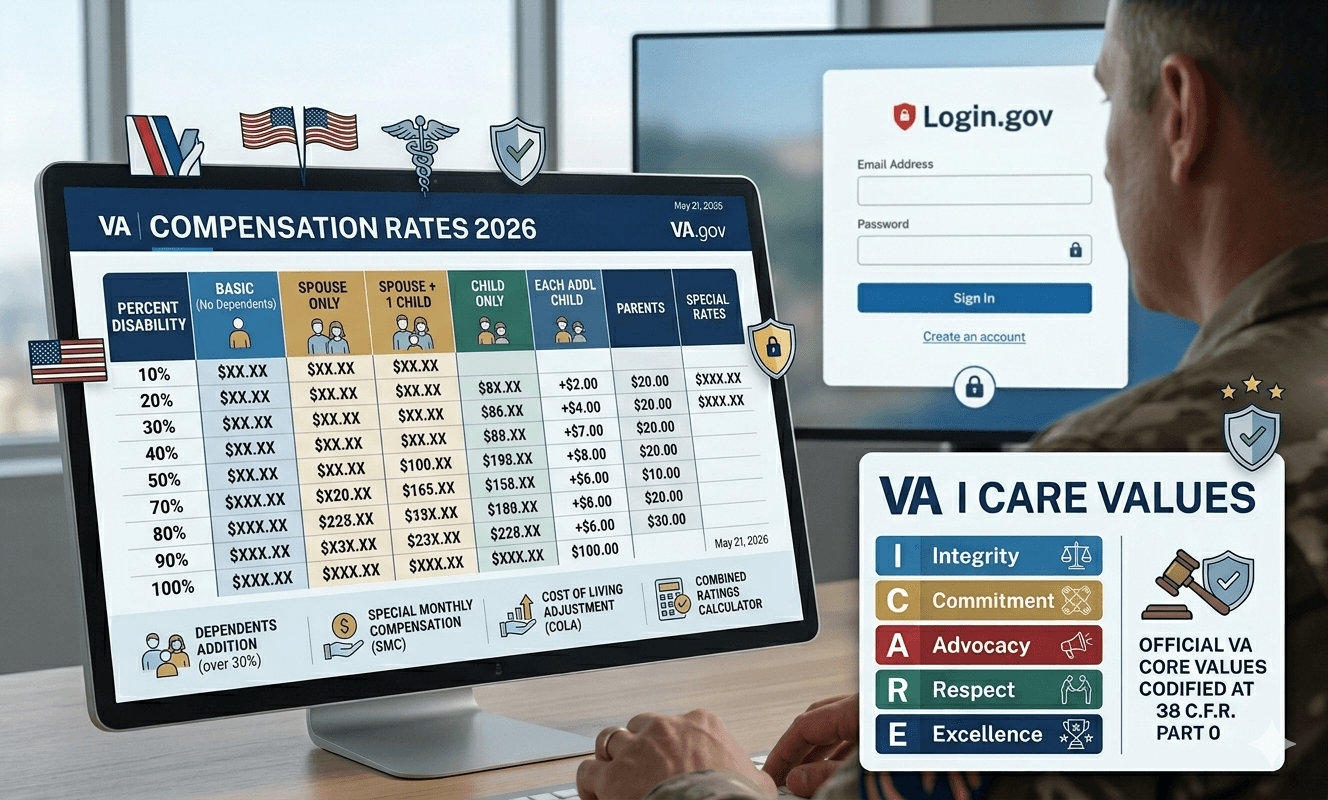
In addition to the disability rating, VA compensation rates are influenced by specific statutory and regulatory guidelines. The VA utilizes a table of monthly compensation rates that corresponds to the assigned disability rating. For example, a veteran rated at 100% disability will receive a higher monthly compensation amount compared to those with a lower rating. This tiered compensation structure aims to provide financial support proportionate to the level of disability sustained.
Furthermore, the VA factor in demographic elements, such as dependents. Veterans with dependent spouses or children may receive additional compensation on top of their base rate, significantly enhancing their financial assistance. This additional support reflects the VA’s recognition of the varying needs of different veteran households.
Annual adjustments, known as Cost of Living Adjustments (COLA), are also applied to ensure that compensation rates reflect inflation and changes in living costs. For 2026, the anticipated 2.8% COLA indicates the continuous commitment of the VA to adapt compensation levels to economic conditions. It is essential for veterans to understand how their compensation rates are computed, as this knowledge empowers them to make informed financial decisions regarding their benefits.
Implications of the 2.8% COLA Increase on Veterans and Families
The recently approved 2.8% Cost of Living Adjustment (COLA) increase signifies a crucial change for veterans and their families. This increment, aiming to counteract inflation, is designed to enhance the purchasing power of veterans who receive compensation from the Department of Veterans Affairs (VA). Such financial adjustments are particularly important in an era characterized by rising living costs and economic uncertainties.
Primarily, the COLA increase provides much-needed relief to veterans who often depend on these benefits for their daily living expenses. With this adjustment, veterans may find it easier to manage essential expenditures such as housing, food, and healthcare. The additional funds could enable families to allocate resources more effectively, possibly allowing for savings or investments that contribute to their long-term financial stability.
This increase also has broader implications for the overall quality of life of veterans and their families. A modest increase in compensation can have a significant impact on their mental and emotional well-being. Financial security, even in small increments, can alleviate stress and improve life satisfaction. Furthermore, the increase can facilitate better access to healthcare services, thereby promoting enhanced health outcomes for veterans and their families.
For those veterans who may still be transitioning into civilian life, this adjustment can provide extra support during a challenging period, contributing to their reintegration into society. In essence, this 2.8% rise in compensation has the potential to bolster not just financial health but also the overall quality of life experienced by veterans and their families.
Comparison of VA Compensation Rates Over Recent Years
The Veterans Affairs (VA) compensation rates have experienced various adjustments over the years, informed primarily by inflation trends and cost-of-living expenses. As of 2026, the official increase of 2.8% in VA compensation reflects ongoing efforts to ensure that veterans receive adequate financial support corresponding with economic shifts. This revision in rates demonstrates a systematic approach to maintaining the purchasing power of compensation payouts.
Historically, VA compensation rates have been modified through periodic adjustments known as Cost-of-Living Adjustments (COLA). These adjustments are primarily tied to the Consumer Price Index (CPI), which measures inflation across a basket of goods and services. For instance, in 2023, veterans witnessed a COLA increase of 5.9%, significantly higher than the forthcoming adjustment planned for 2026. This notable spike, closely aligned with rising inflation rates, aimed to alleviate the financial burden veterans faced during a period of economic uncertainty.
Zooming further back, the COLA adjustments from 2021 to 2022 evidenced a rather modest increase of 1.3%. This modest increment, however, was in stark contrast to the unexpected inflationary trends that emerged in subsequent years. The increases observed from 2020 through 2022 illustrated a gradual struggle in meeting the rising costs of living.
Additionally, as we analyze the trend of VA compensation rates, it is essential to recognize that the patterns and increments are indicative of broader economic conditions. For example, the COLA increases during previous years faced real-world challenges posed by fluctuating economic circumstances. The consistent adjustments reflect the VA’s responsiveness to inflationary pressures and the continuous commitment to supporting veterans and their families effectively.
Resources for Veterans to Understand and Access Their Benefits
For veterans navigating the complexities of compensation rates and benefits, several resources exist to provide essential guidance and support. The U.S. Department of Veterans Affairs (VA) is the primary source of information. Their official website offers a comprehensive overview of benefits, compensation rates, and the recent 2.8% cost-of-living adjustment (COLA) for 2026. Veterans can access detailed information about eligibility criteria, application processes, and available benefits through the VA Benefits page.
In addition to VA resources, various advocacy organizations provide assistance in understanding benefits. The Veterans of Foreign Wars (VFW) and the American Legion are both reputable organizations dedicated to helping veterans. They offer personalized assistance, advocacy, and educational resources to ensure that veterans can access their respective compensation benefits effectively.
Financial advisory services tailored to veterans can also enhance understanding and management of benefits. Organizations like Military OneSource offer a range of resources, including financial counseling and planning tools that help veterans leverage their compensation effectively. Additionally, workshops and webinars hosted by these organizations provide insights into optimal use of VA benefits.
By leveraging these resources, veterans can gain a clearer understanding of their benefits and compensation rates. The collaborative efforts among the VA, advocacy groups, and financial advisors equip veterans with the necessary tools to navigate their unique benefits landscape. These resources aim to empower veterans, ensuring they receive the compensation and benefits they deserve for their service.
Personal Stories: Veterans Share the Impact of COLA Adjustments
For many veterans, cost-of-living adjustments (COLA) are more than just numbers; they represent tangible changes in daily life. The recent 2.8% COLA increase announced for 2026 has sparked a range of personal stories reflecting its impact. Veterans have expressed how these adjustments not only influence their immediate financial conditions but also contribute significantly to their overall quality of life.
John, a veteran who served overseas, shared that the COLA increase helps him afford necessary medications that had become increasingly expensive. “Every little bit helps, especially when you’re on a fixed income. The COLA adjustment makes it possible for me to manage my health needs better,” he stated. Such narratives underscore the importance of these adjustments as a lifeline for veterans grappling with rising costs in healthcare and daily expenses.
Similarly, Maria, a former servicewoman, emphasized how the COLA adjustments enable her to support her family. “With the increase, I can put a bit more aside for my children’s education. It may seem small, but it means a lot to us as a family,” she remarked. Maria’s perspective is illustrative of how COLA increases can help veterans not only meet their obligations but also instill hope for better future opportunities for their dependents.
There are veterans like Tom, who utilize the extra funds toward leisure activities, which contribute to their mental well-being. “I’ve started taking art classes, something I’ve always wanted to do but never had the means for. The COLA adjustment gave me that freedom,” he explained. His story highlights the broader implications of financial stability on personal fulfillment and mental health.
These individual stories reveal a common thread: COLA adjustments have a profound effect on the lives of veterans, touching upon healthcare, family support, and personal growth. As the conversation about COLA continues, it is crucial to remember that these percentage increases have real-world ramifications for those who have served our nation.
Future Considerations: Expected Trends in VA Compensation Rates
As we look ahead to the future of VA compensation rates beyond 2026, several economic indicators may play a critical role in determining the direction of cost-of-living adjustments (COLAs) and overall benefits. The inflation rate, for instance, remains a significant factor that directly influences these adjustments. A sustained increase in the inflation rate could lead to higher COLAs for veterans, as the government aims to maintain purchasing power amidst rising costs.
Additionally, metrics such as the Consumer Price Index (CPI) will be closely monitored. Changes in the CPI provide insight into economic trends that impact the cost of living, thus serving as a foundation for adjustments in VA compensation rates. If future data indicates an increase in healthcare costs, housing prices, or other essential expenditures, it may prompt a reevaluation of current compensation levels to ensure veterans’ benefits remain competitive.
Advocacy for higher benefits also plays a crucial role in shaping future trends in VA compensation. Veteran organizations and advocacy groups continue to lobby for enhancements in compensation packages, emphasizing the need for adjustments that align with veterans’ evolving economic needs. This ongoing dialogue between advocacy groups, policymakers, and economic forecasts could influence decisions regarding future COLA increases.
Furthermore, the legislative landscape will likely evolve, with potential reforms aimed at improving veterans’ benefits. Policy changes may emerge, driven by changes in party leadership, public sentiment regarding veterans’ affairs, or economic pressures on the federal budget. Such developments could result in either enhanced benefits or limitations on future compensation growth.
In summary, while the VA compensation rates for 2026 reflect a modest increase, various economic indicators and advocacy efforts will significantly influence the trends for compensation rates in the years to come. Monitoring these elements will be critical for veterans anticipating adjustments to their benefits in response to changing economic conditions.
Conclusion: The Importance of Staying Informed on VA Benefits
Staying informed about VA benefits is crucial for veterans seeking to fully utilize the resources available to them. Understanding the latest updates, such as the official 2.8% COLA increase in VA compensation rates for 2026, is vital for veterans and their families. Knowledge of these benefits can empower individuals, enabling them to make informed decisions regarding their financial and healthcare needs.
The landscape of veterans’ benefits is continually evolving, necessitating that veterans remain proactive in their pursuit of information. Many veterans may be unaware of changes in laws, eligibility requirements, or the introduction of new programs and resources intended to support their well-being. Regularly reviewing VA updates, attending informational sessions, and consulting with knowledgeable staff can enhance one’s understanding of entitlements. Thus, timely awareness of ongoing changes will help veterans manage their benefits effectively.
Moreover, veterans should familiarize themselves with the various support services provided by the VA. From mental health services to educational benefits, staying informed can make a substantial difference in their quality of life. By taking initiative in gathering information and understanding their rights, veterans can advocate better for themselves and ensure they receive the assistance they deserve.
In conclusion, awareness of VA benefits, including the implications of the recent COLA increase, is essential. Veterans must actively engage with the resources available to them. Through informed action, they can navigate the complexities of their benefits confidently and efficiently, ultimately leading to improved support and a better quality of life.

🇺🇸 IMPORTANT DISCLAIMER – Veterans Benefits Information
This site provides general information about U.S. Department of Veterans Affairs (VA) benefits for educational and informational purposes only.
- Not Official: We are NOT affiliated with, endorsed by, or connected to the U.S. Department of Veterans Affairs (VA), the Veterans Benefits Administration (VBA), the Veterans Health Administration (VHA), or any other government agency.
- No Legal/Financial Advice: The content on this website is for informational purposes only and does not constitute legal, financial, or medical advice. VA benefits rules change frequently – always consult with an accredited Veterans Service Officer (VSO) or a qualified professional for your specific situation.
- Official Sources: For official, binding information and to apply for benefits, always visit official .gov websites: VA.gov, Benefits.VA.gov, or SSA.gov.
- No Data Collection: This site does not collect, store, or process any personal information. It does not have login forms, contact forms, or any system to capture user data. We never ask for your Social Security Number, bank details, or any personal information.
- 🚨 Scam Alert: The VA and other government agencies never charge fees for benefit applications. If anyone asks for money to "process" your VA claim, it is a scam. Report it to the VA Office of Inspector General at VA.gov/OIG.
- Advertising: This site uses third-party advertising (Adsterra) to cover operational costs. We do not endorse or guarantee any products or services advertised.
📌 Information provided as of June 2026. Always verify current eligibility and rules with official .gov sources.
This site is not affiliated with the U.S. Department of Veterans Affairs or any government agency. All information is for educational purposes only. Please visit VA.gov for official information.
