
Introduction to the New VA Appointment System
In May 2026, the Department of Veterans Affairs (VA) will implement a comprehensive overhaul of its appointment scheduling system, designed to provide a more efficient and user-friendly experience for veterans seeking healthcare services. The current system has faced criticism for its complexity and delays, impacting the timely access to care that veterans deserve. The revised system aims to rectify these issues through a series of targeted enhancements.
One of the most notable features of the new VA appointment system is the transition to an advanced digital platform. This platform is expected to streamline appointment scheduling by allowing veterans to book, reschedule, and manage their appointments through an intuitive online interface or mobile application. Such a shift not only modernizes the scheduling process but also empowers veterans with greater control over their healthcare. Enhanced technological integration ensures that veterans can easily navigate the system, reducing the likelihood of errors and misunderstandings.

Additionally, the revamped system introduces a more centralized coordination model for scheduling appointments across various VA facilities. This new model is designed to reduce wait times significantly by optimizing resource allocation and enhancing communication between departments. With integrated data analytics, the VA will better predict demand and manage appointment availability, ultimately ensuring that veterans receive timely care.

Alongside these improvements, there will also be an emphasis on personalized support. Veterans will have access to dedicated resources and assistance to help them understand the new system, allowing for a smoother transition. The VA is committed to making the changes beneficial for all users, striving to ensure that veterans can focus on their health and well-being rather than on navigating a complicated scheduling process.
VA Appointments: What Veterans Need to Know About Faster Scheduling in 2026
May 2026: New VA appointment system cuts wait times, plus text alerts for earlier slots. Community care eligibility rules, same-day options, and critical warnings.
You Can Now Get a VA Appointment Faster. Here’s How.
The VA just finished rolling out a new scheduling system nationwide. If you have been waiting weeks just to book a simple check-up, this changes things.
As of late 2025, every VA facility now uses External Provider Scheduling (EPS) . This technology lets VA employees see real-time availability at over 27,000 community care providers across 78 medical specialties .
Veterans May Qualify for Extra Benefits
Check available financial assistance, healthcare programs and other opportunities that may apply to you.
Check EligibilityWhat this means in plain English: Instead of playing phone tag for days, VA staff can now book your community care appointment instantly. One VA employee can now schedule up to 25 appointments per day using this system . For you, that means less waiting.
The system existed under the previous administration but was never deployed nationwide. The second Trump administration finished the rollout by late 2025, and the VA is expanding it further throughout 2026 .
Here is the bottom line: If you need to see a doctor and your local VA is backed up, the VA can now find you a civilian doctor faster than ever before. But there are still traps to avoid.
What Veterans Need to Know Right Now
The wait time situation is mixed. While the VA says average patient wait times have fallen in four of six major care categories, internal data obtained through the Freedom of Information Act tells a more complicated story .
For new patients in some specialties, things have actually gotten worse.
Here are the facts from October 2025 to January 2026 compared to the year before :
- Neurology: Just 7% of VA facilities met the 28-day standard. Wait times in Omaha went from 27 days to 127 days. In Dallas, from 87 days to 130 days.
- Oncology: Half of facilities saw worsening wait times.
- Primary care and pulmonary care: These are the only areas where more facilities showed significant improvement.
The good news: Existing patients—who make up over 80% of VA care—are generally seeing lower wait times now than in 2024 for primary, specialty, and mental health care .
The bottom line: If you are already in the system, you are probably fine. If you are a new patient needing specialty care like neurology or PTSD treatment, you need to be proactive.
Latest Updates Today (May 2026)
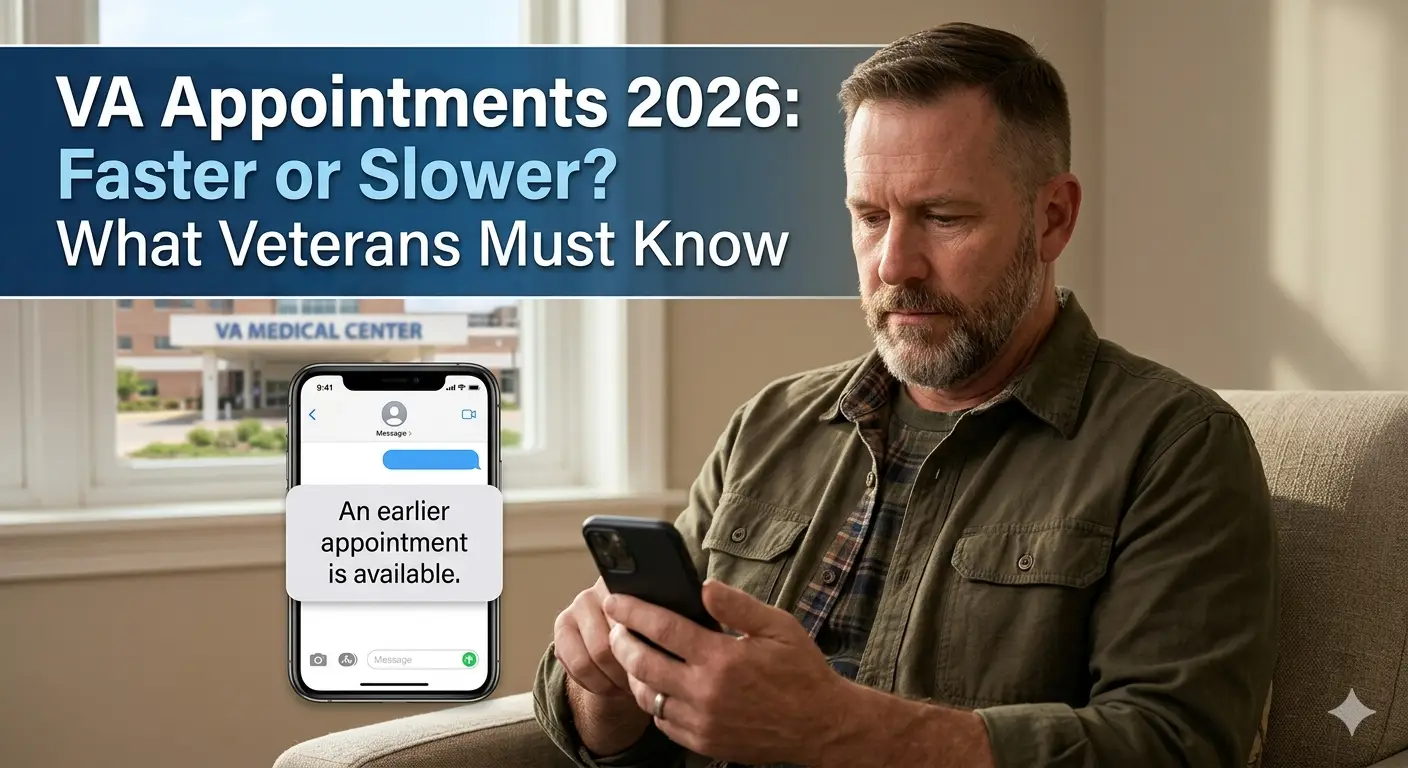
New Text Message System for Earlier Appointments
The VA’s VEText system now includes a feature called Open Slot Management (OSM) .
How it works: If you cancel an appointment, the system automatically offers that slot to other veterans via text message. If you have a future appointment and an earlier slot opens up, you get a text that says:
“FIRST NAME, your VA can see you sooner! An earlier appointment is available on DATE at TIME.”
You simply reply to claim the earlier slot. The first veteran to respond gets it.
To receive these alerts: Make sure the VA has your current cell phone number. If you opted out before, text START to 53079 to rejoin .
New Access to Care Website Changes
The VA updated its Access to Care website in April 2026 with a more user-friendly design and better wait time calculations . The site now uses the Third Next Available Appointment measure at facilities with the new electronic health record system—the same measure major private health systems use.
Important warning: Average wait times on the website do NOT determine your eligibility for community care. Just because the website says wait times are “acceptable” does not mean you cannot request outside care if you are actually waiting.
Urgent Care Hours Changing
Some VA facilities are changing urgent care hours. For example, Coatesville VA in Pennsylvania moved to Monday-Friday, 8 a.m. to 4 p.m., closed weekends and holidays .
What you need to know: If your local urgent care has reduced hours, you still have options:
- 24/7 Triage Nurse: Call 1-833-835-3874 for urgent medical or mental health questions
- Tele Emergency Care: Available 7 a.m. to 11 p.m. ET, 365 days per year
- Same-day appointments: Call your local VA primary care or mental health clinic directly
Who Qualifies for Community Care
You may be eligible to see a community provider (a doctor outside the VA) if you meet any of these six criteria :
- Service not available: Your VA facility doesn’t offer the specific care you need
- No full-service VA: You live in a state or territory without a full-service VA facility
- Grandfathered distance: You qualified under the 40-mile rule before June 6, 2018, and still live in that location
- Excessive wait time: VA can’t see you within access standards
- Best medical interest: You and your VA provider agree community care is better for you
- Quality issues: VA can’t meet quality standards for your needed service
The 14-day rule is critical: If you are waiting for VA to contact you about a referral, pay attention. After one unsuccessful phone attempt, they send a letter. If they cannot reach you within 14 days, your referral may be canceled .
Do this now: Make sure your voicemail is set up. Do not block calls from the VA. Read every letter they send.
How to Apply or Schedule: Step-by-Step
For VA Facility Appointments
Option 1: Online (Fastest)
Sign in to VA.gov/health-care/manage-appointments. You can schedule, cancel, and manage most appointments online. You can also request community care appointments through the portal .
Option 2: Phone
Call your local VA facility directly. For same-day primary care or mental health appointments, call the clinic—not the main line.
Option 3: Text Alerts
Opt in to VEText by texting START to 53079. You will receive appointment reminders and offers for earlier slots .
For Community Care Appointments (If Approved)
Step 1: Your VA provider enters a referral. The specialty care service reviews it within 3 business days to decide if VA can provide the service .
Step 2: If approved for community care, you have two choices:
- Let VA schedule it for you
- Self-schedule using the VA Locator Tool to find a network provider
Step 3: If you self-schedule, you must notify the Community Care Office of your appointment within 14 days of receiving the authorization letter. Failure to do so cancels your authorization .
Step 4: Keep your authorization letter. Take it to your first appointment.
For Urgent Care (No Appointment Needed)
You can walk into any VA urgent care clinic during operating hours for non-life-threatening issues like minor injuries, fevers, or acute mental health concerns .
After hours: Call the 24/7 Triage Nurse at 1-833-835-3874.
Life-threatening emergency: Call 911 or go to the nearest emergency room immediately.
Common Mistakes Veterans Make
Mistake #1: Assuming the “Wait Time” Website Is Accurate
The VA’s own data shows wide variation. A facility might report average wait times of 20 days, but individual experiences vary dramatically. In neurology, some veterans wait over 100 days .
What to do: Do not trust the average. Call and ask for the actual next available appointment date.
Mistake #2: Waiting for VA to Call You
Referrals get canceled after 14 days of unsuccessful contact. That means if you miss one call, your referral could die .
What to do: Call them. Do not wait. If you submitted a referral request, follow up after 3-5 business days.
Mistake #3: Seeing a Community Provider Without Authorization
If you see a civilian doctor without VA pre-approval, you could be on the hook for the entire bill. The VA will not pay for unauthorized non-emergent community care .
Exception: True emergencies. If it is life-threatening, go to the nearest ER. VA will cover it.
Mistake #4: Not Opting Into VEText
The Open Slot Management system only works if the VA has your cell number and you have not opted out. You are missing out on earlier appointments by ignoring these texts .
What to do: Text START to 53079 today.
Mistake #5: Assuming All VA Facilities Have the Same Wait Times
They do not. The data shows dramatic differences. One VA medical center might get you into neurology in 30 days while another takes 130 days .
What to do: If your local VA has long waits, ask about traveling to a different facility or using community care.
What This Means Financially for You and Your Family
For most veterans: The new EPS system means faster access to care, which means less time off work, less travel, and less frustration. Faster appointments also mean conditions get caught earlier, potentially saving you thousands in out-of-pocket costs you would have paid if you went outside the VA system.
For veterans in high-wait specialties (neurology, PTSD, oncology): You need to push for community care. If your local VA cannot see you within 28 days for specialty care, you are eligible for community care at no cost to you .
Warning about prescription costs: If you go to a community provider and they prescribe medication, the VA pharmacy will only cover routine prescriptions that appear on the VA National Formulary. For emergency or urgent care prescriptions, you can get a 14-day supply at a community pharmacy but must pay out-of-pocket first. You can request reimbursement by mailing VA Form 10-320 with your receipt and prescription copy to :
VA Community Care Payment Center
P.O. Box 1004
Fort Harrison, MT 59636
Durable medical equipment: If your community provider orders crutches, a hospital bed, or oxygen equipment, they must submit a Request for Service form to VA. Do not buy it yourself expecting reimbursement .
The Political and Government Context
The EPS system was available during the Biden administration but was never deployed nationwide. The second Trump administration made nationwide implementation a priority, completing it by late 2025 .
VA Secretary Doug Collins has consistently highlighted improvements in wait times, telling Fox News in February 2026 that “by better focusing our resources…our wait times in hospitals are improving” .
But here is the reality check: The VA is also delivering more appointments than ever before—over 82 million direct care appointments in fiscal year 2025, up 4.1% from the previous year . More veterans are signing up for VA health care than ever before, with 100,000 new enrollees in early 2026 alone.
The problem: Demand is rising faster than capacity in some specialties. The VA has a workforce shortage in critical areas like neurology and mental health. The system can schedule faster, but if there are not enough doctors, you are still waiting.
Legislation to watch: The Community Care Scheduling Improvement Act (H.R. 3482) passed out of committee and would permanently require nationwide EPS implementation, locking in these scheduling improvements regardless of future administration changes .
FAQ: Veterans’ Most Searched Questions
How do I schedule a VA appointment online?
Sign in to VA.gov/health-care/manage-appointments. You can schedule, cancel, and manage most appointments. You can also request community care appointments through the same portal .
What is the VA phone number to schedule an appointment?
For general VA health care questions, call 1-800-827-1000, available 24/7. For specific clinic appointments, call your local VA facility directly. For the 24/7 Triage Nurse (urgent medical or mental health questions), call 1-833-835-3874 .
Can I see a non-VA doctor with VA benefits?
Yes, but only if you meet community care eligibility requirements. You must receive VA authorization before seeing a community provider for non-emergent care. Unauthorized care will not be covered .
How long is the VA appointment wait time right now?
It depends heavily on your location and specialty. The VA’s access standard is 20 days for primary and mental health care, 28 days for specialty care. But real-world data shows neurology wait times exceeding 100 days at some facilities. Primary care has generally improved .
What is the VEText system?
VEText is VA’s text messaging service that sends appointment reminders and now offers earlier appointment slots when they become available. Text START to 53079 to join .
Does the VA offer same-day appointments?
Yes, many VA primary care and mental health clinics offer same-day appointments for urgent but non-emergency needs. Call your local clinic directly to ask .
How do I check my VA appointment online?
Sign in to VA.gov/health-care/manage-appointments. You can view upcoming appointments, add them to your calendar, and access after-visit summaries .
What happens if I miss a VA appointment?
Call your VA facility as soon as possible to reschedule. Repeated no-shows can affect your eligibility for future community care referrals. The VA may also cancel pending referrals after unsuccessful contact attempts .
Final Takeaway
The VA appointment system is getting faster, but not for everyone.
If you are an existing patient needing primary care or mental health: You are probably fine. Wait times have generally improved.
If you are a new patient or need specialty care like neurology or PTSD treatment: You need to be aggressive. Call. Follow up. Opt into text alerts. Ask about community care if your local VA has long waits.
Your action checklist:
- Text START to 53079 to opt into VEText for earlier appointment alerts
- Check your voicemail and unblock VA calls to avoid canceled referrals
- Use online scheduling at VA.gov instead of waiting on hold
- Know your community care rights—if VA cannot see you within 20-28 days, you can go elsewhere at no cost
- Never see a civilian doctor without VA authorization unless it is a true emergency
The VA is processing more appointments than ever before. More veterans are signing up than ever before. But the system is still strained. You need to advocate for yourself.
Stay informed. Use the tools available. And do not wait—schedule that appointment today.
Understanding the Reduced Wait Times
The new VA appointment system introduced as part of the Veterans Affairs initiative for 2026 aims to significantly decrease wait times for veterans seeking medical care. By implementing innovative scheduling technologies and operational reforms, the system is designed to enhance veterans’ access to healthcare services efficiently.
One of the primary mechanisms for achieving reduced wait times is the integration of advanced appointment scheduling software. This technology allows for real-time availability tracking and predictive scheduling, which means that veterans can book appointments with providers who have immediate openings. Additionally, the software adapts to changes in demand, thereby optimizing the appointment allocation based on current healthcare needs and provider availability.
Furthermore, the VA is expanding its partnerships with community healthcare providers. This collaboration enables veterans to receive care not only within VA facilities but also through community-based healthcare systems. By diversifying the avenues for care, veterans are less likely to experience long wait times traditionally associated with limited in-house capabilities.
The implementation of telehealth services is another critical component in reducing appointment delays. Many routine health checks and follow-up consultations can now be conducted virtually, which not only saves travel time for veterans but also streamlines the appointment process. By utilizing virtual platforms, the VA can ease the burden on physical facilities and better allocate resources toward high-demand areas.
Through these strategic improvements—advanced scheduling software, community partnerships, and telehealth expansion—the VA aims to provide veterans with the timely medical attention they deserve. The expectation is that these changes will ultimately lead to shorter wait times and improved overall satisfaction with the care veterans receive, addressing a long-standing concern within the VA healthcare system.
Text Alerts for Earlier Appointment Slots
The Department of Veterans Affairs (VA) is introducing a new feature aimed at streamlining the appointment scheduling process for veterans through text alerts. This initiative is particularly relevant given the increasing demand for timely health care services among the veteran population. By implementing a text alert system, the VA will notify veterans about earlier available appointment slots, allowing them to secure appointments that may have otherwise gone to other patients.
This text alert feature works by allowing veterans to opt-in through their VA account or via the VA’s customer service channels. Once registered, veterans can receive notifications directly on their mobile devices whenever an earlier appointment becomes available at their designated facilities. This proactive approach to scheduling not only saves veterans time but also optimizes the use of available resources within the VA healthcare system.
The benefits of these text alerts are manifold. Firstly, they enhance accessibility, enabling veterans to quickly respond to newly available slots which may fit better into their schedules. This is especially advantageous for those veterans who may have rigid time constraints or difficulty commuting. Secondly, the efficiency introduced by these notifications can lead to shorter waiting times for appointments, consequently improving the overall experience and satisfaction of veterans seeking care.
In addition, veterans should be aware that they can adjust their notification preferences at any time. Whether they wish to receive alerts for specific types of appointments or at particular locations, the system is designed for flexibility. This adaptability ensures that each veteran can tailor their experience to their unique healthcare needs. The introduction of text alerts represents a significant step forward in enhancing the appointment scheduling process within the VA system, thereby promoting a more responsive and veteran-centered healthcare environment.
Community Care Eligibility Rules
The implementation of updated eligibility rules for community care has significant implications for veterans seeking timely healthcare services. Under the new system set to take effect in 2026, several criteria will determine whether a veteran might qualify for community care, diverging from the previously established regulations.
Firstly, veterans will be eligible for community care if they are unable to access specific VA services in a reasonable timeframe, as defined by the Department of Veterans Affairs. This includes conditions where the required care is not available within a certain drive distance from their home or if they have challenges that inhibit them from attending a VA facility, such as geographical obstacles or health-related issues.
Additionally, veterans experiencing specific health conditions may also qualify. For example, veterans with service-connected disabilities or urgent health issues that demand immediate attention may be granted access to community care, irrespective of their location in relation to VA facilities. The philosophy behind this change aims to cater to veterans’ unique circumstances, ensuring that they receive timely care without the hurdles that previous policies imposed.
Moreover, the new eligibility criteria will place an emphasis on direct inputs from veterans through surveys and feedback mechanisms, empowering them to share their healthcare access experiences. This participatory approach ensures that the VA can adapt its community care policies to better meet the needs of veterans.
In summary, the transition to the 2026 community care eligibility rules reflects a significant shift in policy aimed at enhancing healthcare access for veterans. By establishing these criteria, the VA underscores its ongoing commitment to addressing the healthcare needs of veterans in a manner that aligns with individual circumstances and challenges.
Same-Day Appointment Options
The Department of Veterans Affairs (VA) has developed a system of same-day appointment options designed to enhance accessibility and provide timely care for veterans. This initiative addresses the often-critical need for immediate medical attention, enabling veterans to receive care without the lengthy waiting periods traditionally associated with appointment scheduling.
Same-day appointments may be scheduled for a range of services including primary care, mental health consultations, and certain specialty services. This flexibility is particularly crucial for veterans who may face acute health concerns that require prompt intervention. The aim is to streamline the process and ensure that veterans do not have to suffer from delays in receiving necessary care.
In specific situations, such as an exacerbation of chronic conditions, sudden physical ailments, or mental health crises, veterans can request a same-day appointment. It is important for veterans to communicate clearly with their healthcare providers about their symptoms and urgency of their needs, as this will facilitate quicker access to care. Furthermore, in addition to physical clinics, the VA is increasingly utilizing telehealth services to accommodate veterans who may prefer or require remote consultations.
By focusing on same-day appointment options, the VA aims to minimize gaps in care that can adversely affect veterans’ health outcomes. This model not only improves the overall healthcare experience but also fosters a sense of trust and confidence among veterans in the VA system. Awareness of these options is crucial, as veterans who know their rights and available services are better equipped to navigate the complexities of healthcare access.
Navigating the New Appointment System
As the Department of Veterans Affairs (VA) implements its new appointment system in 2026, veterans must familiarize themselves with the intricacies of the process to ensure they receive timely care. This guide offers essential steps for effectively scheduling appointments, managing existing ones, and accessing support resources.
First, veterans should take advantage of the VA’s online scheduling tools. The VA’s website provides an intuitive interface for booking appointments and allows users to access their health records, which can prove invaluable when planning visit dates. To begin, veterans must create a secure account on the VA’s online platform. Once set up, navigate to the appointments section to view available slots with preferred healthcare providers.
When scheduling an appointment, it is advisable to consider a few pivotal factors. First, check for the nearest VA medical facilities and any specialized care required. Selecting a facility closer to home can greatly reduce travel time and associated costs. Second, veterans should assess their schedule; opting for appointments during off-peak hours may yield more flexibility in availability. Additionally, having ready access to relevant medical information can facilitate quicker booking and discussions during consultations.
Managing existing appointments is equally important. Veterans can modify or cancel appointments directly through the VA’s online portal, ensuring that their healthcare plans remain fluid and responsive to changes. Notifications and reminders can also be set up, helping veterans keep track of their upcoming appointments. If difficulties arise during this process, the VA provides resources and hotline support for veterans needing assistance.
In conclusion, navigating the new appointment system empowers veterans to take charge of their healthcare. By leveraging online resources, they can schedule and manage appointments effectively, thereby promoting a more streamlined pathway to receiving necessary medical care.
Potential Challenges and Warnings
As veterans transition to the new appointment scheduling system set for implementation in 2026, there are several potential challenges that may arise. Understanding these challenges is crucial for veterans to effectively navigate the system and secure their healthcare appointments in a timely manner.
One significant issue may stem from technological barriers. Many veterans might not have access to high-speed internet or may not be comfortable using new digital platforms. This lack of technological readiness could hinder their ability to utilize the online scheduling tools effectively, potentially leading to increased frustration and missed appointments.
Moreover, the integration of the new scheduling system with existing databases poses risks of data discrepancies. Veterans who rely on accurate health records may find themselves facing issues if the information shared between the various agencies is inconsistent. It is advisable for veterans to verify their health information regularly to ensure their records are current and aligned across systems.
Another challenge could arise from potential staffing shortages. As the demand for appointments accelerates due to a more streamlined scheduling process, the available healthcare personnel may find themselves overwhelmed. Veterans could face longer wait times if the system is not adequately supported by sufficient healthcare staff. This could result in a bottleneck effect, impacting the quality of care provided.
Additionally, it is important for veterans to be aware of common pitfalls in the scheduling process. Misunderstanding the new guidelines or failing to keep track of appointment details may result in missed appointments or unnecessary cancellations. Veterans must stay informed and seek assistance when needed to alleviate confusion.
In conclusion, while the new scheduling system presents exciting opportunities for enhancing veterans’ access to healthcare, it also brings potential challenges that must be addressed with proactive measures and careful implementation.
Feedback from Veterans and Stakeholders
The decision to overhaul the scheduling system for VA appointments in 2026 has prompted a range of feedback from veterans and stakeholders involved in veterans’ care. Many veterans express a sense of optimism regarding the implementation of a more efficient system, as it promises to enhance accessibility to healthcare services that they rightly deserve. Numerous stakeholders, including veteran advocacy groups, have highlighted the importance of using technology to streamline appointment scheduling, thus potentially reducing wait times and improving the overall patient experience.
However, concerns about the ease of use and comprehensibility of the new scheduling system have emerged. Veterans have shared apprehensions about their ability to navigate the updated technology, especially those who may not be as familiar with digital tools. To mitigate this issue, stakeholders suggest comprehensive training programs and resources that would allow veterans to familiarize themselves with the new options available to them. They emphasize the necessity of a user-centric approach that considers veterans’ varying levels of comfort with technology.
Furthermore, some veterans express a desire for continuous feedback mechanisms to be built into the new system. They advocate for an ongoing dialogue between the VA and the veteran community, citing that the effectiveness of any scheduling improvements will largely depend on how well their needs and suggestions are incorporated post-implementation. The feedback from various stakeholders further supports the need for transparent communication from the VA as the changes are rolled out, ensuring veterans are informed and engaged throughout the process. Thus, proactive efforts will ensure that the new system not only meets the expectations but also enhances the quality of care provided to our veterans.
Conclusion and Future Outlook
In examining the advancements in the scheduling of VA appointments, it is clear that the system is undergoing significant changes aimed at improving accessibility and efficiency for veterans. The initiative to streamline scheduling processes aims to address longstanding challenges, thus ensuring that veterans receive the timely care they deserve. With the implementation of modern technologies and improved procedures, the aspiration for reduced wait times appears promising.
Furthermore, the anticipated enhancements in communication between veterans and VA facilities may also contribute significantly to this goal. By fostering a more user-friendly interface and ensuring that veterans are better informed about their appointment statuses, the VA can improve the overall patient experience. An emphasis on user education regarding the new scheduling mechanisms will be crucial as the system evolves, ensuring that veterans maximize the benefits of these changes.
Looking ahead, the future of VA appointments is likely to continue in this direction of modernization and adaptability. Potential further innovations may include the integration of telehealth services, which have proven crucial in maintaining care continuity during times of crisis. Adaptations to the appointment system will undoubtedly consider the diverse needs of the veteran population, paving the way for a more personalized approach to care.
In conclusion, as the VA seeks to refine its appointment scheduling system and embrace technological advancements, it offers hope for a more efficient and responsive healthcare environment for veterans. As these initiatives unfold, continued assessment and feedback from the veteran community will be essential to ensure that the evolving system remains effective and meets the needs of those it serves.


🇺🇸 IMPORTANT DISCLAIMER – Veterans Benefits Information
This site provides general information about U.S. Department of Veterans Affairs (VA) benefits for educational and informational purposes only.
- Not Official: We are NOT affiliated with, endorsed by, or connected to the U.S. Department of Veterans Affairs (VA), the Veterans Benefits Administration (VBA), the Veterans Health Administration (VHA), or any other government agency.
- No Legal/Financial Advice: The content on this website is for informational purposes only and does not constitute legal, financial, or medical advice. VA benefits rules change frequently – always consult with an accredited Veterans Service Officer (VSO) or a qualified professional for your specific situation.
- Official Sources: For official, binding information and to apply for benefits, always visit official .gov websites: VA.gov, Benefits.VA.gov, or SSA.gov.
- No Data Collection: This site does not collect, store, or process any personal information. It does not have login forms, contact forms, or any system to capture user data. We never ask for your Social Security Number, bank details, or any personal information.
- 🚨 Scam Alert: The VA and other government agencies never charge fees for benefit applications. If anyone asks for money to "process" your VA claim, it is a scam. Report it to the VA Office of Inspector General at VA.gov/OIG.
- Advertising: This site uses third-party advertising (Adsterra) to cover operational costs. We do not endorse or guarantee any products or services advertised.
📌 Information provided as of June 2026. Always verify current eligibility and rules with official .gov sources.
This site is not affiliated with the U.S. Department of Veterans Affairs or any government agency. All information is for educational purposes only. Please visit VA.gov for official information.
