
Paralyzed Veterans of America: Mission, Programs, and How to Get Involved
Paralyzed Veterans of America (PVA) is a congressionally chartered veterans service organization founded in 1946 by World War II veterans who returned home with spinal cord injuries. PVA’s mission is to empower veterans with spinal cord injury or disease (SCI/D) to live independent, healthy, and productive lives. The organization provides free benefits assistance, adaptive sports, career support, advocacy, and research funding.
Quick Facts
| Item | Details |
|---|---|
| Organization | Paralyzed Veterans of America (PVA) |
| Founded | 1946 |
| Type | 501(c)(3) nonprofit, congressionally chartered veterans service organization |
| Eligibility | U.S. citizen veterans with spinal cord injury or disease (SCI/D), including MS and ALS, with other than dishonorable discharge |
| Membership Cost | Free |
| Services Cost | Free |
| Chapters | 33 chapters across the U.S. and Puerto Rico |
| Headquarters | Washington, D.C. |
| Official Website | pva.org |
| Veterans Benefits Helpline | 1-866-734-0857 |
| Updated For | 2026 |
What Is Paralyzed Veterans of America?
Paralyzed Veterans of America is the only congressionally chartered veterans service organization dedicated solely to serving veterans with spinal cord injuries and diseases (SCI/D), including multiple sclerosis (MS) and amyotrophic lateral sclerosis (ALS).

PVA was founded in 1946 by a band of service members who came home from World War II with spinal cord injuries. They returned to a grateful nation but also to a world with few solutions to the major challenges they faced. These wounded heroes made a decision not just to live, but to live with dignity as contributors to society. They created Paralyzed Veterans of America, an organization dedicated to serving veterans—and to medical research, advocacy and civil rights for all people with disabilities.

More than 300,000 people live with a spinal cord injury in the U.S. Approximately 42,000 of them are veterans. PVA provides services to veterans free of charge, representing all ages, all branches, and across all conflicts.
Why PVA Matters
PVA fills critical gaps that government programs alone cannot address. The organization:
Helps veterans secure earned VA benefits they may not know they qualify for
Provides adaptive sports and recreation that improve physical and mental health
Offers career support to help veterans re-enter the workforce
Advocates for legislation that protects and expands veterans’ rights
Funds medical research to treat and cure paralysis
PVA’s Core Mission Areas
PVA focuses on the whole veteran—their physical health, financial security, societal needs, and mental well-being. The organization’s work falls into four primary pillars:
Advocacy — Fighting for the rights of paralyzed veterans and all people with disabilities at the federal level
Benefits Assistance — Helping veterans file VA claims and obtain earned benefits
Programs and Services — Providing adaptive sports, career support, and scholarships
Research — Funding medical research to treat and cure spinal cord injuries and diseases
PVA Membership: Eligibility and How to Join
PVA membership is free and open to U.S. citizen veterans with spinal cord injury or disease whose discharge was other than dishonorable.
Who Qualifies for PVA Membership
Veterans May Qualify for Extra Benefits
Check available financial assistance, healthcare programs and other opportunities that may apply to you.
Check EligibilityTo be eligible for PVA membership, you must meet all three of the following criteria:
Citizenship — You are a citizen of the United States or its territories
Military Service — You are a veteran of the U.S. Armed Forces with a discharge other than dishonorable
Medical Condition — You have a spinal cord injury or disease (SCI/D)
Qualifying Conditions
PVA membership covers a range of spinal cord conditions, including:
Amyotrophic lateral sclerosis (ALS) — All veterans with ALS qualify
Multiple sclerosis (MS) — All veterans with MS qualify (PVA expanded membership in 2022 to include all veterans with MS)
Cauda equina syndrome
Poliomyelitis
Spina bifida
Spinal cord tumor
Severe spinal stenosis (causing neurological impairment)
Syringomyelia
Transverse myelitis
PVA welcomes veterans with both service-connected and non-service-connected disabilities. If your condition is not listed, contact members@pva.org for clarification.
Benefits of PVA Membership
Joining PVA provides access to a comprehensive network of support:
VA benefits assistance — Help filing claims and appeals
Employment and higher education support — Career counseling and job placement
Sports and recreation opportunities — Adaptive sports events and programs
Membership in one of 33 chapters — Local social and sporting events
Monthly e-newsletter — Updates on programs, advocacy, and events
Complimentary magazine subscriptions — PN magazine and Sports ‘N Spokes magazine
College scholarships — Financial aid for higher education
Access to member-only Facebook groups — Including a group specifically for women veterans
How to Apply for PVA Membership
Step 1: Complete the online membership form at pva.org/membership.
Step 2: Submit supporting documents:
DD-214 (military discharge document)
Medical evidence of SCI/D (your physician can complete PVA’s Physician’s Statement Form)
Proof of U.S. or U.S. Territorial Citizenship
Step 3: If you prefer a paper application, download the printable membership application and send it by email or mail to membership@pva.org.
Common Mistakes to Avoid
Missing documentation — Ensure you have your DD-214 and medical evidence ready before applying
Assuming you don’t qualify — PVA accepts both service-connected and non-service-connected conditions
Waiting to apply — PVA services are free, and you can join at any time
Not updating your address — Keep your contact information current to receive benefits and publications
PVA Programs and Services
PVA offers a comprehensive suite of programs designed to meet the needs of veterans with SCI/D at every stage of their journey.
Veterans Benefits Assistance
PVA’s National Service Officers (NSOs) help veterans file VA claims, monitor hospital activity, and obtain legal aid for claims and appeals. NSOs are veterans themselves and receive continued education to stay current on VA offerings.
What PVA benefits assistance covers:
Disability compensation claims
VA health care enrollment
Home modification grants
Automobile adaptive equipment grants
VA pension and survivor benefits
Aid and Attendance benefits
Life insurance benefits
Assisted reproductive technologies
Impact: PVA has secured more than $230.5 million in new annual and retroactive payments to veterans and their families, with over 23,000 new claims filed annually.
How to access: Contact the PVA Veterans Benefits Helpline at 1-866-734-0857 or connect with an NSO at PVA.org/NSO.
Adaptive Sports and Recreation
PVA offers over 60 free year-round adaptive sporting and recreational opportunities, benefiting thousands of veterans and athletes with disabilities nationwide. Programs include both virtual and in-person events.
Adaptive sports offered:
Wheelchair rugby
Bass fishing
Paracycling (off-road, road, recreational, and online)
Boccia
Bowling
Pickleball
Wheelchair basketball
Trap shooting
Air guns
Archery
Billiards
Yoga
Whitewater rafting
Kayaking
Paddleboarding
Adaptive hiking
Horseback riding
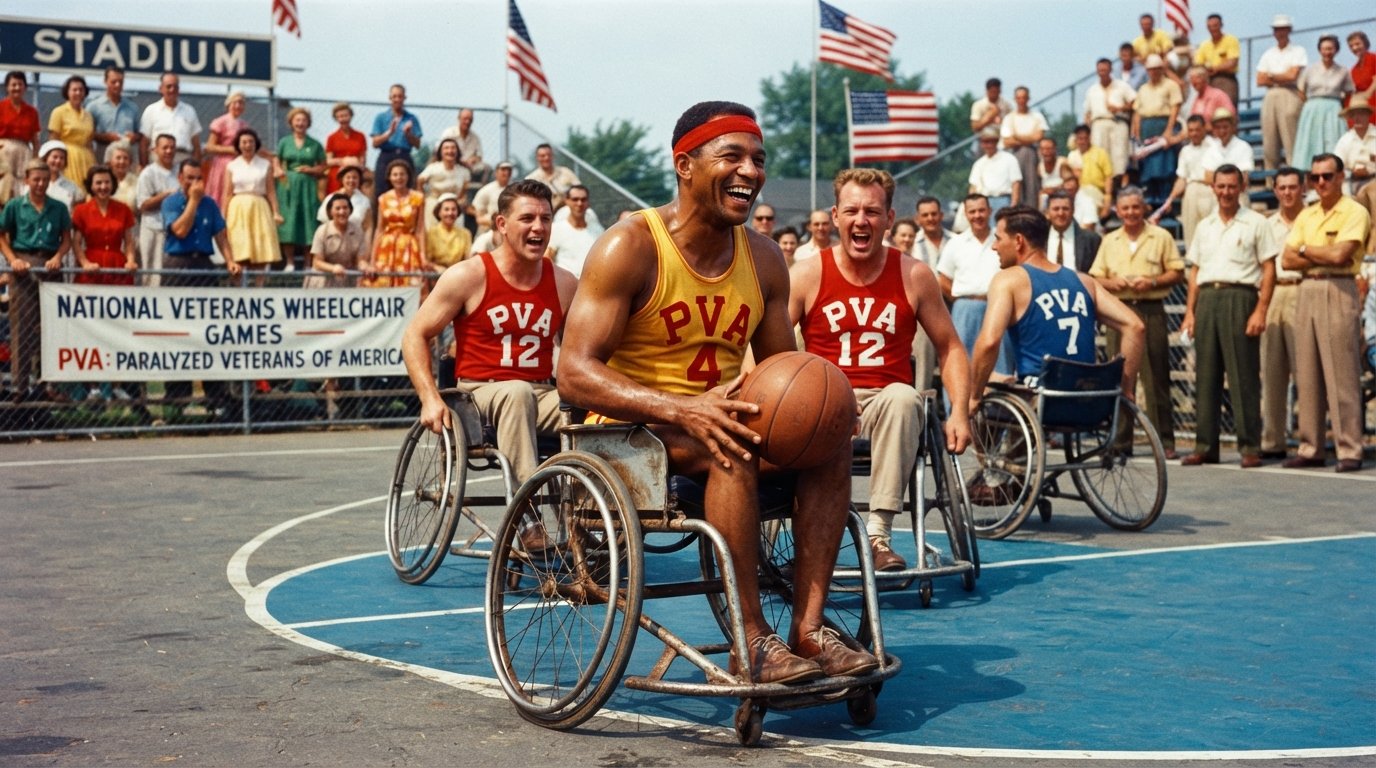
National Veterans Wheelchair Games: Co-presented by PVA and the Department of Veterans Affairs, this is the world’s largest annual wheelchair sports and rehabilitation event solely for military veterans. The Games feature approximately 20 different events and have been held annually since 1981.
Online Fitness + Wellness Program: PVA launched a free virtual adaptive fitness and wellness program powered by Warrior Strong, designed exclusively for veterans facing mobility challenges.
Veterans Career Program
PVA’s Veterans Career Program (formerly known as PAVE) provides free employment support and vocational counseling assistance to all veterans, transitioning service members, spouses, and caregivers.
Services include:
One-on-one vocational counseling
Resume and cover letter assistance
Interview and communication training
Job placement support
Education and training guidance
Volunteer opportunity matching
Eligibility: Open to all veterans, with a focus on PVA members and veterans with disabilities (service-connected and non-service-connected).
Impact: The program has helped more than 5,000 veterans, military spouses, and caregivers find meaningful work. More than 80% of clients stay in their position for more than a year, and veterans placed by PVA earn an average salary of nearly $70,000—35% above the national average for veterans.
How to access: Visit PVA.org/careers or contact the Veterans Career Program directly.
Educational Scholarship Program
PVA’s Educational Scholarship Program assists PVA members and their immediate family members by providing scholarship funds for post-secondary education.
Award amounts:
$2,500 — Full-time students
$1,000 — Part-time students
Eligibility:
Must be a PVA member, spouse, or unmarried dependent child under age 24
Must be a U.S. citizen
Application: Applications become available in March. The PVA Scholarship Review Committee selects recipients based on application completion, personal statement, and academic transcript.
Research Foundation
PVA established its Research Foundation in 1974 to improve the care and treatment of spinal cord injury and disorders. The foundation supports innovative research and fellowships that improve the lives of those with SCI/D.
Funding categories:
Basic Science
Clinical Applications
Design and Development/Assistive Technology
Post-doctoral Fellowships
Grants: Funded up to $200,000 for 2 or 3 years.
Impact: Since its inception, PVA has invested 644 grants for a total of $54,109,999 in research funding.
Advocacy and Legislation
PVA has been behind some of the nation’s most important disability civil rights legislation, including the Americans with Disabilities Act and the Air Carrier Access Act.
2025 Policy Priorities:
Protecting VA’s Specialized Health Care Services
Increasing Access to Long-Term Services and Supports for Veterans with SCI/D
Improving Veterans’ Financial Security
Enhancing Veterans’ Access to Care and Benefits
Supporting Research and Education
PVA testifies before Congress regularly to inform legislators and shape policy priorities that improve the lives of PVA members, their families, caregivers, and survivors.
How to Get Involved with PVA
There are three primary ways to support PVA’s mission: becoming a member, volunteering, and donating.
Become a Member
PVA membership is free and open to qualifying veterans. As a member, you become part of a family of more than 16,000 men and women united to make the world better for veterans and all people with disabilities.
Membership benefits recap:
VA benefits assistance
Career and education support
Adaptive sports and recreation
Chapter membership (33 chapters nationwide)
Monthly e-newsletter
PN magazine and Sports ‘N Spokes subscriptions
Scholarship opportunities
Member-only Facebook groups
Volunteer Your Time
Each PVA chapter offers its own volunteer program with a variety of opportunities. You can commit to as many hours as you choose.
Volunteer opportunities may include:
Assisting at adaptive sports events
Supporting chapter activities
Helping with fundraising events
Providing administrative support
Participating in advocacy efforts
Volunteering can be a life-changing experience—not only for you, but for the paralyzed veteran whose life you are helping to improve.
Donate
PVA is a 501(c)(3) nonprofit organization that neither seeks nor receives government funds. All programs and services are provided free of charge because of donor support.
Ways to give:
One-time donation — Visit pva.org/donate
Monthly giving (Heroes Circle) — Automated recurring donations that ensure PVA can meet every veteran in need
Vehicle donation — Donate cars, trucks, boats, RVs, motorcycles, and even airplanes. Call 877-900-VETS (877-900-8387) or visit pva.careasy.org.
IRA contributions — Tax-deductible contributions from individual retirement accounts
Vehicle donation details:
Free pickup within 24-48 hours
Tax-deductible
PVA receives 70% of net proceeds
Accepts vehicles running or not
IRS Form 1098-C provided for tax purposes
PVA Chapters: Local Support Nationwide
PVA operates 33 chapters across the United States and Puerto Rico. Chapters deliver high-touch services to local members, their families, and caregivers.
What Chapters Provide
Local social events and community building
Adaptive sports and recreation activities
Benefits assistance through local service officers
Advocacy at the state and local level
Volunteer opportunities
Connection to national PVA programs and resources
Finding Your Chapter
Visit PVA.org/chapters to find the chapter nearest you. You can transfer your membership to another chapter if you move.
How Chapters Support Veterans
Chapters magnify PVA’s national efforts by delivering personalized, local support. As PVA National President Robert Thomas noted, “Our chapters are the backbone of our organization, providing direct support to veterans in their communities.”
PVA and VA Benefits: What Veterans Should Know
PVA helps veterans navigate the complex VA benefits system. Here’s what you need to know about key benefit programs.
VA Disability Compensation
VA disability compensation is a monthly tax-free payment for veterans who became ill or injured during military service or whose existing condition worsened due to service.
How PVA helps: NSOs assist with filing initial claims, appeals, and claims for increased ratings. They can submit claims on behalf of the veteran, input evidence, track the claims process, and review files.
Key forms:
VA Form 21-526EZ (Application for Disability Compensation)
VA Form 21-0996 (Appeal to Board of Veterans’ Appeals)
VA Health Care
Veterans with SCI/D may qualify for specialized VA health care, including the VA’s SCI/D system of care.
What PVA does: PVA’s Medical Services Department oversees the quality of care at VA hospitals. National Service Officers stationed within VA hospitals across the country meet veterans from day one of their injury or illness.
How PVA helps: PVA monitors hospital activity, advocates for quality care, and helps veterans access specialized services.
Home Modification and Vehicle Grants
Veterans with qualifying disabilities may be eligible for grants to modify their homes for wheelchair accessibility and to adapt vehicles for their needs.
Programs include:
Specially Adapted Housing (SAH) Grant
Special Housing Adaptation (SHA) Grant
Automobile Allowance and Adaptive Equipment
PVA’s impact: PVA has secured $9.6 million to make veterans’ cars wheelchair-accessible.
VA Pension and Survivor Benefits
PVA assists veterans and surviving spouses with:
VA Pension for eligible low-income veterans with disabilities
Survivor benefits for spouses and dependents
Aid and Attendance benefits for catastrophically disabled veterans
How to Apply for VA Benefits Through PVA
Contact PVA — Call the Veterans Benefits Helpline at 1-866-734-0857 or connect with an NSO at PVA.org/NSO
Gather documentation — DD-214, medical records, and any prior VA correspondence
Meet with an NSO — In person at a VA medical center or by phone
File your claim — Your NSO will prepare and submit your claim
Track your claim — Your NSO monitors progress and keeps you informed
Appeal if denied — PVA provides legal representation for appeals
Common Mistakes Veterans Make with VA Claims
Filing without evidence — Claims without medical evidence are often denied
Missing deadlines — Appeals have strict timelines
Not seeking a secondary condition rating — Conditions caused by your primary disability may qualify for additional compensation
Failing to request a higher-level review — If you disagree with a decision, you have options
Not updating your claim — If your condition worsens, you may qualify for an increased rating
PVA Advocacy: Fighting for Veterans’ Rights
PVA’s advocacy efforts span legislation, regulation, and civil rights.
Legislative Priorities
PVA advocates for legislation that affects veterans with SCI/D and all people with disabilities. Key priorities include:
Protecting and strengthening the VA’s SCI/D system of care
Improving caregiver support and bowel and bladder care services
Increasing access to long-term services and supports
Enhancing veterans’ financial security
Supporting spinal cord research and education
Recent Legislative Wins
PVA’s advocacy helped pass the Senator Elizabeth Dole 21st Century Veterans Healthcare and Benefits Improvement Act, which passed both the House and Senate and was signed into law.
How Veterans Can Support PVA Advocacy
Join PVA — Your membership strengthens PVA’s voice in Washington
Contact your representatives — PVA provides tools to help you advocate
Participate in advocacy events — PVA hosts an Annual Advocacy Legislation Seminar
Share your story — Personal stories help legislators understand the impact of their decisions
Common Questions
What is Paralyzed Veterans of America?
Paralyzed Veterans of America (PVA) is a congressionally chartered veterans service organization founded in 1946. It is the only nonprofit veterans service organization dedicated solely to helping veterans with spinal cord injuries and diseases (SCI/D), including MS and ALS. PVA provides free benefits assistance, adaptive sports, career support, advocacy, and research funding.
Who is eligible for PVA membership?
PVA membership is open to U.S. citizen veterans with a spinal cord injury or disease whose discharge was other than dishonorable. Qualifying conditions include spinal cord injury, ALS, MS, cauda equina syndrome, poliomyelitis, spina bifida, spinal cord tumors, severe spinal stenosis, syringomyelia, and transverse myelitis.
Is PVA membership free?
Yes, PVA membership is completely free. PVA also does not charge for any of its services, including benefits assistance, career counseling, and adaptive sports programs.
How do I apply for PVA membership?
Complete the online form at pva.org/membership. You will need to submit your DD-214, medical evidence of SCI/D (your physician can complete PVA’s Physician’s Statement Form), and proof of U.S. citizenship. You can also download a printed application and send it by email or mail.
What VA benefits can PVA help me with?
PVA helps veterans with VA disability compensation, health care enrollment, home modification grants, automobile grants, VA pension, survivor benefits, Aid and Attendance benefits, life insurance, and appeals. PVA’s National Service Officers are accredited to represent veterans before the VA.
How much does PVA’s benefits assistance cost?
PVA’s benefits assistance is completely free. PVA does not charge veterans for any services, including claims filing, appeals representation, career counseling, or adaptive sports programs.
What adaptive sports does PVA offer?
PVA offers over 60 free adaptive sports and recreation programs, including wheelchair rugby, bass fishing, paracycling, boccia, bowling, pickleball, wheelchair basketball, trap shooting, archery, yoga, whitewater rafting, kayaking, and more. The National Veterans Wheelchair Games is PVA’s largest annual event.
Does PVA help with employment?
Yes, PVA’s Veterans Career Program provides free employment support and vocational counseling to all veterans, transitioning service members, spouses, and caregivers. Services include resume assistance, interview training, job placement, and education guidance. More than 5,000 veterans have found meaningful work through the program.
How can I donate to PVA?
You can donate online at pva.org/donate, join the Heroes Circle monthly giving program, or donate a vehicle by calling 877-900-VETS (877-900-8387). PVA is a 501(c)(3) nonprofit, and all donations are tax-deductible as allowed by law.
Does PVA receive government funding?
No. PVA proudly neither seeks nor receives government funds. All programs and services are funded through donations, grants, and fundraising efforts.
How many PVA chapters are there?
PVA has 33 chapters across the United States and Puerto Rico. Chapters provide local support, including social events, adaptive sports, benefits assistance, and volunteer opportunities.
What is the National Veterans Wheelchair Games?
The National Veterans Wheelchair Games is the world’s largest annual wheelchair sports and rehabilitation event solely for military veterans. Co-presented by PVA and the Department of Veterans Affairs, the Games feature approximately 20 competitive events and have been held annually since 1981.
Can family members join PVA?
PVA membership is limited to qualifying veterans. However, family members can support PVA by volunteering, donating, or participating in chapter activities. PVA’s scholarship program is open to members’ spouses and dependent children.
How do I find my local PVA chapter?
Visit PVA.org/chapters to find the chapter nearest you. You can also contact PVA’s national office at 1-800-424-8200 for assistance.
What should I do if my VA claim is denied?
Contact PVA immediately. PVA’s National Service Officers and attorneys provide free representation for appeals. You have one year from the date of a VA decision to file an appeal. PVA can help you request a higher-level review, submit new evidence, or appeal to the Board of Veterans’ Appeals.
Key Takeaways
PVA is the only congressionally chartered veterans service organization dedicated solely to veterans with spinal cord injuries and diseases (SCI/D), including MS and ALS.
PVA membership is free and open to U.S. citizen veterans with SCI/D and an other than dishonorable discharge.
PVA provides free benefits assistance through accredited National Service Officers who help file VA claims and appeals. PVA has secured more than $230.5 million in benefits for veterans and families.
PVA offers over 60 free adaptive sports programs, including the National Veterans Wheelchair Games, the world’s largest annual wheelchair sports event for veterans.
PVA’s Veterans Career Program has helped more than 5,000 veterans, spouses, and caregivers find meaningful employment, with an average salary of nearly $70,000.
PVA advocates for veterans’ rights at the federal level, supporting legislation that protects VA health care, improves caregiver support, and enhances financial security.
PVA funds medical research to treat and cure spinal cord injuries and diseases, with 644 grants totaling over $54 million invested since 1974.
You can support PVA by becoming a member, volunteering, or donating — including vehicle donations, monthly giving through the Heroes Circle, and IRA contributions.
PVA operates 33 chapters across the United States and Puerto Rico, providing local support, social events, and community connection.
PVA services are completely free — the organization neither seeks nor receives government funds and relies on donor support.
Official Resources
PVA Resources
PVA Official Website: https://www.pva.org
PVA Membership Application: https://pva.org/membership
PVA Veterans Benefits Helpline: 1-866-734-0857
PVA Chapter Finder: https://pva.org/chapters
PVA Vehicle Donation: https://pva.careasy.org or 877-900-VETS (877-900-8387)
PVA Career Program: https://pva.org/careers
PVA Scholarship Program: https://pva.org/scholarship-program
Government Resources
VA Disability Compensation: https://www.va.gov/disability
VA Health Care: https://www.va.gov/health
VA Benefits Forms: https://www.va.gov/find-forms
Medicare: https://www.medicare.gov
Medicaid: https://www.medicaid.gov
USA.gov Veterans Services: https://www.usa.gov/veterans
Veterans Service Organizations
Veterans of Foreign Wars (VFW): https://www.vfw.org
American Legion: https://www.legion.org
Disabled American Veterans (DAV): https://www.dav.org
Wounded Warrior Project: https://www.woundedwarriorproject.org


🇺🇸 IMPORTANT DISCLAIMER – Veterans Benefits Information
This site provides general information about U.S. Department of Veterans Affairs (VA) benefits for educational and informational purposes only.
- Not Official: We are NOT affiliated with, endorsed by, or connected to the U.S. Department of Veterans Affairs (VA), the Veterans Benefits Administration (VBA), the Veterans Health Administration (VHA), or any other government agency.
- No Legal/Financial Advice: The content on this website is for informational purposes only and does not constitute legal, financial, or medical advice. VA benefits rules change frequently – always consult with an accredited Veterans Service Officer (VSO) or a qualified professional for your specific situation.
- Official Sources: For official, binding information and to apply for benefits, always visit official .gov websites: VA.gov, Benefits.VA.gov, or SSA.gov.
- No Data Collection: This site does not collect, store, or process any personal information. It does not have login forms, contact forms, or any system to capture user data. We never ask for your Social Security Number, bank details, or any personal information.
- 🚨 Scam Alert: The VA and other government agencies never charge fees for benefit applications. If anyone asks for money to "process" your VA claim, it is a scam. Report it to the VA Office of Inspector General at VA.gov/OIG.
- Advertising: This site uses third-party advertising (Adsterra) to cover operational costs. We do not endorse or guarantee any products or services advertised.
📌 Information provided as of June 2026. Always verify current eligibility and rules with official .gov sources.
This site is not affiliated with the U.S. Department of Veterans Affairs or any government agency. All information is for educational purposes only. Please visit VA.gov for official information.
