

Introduction to VA Funding Fee
The Veterans Affairs (VA) funding fee is a critical component of the VA home loan program, designed to enhance its sustainability and accessibility for veterans and active military personnel. This funding fee serves multiple purposes, including helping to offset the cost of the program and ultimately allowing qualifying borrowers to secure loans without the necessity of private mortgage insurance (PMI), which is typically required in conventional loan scenarios.
All veterans and active duty service members seeking a VA home loan encounter the funding fee, although specific exemptions do exist. Typically, the fee is calculated as a percentage of the loan amount and is determined by various factors, such as the type of service, the loans utilized as well as whether it is the individual’s first or subsequent use of a VA loan. The fee may be financed into the loan amount, making it a manageable expense for veterans and active military users.

Understanding the implications of the VA funding fee is vital, as it can influence the overall affordability of a home loan. For instance, while the funding fee does add to the upfront expenses associated with purchasing a home, it also helps sustain the VA loan program and ensures that it remains viable and beneficial for generations of veterans. With these loans designed to ease the transition into homeownership for those who have served, it is essential that potential borrowers are fully aware of their financial responsibilities, including the funding fee, when navigating their options for a VA loan.
Understanding the VA Funding Fee Rates for 2026

The VA Funding Fee is a crucial component of the Veterans Affairs home loan program, enabling veterans and eligible service members to procure a mortgage with minimal upfront costs. For the year 2026, the VA funding fee rates have been established to accommodate various borrower classifications and down payment options. Understanding these rates is essential for budgeting and planning.
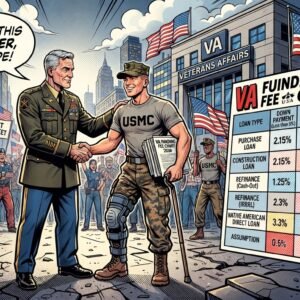
For first-time borrowers utilizing their VA loan benefits in 2026, the funding fee is generally set at 2.3% of the loan amount when no down payment is made. If a down payment is provided, the percentage decreases to 1.65%, creating a more manageable cost structure for those who can contribute some capital upfront. These rates are designed to incentivize veterans to pursue homeownership while still contributing to the sustainability of the VA loan program.
On the other hand, subsequent users of the VA loan benefit experience different funding fee rates. For veterans who have already used their VA benefits once, the funding fee for a loan without a down payment is 3.6%. Conversely, when these borrowers put down some contribution, the fee is reduced to 1.65%. This variation recognizes the ongoing commitment of veterans to the program while providing lower fees for those making financial contributions.
Exemptions to the funding fee also play a vital role in the 2026 rates. Certain individuals, including those receiving disability compensation or who have a dependent who is a service member who died while in service, are entirely exempt from the funding fee. Understanding these classifications can significantly impact a borrower’s financial decision-making when considering the benefits of a VA loan.
Breakdown of VA Funding Fee by Borrower Type
Veterans May Qualify for Extra Benefits
Check available financial assistance, healthcare programs and other opportunities that may apply to you.
Check EligibilityThe VA funding fee serves as a crucial component of the VA Home Loan program, supporting its sustainability while providing eligible service members and veterans the opportunity to purchase homes at favorable terms. The amount paid as a funding fee varies distinctly depending on the type of borrower, with categories that include first-time homebuyers, repeat users, and current or former reservists.
First-time homebuyers utilizing VA loans are generally assessed a lower funding fee compared to those who have used the benefit in the past. As of the latest 2026 rates, first-time users are subject to a funding fee of 2.3% of the loan amount. This fee structure is designed to encourage new borrowers to engage with the benefits provided through VA home financing.
In contrast, repeat users face a slightly escalated fee, set at 3.6% of the total loan amount, reflecting their previous utilization of the VA loan benefits. The differentiation in rates between first-time buyers and repeat borrowers illustrates a strategic approach aimed at promoting homeownership among new veterans while also managing the program’s financial balance as experienced borrowers return to the market.
Additionally, the funding fees for current or former reservists reflect a similar pattern but are specified at distinct rates. Reservists typically pay an amount equivalent to that of repeat users, with the funding fee set at 3.6% for repeat usage and 2.3% for inaugural users. This differential treatment aligns with policies that seek to recognize the unique circumstances and service contributions of reservists.
Understanding how the VA funding fee varies according to borrower type is essential for potential applicants. By being informed about these distinctions, borrowers can better plan their financial commitments when considering a VA loan.
Exemptions from the VA Funding Fee
The VA funding fee is a crucial component of the VA loan program, aiding the maintenance of this benefit for veterans and active-duty service members. However, certain individuals may qualify for exemptions from this fee, which can be particularly beneficial for those facing financial constraints due to service-connected disabilities.
Among the primary candidates for the VA funding fee exemption are veterans who have been determined to have a service-connected disability rating of 10% or greater. This rating must have been granted by the Department of Veterans Affairs. It’s important for service members to ensure that they have updated their records with the VA, as having a current disability rating is essential for exemption eligibility.
Additionally, recipients of the Purple Heart are also automatically exempt from the VA funding fee. The Purple Heart is awarded to those wounded or killed while serving in the U.S. military, and this recognition of their sacrifice extends to benefits such as the exemption from funding fees.
For veterans who believe they qualify for exemption due to disability or as a Purple Heart recipient, the application process involves submitting the necessary documentation to their lender. This includes providing proof of their disability rating or the Purple Heart award. The lender will then submit this information to the VA to verify the exemption status. It is advisable to keep copies of all submitted documentation and correspondences for personal records.
Furthermore, surviving spouses of veterans may also be eligible for exemptions under certain conditions, particularly if the veteran was rated as permanently disabled at the time of their death. Each case is unique, therefore, it is recommended to consult the VA or a qualified mortgage professional to discuss individual circumstances and the specific supporting documents required.
Special Cases and Additional Circumstances
When navigating the complexities of VA loan financing, several special cases and additional circumstances can significantly affect funding fees. Understanding these nuances is essential for veterans and service members seeking to utilize their benefits effectively. One key factor that often influences the funding fee is the military status of the borrower. For instance, individuals who find themselves in a position where their active-duty status changes can expect alterations in their funding fees. If a veteran transitions from active duty to reserve status, their eligibility status and associated fees may vary depending on the circumstances of the change.
Moreover, marital status can also play a pivotal role in determining funding fees. A veteran who is married may qualify for a different fee structure compared to a single veteran. Additionally, if there is a change in marital status due to divorce or remarriage, this can impact the overall funding fee assessment. It is advisable for veterans to communicate any changes in their personal circumstances to the lending institution to ensure accurate fee adjustments.
Furthermore, unique circumstances such as utilizing a VA loan for a construction project warrant special attention. The funding fee for construction loans may differ from that of traditional home purchase loans, reflecting the associated risks and requirements involved in construction financing. As such, understanding the specifics of how these factors influence fees can empower borrowers to make informed decisions while planning their financial commitments.
In light of these considerations, it is crucial for veterans to remain aware of how their individual situations or changes in status can affect their funding fees. Adopting a proactive approach in discussing these aspects with lenders often results in clearer insight and better preparedness when leveraging VA loan benefits.
Calculating Your VA Funding Fee
Understanding how to calculate your VA funding fee is essential for veterans looking to finance their homes through the VA loan program. The VA funding fee is a one-time charge that helps reduce the cost of the loan to taxpayers and is based on various factors, including the type and duration of service, the amount of down payment, and whether this is your first time using a VA loan.
To calculate your funding fee, you first need to determine your down payment percentage. For example, if you are making a down payment of less than 5%, the standard funding fee is typically set at 2.3% of the loan amount. If your down payment is between 5% to 10%, this percentage decreases to 1.65%, and for a down payment greater than 10%, it is further reduced to 1.4%.
Here’s a simple step-by-step process to guide you:1. **Identify Loan Amount**: Determine the total amount of your home loan. Let’s assume it’s $300,000.2. **Choose Down Payment Percentage**: For our example, we will consider a zero percent down payment (2.3% funding fee).3. **Calculate Funding Fee**: Multiply the loan amount by the funding fee percentage (i.e., $300,000 x 0.023 = $6,900).4. **Consider Exemptions**: Understand if you qualify for certain exemptions, such as being a veteran with a service-connected disability, as this eliminates the funding fee altogether.
By refining these calculations based on a few straightforward examples, veterans can better understand the potential costs associated with funding fees and plan their finances accordingly. It’s also advisable to consult with a VA loan specialist who can provide further insights tailored to your unique circumstances, ensuring you optimize your benefits while navigating the complexities of VA financing.
Impact of Funding Fee on Monthly Mortgage Payments
The VA funding fee, a one-time charge applied to loans backed by the Department of Veterans Affairs, plays a substantial role in determining monthly mortgage payments for veterans and active-duty service members. This funding fee is calculated as a percentage of the loan amount, and its rate may vary based on several factors, including the type of deployment and whether the borrower has previously utilized a VA loan. Understanding the integration of this fee into monthly payments is crucial for prospective borrowers, as it can significantly affect their financial planning.
When a veteran takes out a VA loan, the funding fee can either be paid upfront or financed into the loan amount. For instance, if a veteran borrows $300,000 and the applicable funding fee is 2.3%, this amounts to $6,900. If paid upfront, the loan amount would be $300,000. However, if this fee is added to the loan, the total would rise to $306,900. Consequently, monthly payments would be affected in either scenario.
To illustrate the financial implications of the funding fee, consider a borrower who opts for a 30-year fixed-rate mortgage with an interest rate of 4%. If the loan amount is $300,000, the monthly payment would be approximately $1,432. Conversely, financing the funding fee raises the loan amount to $306,900, leading to a monthly payment of around $1,464. This demonstrates an increase of $32 per month, significantly impacting the borrower’s overall financial landscape.
Over the life of a 30-year mortgage, this seemingly minor adjustment can accumulate to a substantial amount. Borrowers must carefully evaluate their options regarding the funding fee to accurately forecast their monthly obligations. By understanding the nuances related to the VA funding fee, service members and veterans can make informed decisions and budget wisely for their future housing costs.
Future Trends and Changes in VA Funding Fees
As we look beyond 2026, several potential trends and legislative changes regarding VA funding fees could arise, ultimately impacting veterans and their access to home financing. These shifts may be influenced by broader economic conditions, evolving governmental approaches, and the ongoing advocacy efforts by veteran service organizations.
One of the significant areas of focus will likely be the adjustments to the funding fee structure itself. Given the fluctuations in the housing market and interest rates, the VA may seek to recalibrate fee amounts to ensure they remain manageable for veterans. This could involve decreasing fees during periods of economic instability, thereby supporting veterans in their endeavors to secure housing without significant financial burdens. Such adjustments could further facilitate homeownership among veterans, potentially leading to increased housing stability.
In addition to changes in funding fees, there may also be a push for exemptions or reductions targeted towards specific groups, such as those with disabilities or those serving in combat zones. Legislative revisions could emerge from ongoing discussions to acknowledge the unique sacrifices made by certain veterans, making it more feasible for them to access financing. Furthermore, the expansion of eligibility criteria for particular programs may be on the horizon, aimed at assisting a more diverse range of veterans in navigating the sometimes complex housing finance landscape.
Moreover, the integration of technological advancements and improved data analytics could transform how the VA administers funding fees and monitors their impacts. By leveraging data-driven decision-making, future policies could become more responsive and tailored to the needs of the veteran community, enhancing overall effectiveness.
Ultimately, as societal views and governmental priorities evolve, so too will the framework governing VA funding fees, reflecting a commitment to continually improving the benefits provided to those who have served.
Conclusion and Final Thoughts
Understanding the VA funding fee is a crucial component for veterans, active-duty service members, and eligible surviving spouses looking to leverage VA loans for home financing. The VA funding fee significantly affects the overall cost of purchasing a home through a VA loan, and being informed about the various rates and possible exemptions is essential for effective financial planning.
In 2026, the funding fee structure will undergo specific adjustments that borrowers need to be aware of. These changes should be considered when choosing to utilize a VA loan for purchasing a property. Familiarizing oneself with the VA funding fee chart not only aids in budgeting but also empowers borrowers to make informed decisions that will impact their long-term financial health. It is also beneficial to explore the exemptions available, as they can substantially reduce or eliminate the fee, which can enhance affordability.
As you embark on this journey, it is recommended to review your specific situation carefully. Reach out to experienced VA loan specialists or financial advisors who can provide tailored advice based on individual circumstances. Furthermore, valuable resources are available on the VA’s official website, which offers comprehensive information regarding various Loan programs, funding fee waivers, and additional benefits for veterans.
In conclusion, by staying informed about the VA funding fee and leveraging available resources, you can optimize your financial planning and make the most of your VA loan benefits. Taking the time to understand these crucial details will lead to more strategic financial decisions and potentially significant savings when purchasing a home.

🇺🇸 IMPORTANT DISCLAIMER – Veterans Benefits Information
This site provides general information about U.S. Department of Veterans Affairs (VA) benefits for educational and informational purposes only.
- Not Official: We are NOT affiliated with, endorsed by, or connected to the U.S. Department of Veterans Affairs (VA), the Veterans Benefits Administration (VBA), the Veterans Health Administration (VHA), or any other government agency.
- No Legal/Financial Advice: The content on this website is for informational purposes only and does not constitute legal, financial, or medical advice. VA benefits rules change frequently – always consult with an accredited Veterans Service Officer (VSO) or a qualified professional for your specific situation.
- Official Sources: For official, binding information and to apply for benefits, always visit official .gov websites: VA.gov, Benefits.VA.gov, or SSA.gov.
- No Data Collection: This site does not collect, store, or process any personal information. It does not have login forms, contact forms, or any system to capture user data. We never ask for your Social Security Number, bank details, or any personal information.
- 🚨 Scam Alert: The VA and other government agencies never charge fees for benefit applications. If anyone asks for money to "process" your VA claim, it is a scam. Report it to the VA Office of Inspector General at VA.gov/OIG.
- Advertising: This site uses third-party advertising (Adsterra) to cover operational costs. We do not endorse or guarantee any products or services advertised.
📌 Information provided as of June 2026. Always verify current eligibility and rules with official .gov sources.
This site is not affiliated with the U.S. Department of Veterans Affairs or any government agency. All information is for educational purposes only. Please visit VA.gov for official information.
