
Introduction to the VA Caregiver Support Program
The VA Caregiver Support Program plays a vital role in supporting both veterans and their caregivers. Established to recognize and assist those who provide care to veterans with severe injuries or conditions, this program is geared towards enhancing their quality of life. The significance of this initiative cannot be overstated, as it not only addresses the emotional and physical challenges faced by caregivers but also helps ensure that veterans receive the care they deserve.
VA Caregiver Support Program 2026: $2.8 Billion Budget + New Transition Deadline & GAO Report
If you are a family caregiver for a veteran, here is the direct answer you need right now: The VA Caregiver Support Program served nearly 100,000 caregivers in 2025 with a $2.6 billion budget, and the transition period for legacy participants has been extended through September 30, 2028—giving existing caregivers nearly three more years before any potential changes to their benefits.

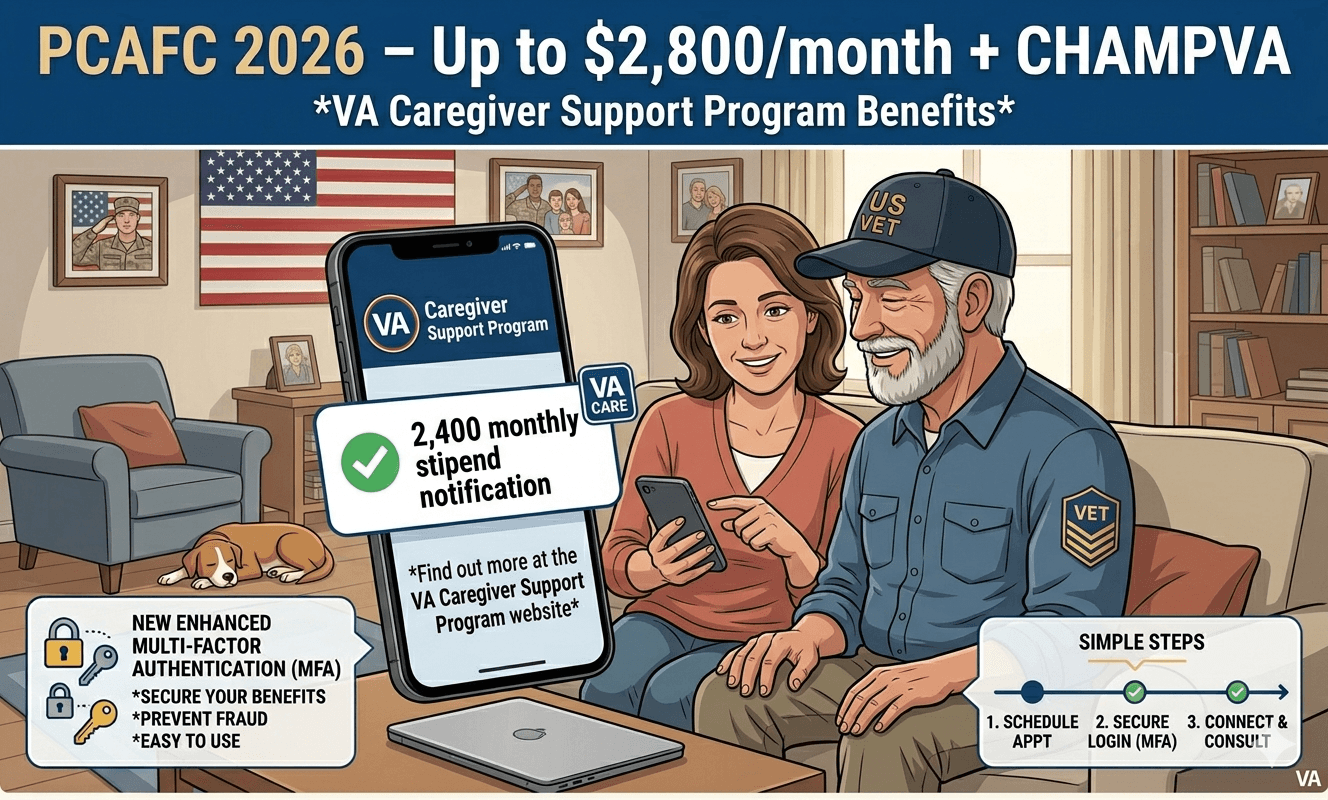
The program consists of two components: the Program of Comprehensive Assistance for Family Caregivers (PCAFC) for caregivers of veterans with 70%+ disability ratings who need personal care services, and the Program of General Caregiver Support Services (PGCSS) open to any caregiver of a VA-enrolled veteran. Primary caregivers in PCAFC receive a monthly stipend averaging $2,000–$2,800, CHAMPVA health insurance, mental health counseling, and up to 30 days of respite care per year .

But here is the critical update. The Government Accountability Office (GAO) just released an April 2026 report finding that VA lacks specific targets for measuring outreach effectiveness, and many caregivers told GAO they wished they had learned about the program sooner . The VA has agreed to make changes.
Here is everything you need to know about the VA Caregiver Support Program in 2026—eligibility, benefits, the transition extension, pending legislation, and how to apply.
What Caregivers Need to Know Right Now
The VA Caregiver Support Program is growing fast. Here are the three most important things you need to know today.
Three things you must know right now:
- The transition period has been extended to 2028. VA published a final rule extending the transition period for legacy PCAFC participants, legacy applicants, and their family caregivers through September 30, 2028 . This means existing caregivers will not experience a decrease in their monthly stipend amount based on a reassessment during this extended window.
- A new bill could expand caregiver benefits. The Veteran Caregiver Reeducation, Reemployment, and Retirement Act (H.R.2148) passed the House Veterans’ Affairs Committee in February 2026. It would extend medical care coverage for 180 days after caregiver status ends, provide bereavement counseling, and require the VA to study retirement savings options for caregivers .
- GAO just released a critical report on the program. The April 2026 GAO report found that while the program serves nearly 100,000 caregivers, the VA lacks specific performance targets for outreach and service delivery. The VA has concurred with recommendations to fix this .
Veterans May Qualify for Extra Benefits
Check available financial assistance, healthcare programs and other opportunities that may apply to you.
Check EligibilityReal-life warning: Many caregivers GAO interviewed said they learned about the program too late—and felt other caregivers still do not know about the mental health support available . Do not wait. If you are caring for a veteran with a 70%+ service-connected disability, apply today.
The VA Caregiver Support Line is available 24/7 at 1-855-260-3274.
Latest Updates (May 2026)
The VA Caregiver Support Program landscape changed significantly in early 2026. Here is everything that happened in the last 90 days.
1. GAO Report on Mental Health Support Released – April 2026
The Government Accountability Office (GAO) released a major report on the VA Caregiver Support Program on April 16, 2026 .
What GAO found:
- The program served approximately 98,000 caregivers in fiscal year 2025
- VA obligated $2.6 billion to implement the program
- Caregivers told GAO they wished they had learned about the program sooner
- VA’s outreach goals lack quantitative targets and time frames
- Telehealth appointments increased 50% from FY2024 to FY2025
What GAO recommended:
- Set quantitative targets and time frames for outreach goals
- Establish goals and collect data to assess services supporting caregiver mental health
The VA’s response: VA concurred with both recommendations and identified steps VHA plans to take to implement them .
2. PCAFC Transition Period Extended to 2028
The VA published a final rule extending the transition period for legacy PCAFC participants, legacy applicants, and their Family Caregivers through September 30, 2028 .
What this means: Legacy participants will remain eligible for PCAFC and will not experience a decrease in the monthly stipend amount based on a reassessment for the duration of the transition period (certain exceptions apply) .
Why this matters: This extension gives existing caregivers nearly three more years of stability before any potential changes to benefits.
3. H.R.2148 Advances – February 12, 2026
The Veteran Caregiver Reeducation, Reemployment, and Retirement Act (H.R.2148) was ordered to be reported by the House Veterans’ Affairs Committee by voice vote on February 12, 2026 .
What the bill would do:
- Extend medical care coverage for primary family caregivers for 180 days after removal from the program (unless discharged for fraud, abuse, or mistreatment)
- Require VA to provide bereavement counseling and support following the veteran’s death
- Mandate retirement planning services for primary family caregivers
- Require VA to study the feasibility of a retirement plan or savings program for caregivers
- Provide employment assistance for 180 days after caregiver status ends
Status: Passed committee. Awaiting full House vote.
4. In-Home Care Reimbursement Cuts in Rural Areas – January 2026
Effective January 1, 2026, the VA reduced reimbursement rates for Home Health Aides (G0156) and Homemakers (S5130) in rural parts of Texas, replacing a tiered locality structure with a single statewide rate .
The impact: Reimbursement rates in rural regions were cut from $67 to $38 per hour. Congressman Vicente Gonzalez urged VA Secretary Collins to reverse the decision, noting “at least 15,000 veterans in Texas who rely on in-home care” will be negatively impacted .
What this means for caregivers: While this affects home health aide reimbursement (not the PCAFC stipend), it signals potential ongoing changes to VA’s home care payment structure.
5. Medical Foster Home Program Expansion – January 2026
VA Puget Sound announced it is seeking caregivers for its Medical Foster Home program, a long-term care option allowing veterans to receive around-the-clock care in a private home setting .
What this program offers:
- Veterans receive personalized care in a home environment
- Caregivers receive education, oversight, and professional support from VA
- Caregivers are paid directly by veterans or their families (not by VA)
- Caregivers may care for up to three veterans in their home
How this relates to CSP: This is a separate program from the Caregiver Support Program but represents another way VA supports veteran caregiving.
Two Components of the VA Caregiver Support Program
The VA Caregiver Support Program consists of two separate components with different eligibility criteria and benefits .
Program of General Caregiver Support Services (PGCSS)
What it is: The general component is open to any caregiver of a veteran enrolled in VA health care. No disability rating or personal care requirement .
FY2025 enrollment: Approximately 28,800 caregivers
Services include:
- Peer support mentoring
- Skills training and coaching
- Telephone support through the Caregiver Support Line (1-855-260-3274)
- Online programs
- Respite care
- Referrals to community mental health resources
Eligibility: Caregiver of any veteran enrolled in VHA health care. The caregiver does NOT need to be a relative or live with the veteran .
Program of Comprehensive Assistance for Family Caregivers (PCAFC)
What it is: The comprehensive component provides enhanced benefits for caregivers of veterans with serious service-connected disabilities requiring hands-on personal care.
FY2025 enrollment: Approximately 70,000 caregivers
Services include everything in PGCSS, PLUS:
- Monthly stipend (paid directly to primary caregiver) – averages $2,000–$2,800
- CHAMPVA health insurance (if caregiver does not already have health insurance)
- Mental health counseling
- Beneficiary travel benefits when traveling with veteran to appointments
- At least 30 days of respite care per year for the veteran
- Free legal and financial planning assistance
- Caregiver education and training
- Access to military commissaries, exchanges, and recreation facilities
Primary vs. Secondary Caregivers:
- The veteran can designate one primary caregiver (receives stipend and all benefits)
- The veteran can designate up to two secondary caregivers (receive training and mental health counseling but NOT stipend or CHAMPVA)
Who Qualifies for PCAFC
Veteran Eligibility Requirements
The veteran must meet ALL of the following :
| Requirement | Details |
|---|---|
| Service-connected disability rating | 70% or more (single or combined) |
| Need for personal care services | Must require in-person personal care for at least 6 continuous months |
| Basis of need | One or more of: (1) inability to perform activities of daily living, (2) need for supervision due to neurological/other impairment, or (3) need for regular instruction/supervision without which functioning would be seriously impaired |
| Best interest determination | Participation in PCAFC must be in veteran’s best interest |
| No duplicative care | Personal care services are not already being provided by another entity |
| Home care | Veteran receives care at home (or will when caregiver designated) |
| Primary care team | Veteran receives ongoing care from a primary care team (or will) |
Caregiver Eligibility Requirements
The caregiver must meet ALL of the following :
| Requirement | Details |
|---|---|
| Age | At least 18 years old |
| Relationship | Spouse, son, daughter, parent, step-family member, extended family member, OR someone who lives with the veteran full-time |
| No abuse/neglect determination | No VA finding of abuse or neglect of the eligible veteran |
| Training | Complete required caregiver training |
| Home assessment | Participate in initial home-care assessment with veteran |
| Demonstrated ability | Show ability to carry out required personal care services |
Which Veterans Are Eligible?
PCAFC is now open to veterans from all service eras :
- Post-9/11 veterans (eligible since program began in 2011)
- Vietnam-era veterans (eligible since October 1, 2020)
- Veterans who served between May 7, 1975, and September 11, 2001 (eligible since October 1, 2022)
Important: Caregivers of veterans who served before May 7, 1975, became eligible for PCAFC on October 1, 2020 .
How to Apply for VA Caregiver Support Program – Step by Step
Step 1: Contact the Caregiver Support Line
The easiest first step is calling the Caregiver Support Line at 1-855-260-3274. Licensed professionals can :
- Tell you about assistance available from VA
- Help you access services
- Connect you with the Caregiver Support Coordinator at a VA medical center near you
- Just listen if that is what you need right now
Step 2: Find Your Local Caregiver Support Coordinator
Every VA medical center has a Caregiver Support Coordinator who can help you navigate the application process. Find your local coordinator at the VA’s “Help Near Home” page .
Step 3: Complete and Submit VA Form 10-10CG
The joint application requires the veteran AND each family caregiver applying to complete and sign VA Form 10-10CG .
How to submit:
- Online: Fastest method through VA.gov
- Mail: Download form, complete, and mail using instructions on form
- Languages available: English, Spanish, Tagalog
Step 4: Participate in Evaluations
Once VA receives the application, a member of the local CSP Team will :
- Contact the veteran and caregiver
- Review eligibility criteria
- Complete an initial intake
- Discuss the evaluation process
What the evaluation includes:
- Clinical assessment of veteran’s care needs
- Assessment of caregiver’s ability to provide required care
- Home visit (at least once per year)
Step 5: Complete Required Training
Before approval, the caregiver must complete required training and demonstrate the ability to assist the veteran with personal care functions required in everyday living .
Step 6: Receive Decision
Approval typically takes 30–45 days . If approved, the caregiver will:
- Begin receiving monthly stipend (direct deposit required—no more paper checks)
- Have access to CHAMPVA and other benefits
If denied: Denial rates average around 25% . You have appeal rights. Work with your Caregiver Support Coordinator or a VSO.
Step 7: Enroll in Direct Deposit
Important: VA will no longer issue PCAFC paper checks. If you receive a stipend by paper check, you must enroll in direct deposit through VA’s Customer Engagement Portal .
Common Mistakes Caregivers Make
Mistake #1: Not Applying While Waiting for PCAFC Approval
Many caregivers do not know they can enroll in the general component (PGCSS) while waiting for their PCAFC application to be processed .
Fix it: Contact your local Caregiver Support Coordinator immediately to enroll in PGCSS. You will receive support services while you wait.
Mistake #2: Missing the One-Year Reporting Window for Dependents
If you acquire a dependent (marriage, birth, adoption) and do not report it within one year, you lose backdated compensation.
Fix it: Report changes in dependent status immediately through your Caregiver Support Coordinator.
Mistake #3: Assuming You Will Lose Other Benefits
Some caregivers worry that PCAFC benefits will reduce other VA benefits.
The truth: VA disability compensation and Special Monthly Compensation (SMC) can coexist with caregiver benefits . Always consult with a benefits counselor before assuming conflicts.
Mistake #4: Not Using Respite Care
The VA provides up to 30 days of respite care per year—short-term relief for caregivers to take a break . Many caregivers do not use this benefit because they feel guilty leaving the veteran.
Fix it: Respite care is not a luxury. It prevents caregiver burnout, which ultimately harms both you and the veteran. Use it.
Mistake #5: Ignoring Mental Health Support
The GAO report found that 43 percent of caregivers of service members or veterans aged 60 or younger met criteria for depression . Yet many do not seek help.
Fix it: PCAFC includes mental health counseling. Use it. Your wellbeing matters.
Mistake #6: Not Having a Backup Plan for Secondary Caregiver
The veteran can designate up to two secondary caregivers . Without them, if you get sick or need a break, there is no one to step in.
Fix it: Designate secondary caregivers at the time of application. This protects both you and the veteran.
Mistake #7: Not Keeping Contact Information Updated
VA uses your contact information to send important notices about recertification, stipend changes, and benefit updates.
Fix it: Update your address and phone number with your Caregiver Support Coordinator immediately when anything changes.
What This Means Financially
Monthly Stipend Amounts
Primary caregivers in PCAFC receive a monthly stipend. The amount is based on :
- The level of care the veteran requires (Tier 1, 2, or 3)
- The locality pay area where the veteran resides
Estimated stipends: Average stipends range from $2,000 to $2,800 per month .
How stipends are paid:
- Direct deposit only (no more paper checks after 2026)
- Tax-free for federal income tax purposes
- Can be used for any purpose (not restricted to caregiving expenses)
CHAMPVA Health Insurance Value
Primary caregivers without other health insurance receive CHAMPVA coverage. CHAMPVA covers:
- Medical expenses including doctor visits and hospital stays
- Prescription medications
- Mental health services
Estimated value: CHAMPVA coverage is worth approximately $5,000–$10,000 per year depending on health care needs.
Respite Care Value
The VA provides at least 30 days of respite care per year. Respite care can be provided in your home, at a VA community living center, or at an adult day health care center .
Estimated value: Professional in-home respite care costs $25–$50 per hour. Thirty days of respite care (8 hours/day) is worth $6,000–$12,000 annually.
Comparison: PCAFC vs. Aid and Attendance
| Benefit | PCAFC | Aid and Attendance |
|---|---|---|
| Maximum monthly amount (2026) | $2,000–$2,800 (average) | Up to $2,424 (single veteran) |
| Who receives payment | Primary caregiver | Veteran (or surviving spouse) |
| Eligibility basis | Caregiver relationship + veteran’s disability rating | Veteran’s pension eligibility + need for assistance |
| Health insurance | CHAMPVA included | Not included |
| Respite care | 30+ days/year | Not included |
What Happens if Veteran’s Condition Changes
PCAFC enrollment is not permanent. The VA reassesses both the veteran and the caregiver periodically .
If care needs decrease: The veteran’s tier designation may be updated, which changes the stipend amount. If the veteran improves to the point where they no longer meet the clinical threshold, enrollment may be terminated.
If care needs increase: The veteran may be moved to a higher tier, increasing the stipend.
Termination protections: VA must give advance notice before terminating PCAFC enrollment and must provide information on how to appeal . Terminations have been challenged successfully in some cases.
Political and Government Context
Program Origins (2011)
The VA Caregiver Support Program was established in May 2011 under the Caregivers and Veterans Omnibus Health Services Act of 2010 . Initially, PCAFC was only available to caregivers of post-9/11 veterans.
Eligibility Expansion (2020-2022)
The program expanded significantly:
- October 1, 2020: Vietnam-era veterans became eligible
- October 1, 2022: Veterans who served between May 7, 1975, and September 11, 2001, became eligible
This expansion dramatically increased program enrollment—nearly doubling from about 50,000 caregivers in 2021 to 98,000 in 2025 .
The Legacy Cohort Transition
When PCAFC expanded eligibility, VA created a “legacy cohort” of existing participants who enrolled under pre-expansion rules. These participants faced potential changes to their benefits under the new framework.
The solution: VA extended the transition period for legacy participants through September 30, 2028 . This means existing caregivers will not see benefit reductions during this extended window.
H.R.2148: The Veteran Caregiver Reeducation, Reemployment, and Retirement Act
This bipartisan bill passed the House Veterans’ Affairs Committee in February 2026 . If enacted, it would:
- Extend CHAMPVA coverage for 180 days after caregiver status ends
- Provide bereavement counseling after veteran’s death
- Require VA to study retirement savings options for caregivers
- Provide employment assistance for caregivers transitioning out of the program
Prognosis: The bill has bipartisan support and passed committee by voice vote. Its prospects in the full House and Senate are uncertain but promising.
GAO Oversight and Future Changes
The April 2026 GAO report identified gaps in VA’s performance management . VA concurred with recommendations, meaning changes are coming to:
- Outreach metrics (VA will set quantitative targets)
- Program evaluation (VA will collect more data on mental health services)
What this means for caregivers: Expect more proactive outreach from VA about available services. The VA has agreed to improve how it measures and reports program performance.
The 24% Problem (From Previous Article Context)
While not specific to the Caregiver Support Program, it is worth noting that a VA OIG review found roughly 24 percent of PACT Act-related claims had incorrect effective dates. If you are a veteran also receiving disability compensation, check your effective dates carefully.
FAQ: VA Caregiver Support Program
Q: What is the VA Caregiver Support Program?
A: The VA Caregiver Support Program (CSP) is a VA program that provides education, resources, support, and services to family caregivers of eligible veterans. It includes two components: General Caregiver Support Services (PGCSS) and Comprehensive Assistance for Family Caregivers (PCAFC) .
Q: How much do VA caregivers get paid in 2026?
A: Primary caregivers in PCAFC receive a monthly stipend averaging $2,000–$2,800. The exact amount depends on the veteran’s care needs (Tier 1, 2, or 3) and the locality pay area .
Q: What is the VA Caregiver Support Line phone number?
A: 1-855-260-3274. The line is staffed by licensed professionals and is available 24/7 .
Q: How do I apply for VA caregiver benefits?
A: Submit VA Form 10-10CG jointly with the veteran. You can apply online, by mail, or with assistance from your local Caregiver Support Coordinator .
Q: What is the difference between PCAFC and PGCSS?
A: PGCSS (general component) is open to any caregiver of a VA-enrolled veteran and offers support groups, training, and respite care. PCAFC (comprehensive component) requires the veteran to have a 70%+ disability rating and need personal care services, and adds a monthly stipend, CHAMPVA health insurance, and other enhanced benefits .
Q: Can a spouse be a paid caregiver for a veteran?
A: Yes. Spouses are eligible to be designated as primary family caregivers under PCAFC. They can receive the monthly stipend and other benefits .
Q: What is the transition period extension for legacy participants?
A: VA extended the transition period for legacy PCAFC participants through September 30, 2028. This means existing caregivers will not experience a decrease in monthly stipend based on a reassessment during this extended period .
Q: What is H.R.2148?
A: The Veteran Caregiver Reeducation, Reemployment, and Retirement Act is a bill that passed the House Veterans’ Affairs Committee in February 2026. It would extend medical care coverage for 180 days after caregiver status ends, provide bereavement counseling, and require VA to study retirement savings options for caregivers .
Q: How many caregivers does the VA program serve?
A: In fiscal year 2025, the VA Caregiver Support Program served approximately 98,000 caregivers—about 28,800 in the general component and 70,000 in the comprehensive component .
Q: Does the caregiver stipend affect the veteran’s VA disability benefits?
A: No. The caregiver stipend is separate from the veteran’s disability compensation. The veteran continues to receive their full disability benefits, and the veteran and caregiver can both receive benefits concurrently .
Q: What happens if the veteran’s condition improves?
A: VA reassesses periodically. If the veteran’s care needs decrease, their tier may change, affecting the stipend amount. If they no longer meet clinical thresholds, enrollment may be terminated. VA must give advance notice and appeal rights .
Q: Can I get paid for caring for a veteran without being in PCAFC?
A: Yes. Other options include Aid and Attendance pension benefits (paid to the veteran, up to $2,424/month in 2026) , Veteran Directed Care (participant-directed budget), and Medical Foster Homes (caregivers paid directly by veterans/families) .
Final Takeaway
The VA Caregiver Support Program is a vital resource for the nearly 100,000 family caregivers supporting seriously injured veterans. With a $2.6 billion annual budget, the program provides monthly stipends, health insurance, mental health support, and respite care to eligible caregivers .
The transition period for legacy participants has been extended through September 30, 2028, providing stability for existing caregivers . New legislation (H.R.2148) could expand benefits further . And the GAO’s recent recommendations will push VA to improve outreach and performance measurement .
Your action items today:
- Call the Caregiver Support Line at 1-855-260-3274. This is the fastest way to learn about services available to you.
- Find your local Caregiver Support Coordinator. Every VA medical center has one. They can help you navigate the application process.
- If you are caring for a veteran with a 70%+ disability rating who needs personal care, apply for PCAFC using VA Form 10-10CG.
- If you are already in PCAFC, note that the transition period runs through September 2028. No immediate changes to your benefits.
- Use your respite care benefit. You get at least 30 days per year. Taking breaks prevents burnout and helps you provide better care.
- Designate secondary caregivers. The veteran can name up to two. This ensures someone can step in when you need a break.
- Share this information with another caregiver. Many caregivers told GAO they wish they had learned about the program sooner. Help them avoid that regret.
The VA Caregiver Support Program recognizes what you do every day: caring for the heroes who served our nation. You are not alone. Help is available.
Thank you for your service as a caregiver. Now go get the support you earned.
At its core, the program offers a wide array of resources tailored to meet the unique needs of veterans and their families. These resources include financial support, educational opportunities, and community-based services. Caregivers can access training that prepares them for the responsibilities of caregiving, along with peer support groups that provide an opportunity for caregiving individuals to share experiences and strategies.
Beneficiaries of the VA Caregiver Support Program encompass primary caregivers who devote their time to the care of veterans who have incurred serious injuries or illnesses following their military service. This support is critical as it acknowledges the significant impact that caregiving can have on the physical and mental well-being of the caregiver. Furthermore, the program aims to alleviate some of the burdens faced by these individuals, making it easier for them to navigate the complexities of healthcare, finances, and day-to-day challenges.
Through increased funding and new initiatives, the VA Caregiver Support Program continues to evolve, reflecting the ever-changing landscape of veteran care. The recent $2.8 billion budget allocated to the program for 2026 highlights the commitment to providing robust support systems that will help caregivers sustain their invaluable work. As developments unfold, the program remains a cornerstone in the efforts to honor and care for those who have served our country.
Overview of the 2026 Budget Allocation
The VA Caregiver Support Program has been allocated a substantial budget of $2.8 billion for the year 2026, reflecting a significant increase in resources aimed at supporting caregivers of veterans. This funding underscores the federal government’s commitment to enhancing the services provided to caregivers, recognizing their crucial role in the care ecosystem for service members. The budget allocation not only covers direct financial assistance, but also extends to training and support services aimed at improving the overall well-being of caregivers.
A notable feature of the 2026 budget is the emphasis on specific allocations designed to address varied aspects of caregiver support. These allocations include increased funding for respite care services, which allow caregivers to take essential breaks, thereby reducing burnout and enhancing caregiving capability. Additionally, a portion of the budget is dedicated to investing in online resources and accessible training programs to equip caregivers with necessary skills and knowledge. The aim is to foster resilience among caregivers through education, which is a critical component of the support system.
When compared to previous budgets, the 2026 allocation represents a marked increase, demonstrating the government’s growing recognition of caregiver contributions. For instance, in 2023, the budget allocated approximately $2 billion, highlighting a clear trend of increasing financial commitment to this demographic. This growth reflects priorities that have evolved to not only assist in the immediate care needs but also to secure long-term sustainability and resources for the caregiver community.
In conclusion, the enhanced budget for 2026 indicates a re-prioritization of resources towards the Caregiver Support Program, effectively illustrating a commitment to improving the lives of caregivers and, by extension, the veterans they serve.
Key Features of the New Transition Deadline
The recent announcement regarding the transition deadline for the VA Caregiver Support Program marks a significant shift in the operations of this vital program. The newly established deadline aims to ensure that caregivers, veterans, and providers are adequately prepared for the impending changes that come with this transition. Understanding the key elements of this deadline is essential for all stakeholders involved.
One of the pivotal features of the new transition deadline is its timeline, which has been set to enable a phased approach. The transition will commence on a defined date, with specific milestones laid out to facilitate a smooth adjustment for caregivers and veterans alike. This timeline is crucial as it gives all parties ample opportunity to engage with the requirements set forth by the VA.
Additionally, it is important to consider the implications this deadline has on current caregivers. They may need to familiarize themselves with new documentation and eligibility criteria as the program evolves. This adjustment process requires caregivers to proactively seek out necessary resources, including guidance from the VA and peer-support networks. It is encouraged for caregivers to stay informed about workshops or training sessions that may be organized to address these changes.
Furthermore, providers must also adapt their operational procedures to align with the new transition deadline. This includes updating training protocols and ensuring staff is equipped with the information needed to support veterans and caregivers effectively. By prioritizing communication and cooperation among all parties, a more effective transition can be achieved, leading to better support for those who rely on the VA Caregiver Support Program.
Impacts on Caregivers and Veterans
The recent announcement of a $2.8 billion budget for the VA Caregiver Support Program has generated significant attention, especially concerning its effects on caregivers and veterans. This new funding is designed to enhance support for family caregivers who play a critical role in the health and well-being of disabled veterans. With the program’s expansion, caregivers are expected to receive better financial assistance, tailored resources, and improved training opportunities. This vital support can lead to a more stable caregiving environment, ultimately benefiting both caregivers and the veterans they care for.
One of the key benefits of the increased budget is the potential for enhanced mental health resources for caregivers. Many who provide daily assistance to veterans can experience feelings of isolation, stress, and burnout. The newly allocated funds aim to address these challenges through programs that prioritize mental health care and provide educational workshops. These initiatives can empower caregivers, equipping them with the skills necessary to manage their responsibilities more effectively while also attending to their wellness.
However, with the transition to the new budget comes a set of challenges. The established transition deadline may introduce uncertainty and administrative hurdles as caregivers and veterans adapt to the updated policies and resources. Ensuring that all stakeholders are informed and capable of navigating these changes is paramount to maximizing the benefits of the program. Caregivers may face initial obstacles in accessing new services, prompting a need for clearer communication from the VA about these changes.
In this context, the effective implementation of the $2.8 billion budget will be critical. The success of these changes hinges on collaboration among all parties involved, ensuring that the needs of both caregivers and veterans are met comprehensively and responsively.
Programs and Services Enhanced by the Budget
The recent allocation of $2.8 billion for the VA Caregiver Support Program marks a significant development aimed at enhancing various services tailored to support caregivers. This substantial budget increase is expected to lead to improvements in training, mental health services, financial aid, and respite care, which are critical components of caregiver support.
One of the primary areas of enhancement is the training programs for caregivers. New educational initiatives will be designed to equip caregivers with advanced skills and resources necessary for providing effective care. This may include online modules, workshops, and access to resource libraries that focus on best practices in caregiving, addressing physical, emotional, and psychological needs. The goal is to empower caregivers with knowledge and tools to prevent burnout and improve patient outcomes.
In addition to training, mental health services are also set to see significant bolstering. Recognizing the emotional toll caregiving can take, the budget will allow for expanded access to mental health support for caregivers. This initiative includes offering counseling services, peer support groups, and stress management resources, ensuring that caregivers have a support network to lean on. Such enhancements are crucial as they aim to mitigate feelings of isolation and depression among caregivers.
Furthermore, financial aid and respite care services will be integral to the budget’s implementation. Financial support mechanisms may be established to alleviate the economic burden faced by many caregivers. Moreover, respite care services will provide temporary relief, allowing caregivers to take necessary breaks without worrying about the continuity of care for their loved ones. This combination of financial and respite support is crucial for maintaining caregiver health and sustaining the viability of caregiving arrangements.
Overall, the enhancements driven by the new budget are designed to create a more robust support framework for caregivers, ultimately leading to improved care quality for veterans.
Feedback from the Community and Stakeholders
The recent announcement regarding the VA Caregiver Support Program, which features a significant budget allocation of $2.8 billion and a new transition deadline, has garnered varied reactions from caregivers, veterans, and advocacy groups across the nation. Understanding their insights provides a clearer perspective on the implications of these changes.
Caregivers have expressed a mix of relief and concern regarding the additional funding allocated to the program. On one hand, many caregivers appreciate the financial support, which they believe is crucial for enhancing the quality of care provided to veterans. The infusion of $2.8 billion is seen as a step forward, potentially leading to better resources, training, and support services, which are vital for caregivers who often face significant emotional and physical demands. On the other hand, there are apprehensions about the new transition deadline, with some caregivers questioning whether this will afford them ample time to adapt to the changes effectively.
Veterans, for their part, have provided insights that align closely with those of caregivers. Many veterans agree that strong support for caregivers is essential, as these individuals play a critical role in their daily lives. Advocacy groups have highlighted the need for ongoing dialogue with the Department of Veterans Affairs (VA) to ensure that the promised funds are utilized in a manner that directly addresses the needs of both veterans and their caregivers.
Moreover, stakeholders from various advocacy organizations have urged the VA to maintain transparency throughout the implementation process. By fostering a collaborative approach between caregivers, veterans, and advocacy groups, the VA can better understand the community’s concerns and adjust its strategies as needed. Collectively, these insights underscore the importance of considering community feedback in shaping a responsive and effective Caregiver Support Program.
Future Prospects for the VA Caregiver Support Program
The VA Caregiver Support Program (CSP) is poised for significant evolution as we look beyond 2026. With a substantial budget allocation of $2.8 billion, this program aims to enhance the quality of care provided to veterans and their caregivers. The future will likely see a focus on legislative actions that prioritize the needs of veterans, emphasizing the enhancement of support systems for caregivers. This includes potential expansions in the eligibility criteria, allowing more individuals to receive assistance.
Moreover, the program may implement technological advancements to better connect caregivers with resources, streamline communication, and reduce the burden of care. Innovations such as mobile applications and online support groups could play an instrumental role in fostering a community among caregivers, facilitating shared experiences and strategies. As the demands of caregiving evolve, it is crucial that support services adapt in tandem to better accommodate the varying needs of caregivers and their veteran charges.
Additionally, there is significant potential for strengthening partnerships with non-profit organizations, healthcare providers, and community services. Collaborative efforts can create a more comprehensive support framework that not only addresses immediate caregiving needs but also promotes the long-term well-being of both veterans and caregivers.
As societal attitudes towards caregiving change, we may also witness a shift in public policy, advocating for a more robust recognition of caregivers’ roles and contributions. This could lead to benefits such as improved financial assistance, access to mental health resources, and educational programs designed to enhance caregivers’ skills and resilience.
In conclusion, the future of the VA Caregiver Support Program holds promise for better services and legislative support that reflects the evolving landscape of caregiving. By addressing the challenges faced by caregivers and providing a sustainable support system, we can ensure that both veterans and their caregivers receive the care and acknowledgment they deserve.
How to Prepare for Changes in the Program
As caregivers and veterans brace for the changes stemming from the VA Caregiver Support Program 2026, comprehensive preparation will be crucial to accommodate the implications of the new $2.8 billion budget and the adjusted transition deadline. Proper planning involves understanding the shifts not only in funding but also in eligibility criteria and available resources. Here are some practical strategies to help navigate these changes.
First and foremost, caregivers should stay informed about the specific adjustments in the program. This can be achieved by regularly checking the official VA website or attending informational webinars. Engaging with community organizations focused on veterans’ care can provide additional perspective and insights into effective adaptation strategies. Furthermore, enhancing communication with veterans’ service organizations can offer tailored support regarding the new policies.
Next, caregivers should assess their current circumstances and needs. This assessment could involve reviewing their care routines, understanding the types of services currently utilized, and identifying any gaps that might arise from program changes. Further, considering creating a financial plan may be beneficial, as budget alterations could impact the availability of sums designated for caregiver reimbursement.
Another proactive step is to familiarize oneself with alternate resources and support networks. The transition may pave the way for new services or programs that align better with individual needs. Exploring local, state, and federal resources will enable the identification of support that might complement the existing offerings of the VA Caregiver Support Program.
In conclusion, being proactive regarding these changes is imperative. By staying well-informed, assessing current needs and care delivery methods, and having a backup plan, caregivers can successfully navigate the upcoming transitions in the VA Caregiver Support Program, ensuring the continued quality of care for their loved ones.
Conclusion and Call to Action
In conclusion, the VA Caregiver Support Program is set to undergo significant changes in 2026, backed by a substantial budget of $2.8 billion aimed at enhancing the quality of life for caregivers and veterans alike. This initiative not only reflects the commitment of the U.S. Department of Veterans Affairs but also underscores the importance of supporting those who tirelessly devote themselves to the care of our veterans. The forthcoming transition deadline serves as a crucial time for caregivers to familiarize themselves with the updated provisions and resources available to them.
Throughout this blog post, we explored various facets of the VA Caregiver Support Program, including its budgetary implications, the specific services provided, and how these adjustments aim to better support caregivers in our communities. It’s clear that the program’s expanded resources will not only assist caregivers but also strengthen the structural support crucial for veterans’ overall health and well-being.
We encourage all readers to actively engage with the VA Caregiver Support Program. By staying informed about the latest changes, caregivers can take full advantage of available resources to enhance their caregiving journey. Additionally, participating in community discussions, sharing experiences, and advocating for the needs of caregivers can foster a society that values and recognizes their vital contributions.
Let us work together to ensure that caregivers receive the support and recognition they deserve. For those interested, we invite you to explore further resources offered by the VA and other organizations dedicated to this cause. The path towards improved support for caregivers is a collective effort, and every engagement counts.




🇺🇸 IMPORTANT DISCLAIMER – Veterans Benefits Information
This site provides general information about U.S. Department of Veterans Affairs (VA) benefits for educational and informational purposes only.
- Not Official: We are NOT affiliated with, endorsed by, or connected to the U.S. Department of Veterans Affairs (VA), the Veterans Benefits Administration (VBA), the Veterans Health Administration (VHA), or any other government agency.
- No Legal/Financial Advice: The content on this website is for informational purposes only and does not constitute legal, financial, or medical advice. VA benefits rules change frequently – always consult with an accredited Veterans Service Officer (VSO) or a qualified professional for your specific situation.
- Official Sources: For official, binding information and to apply for benefits, always visit official .gov websites: VA.gov, Benefits.VA.gov, or SSA.gov.
- No Data Collection: This site does not collect, store, or process any personal information. It does not have login forms, contact forms, or any system to capture user data. We never ask for your Social Security Number, bank details, or any personal information.
- 🚨 Scam Alert: The VA and other government agencies never charge fees for benefit applications. If anyone asks for money to "process" your VA claim, it is a scam. Report it to the VA Office of Inspector General at VA.gov/OIG.
- Advertising: This site uses third-party advertising (Adsterra) to cover operational costs. We do not endorse or guarantee any products or services advertised.
📌 Information provided as of June 2026. Always verify current eligibility and rules with official .gov sources.
This site is not affiliated with the U.S. Department of Veterans Affairs or any government agency. All information is for educational purposes only. Please visit VA.gov for official information.
