

Introduction to Navy Federal VA Loan Rates
Navy Federal VA loan rates represent a crucial financial tool available to military service members and veterans, facilitating access to home financing with competitive terms. These rates are determined by various factors, including the overall economic conditions, the current state of the housing market, and specific lender policies, making them a vital aspect of the home purchasing process for those eligible.
In general, service members and veterans may find that VA loans, particularly through institutions like Navy Federal Credit Union, often offer lower interest rates compared to conventional loans. This can significantly reduce the total cost of homeownership over time, thus empowering veterans to invest in their future. The significance of these rates extends beyond just cost savings; they reflect a commitment to supporting those who have served in the armed forces.

As we look forward to 2026, it is essential for borrowers to actively monitor the nuances of Navy Federal VA loan rates. Economic conditions, legislation changes, and shifts in lending practices can all influence these rates, potentially altering the financial landscape for veterans. Staying informed about current trends and potential rate changes will allow military families to make strategic decisions regarding their home financing options.

Understanding the implications of Navy Federal VA loan rates is paramount for anyone considering home ownership in the coming years. With the right information and guidance, service members and veterans can better navigate the home loan process and take advantage of the benefits offered through their eligibility. Consequently, keeping a close eye on these rates as they evolve will play an integral role in achieving home ownership goals in 2026 and beyond.
Current VA Loan Rates for May 2026
As of May 2026, Navy Federal Credit Union offers competitive VA loan rates that are attractive to eligible veterans and service members. Currently, the rates for a 30-year fixed VA loan stand at approximately 3.25%, reflecting a steady market environment. This rate provides a stable, long-term financing option for those looking to purchase a home or refinance an existing loan. Meanwhile, the rates for a 15-year fixed VA loan are offering approximately 2.85%, which can greatly benefit those who prefer a shorter loan term and wish to pay their mortgage off sooner.
It is essential to consider how these rates may be affected by factors such as a borrower’s credit score and down payment. Typically, borrowers with a higher credit score may qualify for more favorable rates. Furthermore, during May, Navy Federal Credit Union is celebrating Military Appreciation Month, an event that often includes promotional discounts or additional benefits for VA loans. This may lead to further reductions in interest rates or the possibility of waived fees, which enhance affordability for military members and their families.
Overall, the current VA loan rates provided by Navy Federal reflect a commitment to serve the needs of veterans. It is recommended that prospective borrowers remain vigilant and stay informed about any changes to these rates, especially as fluctuations can occur based on economic conditions or Federal Reserve policies. Those interested should reach out to Navy Federal or utilize their online resources to better understand how the current rates impact their individual financing plans.
Market Forecast for VA Loan Rates Through 2026
Veterans May Qualify for Extra Benefits
Check available financial assistance, healthcare programs and other opportunities that may apply to you.
Check EligibilityAs we look ahead to 2026, it is essential to understand the anticipated trajectory of VA loan rates. Current trends indicate that rates are expected to stabilize in the mid-5% range throughout much of the year. This forecast is influenced by several economic indicators, including inflation rates, Federal Reserve policies, and overall market conditions.
The Federal Reserve has signaled a more cautious approach in its monetary policy, particularly in response to the fluctuating economic landscape. As a result, while borrowing costs have risen in recent years, the pace may slow down, contributing to a more predictable environment for prospective borrowers looking at VA loans. Additionally, ongoing geopolitical tensions and their subsequent impact on global economic stability will inevitably play a role in shaping interest rates in the coming year.
Moreover, housing market dynamics will also influence VA loan rates. A potential slowdown in housing price appreciation could lead to a more accessible market for veterans and service members, thereby enhancing the appeal of VA loans. The expectation is that demand for these loans will remain robust, driven by favorable lending terms and the continued support of the Department of Veterans Affairs. Such demand will help maintain a consistent interest rate environment.
Overall, while predicting future interest rates involves a degree of uncertainty, the mid-5% range for VA loan rates appears to be a reasonable expectation through 2026. This estimation reflects a combination of economic fundamentals, regulatory factors, and consumer behavior trends. As borrowers navigate their options, staying informed about these dynamics will be crucial in making strategic financial decisions regarding VA loans.
Understanding VA Funding Fee Rates
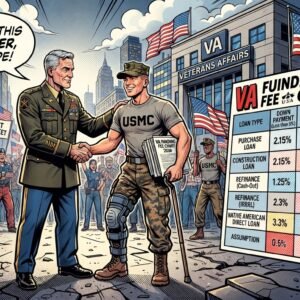
The VA funding fee is a vital aspect of VA loans that serves multiple purposes, primarily aimed at sustaining the program for future generations of veterans. This fee is typically expressed as a percentage of the loan amount and is required for all borrowers who utilize the VA loan benefits, unless they are exempt due to a service-related disability. Understanding the structure of these fees is critical for prospective borrowers planning to navigate Navy Federal VA loan rates.
For the year 2026, it is noteworthy to confirm that VA funding fee rates will remain unchanged from previous years. This consistency helps potential homebuyers in budgeting for their mortgage expenses without the concern of unexpected increases in the fees. The funding fee is generally higher for first-time borrowers and can be lower upon subsequent use of VA loan benefits. For example, a borrower using a VA loan for the first time might face a funding fee of 2.3% of the loan amount, while repeat users might encounter a fee of 3.6%.
Additionally, the funding fee can be financed into the loan, meaning borrowers do not need to pay it upfront, allowing for greater accessibility to home financing through VA loans. Those who may find themselves most affected by the funding fee include active-duty service members, veterans, and certain surviving spouses who do not qualify for exemptions. It is essential for these individuals to assess how the funding fee impacts their overall borrowing expenses as they explore loan options.
This fee is a smaller sacrifice in comparison to the advantages of securing a VA loan, which often includes favorable interest rates, zero down payment requirements, and no private mortgage insurance fees. Therefore, understanding the VA funding fee rates and their implications is crucial for successful navigation of the VA loan process.
Loan Limits: A Closer Look
As veterans and active service members consider their housing options, understanding the loan limits set for VA loans in 2026 becomes paramount. The Department of Veterans Affairs (VA) continues to adjust these limits to reflect the rising costs of real estate and the need for accessible financing for military personnel. As of 2026, the loan limits are influenced by locality and housing market trends, ensuring that service members can obtain affordable financing without the need for private mortgage insurance.
The standard loan limit for VA loans generally aligns with the conforming loan limits set by the Federal Housing Finance Agency (FHFA). In 2026, the baseline conforming loan limit is expected to approximate $726,200; however, this varies across different regions, especially in high-cost areas. It’s essential for veterans and service members to note that the VA does not impose a cap on the amount they can borrow if they have their full entitlement. This means that borrowers in higher-cost regions may qualify for loans exceeding conventional limits, providing significant flexibility.
With these benefits in mind, potential borrowers should keep an eye on the evolving real estate landscape and how VA loan limits may reflect market shifts. Any increase in the loan limits can directly impact veterans’ purchasing power, allowing them to obtain homes that might otherwise be out of reach. Furthermore, these adjustments seek to provide a safety net, ensuring that veterans and service members aren’t disproportionately affected by housing shortages. To navigate these changes effectively, it is crucial for veterans to engage with lenders knowledgeable in VA loans who can offer guidance tailored to their financial situations and the market conditions in 2026.
Economic Conditions Impacting VA Loans
The landscape of VA loans is inherently influenced by a myriad of economic factors, which will undoubtedly shape the rates and eligibility in 2026. Primarily, inflation remains a key variable. Inflation affects the purchasing power of consumers, including those eligible for VA loans. As inflation rises, the cost of goods and services escalates, which can lead to the Federal Reserve adjusting interest rates in a bid to stabilize the economy.
Interest rates, in turn, directly correlate with VA loan rates. If the Federal Reserve implements rate hikes as a response to heightened inflation, the borrowing costs for VA loans are likely to increase. Such adjustments can make home financing less affordable for veterans and active-duty military members. Hence, in 2026, potential borrowers should anticipate varying scenarios based on how inflation trends and the associated monetary policy adjustments unfold.
Besides inflation, market demand plays a critical role in shaping VA loan rates. Increased demand for housing, spurred by favorable employment conditions or demographic shifts, may lead to a competitive market that influences lenders’ willingness to offer loans at lower rates. Conversely, if demand wanes due to economic uncertainty or a downturn in the housing market, lenders may tighten loan criteria or raise rates in response to perceived risk. Therefore, understanding local and national market conditions will be crucial for prospective borrowers navigating VA loans in 2026.
Lastly, while the above factors primarily guide loan rates, government policies related to veterans and housing will also impact the VA loan program’s future. Legislative changes and budget allocations could enhance or restrict benefits, directly affecting the attractiveness of VA loan options.
What Remains the Same in VA Loan Policies
As we look ahead to 2026, it is vital to understand which policies regarding VA loans will remain stable. This perspective provides clarity for veterans and service members contemplating home financing under the Veterans Affairs (VA) program. Certain fundamental aspects of VA loans are expected to stay unchanged, contributing to the assurance of reliable support for eligible borrowers.
Firstly, the VA loan program will continue to offer benefits aimed at helping veterans secure favorable home financing. One key aspect is the absence of a down payment requirement for qualifying applicants, which has historically made VA loans attractive. This policy alleviates the financial burden typically associated with purchasing a home, thereby facilitating home ownership for military personnel and veterans.
Another critical area that will remain constant is the prohibition of private mortgage insurance (PMI). Unlike conventional loans that require PMI when the down payment is lower than 20%, VA loans eliminate this additional cost, effectively lowering the monthly mortgage payment for borrowers. This lack of PMI provides significant opportunities for veterans to manage their financial commitments more effectively.
Additionally, VA loans will continue to offer competitive interest rates, which helps make home ownership more affordable. These rates are often lower than those available in the conventional market, providing veterans with attractive financing options. Furthermore, though the VA funding fee may vary, the overall goal remains to enable easier access to loan resources for eligible borrowers.
In summary, the enduring features of VA loans, including no down payment, absence of PMI, and low interest rates, will remain consistent through 2026. Such stability is essential for veterans planning to navigate the home-buying process with confidence.
Strategies to Navigate Potential Changes
As the landscape of VA loan rates continues to evolve, particularly as we approach the year 2026, it becomes increasingly important for veterans and service members to adopt effective strategies for navigating these potential changes. Proper financial planning plays a pivotal role in ensuring that one can secure the best possible loan terms, thus maximizing benefits while minimizing costs.
One of the fundamental strategies is to stay informed about market trends and indicators affecting VA loan rates. Regularly monitoring national economic news, Federal Reserve announcements, and even local real estate market analyses can provide insights into when rates might rise or fall. By understanding these patterns, borrowers can anticipate changes and act accordingly, and thus the significance of conducting research cannot be overstated.
Additionally, timing the mortgage application is crucial. For example, if VA loan rates are trending upwards, locking in a rate sooner rather than later might save considerable money over time. Veterans and service members should consult with a mortgage advisor or financial planner to determine the most opportune moment to lock in their interest rate. It’s often beneficial to initiate this process a few months before the anticipated change in rate trends.
Moreover, improving personal credit scores can provide more favorable terms when applying for a VA loan. Simple adjustments, such as paying down existing debts and ensuring timely payments on current obligations, can have a notable impact. Enhanced credit scores generally yield lower interest rates and improved loan conditions, ultimately making any changes in VA loan rates less burdensome.
In conclusion, by proactively managing personal finances, staying informed about market fluctuations, and improving credit scores, veterans and service members can effectively navigate the challenges posed by potential changes in VA loan rates as we approach 2026.
Conclusion: Staying Informed About VA Loan Rates
As we have explored throughout this blog post, understanding VA loan rates, particularly those offered by Navy Federal, is crucial for potential homebuyers and veterans alike. The landscape of mortgage rates remains subject to various influences including economic indicators, governmental policies, and broader market trends. An informed approach to navigating these rates can significantly enhance one’s financial decision-making process.
The importance of staying updated on VA loan rates cannot be overstated. As the year 2026 approaches, various factors will continue to affect the economy, thus impacting mortgage rates, including those from Navy Federal. Monitoring these changes is essential for veterans considering utilizing their VA loan benefits. It is advisable to frequently consult credible sources and financial institutions like Navy Federal to obtain the most current information. There are advantages to being proactive in this arena; homebuyers can capitalize on favorable rates, potentially reducing the overall cost of their investments.
In addition to monitoring rates, individuals should also consider factors such as loan eligibility, the type of property being financed, and personal creditworthiness. These elements play significant roles in determining the final loan terms and interest rates. By remaining vigilant and engaged with emerging trends in VA loan rates, homebuyers can position themselves advantageously, ensuring they are well-prepared to make informed decisions that align with their financial aspirations.
Ultimately, purchasing a home using VA loan benefits is both a privilege and a significant financial step. Therefore, continuous education and consultation with qualified professionals can illuminate the best pathways forward in securing favorable VA loan rates.


🇺🇸 IMPORTANT DISCLAIMER – Veterans Benefits Information
This site provides general information about U.S. Department of Veterans Affairs (VA) benefits for educational and informational purposes only.
- Not Official: We are NOT affiliated with, endorsed by, or connected to the U.S. Department of Veterans Affairs (VA), the Veterans Benefits Administration (VBA), the Veterans Health Administration (VHA), or any other government agency.
- No Legal/Financial Advice: The content on this website is for informational purposes only and does not constitute legal, financial, or medical advice. VA benefits rules change frequently – always consult with an accredited Veterans Service Officer (VSO) or a qualified professional for your specific situation.
- Official Sources: For official, binding information and to apply for benefits, always visit official .gov websites: VA.gov, Benefits.VA.gov, or SSA.gov.
- No Data Collection: This site does not collect, store, or process any personal information. It does not have login forms, contact forms, or any system to capture user data. We never ask for your Social Security Number, bank details, or any personal information.
- 🚨 Scam Alert: The VA and other government agencies never charge fees for benefit applications. If anyone asks for money to "process" your VA claim, it is a scam. Report it to the VA Office of Inspector General at VA.gov/OIG.
- Advertising: This site uses third-party advertising (Adsterra) to cover operational costs. We do not endorse or guarantee any products or services advertised.
📌 Information provided as of June 2026. Always verify current eligibility and rules with official .gov sources.
This site is not affiliated with the U.S. Department of Veterans Affairs or any government agency. All information is for educational purposes only. Please visit VA.gov for official information.
