
Introduction to VA Disability Pay
VA Disability Pay, administered by the U.S. Department of Veterans Affairs, provides financial benefits to veterans who have mental or physical disabilities as a result of their military service. This system aims to assist those who have sacrificed their well-being for the nation, helping to alleviate the financial burdens that often accompany service-related injuries or illnesses. Understanding the details of VA Disability Pay is crucial for veterans seeking to access these essential benefits.
Eligibility for VA Disability Pay is primarily determined by a veteran’s service record and the severity of their disability. Veterans who have been honorably discharged and can demonstrate a connection between their service and their current health challenges may qualify for these benefits. In particular, the VA assigns a disability rating, which ranges from 0 to 100 percent, reflecting the degree of disability and guiding the compensation amount. The higher the rating, the greater the financial support offered by the VA.

The importance of familiarizing oneself with the VA Disability Pay chart cannot be overstated. This chart provides transparent guidelines regarding the monthly compensation amounts that veterans can expect, based on their disability rating. By understanding these rates, veterans can effectively plan their finances and gain insights into available support mechanisms, ultimately facilitating a smoother transition to civilian life. Furthermore, it helps veterans recognize their rights and advocate for the benefits to which they are entitled.

In conclusion, VA Disability Pay represents a critical lifeline for veterans facing health challenges resulting from their service. By being informed about the eligibility criteria and payment structure, veterans can better navigate their benefits and improve their overall quality of life.
Understanding the VA Disability Rating System
The VA disability rating system plays a crucial role in determining the level of compensation a veteran receives based on their service-connected disabilities. This system categorizes disabilities into various rating levels that range from 0% to 100%, with each percentage reflecting the severity of the disability. The higher the rating, the more significant the impairment, and consequently, the greater the compensation entitlement.
Ratings are determined through a comprehensive evaluation that includes medical examinations, the veteran’s service records, and other pertinent documentation. The assessment considers how the disability affects daily life and the veteran’s ability to perform work-related tasks. The Veterans Affairs (VA) utilizes a combination of diagnostic codes and rating criteria found in the VA Schedule for Rating Disabilities (VASRD) to assign these percentages. Each disability is assigned a specific code that aligns with the diagnosis, ensuring that relevant factors are taken into account.
The importance of these ratings is paramount, as they directly influence the financial support veterans receive. For instance, a veteran rated at 100% is eligible for the maximum compensation benefits, including added allowances for dependents. Additionally, lower disability ratings, such as 30% or 50%, still provide significant benefits, reflecting the impact of the disability on employment and quality of life.
Veterans May Qualify for Extra Benefits
Check available financial assistance, healthcare programs and other opportunities that may apply to you.
Check EligibilityUnderstanding this rating system is essential for veterans seeking compensation, as it not only affects their financial stability but also impacts their access to healthcare services and vocational rehabilitation programs. The development of accurate, thorough documentation during the rating process can substantially affect the outcome. With changes and updates to regulations frequently occurring, staying informed about the rating system is essential for maximizing benefits.
Overview of the 2025 VA Disability Payment Rates
The 2025 VA Disability Payment Rates reflect a significant adjustment from the previous year, with changes implemented to ensure veterans receive fair compensation for service-connected disabilities. The Department of Veterans Affairs (VA) has engaged in a comprehensive review to assess the cost of living and other economic factors impacting veterans. As a result, the monthly compensation amounts for various disability rating percentages have seen notable increases.
For 2025, the base rate for a veteran with a 100% disability rating has risen to approximately $3,800, which marks an increase of around 8% from 2024. This adjustment is intended to account for inflation and rising living costs, ensuring that veterans can maintain a reasonable standard of living. Similarly, veterans rated with disabilities between 10% to 90% will experience corresponding increases in their monthly compensation amounts. For example, a veteran with a 90% rating will now receive about $2,800, which is an enhancement from the previous year.
The compensation rates vary based on disability ratings, ranging from 0% (no compensation) to 100% (total disability). The VA also considers additional factors such as dependents, which can further augment a veteran’s compensation. For instance, veterans with dependents may receive higher monthly payments, reflecting their family responsibilities. These adjustments illustrate the VA’s commitment to supporting veterans and recognizing their sacrifices through adequate financial compensation.
In summary, the 2025 payment rates for VA Disability are structured to provide fair remuneration based on the severity of service-connected disabilities. With these increases, it is anticipated that veterans will benefit from a more sustainable financial outlook as they navigate their post-military lives.
Breakdown of Payments by Disability Rating
The VA disability compensation system is structured to provide financial support to veterans based on their level of service-connected disability. Payments vary depending on the assigned disability rating, which is expressed as a percentage of impairment. This breakdown outlines the compensation rates associated with different disability ratings, enabling veterans to understand what they may be entitled to receive.
According to the VA disability pay chart for 2025, monthly compensation begins at a rate for those who have received a 10% disability rating, with incremental increases up to 100% disability. For instance, as of 2025, veterans with a 100% disability rating may receive a monthly compensation of approximately $3,500, whereas those with a 90% rating could receive around $3,200 monthly. Intermediate disability ratings yield varying amounts, with a 70% rating corresponding to approximately $1,800 per month.
In addition to the standard payments, veterans may also qualify for additional compensation through special circumstances. For example, veterans with dependents may receive increased amounts based on the size of their family. Furthermore, veterans classified as totally and permanently disabled might also see preferential adjustments in their compensation.
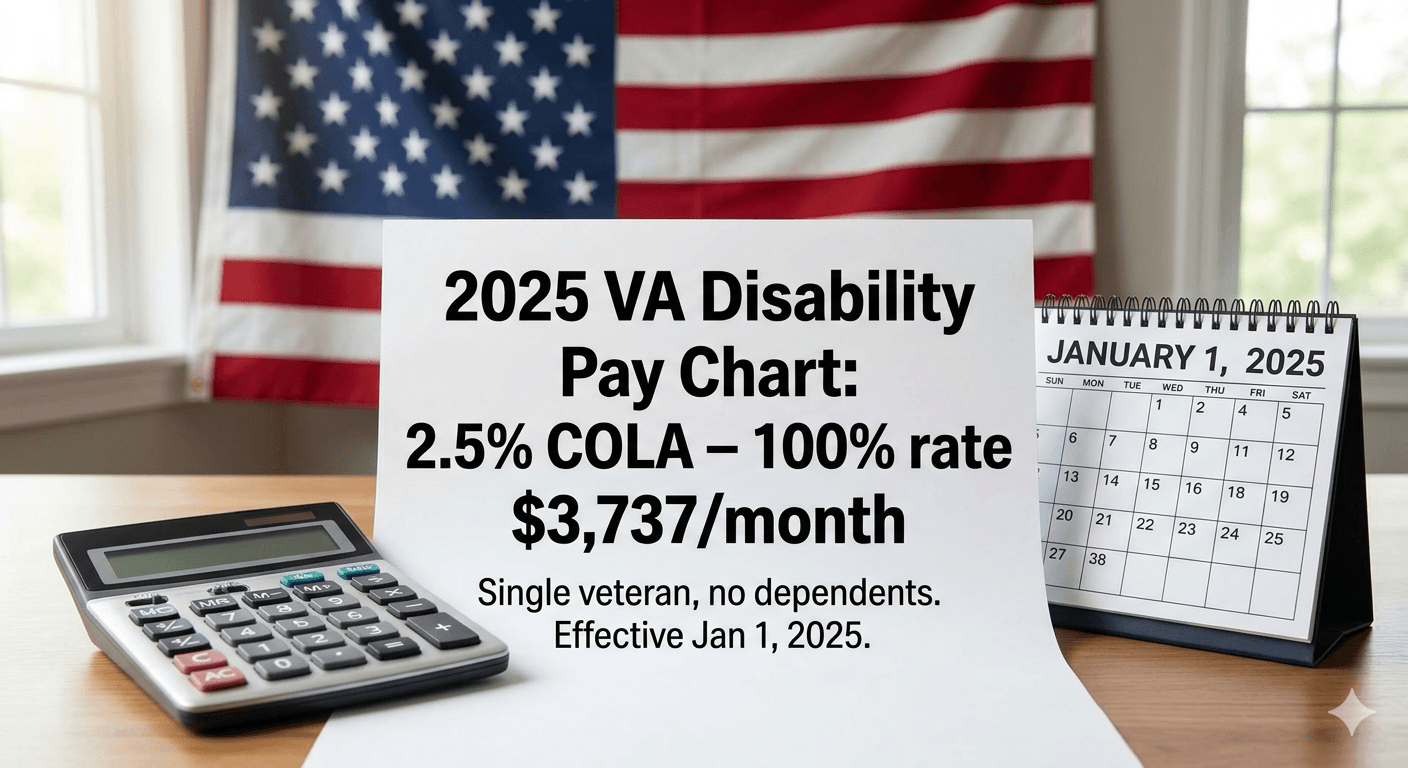
To provide a visual representation, the following chart illustrates the compensation rates associated with common disability ratings:
Breakdown by rating (single, no dependents):
- 10%: 175.51permonth(upfrom171.23)
- 20%: 346.96(upfrom338.49)
- 30%: 537.42(upfrom524.31)
- 40%: 774.16(upfrom755.28)
- 50%: 1,102.04(upfrom1,075.16)
- 60%: 1,395.87(upfrom1,361.88)
- 70%: 1,759.19(upfrom1,716.28)
- 80%: 2,044.89(upfrom1,995.01)
- 90%: 2,297.96(upfrom2,241.91)
- 100%: 3,737.85(upfrom3,646.49)
These numbers are official. Bookmark them.
This structured approach to disability compensation ensures that veterans receive the financial assistance they require, aligned with their specific needs stemming from service-related conditions. By understanding this breakdown, veterans can navigate the compensation landscape more effectively.
Cost of Living Adjustments in 2025
Cost of Living Adjustments (COLA) play a crucial role in maintaining the purchasing power of veterans reliant on VA disability compensation. As inflation affects the economy, these adjustments ensure that the compensation veterans receive keeps pace with rising living costs, thereby allowing them to sustain their quality of life. In 2025, it is expected that the VA will implement COLA based on the Consumer Price Index for Urban Wage Earners and Clerical Workers (CPI-W). This index reflects changes in the prices of goods and services and serves as a reliable indicator for adjusting disability payments.
The necessity for COLA cannot be overstated, particularly for veterans who depend on fixed income in the form of disability benefits. Without timely adjustments, the value of these benefits diminishes, which may lead to financial hardships for these service members and their families. Understanding how COLA operates provides veterans with essential insights into their compensation, encouraging them to stay informed about the adjustments which could impact their financial planning and budgeting.
For 2025, a potential COLA increase would likely align with the projected inflation rates, reflecting an effort to uphold veterans’ economic standards. This adjustment not only addresses inflation but also demonstrates the government’s commitment to supporting veterans adequately. A well-informed veteran community is empowered to advocate for necessary adjustments and to comprehend the financial landscape they navigate. Keeping track of these changes, therefore, remains vital to ensuring that benefits evolve in tandem with economic realities.
Additional Benefits for Disabled Veterans
Disabled veterans are entitled to a variety of additional benefits that extend beyond monetary compensation, significantly enhancing their quality of life. Among these benefits, healthcare services provided by the Department of Veterans Affairs (VA) stand out as one of the most critical resources. Eligible veterans can access comprehensive medical care, mental health services, and prescription medication at little to no cost, which is essential for managing service-related disabilities.
In addition to healthcare, education assistance programs are available for veterans seeking to further their education or acquire new vocational skills. The VA offers the Post-9/11 GI Bill, which covers tuition and fees for eligible individuals attending college, university, vocational, or technical schools. Furthermore, veterans can receive a monthly housing allowance while enrolled in educational programs, providing essential financial support during their studies.
Vocational rehabilitation and employment services are another critical component of the additional benefits available to disabled veterans. These services focus on helping veterans with service-connected disabilities attain the skills and training necessary to secure meaningful employment. The VA’s Vocational Rehabilitation and Employment (VR&E) program offers personalized services, including counseling, education, and job placement assistance, to help veterans transition successfully into civilian life.
Housing grants also play an important role in supporting the needs of disabled veterans. The VA administers several programs aimed at assisting veterans in acquiring suitable housing. One notable program is the Specially Adapted Housing (SAH) grant, which assists veterans with certain permanent and total service-connected disabilities in building or modifying homes to meet their specific needs. This financial aid can be invaluable in facilitating a safe and comfortable living environment.
Overall, these various additional benefits play a crucial role in supporting disabled veterans. By providing healthcare, educational support, vocational training, and housing assistance, these benefits significantly contribute to the overall well-being of those who have served their country.
How to Apply for VA Disability Benefits
Applying for VA disability benefits is a structured process that requires careful preparation and adherence to established procedures. Veterans seeking disability compensation can start their application online or through traditional methods such as mailing in a paper application. The online application process can be accessed through the VA’s official website, where veterans can create an account on the Vets.gov portal. This platform provides a user-friendly experience, allowing applicants to save their progress and return at a more convenient time.
Before beginning the application, it is essential to gather all necessary documentation. This includes service records, medical diagnoses, and personal identification information. Veterans should provide detailed records of their medical conditions, including treatment history and any supporting evidence from health care providers. These documents are crucial as they substantiate the claims for disability benefits and help the VA determine the eligibility.
To enhance the chances of a successful application, veterans are advised to follow a few strategic steps. Firstly, seeking assistance from a service officer or a veteran service organization can significantly streamline the process. These professionals can assist in navigating the complexities of paperwork and can provide insights into what specific information needs to be highlighted. Secondly, ensuring that all forms are completed accurately is imperative to avoid delays. Any errors or omissions can lead to complications or denials, which may require additional time to resolve.
Lastly, after submitting the application, veterans should stay informed by checking the status of their claim through the VA’s online portal or by contacting their regional VA office. This proactive approach can help veterans to remain engaged in the process and address any issues that may arise, ensuring a smoother path toward obtaining disability benefits.
Appealing a VA Disability Decision
The appeals process for veterans who disagree with their disability rating or benefit decision is a crucial pathway to ensuring fair treatment and the correction of potentially erroneous evaluations. Veterans may find themselves in a situation where they believe their service-related disability has not been adequately assessed. In such cases, understanding the appeal process within the Department of Veterans Affairs (VA) is vital.
Common reasons a veteran might choose to appeal a VA disability decision include dissatisfaction with the assigned disability rating, disagreements regarding service connections, or failure to receive benefits for certain conditions. The first step in this process generally involves obtaining a clear explanation of the decision, including the rating criteria used by the VA. By understanding the VA’s reasoning, veterans can address specific aspects relevant to their case when submitting an appeal.
To initiate an appeal, a veteran must file a Notice of Disagreement (NOD) within one year from the date they receive their decision letter. The NOD must clearly outline the areas of disagreement, providing a detailed rationale as to why the original decision should be reconsidered. This step can be complex, and it is often beneficial for veterans to seek help from qualified representatives, such as veterans service organizations (VSOs) that are well-versed in VA processes.
After filing the NOD, veterans may opt for a higher-level review, a supplemental claim, or a hearing before the Board of Veterans’ Appeals, depending on their preference. Each of these avenues has distinct procedures and requirements that must be adhered to, ensuring that veterans present their cases comprehensively and effectively. Thus, it’s essential to remain organized and submit all pertinent medical evidence and documentation to support the appeal.
Conclusion and Final Thoughts
Understanding VA disability pay is crucial for veterans and their families as it impacts financial stability and access to necessary resources. The VA disability pay chart for 2025 outlines the latest rates, which reflect fundamental adjustments based on various factors including cost of living and service-related impairments. Staying informed about these rates not only prepares veterans for their financial planning but also empowers them to advocate for their rightful benefits.
As we have discussed, the VA strives to offer a comprehensive system that caters to the unique needs of those who have served in the military. The changes in the VA disability pay can have significant implications for current and future beneficiaries, making it vital for individuals to monitor updates and reforms periodically. Understanding the nuances of the benefits system enables veterans to better navigate their claims and ensures they receive the support aligned with their specific conditions and sacrifices.
The importance of regularly reviewing the VA disability pay chart cannot be overstated. With changes expected and potential legislative adjustments in the pipeline, veterans must remain proactive. Engaging with resources such as veteran service organizations can provide valuable assistance in understanding and accessing these benefits. Keeping abreast of amendments in disability rates ensures veterans receive the maximum support available, reinforcing their commitment to serving the country.
In conclusion, being well-informed about the VA disability pay rates and understanding the overall healthcare and benefits system strengthens the connection between the government and veterans. It highlights the ongoing commitment to honor the sacrifices made by military personnel and affirms the importance of accessible financial assistance for this deserving community.




🇺🇸 IMPORTANT DISCLAIMER – Veterans Benefits Information
This site provides general information about U.S. Department of Veterans Affairs (VA) benefits for educational and informational purposes only.
- Not Official: We are NOT affiliated with, endorsed by, or connected to the U.S. Department of Veterans Affairs (VA), the Veterans Benefits Administration (VBA), the Veterans Health Administration (VHA), or any other government agency.
- No Legal/Financial Advice: The content on this website is for informational purposes only and does not constitute legal, financial, or medical advice. VA benefits rules change frequently – always consult with an accredited Veterans Service Officer (VSO) or a qualified professional for your specific situation.
- Official Sources: For official, binding information and to apply for benefits, always visit official .gov websites: VA.gov, Benefits.VA.gov, or SSA.gov.
- No Data Collection: This site does not collect, store, or process any personal information. It does not have login forms, contact forms, or any system to capture user data. We never ask for your Social Security Number, bank details, or any personal information.
- 🚨 Scam Alert: The VA and other government agencies never charge fees for benefit applications. If anyone asks for money to "process" your VA claim, it is a scam. Report it to the VA Office of Inspector General at VA.gov/OIG.
- Advertising: This site uses third-party advertising (Adsterra) to cover operational costs. We do not endorse or guarantee any products or services advertised.
📌 Information provided as of June 2026. Always verify current eligibility and rules with official .gov sources.
This site is not affiliated with the U.S. Department of Veterans Affairs or any government agency. All information is for educational purposes only. Please visit VA.gov for official information.
