

Understanding VA Appraisal Fees
VA appraisal fees are a critical component of the home purchasing process, especially for veterans who utilize VA loans. These fees are specifically associated with the valuation process mandated by the Department of Veterans Affairs (VA). The primary purpose of a VA appraisal is to ensure that the property being purchased with a VA loan meets certain standards of safety, soundness, and structural integrity, as well as to determine its fair market value. This ensures that veterans are not overpaying for a property and that the homes they purchase are worthy investments.
One of the distinguishing features of VA appraisal fees is how they differ from conventional appraisal costs. Generally, conventional loans may require appraisals that are performed by private entities without the oversight of the VA. In contrast, VA appraisals maintain strict regulations that help guarantee consistency and protect veterans’ interests throughout the home buying journey. Due to these different approaches, the fee structure associated with VA appraisals may vary slightly based on geographical location and specific requirements of the state or county in which the property is located.

For veterans utilizing VA loans, understanding these appraisal fees is not only essential for budgeting purposes but also for planning their home buying experience. The fees can vary depending on factors such as property type and location, thereby affecting the overall cost involved in securing a VA loan. Nevertheless, despite potential variances and increases in fees, the significance of obtaining a comprehensive appraisal cannot be overstated, offering peace of mind for veterans during their purchasing process. Ultimately, understanding the ins and outs of VA appraisal fees can better equip veterans for their upcoming transactions.
New Fee Schedule Effective June 15, 2026

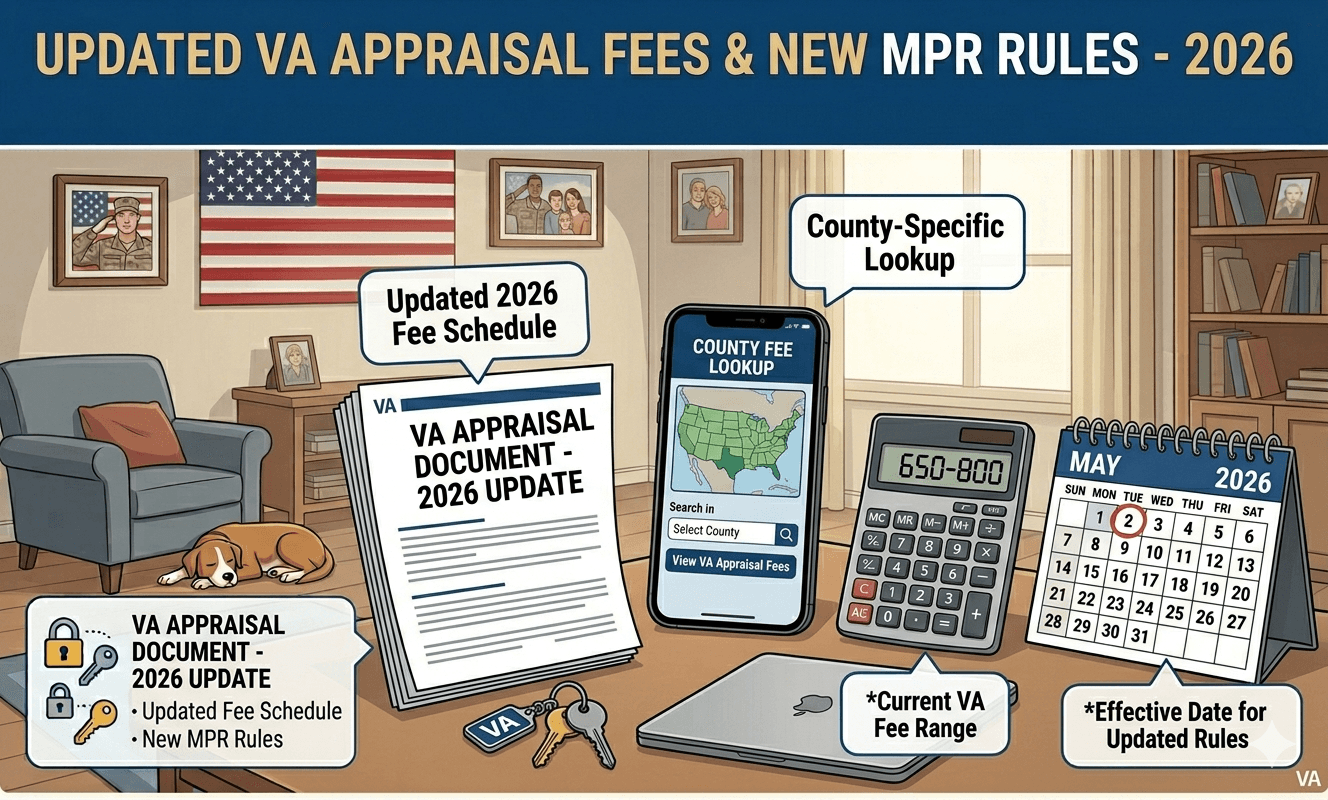
Beginning June 15, 2026, the Department of Veterans Affairs (VA) will implement a revised appraisal fee schedule that will impact costs for veterans seeking VA-backed loans. This fee adjustment is designed to reflect changes in various factors, including property type and county designation. With the housing market continually evolving, these shifts in appraisal fees aim to align with the current economic climate.
The new VA appraisal fee structure will include different pricing tiers depending on the location and the type of property being assessed. For instance, residential properties in high-demand counties may incur higher appraisal fees compared to those in rural or less-populated areas. The VA acknowledges the significance of geographical distinctions, as urban centers typically experience greater market fluctuations and higher demand for housing, consequently affecting the overall appraisal costs.
Moreover, the appraisal process itself will still require adherence to strict standards set by the VA, ensuring that all properties are evaluated accurately and comprehensively. However, the age and style of the property, along with its condition and specific features, can also influence the appraisal fee. For instance, unique custom homes may require more detailed assessments, potentially leading to increased costs compared to standard properties.
Veterans and potential homebuyers should stay informed about these adjustments to prepare for the financial implications of their VA loan applications moving forward. Understanding the impact of the new fee schedule will enable applicants to budget accordingly and make informed decisions about their property investments amidst changing market conditions. The continued goal of the VA is to provide veterans with access to fair and reasonable appraisal costs while ensuring the integrity of the property evaluation process.
High-Demand County Designation Explained
Veterans May Qualify for Extra Benefits
Check available financial assistance, healthcare programs and other opportunities that may apply to you.
Check EligibilityIn the context of VA appraisals, a high-demand county is classified based on specific factors that indicate a surge in housing demand, often correlating with economic growth and population increase. These counties typically experience rapid price appreciation, attracting not only local residents but also newcomers seeking housing opportunities. For a county to achieve this high-demand status, several criteria are evaluated, including job growth, housing inventory levels, and median home prices relative to historical trends.
For instance, counties that have seen significant in-migration or substantial employment opportunities from industries such as technology, healthcare, or finance frequently earn this designation. Other influencing factors may also include proximity to urban centers, desirable schooling districts, and access to transportation, which collectively heighten the demand for housing in these regions.
The implications of this designation are critical for veterans wishing to purchase homes in high-demand areas. With rising appraisal fees in counties classified as high-demand, veterans can expect to incur additional costs when seeking financing through VA loans. This elevation in fees arises from the increased workload and complexity associated with appraisals in such buoyant markets, where assessed values can escalate rapidly due to competition among buyers.
Examples of counties that fall into the high-demand category include Los Angeles County, CA, and King County, WA. Both of these regions have seen significant appreciation in home values, largely driven by economic opportunities and population growth. Consequently, veterans considering property purchases in these areas must prepare for potentially higher appraisal fees, impacting their purchases and overall financial planning.
Cost Breakdown of Appraisal Fees by Property Type
Understanding the costs associated with VA appraisal fees is essential for prospective homebuyers and investors. The fees can vary significantly depending on the type of property being appraised. Typically, single-family homes incur the least expense, with appraisal fees ranging from $400 to $600. Factors that may influence this cost include the property’s location, square footage, and current market conditions. For example, homes situated in high-demand areas may experience higher fees due to increased competition among appraisers.
Multi-family units, such as duplexes and triplexes, generally incur higher appraisal fees, often falling between $600 to $1,200. This increase is attributed to the complexity involved in evaluating multiple living units and the additional considerations required for income-generating properties. Appraisers must assess factors like rental income potential, vacancy rates, and overall condition, which can significantly influence the final appraisal report.
Condominiums, on the other hand, have variable appraisal fees that typically range from $450 to $800. The specific fee is affected by factors such as the size of the unit, the amenities available in the building, and the management structure of the condominium association. Similar to multi-family units, the appraisal process for condominiums requires careful evaluation of the property’s marketability, common areas, and association fees, which can impact the fee structure.
In addition to the type of property, other factors that may influence appraisal fees include the complexity of the property, the current demand for appraisals in a particular county, and seasonal fluctuations in the real estate market. As regulations change, understanding these costs will be crucial in navigating the VA home loan process effectively.
Impact of New Multipliers on Appraisal Fees
The introduction of new multipliers for high-demand counties is set to significantly impact the appraisal fees associated with VA loans starting June 15, 2026. These multipliers are expected to increase base appraisal fees by an astonishing 125-150%. This change arises from the need to align with market conditions where demand for real estate appraisals continues to escalate in certain geographic areas.
The incorporation of these multipliers reflects the growing complexities within the real estate market, where appraisals must account for rapidly increasing property values and heightened demand. High-demand counties, characterized by their strong housing markets and limited inventory, necessitate more thorough and, consequently, more costly appraisal processes. With the added pressure on appraisers to provide accurate values amid fluctuating values and bidding wars, these fee adjustments are deemed essential.
For instance, consider a scenario where the base appraisal fee is currently set at $500. With the new multipliers in effect, the fee could rise to anywhere between $1,125 and $1,250 in high-demand areas. Another hypothetical case may involve a base fee of $600, which would likely escalate to between $1,350 and $1,500 under the new rules. Such fee increases may seem steep; however, they are intended to ensure that appraisers are fairly compensated for their expertise and the additional work required to navigate dynamic market conditions.
Ultimately, while these changes represent a significant increase in appraisal costs, they stem from a calculated response to evolving market demands and the necessity for accurate property valuation. The implementation of these multipliers will help maintain a reliable appraisal system, essential for all real estate transactions within these designated counties.
Re-inspection Fees: What to Expect
When engaging with a VA appraisal, homeowners should be aware of potential fixed re-inspection fees that may arise during the process. The standard fee set at $150 applies in cases where repairs or additional assessments are necessary post-initial appraisal. This cost is uniform across many situations, providing a consistent framework for homeowners who may be navigating repairs and evaluations needed to meet VA standards.
Re-inspections are typically required when the initial appraisal identifies defects or deficiencies within the property that could affect the safety, structural integrity, or overall livability of the home. Common issues prompting a re-inspection include the need for roof repairs, plumbing failures, or electrical system concerns. Such deficiencies must be resolved to ensure alignment with VA lending guidelines before the loan can be approved, reflecting the importance of addressing these issues promptly.
Homeowners should take a proactive approach when it comes to managing these potential re-inspection fees. It is advisable to pay close attention to the findings of the initial appraisal and address any noted concerns as efficiently as possible. Engaging qualified professionals for repairs and ensuring that all necessary documentation is readily available at the time of the re-inspection can not only expedite the process but may also assist in avoiding further unforeseen costs. Additionally, prior to scheduling a re-inspection, it may be beneficial to communicate clearly with the appraisal management firm regarding the specifics of repairs undertaken. This not only ensures that the appraisor is adequately informed but also paves the way for a smoother, more efficient evaluation.
The Valor Act and Potential Refunds for Veterans
The Valor Act represents a significant legislative effort aimed at providing financial relief to veterans, particularly those with pending disability claims related to their military service. As part of this initiative, the act proposes a structure for refunding appraisal fees incurred during the home buying process for veterans whose disability claims are subsequently approved. This is a pivotal move considering that home appraisals can often be a financial burden, particularly for those undergoing significant life transitions.
To qualify for the potential refunds under the Valor Act, veterans must meet specific criteria. Primarily, eligibility is determined by having a disability claim pending at the time the appraisal occurs and subsequently receiving approval for that claim. Veterans who find themselves in situations where their claims are validated after an appraisal has been conducted may stand to benefit from this initiative. This not only assists in alleviating the financial stress of upfront costs, but it also recognizes the sacrifices that veterans have made in service to their country.
The potential financial benefits of the Valor Act can be quite substantial. By enabling veterans to reclaim their appraisal fees, the act aims to lessen barriers to homeownership and ensure that veterans can secure stable and comfortable housing without being encumbered by additional costs. In essence, the Valor Act empowers veterans, facilitating a smoother transition back into civilian life while addressing some of the financial challenges they often face. This legislative measure not only reflects a commitment to the well-being of veterans but also strengthens the community support systems around them. Through such acts, the government reinforces its dedication to serving those who have served the nation in various capacities.
Comparative Analysis of VA Appraisal Fees Nationwide
The VA appraisal fees across the United States exhibit a broad range, primarily fluctuating between $400 and $1,200. This significant variance can be attributed to multiple factors, including geographical location, demand for services, and local market conditions. Individual states often present different fee structures based on the operational costs incurred by appraisers and the region’s specific requirements.
For instance, in urban areas with high demand for housing, such as California and New York, one might find fees leaning towards the higher end of the spectrum. This can be primarily due to the increased competition among appraisers and the higher living costs which contribute to inflated pricing. Conversely, regions with lower housing demands or populations, such as rural areas in the Midwest, might offer more affordable VA appraisal fees, often at or below the national average.
Additionally, local regulations and market dynamics play a crucial role in determining these appraisal fees. For instance, certain counties may impose stricter guidelines or require additional inspections, thereby escalating fees. Variations also arise due to the differing levels of experience and qualifications among appraisers, with seasoned professionals often charging more due to their expertise and reputation.
It is also essential to consider how changes in state regulations and policies could impact future fee structures. States may opt to adjust their guidelines in response to market conditions, which can lead to fluctuations in the prices of VA appraisal services across different regions. Understanding these factors is crucial for potential homeowners utilizing VA loans, as the variability in appraisal fees could significantly affect the overall cost of home purchasing.
Final Thoughts and Recommendations for Veterans
As the implementation of the new VA appraisal fees takes effect on June 15, 2026, it is crucial for veterans to familiarize themselves with the upcoming changes and financial implications. Understanding the revised fee structure will enable veterans to navigate the housing market effectively and remain informed regarding their rights and responsibilities during the appraisal process. The adjustment in fees signifies a notable shift in policy that may impact access to housing for many veterans seeking home loans through VA programs.
Veterans should start preparing for these fees by establishing a budget that accounts for the new appraisal costs. This proactive approach can alleviate financial strain and promote a smooth transaction when purchasing or refinancing a property. Utilizing resources provided by the VA can aid veterans in obtaining clarification on the fee structure and integrating these expenses into their financial planning. Moreover, veterans are encouraged to leverage loans, grants, and local assistance programs that may help mitigate the impact of increased appraisal costs.
Seeking assistance from knowledgeable professionals in the real estate sector can also prove beneficial. Engaging with VA-approved lenders or advisors familiar with the changes in appraisal rules is vital. They can provide insight into current market trends and help veterans strategize effectively to ensure they are making informed housing decisions.
Lastly, veterans should remain vigilant regarding their rights under the VA guidelines. The establishment of new regulations necessitates that veterans are prepared to advocate for themselves and seek recourse if they encounter discrepancies during the appraisal process. By staying informed and utilizing available resources, veterans can navigate the effects of these new appraisal fees responsibly and effectively.


🇺🇸 IMPORTANT DISCLAIMER – Veterans Benefits Information
This site provides general information about U.S. Department of Veterans Affairs (VA) benefits for educational and informational purposes only.
- Not Official: We are NOT affiliated with, endorsed by, or connected to the U.S. Department of Veterans Affairs (VA), the Veterans Benefits Administration (VBA), the Veterans Health Administration (VHA), or any other government agency.
- No Legal/Financial Advice: The content on this website is for informational purposes only and does not constitute legal, financial, or medical advice. VA benefits rules change frequently – always consult with an accredited Veterans Service Officer (VSO) or a qualified professional for your specific situation.
- Official Sources: For official, binding information and to apply for benefits, always visit official .gov websites: VA.gov, Benefits.VA.gov, or SSA.gov.
- No Data Collection: This site does not collect, store, or process any personal information. It does not have login forms, contact forms, or any system to capture user data. We never ask for your Social Security Number, bank details, or any personal information.
- 🚨 Scam Alert: The VA and other government agencies never charge fees for benefit applications. If anyone asks for money to "process" your VA claim, it is a scam. Report it to the VA Office of Inspector General at VA.gov/OIG.
- Advertising: This site uses third-party advertising (Adsterra) to cover operational costs. We do not endorse or guarantee any products or services advertised.
📌 Information provided as of June 2026. Always verify current eligibility and rules with official .gov sources.
This site is not affiliated with the U.S. Department of Veterans Affairs or any government agency. All information is for educational purposes only. Please visit VA.gov for official information.
