

Introduction to VA Home Loans in California
VA home loans, propagated by the U.S. Department of Veterans Affairs, serve as a specialized financial product aimed at assisting veterans, active military personnel, and certain eligible spouses in securing affordable housing. These loans cater primarily to individuals who have demonstrated service to the nation, offering them favorable terms that are often more advantageous than those found in conventional lending options.
One of the distinguishing characteristics of VA home loans is that they do not require a down payment, a significant financial barrier for many prospective homebuyers. This feature makes homeownership more accessible to veterans and active duty members, ensuring that they can purchase properties without the burden of accumulating substantial upfront costs. Additionally, VA loans typically do not necessitate private mortgage insurance (PMI), which is commonly required in traditional loans, further reducing overall monthly expenses.

Another critical aspect is the competitive interest rates associated with VA home loans. These rates are often lower than those of conventional mortgages due to the fact that the loan is backed by the federal government, which mitigates risk for lenders. By facilitating more substantial savings on interest, VA loans enable veterans in California to allocate their resources toward home maintenance, education, or other vital areas.

Furthermore, VA loans come with flexible qualification standards. Unlike conventional loans, which can be stricter in their borrowing requirements, VA loans consider unique circumstances that veterans might face, such as service-related disabilities or unstable income periods. This flexibility ensures that eligible service members can still qualify for home financing without facing prohibitive credit scores or debts.
Overall, VA home loans provide essential financial support, specifically designed for veterans and active military personnel in California. Their unique attributes not only promote homeownership but also honor the sacrifices made by those who have served the country.
Current VA Home Loan Rates in California
As of 2026, California’s average VA home loan rate stands at 6.09% for a 30-year fixed mortgage. This rate exemplifies a significant trend in the housing finance market in recent years, where fluctuations have been influenced by various economic factors. Understanding these rates requires an analysis of the broader context, including the Federal Reserve’s monetary policy, inflation trends, and the overall health of the housing market.
The recent average of 6.09% reflects an upward movement compared to previous years. The persistence of low rates in the past decade had made VA loans highly appealing to veterans and active-duty service members looking to purchase homes in California. However, with rising inflation and changes in economic expectations, prospective borrowers must now navigate increased borrowing costs. This adjustment has prompted many to reassess their home buying strategies as the market continues to evolve.
Veterans May Qualify for Extra Benefits
Check available financial assistance, healthcare programs and other opportunities that may apply to you.
Check EligibilityVarious factors contribute to the fluctuations in VA home loan rates. Economic indicators such as unemployment rates, economic growth, and inflation heavily influence the decisions made by lenders. Furthermore, the demand for housing continues to play a crucial role in shaping interest rates. In California, where housing demand remains robust due to population growth and limited inventory, veterans are increasingly encouraged to explore their eligibility for VA loans while keeping in mind these higher rates.
Looking forward, experts predict that VA home loan rates may continue to adjust in response to ongoing economic conditions. Borrowers in California should remain informed about these developments and carefully consider their options. It is advisable for potential homebuyers to consult with experienced lenders to understand how the current average rate of 6.09% may impact their purchasing power and financing options.
County Loan Limits and Their Implications
In the context of VA home loans in California, understanding county loan limits is crucial for potential homebuyers. Each county within the state has specific loan limits dictated by the cost of living and housing market conditions. Particularly in high-cost areas, these limits can be significantly elevated, impacting the buying power for veterans and military personnel.
For instance, in counties like San Diego, the VA home loan limit can soar up to $1,209,750. This figure represents the maximum amount a veteran can borrow without requiring a down payment. The implications of these loan limits are profound; they not only dictate the affordability but also the type and size of homes that veterans can purchase. In a market characterized by rising property values, these limits ensure veterans are not priced out of crucial housing opportunities.
The loan limits are particularly beneficial in areas where home prices are well above the national average. Veterans seeking homes in such regions can leverage these higher loan limits to secure properties that might otherwise be financially unattainable. Understanding that these limits are adjusted annually allows potential buyers to plan their purchase strategies effectively, based on expected changes in the market.
Moreover, these county-specific limits encourage informed decision-making among homebuyers. By being aware of the maximum borrowing potential afforded to them through VA loans, veterans can evaluate their budgets and housing options more comprehensively. As a result, this empowers them to make strategic choices that align with their long-term financial goals.
In essence, familiarizing oneself with the county loan limits related to VA home loans not only helps in setting realistic expectations but also enhances the overall home-buying experience for veterans in California.
Why VA Rates are Lower than Conventional Loans
The VA home loan program, designed specifically for veterans, active-duty service members, and certain members of the National Guard, provides significant benefits that contribute to its generally lower interest rates when compared to conventional loans. One of the primary reasons for this disparity is the VA guarantee, which acts as a safety net for lenders. This guarantee ensures that a portion of the loan is backed by the government, which lessens the risk associated with lending to borrowers who might have had difficulty securing financing through traditional means.
When a lender is aware that a portion of the loan will be covered by the VA in the event of a default, they may feel more comfortable offering lower interest rates. This reduced lender risk translates into a more attractive mortgage option for veterans and active duty service members, allowing them to realize substantial savings over the life of their loans. Furthermore, these loans typically do not require private mortgage insurance (PMI), which is often a requirement for borrowers with lower down payments on conventional loans. The absence of PMI not only makes VA loans more affordable but also serves to lower the overall monthly payments.
Additionally, many lenders recognize the reliability and creditworthiness of VA borrowers. Veterans often have a stable income and a strong track record of repayment, which further encourages lenders to offer competitive rates. The combination of the VA guarantee and the credit profile of veterans means that VA home loans can come with favorable terms, including lower interest rates and more flexible qualification standards. This combination positions VA loans as a beneficial option for eligible borrowers, helping them to more easily achieve homeownership.
Factors Influencing VA Loan Rates
The rates for VA home loans in California can fluctuate based on several key factors. Understanding these elements can empower borrowers to make informed decisions and potentially secure better rates. One of the most significant influences on VA loan rates is the borrower’s credit score. A higher credit score often results in lower interest rates, as lenders view these borrowers as less risky. Typically, lenders look for a credit score of at least 620 to qualify for a VA loan, but achieving a score above 720 can provide even more favorable terms.
In addition to credit scores, the type of loan can also impact rates. For instance, fixed-rate VA loans generally offer reliable payments over time, while adjustable-rate mortgages (ARMs) might feature lower initial rates that adjust after a specified period. Borrowers should carefully consider their financial situation and how long they plan to stay in the home when selecting a loan type, as this can influence the overall cost of financing.
Moreover, lender-specific criteria play a crucial role in determining the rates available to borrowers. Different lenders may have varying underwriting standards, fees, and structures, leading to different interest rates even for similar borrower profiles. Therefore, it is essential for potential borrowers to shop around. Comparing multiple lenders not only allows borrowers to find the most competitive interest rates but also helps them understand the overall terms associated with their loans.
Other factors that can affect VA loan rates include the overall market conditions and the economic landscape. When the economy is booming, rates might rise due to increased competition for finance, whereas, in a downturn, rates may decrease as lenders strive to attract borrowers. Keeping abreast of these broader economic trends can also assist individuals in timing their loan applications for the best possible rates.
Comparing VA Loans to Other Loan Types
When considering the best financing options for purchasing a home, it is essential to compare various loan types, including VA home loans, conventional loans, and FHA loans. Each offers distinct advantages and disadvantages that can significantly influence a borrower’s decision based on their specific circumstances.
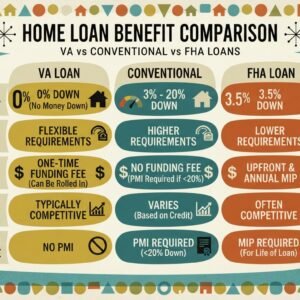
VA home loans are primarily designed for veterans, active-duty service members, and eligible survivors. One of the most significant benefits of VA loans is the absence of a required down payment, allowing service members to purchase homes without the financial strain that typically accompanies conventional loans. Additionally, these loans do not require private mortgage insurance (PMI), which can save borrowers considerable amounts in monthly payments. However, VA loans do come with a funding fee, which is a percentage of the loan amount that can be rolled into the mortgage or paid upfront.
In contrast, conventional loans are not insured by the government and often require a down payment, which can range from 3% to 20% of the home’s purchase price. Though conventional loans can provide flexibility in terms of loan amount and use, they also necessitate PMI if the down payment is less than 20%. This can lead to higher monthly payments compared to VA loans.
FHA loans, backed by the Federal Housing Administration, are another alternative, targeting first-time homebuyers with lower credit scores. FHA loans require a lower down payment, typically around 3.5%, which appeals to many buyers. However, these loans also carry mortgage insurance, which can add to the overall cost over the life of the loan. Furthermore, FHA loans are subject to specific limits varying by region, which can restrict borrower options in higher-cost areas.
In conclusion, each loan type presents unique characteristics, and understanding the nuances between VA home loans, conventional loans, and FHA loans is essential for prospective borrowers. Determining the best fit often depends on individual financial situations, eligibility, and long-term homeownership goals.
The Application Process for VA Home Loans
Applying for a VA home loan in California involves several important steps. Understanding this application process can help streamline your efforts and enhance your chances of securing the funding you need. The first step is obtaining a Certificate of Eligibility (COE). This document verifies your status as a qualified veteran or active duty service member. You can apply for the COE online, through your lender, or by mailing a completed VA Form 26-1880 to the Veterans Affairs office.
Once you have received your COE, the next step is to select a lender that specializes in VA home loans. It is advisable to shop around and compare rates and fees among various lenders to find the best terms suited to your financial situation. Be sure to inquire about their willingness to work with VA loans, as some lenders may have specific programs tailored for veterans.
After selecting a lender, you will submit a loan application. This includes providing financial documentation such as income verification, employment history, and credit information. The lender will assess your financial health to determine your eligibility for the VA home loan. It’s important to prepare your documents in advance to expedite the process.
Next, the lender will conduct a property appraisal to ensure that the home meets the VA’s minimum property requirements and to determine its fair market value. This step is critical as it directly impacts the amount you can borrow. If the property appraises below the expected value, it may influence the loan terms or require negotiation with the seller.
Upon successful appraisal, the lender will process the loan and prepare for closing. During the closing, you will review and sign loan documents, pay any closing costs, and officially finalize your home purchase. Throughout this process, communication with your lender is essential. They will provide guidance, answer questions, and assist with any challenges that may arise.
In conclusion, following these structured steps for applying for a VA home loan in California can facilitate a smoother borrowing experience. From obtaining your Certificate of Eligibility to collaborating closely with your lender, being proactive and informed will help you navigate this important financial decision efficiently.
Understanding the Benefits of VA Home Loans
VA home loans offer several advantages that can make homeownership more accessible for eligible veterans and active-duty service members. One of the most significant benefits is the requirement of no down payment. This feature allows borrowers to finance the full purchase price of the home, eliminating the usual barrier many first-time homebuyers face. As a result, veterans can move into their new homes without needing to save tens of thousands of dollars for a down payment, which can be especially advantageous in California’s competitive real estate market.
Another considerable benefit is the exemption from private mortgage insurance (PMI), a cost that typically accompanies conventional loans when a buyer makes a down payment of less than 20%. By not having to pay PMI, VA loan borrowers can enjoy lower monthly payments, thus enhancing their overall budget for housing expenses. This savings can be redirected towards home improvements, furnishing, or even contributing to other financial goals.
Additionally, VA home loans often come with competitive interest rates which can be lower than average market rates. This factor can lead to significant savings over the life of the loan, as even a slight difference in interest rates can accumulate to substantial amounts over 15 to 30 years. Real-life examples highlight these advantages clearly: a veteran purchasing a home valued at $500,000 could potentially save thousands in upfront costs and tens of thousands in long-term interest.
In conclusion, VA home loans represent an invaluable opportunity for those who have served in the military. With benefits such as no down payment, absence of PMI, and competitive interest rates, veterans can achieve their dream of homeownership more easily than with traditional financing options.
Conclusion and Future Outlook for VA Loans in California
In conclusion, the VA home loan program continues to provide accessible funding options for veterans and active-duty service members in California. As we look ahead to 2026, several trends and factors are likely to shape the landscape of VA loan rates. These include the anticipated changes in interest rates, shifts in housing demand, and evolving policies that may impact the availability of these loans.
The Federal Reserve’s monetary policy will play a crucial role in determining interest rates. If the trend of increasing rates continues, VA loans could become more challenging to secure at favorable rates. However, VA loans often offer a competitive edge due to their unique benefits, such as zero down payment and limited closing costs, which may attract more borrowers despite rising costs.
Additionally, California’s housing market is expected to experience fluctuations due to various economic factors, including job growth and demographic shifts. The increasing influx of residents into California could elevate housing demand, potentially driving up prices and influencing the overall loan market. For veterans and active-duty members, this can mean both challenges and opportunities in their quest for home ownership.
Moreover, legislative developments aimed at supporting veteran homeownership may lead to further enhancements in VA loan benefits. Initiatives that streamline application processes or expand eligibility criteria can positively impact the accessibility of VA loans. As the housing market evolves, stakeholders should remain informed about these trends and actively engage with financial advisors to optimize their loan choices.
As we approach 2026, the future of VA home loans in California appears to be a mix of opportunity and challenge. Staying informed of market conditions and potential changes in legislation will be vital for prospective homebuyers. The VA home loan program remains an invaluable resource, offering veterans a path to homeownership, albeit with considerations unique to each market cycle.

🇺🇸 IMPORTANT DISCLAIMER – Veterans Benefits Information
This site provides general information about U.S. Department of Veterans Affairs (VA) benefits for educational and informational purposes only.
- Not Official: We are NOT affiliated with, endorsed by, or connected to the U.S. Department of Veterans Affairs (VA), the Veterans Benefits Administration (VBA), the Veterans Health Administration (VHA), or any other government agency.
- No Legal/Financial Advice: The content on this website is for informational purposes only and does not constitute legal, financial, or medical advice. VA benefits rules change frequently – always consult with an accredited Veterans Service Officer (VSO) or a qualified professional for your specific situation.
- Official Sources: For official, binding information and to apply for benefits, always visit official .gov websites: VA.gov, Benefits.VA.gov, or SSA.gov.
- No Data Collection: This site does not collect, store, or process any personal information. It does not have login forms, contact forms, or any system to capture user data. We never ask for your Social Security Number, bank details, or any personal information.
- 🚨 Scam Alert: The VA and other government agencies never charge fees for benefit applications. If anyone asks for money to "process" your VA claim, it is a scam. Report it to the VA Office of Inspector General at VA.gov/OIG.
- Advertising: This site uses third-party advertising (Adsterra) to cover operational costs. We do not endorse or guarantee any products or services advertised.
📌 Information provided as of June 2026. Always verify current eligibility and rules with official .gov sources.
This site is not affiliated with the U.S. Department of Veterans Affairs or any government agency. All information is for educational purposes only. Please visit VA.gov for official information.
