
November 11: Why This Date Matters to Every Veteran
November 11 matters because at 11 a.m. on that date in 1918, the armistice ending World War I took effect. It became Armistice Day in 1919 and Veterans Day in 1954. Today it honors every American veteran—living and deceased—who served honorably in wartime or peacetime.
Quick Facts
| Item | Details |
|---|---|
| Date | November 11 (every year) |
| 2026 Observance | Wednesday, November 11, 2026 |
| Historical Event | Armistice ending World War I (1918) |
| Original Name | Armistice Day |
| Renamed | Veterans Day (1954) |
| Federal Holiday | Yes (5 U.S.C. 6103) |
| National Ceremony | Arlington National Cemetery, 11:00 a.m. |
| Moment of Silence | 2:11 p.m. Eastern (Veterans Day Moment of Silence Act) |
| Official Agency | U.S. Department of Veterans Affairs (VA) |
| Updated For | 2026 |
Why November 11 Matters: The Short Answer
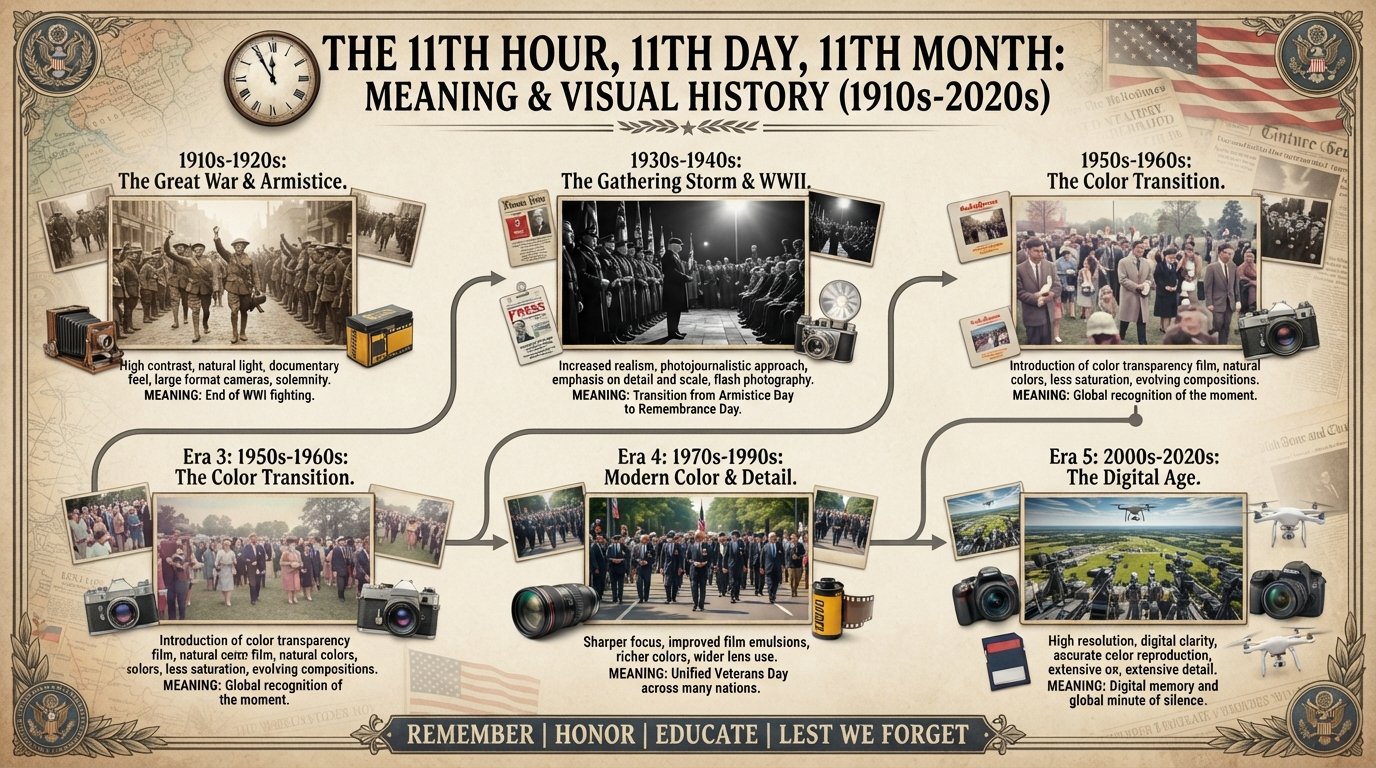
November 11 matters because it is the date the guns fell silent on the Western Front in 1918. At the 11th hour of the 11th day of the 11th month, the armistice between the Allied nations and Germany went into effect, ending the fighting of World War I. For that reason, November 11, 1918, is generally regarded as the end of “the war to end all wars.”

That single moment—11 a.m. on November 11, 1918—became the foundation for a national day of remembrance. What began as Armistice Day, honoring the veterans of World War I, evolved into Veterans Day, a day to honor all who have served in the U.S. Armed Forces.

For veterans, November 11 is more than a date on the calendar. It is a reminder that their service is recognized, their sacrifices are remembered, and their contributions to national security are appreciated—not just by the military, but by the nation they served.
The 11th Hour of the 11th Day of the 11th Month
The phrase “the 11th hour of the 11th day of the 11th month” refers to the exact moment the armistice ending World War I took effect: 11:00 a.m. on November 11, 1918. The armistice was signed at 5:00 a.m. that morning in a railway carriage at Compiègne, France, and called for a ceasefire effective at 11 a.m. that day.
What Happened on November 11, 1918
| Time | Event |
|---|---|
| 5:00 a.m. | Armistice signed at Compiègne, France |
| 5:10 a.m. | Armistice agreed to come into effect at 11 a.m. |
| 11:00 a.m. | Guns of the Western Front fell silent |
| Afternoon | Impromptu parades, shops closed, celebrations began |
The armistice agreement was signed by German government minister Matthias Erzberger and Allied representatives. It called for a complete cessation of hostilities on land, sea, and air. The initial armistice was set to last 36 days but was repeatedly extended until the Treaty of Versailles was signed on June 28, 1919.
Fighting continued right up to 11 a.m. on November 11. The last hours of World War I were marked by intense combat as both sides launched full-scale offensives until the final minute of the agreed ceasefire. Approximately 11,000 casualties were suffered on the final day alone.
Veterans May Qualify for Extra Benefits
Check available financial assistance, healthcare programs and other opportunities that may apply to you.
Check EligibilityWhen news of the armistice spread, celebrations erupted across the United States and Allied nations. Impromptu parades were held, shops closed for the day, and Americans gathered to mark the end of the deadliest conflict the world had yet seen.
From Armistice Day to Veterans Day: How November 11 Evolved
November 11 was first proclaimed Armistice Day by President Woodrow Wilson in November 1919. In his proclamation, Wilson called on Americans to observe the day with “solemn pride in the heroism of those who died in the country’s service and with gratitude for the victory.”
Timeline: How November 11 Became Veterans Day
| Year | Event |
|---|---|
| 1918 | Armistice ends World War I on November 11 |
| 1919 | President Wilson proclaims first Armistice Day |
| 1921 | Unknown Soldier buried at Arlington National Cemetery |
| 1926 | Congress passes resolution for annual observance |
| 1938 | November 11 becomes a legal federal holiday |
| 1947 | First Armistice Day parade honoring all veterans (Birmingham, AL) |
| 1954 | Congress renames Armistice Day to Veterans Day |
| 1968 | Uniform Holiday Bill moves observance to fourth Monday of October |
| 1971 | New date takes effect, causing widespread confusion |
| 1975 | President Ford signs law returning Veterans Day to November 11 |
| 1978 | November 11 observance resumes permanently |
1919: The First Armistice Day
In November 1919, President Wilson proclaimed November 11 as the first commemoration of Armistice Day. The original concept called for parades, public meetings, and a brief suspension of business beginning at 11:00 a.m. Leavenworth, Kansas, held the nation’s first parade and observance on November 11, 1919.
1921: The Unknown Soldier
On November 11, 1921, an unidentified American soldier—whose name was “known but to God”—was buried at Arlington National Cemetery. This soldier became the personification of dignity and reverence for America’s veterans. In 1958, two more unidentified fallen American soldiers from World War II and Korea were interred next to their comrade from World War I.
1926: Congressional Recognition
On June 4, 1926, Congress passed a concurrent resolution officially recognizing the end of World War I, requesting that the President issue a proclamation calling on officials to display the American flag on all government buildings on November 11. The resolution invited the people of the United States to observe the day in schools, churches, or other suitable places with appropriate ceremonies of friendly relations with all peoples.
1938: Armistice Day Becomes a Legal Holiday
An Act approved May 13, 1938, made the 11th of November in each year a legal holiday—”a day to be dedicated to the cause of world peace and to be thereafter celebrated and known as ‘Armistice Day.'” At that time, Armistice Day was primarily a day set aside to honor veterans of World War I.
1947: The Push for All Veterans
Raymond Weeks of Birmingham, Alabama, organized an Armistice Day parade in 1947 to honor veterans of all wars, not just World War I. His efforts helped build momentum for expanding the holiday’s scope.
1954: Veterans Day Is Born
In 1954, after World War II had required the greatest mobilization of military forces in the nation’s history and after American forces had fought in Korea, Congress amended the Act of 1938 by striking out the word “Armistice” and inserting the word “Veterans.” On June 1, 1954, November 11 became a day to honor American veterans of all wars. President Dwight D. Eisenhower signed the bill and called upon Americans everywhere to re-dedicate themselves to the cause of peace.
1968–1978: The Date Controversy
In 1968, Congress passed the Uniform Monday Holiday Act, which moved Veterans Day to the fourth Monday of October to create a three-day weekend. The change took effect in 1971, but it caused widespread confusion. Many states continued to observe November 11, and veterans groups strongly opposed the change. President Gerald R. Ford signed Public Law 94-97 in 1975, returning Veterans Day to November 11 beginning in 1978. The restoration preserved the historical significance of the date and helped focus attention on the holiday’s purpose: honoring America’s veterans.
November 11 vs. Memorial Day: Why the Date Still Matters
November 11 honors all who served. Memorial Day honors those who died while serving. The distinction matters because each holiday serves a different purpose.
| Aspect | Veterans Day (November 11) | Memorial Day (Last Monday in May) |
|---|---|---|
| Who Is Honored | All veterans, living and deceased | Service members who died in service |
| Primary Focus | Thanking living veterans | Mourning and remembering the fallen |
| Tone | Gratitude and appreciation | Solemn remembrance |
| Origin | Armistice ending World War I | Post-Civil War remembrance |
| Date | Fixed: November 11 | Floating: Last Monday in May |
| 2026 Date | Wednesday, November 11 | Monday, May 25 |
Veterans Day is the day set aside to thank and honor all those who served honorably in the military—in wartime or peacetime. While those who died are also remembered on Veterans Day, it is primarily a day of gratitude for living veterans. Memorial Day, by contrast, is specifically dedicated to mourning and remembering the fallen.
For veterans, November 11 is a day when the nation says “thank you” to those who came home. Memorial Day is a day when the nation pauses to remember those who did not.
The National Veterans Day Ceremony: November 11 at Arlington
The Veterans Day National Ceremony is held each year on November 11 at Arlington National Cemetery. The ceremony commences precisely at 11:00 a.m. with a wreath-laying at the Tomb of the Unknowns and continues inside the Memorial Amphitheater with a parade of colors by veterans’ organizations and remarks from dignitaries.
Ceremony Details
| Detail | Information |
|---|---|
| Location | Arlington National Cemetery, Arlington, Virginia |
| Time | 11:00 a.m. |
| First Event | Wreath-laying at Tomb of the Unknowns |
| Second Event | Ceremony in Memorial Amphitheater |
| Public Access | Open to public |
| 2026 Date | Wednesday, November 11, 2026 |
The ceremony is intended to honor and thank all who served in the United States Armed Forces. The event includes the national anthem, a color guard made up of members from each branch of the military, a Presidential wreath-laying, a parade of colors by veterans’ organizations, musical performances, and the national Veterans Day address.
The 2026 Veterans Day Poster
The 2026 Veterans Day Poster brings together the enduring symbols of the nation’s history with the continued legacy of military service, and recognizes America’s 250th anniversary. The design combines the modern American flag with an early American flag, visually connecting the founding of the United States with the generations of veterans who have defended its freedoms. The poster will be displayed in VA facilities, military installations, and municipal buildings across America, and will serve as the cover of the official program for the Veterans Day commemoration at Arlington National Cemetery on November 11, 2026.
The Bells of Peace Ceremony
The annual Bells of Peace Ceremony commemorates the millions of Americans who served in World War I. Bells ring at the 11th hour across the nation, including at the Tomb of the Unknown Soldier in Arlington National Cemetery. This tradition honors the moment the guns fell silent in 1918.
November 11 and the Moment of Silence
The Veterans Day Moment of Silence Act, signed into law on October 7, 2016, requires the President to issue a proclamation calling on Americans to observe a two-minute national moment of silence on Veterans Day at 2:11 p.m. Eastern Standard Time (11:11 a.m. Pacific).
This moment of silence is distinct from the National Moment of Remembrance observed on Memorial Day at 3:00 p.m. local time. The Veterans Day moment honors all veterans, while the Memorial Day moment specifically honors the fallen.
What November 11 Means to Military Families
November 11 is not just a day for veterans—it is a day for their families. Military families share the burden of service: deployments, moves, uncertainty, and sacrifice. Veterans Day recognizes that service is a family commitment.
For Surviving Spouses and Families
For Gold Star families and surviving spouses, November 11 carries layered meaning. It is a day of gratitude for their loved one’s service and a reminder of their loss. The VA honors Gold Star families during Veterans Day ceremonies and through benefits including:
Dependency and Indemnity Compensation (DIC): A tax-free monthly benefit for surviving spouses, children, or parents of service members who died in the line of duty. In 2026, the base monthly rate for a surviving spouse is $1,699.36.
VA Survivors Pension: A needs-based monthly benefit for qualified surviving spouses and unmarried dependent children of wartime veterans. In 2026, the VA pays the difference between income and $11,699 for an unremarried surviving spouse or unmarried child.
Burial benefits: Including burial in a national or state veterans cemetery, a government-furnished headstone or marker, and military funeral honors.
Chapter 35 education benefits: For eligible dependents of veterans who died or are permanently and totally disabled from service-connected conditions.
For Caregivers
Family caregivers of veterans often provide daily support that makes it possible for veterans to remain at home. The VA Caregiver Support Program offers resources, training, and financial assistance to eligible caregivers. November 11 is a reminder to check whether you qualify for caregiver support.
For Children of Veterans
November 11 is an opportunity for military children to understand their parent’s service. Many schools hold Veterans Day assemblies where veterans are invited to speak. Taking a child to a Veterans Day ceremony or parade can create a lasting memory and a sense of pride.
VA Benefits Every Veteran Should Know
November 11 serves as an annual reminder for veterans to check eligibility for VA benefits they may have earned but never claimed. Many veterans miss out on benefits because they assume they don’t qualify or don’t know the programs exist.
VA Disability Compensation
What it is: Monthly, tax-free payments to veterans for disabilities incurred or aggravated during military service.
Who qualifies: Veterans with a service-connected physical or mental health condition rated at 10% or higher.
2026 rates: Monthly compensation ranges from $180.42** for a veteran with a 10% rating to **$4,671.47 for a veteran rated at 100% with a spouse, child, and two dependent parents. Additional amounts are available for dependents and for spouses who require aid and attendance.
How to apply: Submit VA Form 21-526EZ online through VA.gov, by mail, or in person at a VA regional office.
Why it matters: Disability compensation provides ongoing financial support for veterans whose health was affected by service.
Special Monthly Compensation (SMC)
What it is: Additional compensation for veterans with severe service-connected injuries.
Who qualifies: Veterans who have lost the use of limbs or certain organs as a result of their service.
2026 rates: SMC payments range from $4,584.77 to $11,843.74 per month, depending on the level of loss and care needs.
VA Pension
What it is: A needs-based benefit for wartime veterans with limited income.
Who qualifies: In 2026, a veteran must be age 65 or older or permanently and totally disabled, have served during a wartime period, and meet income and asset limits.
2026 income limits: For a single veteran with no dependents, the annual income limit is $17,441**. The asset threshold is **$163,699. Veterans who require aid and attendance and have one dependent may qualify for a higher income limit of $34,488.
How to apply: Submit VA Form 21P-527EZ.
VA Health Care
What it is: Comprehensive health care through VA medical centers, clinics, and community providers.
Who qualifies: Most veterans who served active duty and were not dishonorably discharged. Veterans with service-connected disabilities rated 50% or higher receive Priority Group 1—no copays for any VA care. Veterans with no disability rating are placed in lower priority groups based on income.
How to apply: Apply online at VA.gov or by submitting VA Form 10-10EZ.
GI Bill Education Benefits
What it is: Financial assistance for education and training, including tuition, housing, and books.
Who qualifies: Veterans who served at least 90 days of active duty after September 10, 2001 (Post-9/11 GI Bill), or under other GI Bill programs.
Why it matters: The GI Bill covers college, vocational training, apprenticeships, and licensing programs.
2026 Cost-of-Living Adjustment
Veterans and survivors saw a 2.8 percent cost-of-living adjustment in 2026, tied to the Social Security Administration’s annual COLA. VA benefit increases take effect December 1 each year, meaning the higher payments are reflected in 2026 benefit checks. The 2.8 percent adjustment follows a 2.5 percent increase in 2025 and a 3.2 percent increase in 2024.
Summary: VA Benefits at a Glance
| Benefit | Who Qualifies | 2026 Amount | How to Apply |
|---|---|---|---|
| Disability Compensation | Service-connected disability rated 10%+ | $180.42–$4,671.47/month | VA Form 21-526EZ |
| Special Monthly Compensation | Severe service-connected injuries | $4,584.77–$11,843.74/month | VA Form 21-526EZ |
| VA Pension | Wartime veterans 65+ or disabled, income limits | Up to $17,441/year (single) | VA Form 21P-527EZ |
| VA Health Care | Most veterans with honorable service | No cost for Priority Group 1 | VA Form 10-10EZ |
| DIC (Survivor) | Surviving spouses/children of fallen | $1,699.36/month base | VA Form 21P-534EZ |
| Survivors Pension | Low-income surviving spouses/children | Up to $11,699/year | VA Form 21P-535 |
How November 11 Is Observed Across America
November 11 is observed through national ceremonies, local parades, school programs, restaurant discounts, retail promotions, and community events. The day emphasizes thanking living veterans for their service.
National Observances
| Event | Location | Details |
|---|---|---|
| National Veterans Day Ceremony | Arlington National Cemetery | 11:00 a.m., open to public |
| Bells of Peace | Nationwide | Bells ring at 11:00 a.m. |
| Veterans Day Moment of Silence | Nationwide | 2:11 p.m. Eastern |
| Veterans Day Regional Sites | Communities nationwide | VA-recognized observances |
State and Local Observances
All 50 states observe Veterans Day. State-level observances vary widely:
Iowa holds its official State of Iowa Veterans Day ceremony at the Iowa Veterans Cemetery, beginning at 8:00 a.m. with the Governor and Adjutant General opening the observance.
Minnesota hosts the official State Veterans Day event at the Minnesota National Guard Armory, drawing hundreds of veterans from the region.
Hawaii holds ceremonies featuring the Pledge of Allegiance, rifle volley salutes, “Taps,” and military marches.
New York illuminates state landmarks in green to honor veterans and service members.
Community Activities
| Activity | Details |
|---|---|
| Parades | Cities nationwide hold parades; many on the weekend nearest November 11 |
| Ceremonies | Wreath-laying, flag ceremonies, moments of silence |
| School Programs | Assemblies, veteran guest speakers, essay contests |
| Church Services | Special services honoring veterans |
| Flag Display | American flags flown at half-mast until noon |
| Restaurant Deals | Free meals and discounts at over 50 chains |
| Retail Discounts | Promotions at clothing, electronics, and home improvement stores |
Free Meals and Discounts
Veterans Day 2026 brings free meals and discounts at restaurants across the country. Participating restaurants typically include Applebee’s, Chili’s, Denny’s, Golden Corral, Texas Roadhouse, Buffalo Wild Wings, and many others. Most require valid military ID, VA ID card, DD-214, or other proof of service.
Important: Offers vary by location and year. Veterans should call ahead to confirm participation.
Free National Park Admission
All National Park Service sites waive entrance fees on Veterans Day, November 11, 2026. Camping, boat launches, transportation, and tours may still require fees.
The Red Poppy: A Symbol of Remembrance
The red poppy has been associated with November 11 observances since the 1920s. The tradition comes from the poem “In Flanders Fields,” written in 1915 by Canadian doctor John McCrae. Until the 1960s, veterans groups used the red poppy as the symbol of Veterans Day. For decades, veterans sold paper poppies to raise money for memorials and for the families of those who died in the war.
In Canada, Australia, and the United Kingdom, November 11 is observed as Remembrance Day, and citizens wear red poppies to honor their war dead. The poppy remains a powerful symbol of the armistice and the sacrifices it commemorates.
November 11 and Women Veterans
November 11 honors all veterans, including the approximately 1.7 million women who have served in the U.S. Armed Forces. Women make up about 11.1 percent of the total veteran population.
Each year, National Women Veterans Recognition Week is observed around November 11. Congress has designated November 5–11 as National Women Veterans Recognition Week in past years, and presidents have issued proclamations recognizing the contributions of women veterans.
The Vietnam Women’s Memorial in Washington, D.C., becomes a site for storytelling and remembrance each Veterans Day. Women veterans are encouraged to use November 11 as an opportunity to connect with VA services and benefits tailored to their needs.
Common Mistakes Veterans Make on November 11
Many veterans miss out on benefits, recognition, and support because they make avoidable mistakes. Here are the most common:
Not applying for VA benefits because you assume you won’t qualify.
Missing the appeal deadline (120 days from a VA decision letter).
Failing to attend C&P exams scheduled by VA.
Not reporting dependent changes that could increase your compensation.
Submitting incomplete forms and having to start over.
Ignoring secondary conditions connected to your service-connected disability.
Not checking state benefits that may be available in addition to federal benefits.
Failing to keep a copy of your DD-214 and other service records.
Not seeking help when experiencing mental health challenges. The Veterans Crisis Line is available by dialing 988, then pressing 1.
How to Avoid These Mistakes
Apply for benefits even if you’re unsure about eligibility. The application is free, and VA will determine eligibility.
Respond to VA requests promptly.
Keep copies of everything you submit.
Ask for help from a Veterans Service Organization (VSO) if you need assistance.
Check your state’s veterans affairs office for additional benefits.
The Appeals Process: What Veterans Should Know
If VA denies your claim, you have three appeal options. The appeals process exists to ensure veterans receive fair consideration.
Appeal Options
| Option | Description | Deadline |
|---|---|---|
| Supplemental Claim | Submit new and relevant evidence | Within 1 year of decision |
| Higher-Level Review | Request a senior reviewer to examine the decision | Within 1 year of decision |
| Board Appeal | Appeal to the Board of Veterans’ Appeals | Within 1 year of decision |
Common Mistakes in Appeals
Missing the 120-day deadline to file a Notice of Disagreement (if appealing the old way).
Not submitting new evidence with a Supplemental Claim.
Failing to request a hearing if you want to present your case in person.
Giving up after one denial when multiple appeal paths exist.
How to Observe November 11 as a Veteran
Veterans can observe November 11 by participating in ceremonies, connecting with fellow veterans, checking their benefits, and sharing their stories.
10 Meaningful Ways to Observe Veterans Day
Attend a Veterans Day ceremony at a local memorial, cemetery, or VA facility.
Participate in the national moment of silence at 2:11 p.m. Eastern.
Visit the Veterans Day National Ceremony at Arlington National Cemetery (open to the public).
Connect with fellow veterans through a VSO, veteran service organization, or local veterans group.
Check your VA benefits and apply for anything you’re missing.
Share your story with family, friends, or a younger generation.
Visit a VA hospital to spend time with fellow veterans.
Wear your veteran hat or lapel pin to show your service.
Support a veteran-owned business.
Reach out to a veteran who may be struggling. The Veterans Crisis Line is available 24/7 by dialing 988, then pressing 1.
How to Observe November 11 as a Non-Veteran
Thank a veteran for their service—a simple “thank you” matters.
Attend a parade or ceremony in your community.
Display the American flag at your home or business.
Learn about veterans’ stories and share them.
Support veterans service organizations through donations or volunteer work.
Teach children about the meaning of Veterans Day.
Common Questions
1. Why is Veterans Day on November 11?
November 11 marks the anniversary of the armistice that ended World War I in 1918. The armistice took effect at 11:00 a.m.—the “11th hour of the 11th day of the 11th month.” The date has been observed since 1919 and became a federal holiday in 1938. Veterans Day is always observed on November 11, regardless of the day of the week it falls on.
2. Is Veterans Day always on November 11?
Yes. Veterans Day is always observed officially on November 11, regardless of the day of the week. When it falls on a Saturday or Sunday, federal employees may observe the holiday on Friday or Monday, but the official date remains November 11.
3. What time did World War I end?
World War I fighting ended at 11:00 a.m. on November 11, 1918. The armistice was signed at 5:00 a.m. that morning and called for a ceasefire effective six hours later. The phrase “the 11th hour of the 11th day of the 11th month” commemorates this moment.
4. What is the difference between Veterans Day and Armistice Day?
Armistice Day was the original name of the holiday, established in 1919 to honor veterans of World War I. In 1954, Congress renamed it Veterans Day to honor all American veterans of all wars. The date remains November 11.
5. Is Veterans Day a federal holiday?
Yes. Veterans Day is one of eleven federal holidays established by 5 U.S.C. 6103. Federal government offices, post offices, and most banks are closed on November 11. The 2026 observance falls on Wednesday, November 11.
6. What is the Veterans Day Moment of Silence?
The Veterans Day Moment of Silence Act, signed into law in 2016, calls for a two-minute national moment of silence at 2:11 p.m. Eastern Standard Time (11:11 a.m. Pacific) on Veterans Day. This moment honors all veterans.
7. How is Veterans Day different from Memorial Day?
Veterans Day honors all who served, living and deceased, with a focus on thanking living veterans. Memorial Day honors military personnel who died while serving. Veterans Day is November 11; Memorial Day is the last Monday in May.
8. Do veterans get free meals on November 11?
Yes. Over 50 restaurant chains offer free meals or discounts to veterans and active-duty service members on November 11. Participating restaurants include Applebee’s, Chili’s, Denny’s, Golden Corral, and Texas Roadhouse. Valid military ID or proof of service is required.
9. Is National Park admission free on November 11?
Yes. All National Park Service sites waive entrance fees on Veterans Day, November 11, 2026. Camping, transportation, and tours may still require fees.
10. What VA benefits are available to veterans in 2026?
Veterans may qualify for VA disability compensation, VA pension, VA health care, GI Bill education benefits, and survivor benefits. Disability compensation ranges from $180.42 to $4,671.47 per month. VA pension provides up to $17,441 annually for eligible wartime veterans. Apply through VA.gov.
11. What is the National Veterans Day Ceremony?
The National Veterans Day Ceremony is held each year on November 11 at Arlington National Cemetery. It begins at 11:00 a.m. with a wreath-laying at the Tomb of the Unknowns and continues in the Memorial Amphitheater with a parade of colors and remarks from dignitaries.
12. Why do we wear red poppies on November 11?
The red poppy tradition comes from the poem “In Flanders Fields,” written by John McCrae in 1915. The poppy symbolizes remembrance of those who died in war. Veterans groups sold paper poppies for decades to raise money for veterans’ families. In Canada, Australia, and the UK, November 11 is Remembrance Day, and red poppies are worn to honor the fallen.
Key Takeaways
November 11 marks the armistice that ended World War I in 1918 at the 11th hour of the 11th day of the 11th month.
Veterans Day 2026 is Wednesday, November 11, 2026—a federal holiday honoring all who served.
The holiday began as Armistice Day in 1919 and was renamed Veterans Day in 1954 to honor all veterans.
The National Veterans Day Ceremony is held at Arlington National Cemetery at 11:00 a.m. on November 11.
The Veterans Day Moment of Silence is observed at 2:11 p.m. Eastern.
VA disability compensation in 2026 ranges from $180.42 to $4,671.47 per month, depending on rating and dependents.
VA pension pays up to $17,441 annually for eligible wartime veterans, with higher rates for aid and attendance.
VA Form 21-526EZ is used for disability compensation; VA Form 10-10EZ is used for health care.
Red poppies are worn on November 11 to honor the fallen; the tradition comes from the poem “In Flanders Fields.”
Veterans should use November 11 as a reminder to check VA benefit eligibility and apply for benefits they may have earned but not claimed.
Official Resources
U.S. Department of Veterans Affairs (VA): va.gov
Veterans Day Information: department.va.gov/veterans-day
History of Veterans Day: department.va.gov/veterans-day/history-of-veterans-day
Arlington National Cemetery: arlingtoncemetery.mil
National Park Service Free Entrance Days: nps.gov
USA.gov Veterans Benefits: usa.gov/veterans-benefits
VA Benefits hotline: 1-800-827-1000
Veterans Crisis Line: Dial 988, then press 1
U.S. Office of Personnel Management (OPM): opm.gov
VA Caregiver Support Program: caregiver.va.gov




🇺🇸 IMPORTANT DISCLAIMER – Veterans Benefits Information
This site provides general information about U.S. Department of Veterans Affairs (VA) benefits for educational and informational purposes only.
- Not Official: We are NOT affiliated with, endorsed by, or connected to the U.S. Department of Veterans Affairs (VA), the Veterans Benefits Administration (VBA), the Veterans Health Administration (VHA), or any other government agency.
- No Legal/Financial Advice: The content on this website is for informational purposes only and does not constitute legal, financial, or medical advice. VA benefits rules change frequently – always consult with an accredited Veterans Service Officer (VSO) or a qualified professional for your specific situation.
- Official Sources: For official, binding information and to apply for benefits, always visit official .gov websites: VA.gov, Benefits.VA.gov, or SSA.gov.
- No Data Collection: This site does not collect, store, or process any personal information. It does not have login forms, contact forms, or any system to capture user data. We never ask for your Social Security Number, bank details, or any personal information.
- 🚨 Scam Alert: The VA and other government agencies never charge fees for benefit applications. If anyone asks for money to "process" your VA claim, it is a scam. Report it to the VA Office of Inspector General at VA.gov/OIG.
- Advertising: This site uses third-party advertising (Adsterra) to cover operational costs. We do not endorse or guarantee any products or services advertised.
📌 Information provided as of June 2026. Always verify current eligibility and rules with official .gov sources.
This site is not affiliated with the U.S. Department of Veterans Affairs or any government agency. All information is for educational purposes only. Please visit VA.gov for official information.
