

Understanding VA Home Loans
VA home loans are a type of mortgage designed specifically to benefit veterans, active-duty service members, and certain eligible surviving spouses. The primary purpose of these loans is to provide a viable pathway to homeownership for those who have served in the military. A standout feature of VA loans is that they do not require a down payment, which significantly lowers the upfront costs associated with purchasing a home. This feature, coupled with competitive interest rates, makes VA loans an attractive option for many veterans.
To qualify for a VA home loan, applicants must meet specific eligibility requirements. Generally, this includes having served for a minimum period in the military and having received an honorable discharge. The process often involves obtaining a Certificate of Eligibility (COE), which verifies a borrower’s service and eligibility status. This document is essential as it helps lenders understand the borrower’s rights and benefits when applying for the loan.

One of the significant benefits of VA home loans is the absence of private mortgage insurance (PMI). For many traditional loans, especially those with lower down payments, lenders require PMI to protect against default. However, VA loans do not have this requirement, which can lead to substantial savings over the life of the loan. Furthermore, the VA provides favorable loan terms, including lower interest rates compared to conventional loans, which is a crucial aspect for veterans seeking financial relief and stability.

With these benefits, VA home loans not only facilitate access to homeownership but also help veterans build equity in a manner that aligns with their service. These loans are designed to meet the unique needs of service members and can be a pivotal component of financial support for those transitioning to civilian life.
Current VA Home Loan Rates in Washington
As of 2026, navigating the landscape of VA home loan rates in Washington, VA, provides insights essential for veterans considering home purchase or refinancing options. The average rates for 30-year purchase loans have shown a slight fluctuation, reflecting broader economic trends as well as local developments. In comparison to national averages, the rates in Washington often align closely with the overall market yet may present unique characteristics depending on regional demand and loan volume.
For 2026, the average VA loan rate for a 30-year fixed mortgage in Washington sits at approximately 3.25%. This figure represents a competitive option for veterans, particularly when compared to the national average, which is currently around 3.5%. The rate comparisons highlight the favorable lending landscape available to veterans in the region, aimed at facilitating homeownership.
Moreover, refinancing options are also attractive for veterans in Washington, with average rates for 30-year refinances hovering around 3.2%. These rates not only offer potential cost savings for existing homeowners but also allow veterans to streamline their finances. It is noteworthy that these VA loan rates vary slightly depending on the lending institution, borrower credit profile, and other individual factors.
Veterans May Qualify for Extra Benefits
Check available financial assistance, healthcare programs and other opportunities that may apply to you.
Check EligibilityUnderstanding the nuances of VA home loan rates in Washington is crucial for veterans seeking to optimize their mortgage options. By comparing local rates to national figures, veterans can gauge the effectiveness of their lending choices. Evaluating these rates alongside other financial products will provide a more comprehensive understanding of their potential commitment and eventual savings.
Understanding VA Funding Fees
The VA funding fee is a crucial component of the VA home loan program, designed to help offset the costs of the loan features provided to veterans. This fee is typically applied as a percentage of the loan amount and plays an important role in determining the overall expense associated with securing a VA loan. Understanding this fee structure is essential for borrowers looking to finance their homes using VA-backed loans.
Traditionally, all veterans who are applying for a VA loan are required to pay the funding fee. The amount of the fee can vary based on several factors, such as the type of loan, the size of the down payment, and whether the veteran has previously used a VA loan. For first-time users of the VA loan benefits without a down payment, the funding fee is generally set at 2.3%. However, with a larger down payment, this rate can decrease. For subsequent use of the benefits, the fee increases, reflecting the increased risk to the lender.
It is critical for veterans to be aware that certain exceptions exist, particularly for those with service-connected disabilities. Specifically, veterans who are receiving compensation for such disabilities are exempt from paying the VA funding fee, significantly easing their financial burden in acquiring a home. Additionally, the surviving spouses of service members who have died in the line of duty, or as a result of service-related disabilities, are also exempt from this fee.
Overall, understanding the VA funding fee structure is essential for prospective homeowners utilizing VA loans in Washington, VA. These fees can considerably impact the total cost of the mortgage; thus, being informed allows veterans to make educated and effective financial decisions as they navigate the home-buying process. In conclusion, having a clear grasp of these fees and the available exemptions is beneficial to ensuring a more manageable and affordable path to homeownership.
Benefits of VA Loans for Washington Veterans
VA loans offer numerous benefits that can significantly impact the financial outlook of veterans living in Washington. One of the most notable advantages is the absence of a down payment requirement, which allows veterans to purchase homes without needing to save a large sum of money. This feature is particularly crucial in a competitive housing market, where the costs associated with buying a home can be prohibitively high.
Additionally, VA loans typically come with lower interest rates than conventional loans. This reduction in rates can lead to substantial monthly savings and reduce the overall financial burden on veterans. With the potential for better terms and conditions compared to standard mortgage options, many veterans may find that VA loans are a more financially sound choice.
Another key advantage is the elimination of private mortgage insurance (PMI), which is a standard requirement for most low-down-payment mortgages. By not requiring PMI, VA loans not only lower monthly payments but also enhance the affordability of homeownership for veterans. This can make it easier for them to budget for other expenses, contributing positively to their overall financial health.
Furthermore, VA loans provide veterans the option for flexible credit score requirements. This inclusivity means that even those with less-than-perfect credit can often secure a loan, thus opening the door to homeownership for a broader spectrum of veterans.
In essence, the collective benefits of VA loans in Washington enable veterans to invest in homes with greater ease and affordability, thereby fostering better financial stability for the future. By taking advantage of these unique characteristics, veterans can achieve their homeownership goals and secure financial peace of mind for themselves and their families.
Tips for Securing the Best VA Loan Rate
Securing the best possible VA home loan rates requires careful planning and informed decision-making. One of the most critical factors is maintaining a healthy credit score. Lenders typically assess your creditworthiness through your score, and a higher score can significantly enhance your chances of obtaining lower interest rates. Veterans should regularly monitor their credit report for inaccuracies and work to clear any outstanding debts. Ensuring timely payments for current loans and credit cards also plays a vital role in preserving a healthy credit history.
Another essential tip is to shop around for lenders. VA loans are offered by various financial institutions, so comparing rates, fees, and terms among multiple lenders can lead to favorable outcomes. It is prudent to obtain quotes from at least three to four lenders before making a decision. This practice not only provides a clearer picture of market rates but also enables veterans to explore the various loan options available including fixed-rate and adjustable-rate mortgages.
Additionally, understanding the importance of different loan features is crucial in securing the best rates. For instance, veterans should consider the loan term, as longer terms usually result in lower monthly payments, albeit at a higher overall cost. Conversely, short-term loans may have higher monthly expenses but can save money on interest in the long run. Another significant aspect to evaluate is whether to pay for discount points upfront to lower the overall interest rate. Each point typically equals one percent of the total loan amount and can lead to savings over the loan’s lifespan.
Ultimately, a combination of maintaining a healthy credit score, diligent lender comparison, and thorough understanding of loan features will empower veterans to secure advantageous VA home loan rates in Washington, VA.
The Role of Credit Scores in VA Loans
Credit scores play a critical role in determining the rates offered for VA home loans in Washington, VA. While VA loans are particularly beneficial as they often require no down payment and come with favorable terms, lenders still consider credit scores to assess the risk of lending. Most lenders will favor borrowers with higher credit scores, as a higher score generally indicates a responsible borrowing history and a lower likelihood of default.
The minimum credit score required to qualify for a VA loan can vary depending on the lender. However, a common benchmark is a score of 620. Borrowers with credit scores at or above this threshold are more likely to secure a VA mortgage with advantageous rates. Nevertheless, it is essential to remember that these numbers can change; therefore, potential homebuyers should check with various lenders for their specific requirements.
Improving one’s credit score is a proactive strategy that can lead to better loan terms. Borrowers can enhance their credit scores through several methods. First, making timely payments on existing debts can significantly boost credit ratings, as payment history constitutes a significant portion of the credit score calculation. Additionally, reducing overall debt levels, particularly high credit card balances, can also positively impact credit scores. Potential borrowers should also ensure they regularly check their credit reports for any inaccuracies, which can sometimes lower scores unfairly. By addressing such discrepancies and taking the necessary steps to improve credit standing, homebuyers can position themselves to obtain more favorable VA loan rates.
In conclusion, understanding the role of credit scores in VA loans is essential for borrowers seeking to navigate the lending landscape effectively. By focusing on improving creditworthiness, prospective VA loan recipients can achieve better financing options in Washington, VA.
Streamlining with an IRRRL Refinance
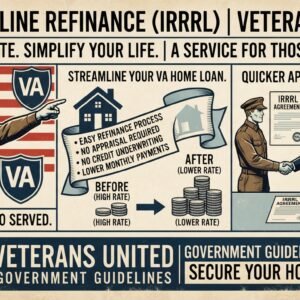
The Interest Rate Reduction Refinance Loan (IRRRL) is a specialized option designed to assist veterans in refinancing existing VA loans. This program aims to lower monthly payments by taking advantage of lower interest rates available in the current market. By utilizing an IRRRL refinance, veterans can convert their existing loans into more manageable financial obligations, thereby enhancing their economic stability.
One of the principal benefits of pursuing an IRRRL is the simplicity of the process. Unlike traditional refinancing options, the IRRRL allows veterans to bypass extensive documentation requirements, diminishing the time and effort typically involved in refinancing. This streamlined approach is particularly beneficial for those who may be pressed for time or seeking to minimize their paperwork load.
To qualify for an IRRRL, veterans must meet certain eligibility criteria. Firstly, the borrower must already have an existing VA loan. Additionally, the new loan must offer a tangible benefit such as a lower interest rate or a change in loan terms that enables better affordability. Importantly, there is typically no requirement for a new appraisal or a significant credit check, thus facilitating a quicker turnaround for veterans seeking refinancing options.
The IRRRL not only helps to reduce monthly payments but can also shorten the loan duration, thus allowing veterans to pay off their homes more rapidly. This flexibility can significantly improve the financial outlook for many servicemen and women, presenting a viable path to homeownership stability. Engaging in the IRRRL process warrants consideration for any veteran interested in achieving lower payments or altering their loan terms for financial advantage.
In conclusion, the IRRRL presents an accessible and beneficial refinancing solution for veterans in Washington, VA, looking to optimize their existing VA loans.
Calculating Loan Limits for Washington Veterans
Understanding the loan limits applicable to veterans in Washington is a crucial aspect of navigating the VA home loan process. Each year, these limits are assessed based on the conforming loan limits set by the Federal Housing Finance Agency (FHFA). For 2026, the maximum loan limit for veterans in Washington can be influenced by various factors, including the region’s housing market and whether veterans have full entitlement.
The concept of full entitlement is significant because it allows eligible veterans to access higher loan amounts without needing a down payment. Veterans with their full entitlement can borrow up to the conforming loan limit without facing any restrictions on the amount they can borrow. This aspect makes VA loans particularly appealing, as it enables veterans to secure financing that aligns with the current market conditions without the constraints typically found in conventional loans.
For veterans in Washington, the loan limits can also vary based on the specific county due to differing real estate markets throughout the state. For instance, in high-cost areas, the loan limits may be set higher than in counties with more affordable housing options. Knowing the specific loan limit for one’s location can help veterans plan better and make informed decisions when seeking a mortgage.
Moreover, if a veteran has lost some of their entitlement due to a previous VA loan default, understanding how this impacts their borrowing capacity is vital. In such cases, the remaining entitlement can be used to calculate the maximum amount they can borrow, and this may require careful assessment to ensure eligibility for the desired loan amount.
By comprehensively analyzing these factors, veterans in Washington can navigate the VA loan limits effectively, enabling them to make well-informed choices regarding home financing.
Starting Your VA Loan Journey
Embarking on the journey to secure a VA home loan is a significant step for veterans seeking to achieve homeownership in Washington, VA. The process begins with obtaining a Certificate of Eligibility (COE), a document that confirms a veteran’s eligibility for VA benefits. This certificate can be requested through the VA’s eBenefits portal, via mail, or with the help of a lender who may assist in obtaining it on the veteran’s behalf. The application for the COE requires basic information about the service member, including their service history and discharge status.
Once the Certificate of Eligibility is acquired, the next step involves researching and identifying lenders who are authorized to issue VA loans. It is advisable to compare multiple lenders since rates, fees, and customer service can vary significantly. Many veterans find it beneficial to consult with a loan officer who specializes in VA loans, as they can provide valuable insights into the nuances of the loan process, including the specific requirements needed to qualify for a VA loan.
Understanding the application process is crucial for veterans as it can vary depending on the lender. Typically, the application will require financial documentation, such as income verification, credit history, and any outstanding debts. Veterans should prepare to disclose information regarding their financial situation comprehensively, as this will help lenders assess their loan eligibility more effectively. After submitting the application, the lender will conduct underwriting to evaluate the risks associated with the loan. It is at this stage that the loan is processed, and any necessary adjustments may be made based on the veteran’s financial profile.
By following these steps, veterans can navigate the VA loan application process with greater confidence and clarity, ensuring they are well-prepared to secure the financing needed for their home in Washington, VA.

🇺🇸 IMPORTANT DISCLAIMER – Veterans Benefits Information
This site provides general information about U.S. Department of Veterans Affairs (VA) benefits for educational and informational purposes only.
- Not Official: We are NOT affiliated with, endorsed by, or connected to the U.S. Department of Veterans Affairs (VA), the Veterans Benefits Administration (VBA), the Veterans Health Administration (VHA), or any other government agency.
- No Legal/Financial Advice: The content on this website is for informational purposes only and does not constitute legal, financial, or medical advice. VA benefits rules change frequently – always consult with an accredited Veterans Service Officer (VSO) or a qualified professional for your specific situation.
- Official Sources: For official, binding information and to apply for benefits, always visit official .gov websites: VA.gov, Benefits.VA.gov, or SSA.gov.
- No Data Collection: This site does not collect, store, or process any personal information. It does not have login forms, contact forms, or any system to capture user data. We never ask for your Social Security Number, bank details, or any personal information.
- 🚨 Scam Alert: The VA and other government agencies never charge fees for benefit applications. If anyone asks for money to "process" your VA claim, it is a scam. Report it to the VA Office of Inspector General at VA.gov/OIG.
- Advertising: This site uses third-party advertising (Adsterra) to cover operational costs. We do not endorse or guarantee any products or services advertised.
📌 Information provided as of June 2026. Always verify current eligibility and rules with official .gov sources.
This site is not affiliated with the U.S. Department of Veterans Affairs or any government agency. All information is for educational purposes only. Please visit VA.gov for official information.
