

Introduction to VA Home Loans in Arizona
Veterans and active-duty service members in Arizona are afforded unique opportunities when it comes to home financing, largely thanks to the VA home loan program. This initiative, backed by the U.S. Department of Veterans Affairs, aims to provide eligible individuals with the necessary resources to purchase, build, or improve homes without the burdens typically associated with conventional mortgages. Understanding the significance of VA home loans is essential for veterans looking to make a smart investment in real estate.
One of the most notable features of the VA home loan program is the elimination of the down payment requirement. This benefit is particularly advantageous for many veterans in Arizona, where the cost of living can pose a substantial barrier to homeownership. By facilitating access to housing without the prerequisite of a sizable upfront payment, the program aims to support veterans in establishing their roots in the communities they serve.

In addition to the absence of a down payment, VA home loans also distinguish themselves through the absence of private mortgage insurance (PMI). Typically, conventional loans necessitate PMI when the borrower’s down payment is less than 20%, which can substantially increase monthly payments. However, with VA loans, veterans can secure financing without incurring these additional costs, ultimately leading to greater affordability in their monthly obligations.

The VA home loan program extends beyond mere financial advantages; it also provides veterans a pathway to homeownership that recognizes their service. By focusing on their unique needs, these loans serve not only as a financial tool but also as a means to honor their commitment to the country. As such, the importance of VA home loans in Arizona cannot be overstated, representing both a practical solution for housing and a tribute to those who have served.
Current VA Home Loan Rates in Arizona
As of August 2026, the VA home loan interest rates in Arizona range from 5.984% to 6.24% for a 30-year fixed loan. This variation illustrates the competitive nature of the market for VA loans, which are designed specifically for veterans, active-duty service members, and certain members of the National Guard and Reserves. The rates offered on these loans can differ based on a number of influencing factors.
One significant factor impacting VA home loan rates is the overall economic environment, including the prevailing interest rates set by the Federal Reserve. Changes in these rates can lead to variations in the mortgage rates that lenders offer. Additionally, the broader economic landscape, including inflation rates and housing market trends, can also play a crucial role in determining the rates available to borrowers.
Another aspect that affects VA loan interest rates in Arizona is the individual borrower’s credit score and financial profile. Lenders typically assess a borrower’s creditworthiness when deciding the interest rate to offer. Higher credit scores generally lead to more favorable interest rates being available. Furthermore, the loan-to-value ratio and the amount of the down payment can also influence the interest rate offered on a VA home loan.
Veterans May Qualify for Extra Benefits
Check available financial assistance, healthcare programs and other opportunities that may apply to you.
Check EligibilityIn addition, lenders may have their own unique policies and guidelines that affect their individual interest rates for VA loans. Some lenders might specialize in VA loans and could offer competitive rates and fees compared to others. It is essential for borrowers to shop around and compare different lenders to secure the best possible rate.
Understanding the current VA home loan rates and the various factors that can influence them is vital for prospective homeowners in Arizona. By being aware of these dynamics, veterans and service members can make informed decisions about their financing options when purchasing a home.
Benefits of VA Home Loans for Arizona Veterans
VA home loans offer numerous advantages tailored specifically for Arizona veterans, significantly easing the financial burden associated with purchasing a home. One of the most notable benefits is the absence of a required down payment. Traditional mortgage loans typically necessitate a substantial upfront payment, which can be a barrier for many potential homeowners. In contrast, veterans utilizing VA loans can secure financing without the need for any down payment, allowing them to purchase their homes with greater accessibility.
Another crucial benefit of VA home loans is the exemption from private mortgage insurance (PMI). In standard lending scenarios, borrowers who make a down payment of less than 20% must pay PMI to protect lenders in case of defaults. For veterans, however, the VA home loan program eliminates this requirement, thus resulting in monthly savings that can significantly improve one’s financial situation. This feature is particularly advantageous for those who may not have large savings yet wish to invest in real estate.
Moreover, VA home loans typically offer competitive interest rates compared to conventional mortgages. Lenders understand the veterans’ circumstances and provide favorable terms, which translates to lower monthly payments and reduced overall interest costs over the life of the loan. Additionally, the VA guarantees a portion of the loan, limiting the risk for lenders, and facilitating better lending terms for veterans.
The associated benefits extend beyond just financial support. The process of obtaining a VA home loan is often more streamlined than conventional loans, with reduced fees and less stringent credit score criteria. Arizona veterans can, therefore, achieve homeownership more efficiently. Collectively, these advantages position VA home loans as a compelling option for those who have served, making it easier for them to establish a stable home in Arizona.
Exemptions for Service-Connected Disabilities
Veterans who have been awarded a 10% service-connected disability rating qualify for certain exemptions, which can significantly influence their financial obligations when utilizing VA home loans. One of the most notable benefits is the exemption from the VA funding fee, a cost that usually accompanies VA loans unless otherwise waived.
The VA funding fee is typically a percentage of the total loan amount, which helps to offset the program’s costs to taxpayers. However, veterans who are rated at 10% or higher due to their service-related disabilities are exempt from this fee. This exemption alleviates a substantial burden and lowers the overall cost of obtaining a mortgage. For instance, for a loan amount of $250,000, the VA funding fee could ordinarily range between 1.4% and 3.6%, translating into savings that could reach several thousand dollars depending on the exact fee rate applied for the loan type.
Furthermore, the absence of the VA funding fee can have a ripple effect on the overall affordability of the loan. Without this added expense, veterans may find themselves more capable of securing a loan with preferable terms or accessing a larger loan amount without exceeding their budget. This exemption not only encourages homeownership among veterans but also acknowledges and supports their service.
In addition to the funding fee exemption, veterans with service-connected disabilities might also be eligible for other benefits such as potential property tax exemptions, which can further decrease the financial burden associated with purchasing a home. Understanding and leveraging these exemptions can help veterans make informed decisions, maximizing their financial benefits when considering home loans.
Understanding VA Loan Limits in Arizona
The VA home loan program offers significant benefits to veterans, including the potential for purchasing homes without the requirement of a down payment. However, an essential aspect that service members and veterans need to understand is the concept of entitlements and how they affect loan limits in Arizona. VA loan limits in Arizona can be categorized into two types: full and partial entitlement.
Full entitlement allows VA borrowers to access home loans without a limit on the amount they can borrow. This is particularly beneficial in high-cost areas, such as parts of Arizona. Since there is no cap associated with full entitlement, veterans can secure financing for homes valued well above the standard limits. This means they can pursue properties that fit their needs without the constraints typically imposed by other types of loans.
In contrast, partial entitlement applies to veterans who have previously utilized a portion of their VA loan benefits. In Arizona, those with partial entitlement face specific loan limits. As of 2026, the baseline loan limit for partial entitlement is $832,750. This figure represents the highest amount a lender can issue under a VA loan for those who have already used some of their benefits. Veterans with partial entitlement must take into account their remaining entitlement to ensure that they do not exceed the borrowing limits set forth by the VA.
The distinction between full and partial entitlement is crucial for borrowers in Arizona. Understanding these differences can greatly influence a veteran’s home-buying strategy and financing options. Whether one is eligible for a full entitlement or has partial entitlement, it is imperative to consult with knowledgeable lenders who can provide detailed information tailored to individual circumstances and the unique housing market of Arizona.
Strategies for Securing the Best VA Home Loan Rate
For veterans looking to secure a favorable VA home loan rate, there are several strategies to consider that can significantly enhance the likelihood of obtaining a competitive interest rate. One of the most effective approaches is to compare multiple lenders. Since different lenders offer varying rates and terms on VA home loans, shopping around can provide a more comprehensive view of what is available in the market. Utilize online tools or consult with a mortgage broker who specializes in VA loans to identify lenders that offer the best options based on your specific financial situation.
Another critical factor in securing the best VA home loan rate is maintaining a good credit score. Lenders assess creditworthiness to determine interest rates and loan terms; thus, a higher credit score typically correlates with lower interest rates. Veterans should proactively manage their credit by paying bills on time, reducing existing debt, and ensuring that there are no inaccuracies on their credit reports. It is advisable to obtain a free credit report to check for errors well before applying for the loan, allowing ample time to resolve any potential issues.
Additionally, veterans may want to explore refinancing options. If interest rates have decreased since securing the initial VA home loan, refinancing can lead to substantial savings. A lower interest rate can significantly reduce monthly payments and overall loan costs. It is essential to analyze closing costs and ensure that the long-term benefits of refinancing outweigh the initial expenses. Engaging with a knowledgeable financial advisor who understands VA loans can provide valuable insights into whether refinancing is the right move.
By implementing these strategies—comparing various lenders, maintaining a healthy credit score, and considering refinancing options—veterans can position themselves advantageously in securing the best possible VA home loan rates available in 2026.
IRRRL Streamline Refinancing for Existing VA Loans
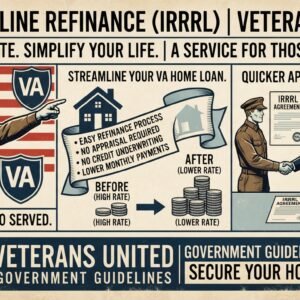
The Interest Rate Reduction Refinance Loan (IRRRL) is a noteworthy option available to veterans who currently hold VA loans. This specific refinancing mechanism is designed to simplify the process of securing lower interest rates on existing VA loans, providing significant financial benefits to eligible veterans. One of the principal advantages of the IRRRL is its streamlined nature, allowing for an expedited refinance process with reduced documentation requirements.
The IRRRL enables veterans to switch from an adjustable-rate mortgage (ARM) to a fixed-rate loan or refinance from one fixed-rate loan to another. This flexibility helps ensure that borrowers can secure a more favorable loan structure that aligns with their financial goals. Moreover, the reduction in monthly payments can enhance financial stability for veterans, offering them a means to reallocate funds toward other essential expenses or savings.
Another key benefit of the IRRRL is that it does not require an appraisal on the property, which is typically a requirement in traditional refinancing scenarios. This absence of an appraisal can significantly expedite the process, minimizing delays and allowing veterans to take advantage of lower rates more swiftly. Additionally, the funding fee associated with the IRRRL may also be lower than that of other refinancing options, further contributing to its appeal.
Veterans engaging in the IRRRL process will also find that there is no need to verify income or employment status, provided their current mortgage is already a VA loan. These relaxed requirements represent a significant advantage for many borrowers, as they can limit the amount of documentation and the time spent securing new financing.
In summary, the IRRRL stands as a valuable opportunity for veterans looking to capitalize on improved market conditions and reduce their home loan costs. It is advisable for veterans to consult with a knowledgeable mortgage lender to explore their potential eligibility for this streamlined refinancing option, ensuring they make informed financial decisions regarding their VA loans.
Obtaining Your VA Certificate of Eligibility
Securing a VA Certificate of Eligibility (COE) is a crucial step for veterans seeking to access benefits related to the VA home loan program. This document proves to lenders that an individual is eligible for VA financing, which may offer favorable terms and interest rates compared to traditional loans. To obtain your COE, you should begin by gathering the necessary documentation that verifies your military service. This includes your discharge papers or any service records that indicate active duty status.
There are three primary methods to apply for a COE: online, by mail, or through your lender. The most efficient way is to utilize the VA’s online application system. You can access this service via the official VA website, va.gov. This platform allows veterans to apply for their certificate conveniently and securely. When using this online method, you’ll need to create an account and provide your personal information, including your Social Security number and details of your military service.
If you prefer a traditional approach, you can apply by completing VA Form 26-1880 and sending it to the appropriate regional loan center. This method can take longer due to processing times associated with mail. For those working with a lender that participates in the VA loan program, the lender might assist in obtaining the COE on your behalf. They can submit the necessary information to the VA, streamlining the process for you.
Once your application is submitted through any of these channels, the VA will process it, typically within a few days if applied online or several weeks if submitted by mail. You’ll receive a confirmation regarding your eligibility status, which can then be used to move forward with your home loan application. Make sure to keep your certificate in a safe place, as it may be required when dealing with lenders.
In conclusion, obtaining a VA Certificate of Eligibility is a straightforward process, whether online, by mail, or through your lender. Utilizing the resources available on va.gov can greatly assist in ensuring that your application is submitted correctly and efficiently.
Conclusion and Final Thoughts
Understanding VA home loan options and rates is paramount for veterans in Arizona seeking to secure financing for their homes. As the landscape of home financing evolves, particularly in 2026, it becomes increasingly important for veterans to stay informed about the various benefits available to them. VA home loans present a unique opportunity, as they typically offer favorable terms and conditions that may not be available through conventional financing methods.
Veterans should take advantage of the resources accessible to them, including VA-approved lenders, financial advisors, and educational workshops focused on VA loans. These resources not only provide valuable insights into current loan rates but also assist veterans in navigating the complexities of the housing market. It is advisable for veterans to conduct thorough research and compare different loan options to identify what best meets their financial situation and homeownership goals. Understanding the specifics—such as interest rates, fees, and eligibility requirements—can lead to substantial savings and better financial outcomes.
Moreover, engaging with local veteran support organizations can also enhance one’s understanding of available benefits. These groups often have the latest information on loan programs, financial assistance, and even tips on managing mortgage applications effectively. Empowering oneself with knowledge facilitates informed decision-making, which is crucial in an ever-changing housing environment.
In conclusion, Arizona veterans are encouraged to explore and understand their VA home loan options thoroughly. By leveraging available resources and making informed decisions, veterans can significantly improve their chances of obtaining favorable financing for their homes. This proactive approach will not only aid in achieving homeownership but will also contribute to long-term financial security for veterans and their families.


🇺🇸 IMPORTANT DISCLAIMER – Veterans Benefits Information
This site provides general information about U.S. Department of Veterans Affairs (VA) benefits for educational and informational purposes only.
- Not Official: We are NOT affiliated with, endorsed by, or connected to the U.S. Department of Veterans Affairs (VA), the Veterans Benefits Administration (VBA), the Veterans Health Administration (VHA), or any other government agency.
- No Legal/Financial Advice: The content on this website is for informational purposes only and does not constitute legal, financial, or medical advice. VA benefits rules change frequently – always consult with an accredited Veterans Service Officer (VSO) or a qualified professional for your specific situation.
- Official Sources: For official, binding information and to apply for benefits, always visit official .gov websites: VA.gov, Benefits.VA.gov, or SSA.gov.
- No Data Collection: This site does not collect, store, or process any personal information. It does not have login forms, contact forms, or any system to capture user data. We never ask for your Social Security Number, bank details, or any personal information.
- 🚨 Scam Alert: The VA and other government agencies never charge fees for benefit applications. If anyone asks for money to "process" your VA claim, it is a scam. Report it to the VA Office of Inspector General at VA.gov/OIG.
- Advertising: This site uses third-party advertising (Adsterra) to cover operational costs. We do not endorse or guarantee any products or services advertised.
📌 Information provided as of June 2026. Always verify current eligibility and rules with official .gov sources.
This site is not affiliated with the U.S. Department of Veterans Affairs or any government agency. All information is for educational purposes only. Please visit VA.gov for official information.
