
Jordan Maynard: Veteran, IED Survivor, and Inspirational Marine
Marine Sergeant Jordan Maynard lost both legs above the knee in an IED blast in Nawa, Afghanistan, on March 23, 2011. While serving as a squad leader with the 2nd Battalion, 3rd Marines, he stepped on an explosive during a foot patrol. Despite catastrophic injuries, he remained conscious and directed his fellow Marines’ response. Maynard now lives in Arizona with his family and is a spokesperson for wounded veteran recovery.
Quick Facts
| Item | Details |
|---|---|
| Full Name | Jordan Maynard |
| Branch | U.S. Marine Corps |
| Rank | Sergeant (E-5) |
| Unit | 2nd Battalion, 3rd Marines |
| Injury Date | March 23, 2011 |
| Location of Injury | Nawa, Afghanistan |
| Injuries Sustained | Bilateral above-knee amputations, shattered left elbow, traumatic brain injury, internal injuries |
| Enlisted | 2007 |
| Deployments | Two (Afghanistan) |
| Hometown | Kingman, Arizona |
| Key VA Benefits | VA Disability Compensation, SMC, SAH Grant, Automobile Allowance, Caregiver Support |
| Official Agency | U.S. Department of Veterans Affairs (VA) |
| Updated For | 2026 |
Who Is Jordan Maynard?
Jordan Maynard is a U.S. Marine Corps veteran, IED survivor, and double amputee who has become a symbol of resilience for wounded veterans across the country. He enlisted in the Marine Corps in 2007 and deployed twice to Afghanistan, where he served as a mortar squad leader and conducted over 100 patrols with joint task forces.

On March 23, 2011, during his second deployment, Maynard was leading a foot patrol with the 2nd Battalion, 3rd Marines in Nawa, Afghanistan, when he spotted an IED and warned his patrol to stop. As he stepped back to safety, he triggered a second explosive device that had been missed moments earlier.

The blast resulted in bilateral above-the-knee amputations, a shattered elbow, numerous internal injuries, and a traumatic brain injury. Maynard was conscious throughout the ordeal and gave lifesaving instructions to his teammates before being medically evacuated. He went into cardiac arrest multiple times en route to the field hospital, requiring a resuscitative thoracotomy—manual pumping of his heart by hand.
Maynard was treated at the field hospital in Deleram, Afghanistan, then transported to Landstuhl, Germany, before arriving at Bethesda Naval Medical Center. He remained at Bethesda for a month before transferring to Balboa Naval Medical Center in San Diego to be closer to his family.
Military Service and Injury
Early Service
Jordan Maynard enlisted in the U.S. Marine Corps in 2007, fulfilling a childhood dream of serving his country. He was assigned to the 2nd Battalion, 3rd Marines and quickly distinguished himself as a capable leader, rising to the rank of Sergeant and serving as a mortar squad leader.
Deployment to Afghanistan
Maynard deployed twice to Afghanistan. During his second deployment, he was stationed in the volatile Nawa district of Helmand Province, where he conducted security operations and cleared IEDs as part of joint task force missions.
The IED Attack
Veterans May Qualify for Extra Benefits
Check available financial assistance, healthcare programs and other opportunities that may apply to you.
Check EligibilityOn March 23, 2011, Maynard was on a foot patrol when he spotted a pressure-plate IED and halted his patrol. As he stepped backward to safety, he triggered a second, undetected IED. The explosion caused catastrophic injuries. Despite being thrown through the air and immediately recognizing his legs were gone, Maynard remained conscious and directed his Marines on how to treat him and secure the area.
Medical Evacuation and Treatment
Maynard was medically evacuated by helicopter. During transport, he went into cardiac arrest multiple times. The medical crew performed a resuscitative thoracotomy to keep him alive until reaching the field hospital. He was then transported to Landstuhl Regional Medical Center in Germany before arriving at Bethesda Naval Medical Center in Maryland. After a month at Bethesda, he transferred to Balboa Naval Medical Center in San Diego, where he underwent extensive rehabilitation and was closer to his family.
Recovery and Rehabilitation
Jordan Maynard’s recovery was long and complex, involving multiple surgeries, prosthetic fittings, and intensive physical and occupational therapy. His injuries included bilateral above-knee amputations, a shattered left elbow, internal injuries, and traumatic brain injury.
At Balboa Naval Medical Center, Maynard met June, his case manager from Semper Fi & America’s Fund, an organization that became instrumental in his recovery. The fund covered expenses the VA does not, including plane tickets, specialty surgeons, and mobility devices for life.
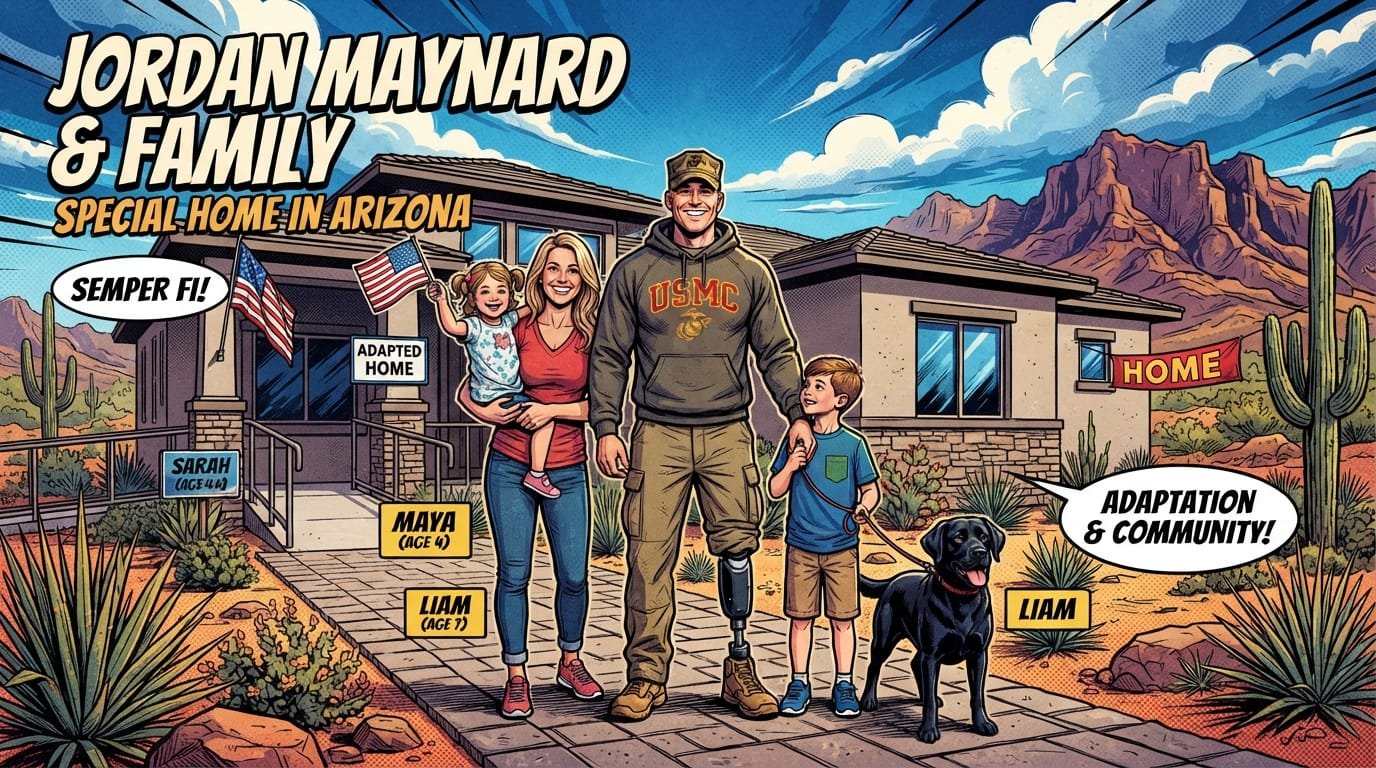
Maynard credits his son, Jay, as a source of inspiration throughout his recovery. In 2014, Homes For Our Troops (HFOT) built a specially adapted custom home for Maynard and his family in Cottonwood, Arizona. The home was designed with accessibility features to support his independence and quality of life.
In 2025, the American Legion Riders honored Maynard with a customized motorcycle through the Combat Hero Bike Build program at American Legion Post 34 in Cave Creek, Arizona. Wounded Warriors Family Support also provided the Maynard family with a vehicle grant for a new Ford F-250, which Maynard described as giving his family “the freedom to choose our path” and pursue their goals of outdoor independence away from hospitals.
VA Benefits for IED Survivors and Amputee Veterans
Veterans who sustain injuries from IED blasts, including amputations, traumatic brain injury, and PTSD, may qualify for a range of VA benefits. Below is a breakdown of the most relevant programs.
VA Disability Compensation
What it is: A tax-free monthly payment for veterans who became sick or injured during their military service, or whose existing condition was made worse by service.
Who qualifies: Veterans with a service-connected disability rated at 10% or higher. IED blast injuries, including amputations, TBI, and PTSD, are typically service-connected if they occurred during active duty.
Why it matters: This is the foundation of VA benefits for wounded veterans. For catastrophic injuries like Maynard’s, compensation is often supplemented by Special Monthly Compensation (SMC).
What to do next: File VA Form 21-526EZ (Application for Disability Compensation and Related Compensation Benefits). Provide your DD-214, medical records, and buddy statements if available.
Special Monthly Compensation (SMC)
What it is: An additional monthly payment for veterans who lost, or lost the use of, specific organs or body parts due to military service. Amputation or loss of use of limbs qualifies.
Who qualifies: Maynard’s bilateral above-knee amputations place him in a high SMC category. Veterans with amputation of both feet (below the knee), loss of use of both feet, or amputation of one foot and loss of use of the other may qualify for SMC-L rates.
Why it matters: SMC significantly increases monthly compensation for the most severely disabled veterans. In 2026, SMC-K alone pays $139.87 per month, while higher SMC levels (L through O) range from $4,900 to over $6,000 monthly.
What to do next: SMC is typically awarded automatically when VA rates your disabilities, but you can request consideration if it is not included in your rating decision.
VA Disability Compensation Rates (2026)
The 2026 COLA increase was 2.8%. Here are the basic monthly rates for a veteran alone:
| Disability Rating | Monthly Rate (Veteran Alone) |
|---|---|
| 10% | $180.42 |
| 20% | $356.66 |
| 30% | $552.47 |
| 40% | $795.84 |
| 50% | $1,135.47 |
| 60% | $1,438.62 |
| 70% | $1,812.14 |
| 80% | $2,105.14 |
| 90% | $2,364.87 |
| 100% | $3,940.02 |
Veterans with dependents (spouse, children, or dependent parents) receive higher rates.
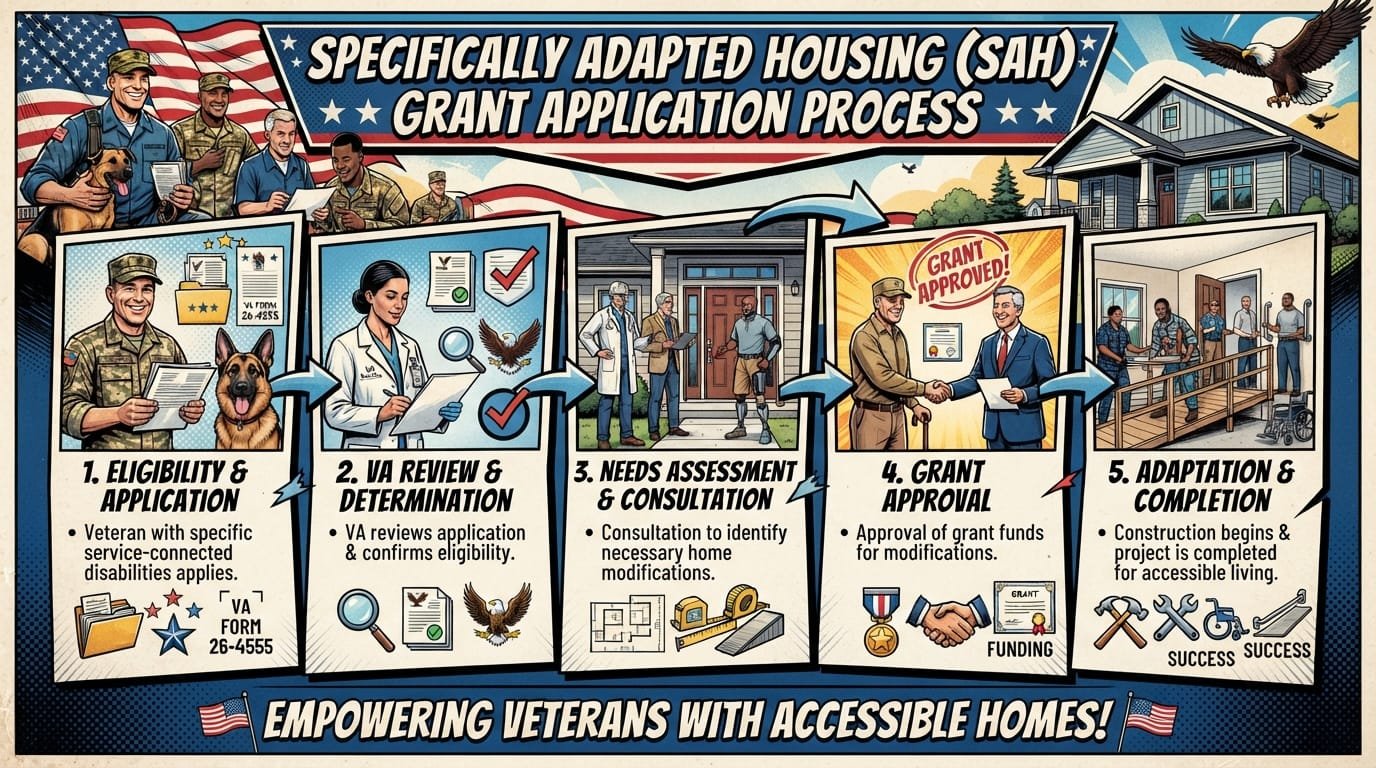
Specially Adapted Housing (SAH) Grant
What it is: A grant to help veterans with certain severe service-connected disabilities build, buy, or modify a home to meet their accessibility needs.
Who qualifies: Veterans with specific severe disabilities, including loss or loss of use of both legs, blindness plus loss of a leg, or severe burns. Maynard’s bilateral above-knee amputations qualify him for SAH benefits.
Why it matters: The FY2026 maximum SAH grant is $126,526. This grant funded the construction of Maynard’s HFOT home in Cottonwood, Arizona.
What to do next: Apply using VA Form 26-4555 (Application in Acquiring Specially Adapted Housing or Special Home Adaptation Grant).
Special Home Adaptation (SHA) Grant
What it is: A grant for veterans who need home modifications but do not qualify for SAH.
Who qualifies: Veterans with certain service-connected disabilities that require home adaptations.
Why it matters: The FY2026 maximum SHA grant is $25,350.
Automobile Allowance and Adaptive Equipment
What it is: A one-time payment of up to $27,074.99 (as of October 1, 2025) toward the purchase of a vehicle, plus funding for adaptive equipment.
Who qualifies: Veterans with service-connected loss or loss of use of one or both hands or feet, or other qualifying disabilities.
Why it matters: This benefit helps veterans regain mobility and independence.
What to do next: Apply using VA Form 21-4502 (Automobile Allowance and Adaptive Equipment Application) and VA Form 10-1394 for the adaptive equipment grant.
VA Caregiver Support Program
What it is: The Program of Comprehensive Assistance for Family Caregivers (PCAFC) provides family caregivers of eligible veterans with a tax-free monthly stipend, education and training, respite care, and access to telehealth therapy.
Who qualifies: Veterans who served after 2001 with a serious injury or illness incurred or aggravated in the line of duty that requires ongoing personal care services. The program was extended for legacy participants through September 30, 2028.
Why it matters: In 2026, caregiver stipends range from approximately $1,896 to $3,793 per month, depending on location and level of care required.
What to do next: Apply through the VA Caregiver Support Program online or by calling 855-260-3274. Veterans and caregivers can also connect with their local Caregiver Support Program Team using VA’s online locator tool.
Prosthetic and Amputation Care
What it is: VA’s Amputation System of Care (ASoC) provides coordinated, specialized care and lifelong support for veterans living with limb loss.
Who qualifies: All veterans with service-connected amputations.
Why it matters: VA operates over 140 sites for amputation specialty care, including seven Regional Amputation Centers that offer comprehensive prosthetics, rehabilitation, and community reintegration services.
What to do next: Contact your local VA medical center’s prosthetics department or ask your primary care provider for a referral to the Amputation System of Care.
Mental Health and PTSD Support
What it is: VA provides free mental health care for veterans with service-connected conditions, including PTSD, depression, and anxiety related to IED blast events.
Who qualifies: Veterans with a service-connected mental health condition, or those who served in combat zones, may qualify for free VA mental health care regardless of their disability rating.
Why it matters: IED blast survivors often experience PTSD, TBI, and other invisible wounds. VA recreational therapy programs, support groups, and evidence-based treatments like Cognitive Processing Therapy and Prolonged Exposure are available.
What to do next: Contact your local VA medical center or Vet Center. The Veterans Crisis Line is available 24/7 by dialing 988, then pressing 1.
Key VA Benefit Comparison Table
| Program | Eligible Veterans | Income Limits | Online Application |
|---|---|---|---|
| VA Disability Compensation | Service-connected disability rated 10%+ | None (compensation is not needs-based) | VA Form 21-526EZ via VA.gov |
| Special Monthly Compensation | Loss or loss of use of limbs, organs, or functions | None | Automatically considered with disability claim |
| SAH Grant | Severe mobility impairments (e.g., bilateral amputation) | None | VA Form 26-4555 via VA.gov |
| SHA Grant | Disabilities requiring home modifications | None | VA Form 26-4555 via VA.gov |
| Automobile Allowance | Loss/loss of use of hands or feet | None | VA Form 21-4502 via VA.gov |
| Caregiver Support (PCAFC) | Post-9/11 veterans with serious injury/illness | None | VA Caregiver Support Program online |
| Prosthetic Care (ASoC) | Veterans with amputations | None | Contact local VA medical center |
| Mental Health Care | Combat veterans, service-connected mental health conditions | None for combat veterans | Contact local VA or Vet Center |
Common Mistakes Veterans Make When Filing IED-Related Claims
Not filing a claim at all. Many veterans with catastrophic injuries assume their military medical records will automatically trigger benefits. In reality, a formal claim must be filed.
Failing to claim secondary conditions. IED blast survivors often develop secondary conditions such as PTSD, depression, chronic pain, or arthritis. These should be claimed as secondary to the primary injury.
Missing the intent to file deadline. Filing an intent to file preserves your effective date (and back pay) while you gather evidence.
Not providing buddy statements. For IED blast events, buddy statements from fellow service members can help corroborate the event when official records are incomplete or lost.
Not appealing a denial. If your claim is denied, you have the right to appeal. The appeals process includes supplemental claims, higher-level review, and Board of Veterans’ Appeals review.
Failing to update your claim as conditions worsen. VA ratings are not permanent. If your condition deteriorates, you can request an increased rating.
Not using a Veterans Service Organization (VSO). VSOs like the American Legion, VFW, DAV, and Wounded Warrior Project provide free assistance with claims.
Appeals Process for VA Claims
If VA denies your claim or assigns a rating lower than expected, you have options:
Supplemental Claim: Submit new and relevant evidence to support your claim. This is the fastest option if you have additional medical records or buddy statements.
Higher-Level Review: Request a senior reviewer to examine your case without new evidence.
Board of Veterans’ Appeals (BVA): Appeal directly to the BVA. You can choose a video conference, telephone, or in-person hearing.
Court of Appeals for Veterans Claims (CAVC): If the BVA denies your appeal, you can appeal to the CAVC.
For catastrophic injuries like IED-related amputations, the appeals process is rarely necessary because service connection is typically well-documented. However, the rating percentage and effective date are common points of dispute.
State Benefits for Arizona Veterans
Jordan Maynard lives in Arizona, which offers several state-level benefits for veterans:
Arizona Property Tax Exemption: Veterans with a 100% permanent and total disability rating may qualify for a full property tax exemption on their primary residence.
Arizona Veteran License Plates: Disabled veterans may qualify for special license plates.
Arizona State Veterans’ Homes: The Arizona Department of Veterans’ Services operates veterans’ homes across the state.
Arizona Veterans’ Services: State benefits counselors can assist with VA claims and benefits navigation.
Veterans should contact the Arizona Department of Veterans’ Services for more information on state-specific benefits.
Common Questions
1. Who is Jordan Maynard?
Jordan Maynard is a U.S. Marine Corps veteran from Kingman, Arizona. He served as a Sergeant with the 2nd Battalion, 3rd Marines and was severely injured by an IED in Nawa, Afghanistan, on March 23, 2011. He lost both legs above the knee, shattered his left elbow, and sustained traumatic brain injury.
2. What happened to Jordan Maynard in Afghanistan?
On March 23, 2011, during his second deployment, Maynard was leading a foot patrol when he spotted an IED and warned his squad to stop. As he stepped back, he triggered a second IED that had been missed. The blast caused bilateral above-knee amputations, a shattered elbow, internal injuries, and TBI.
3. How did Jordan Maynard survive his injuries?
Maynard remained conscious after the blast and directed his Marines on how to treat him. He was medically evacuated by helicopter, went into cardiac arrest multiple times, and required a resuscitative thoracotomy (manual heart pumping) en route to the field hospital.
4. What VA benefits does Jordan Maynard receive?
As a double amputee with TBI and other injuries, Maynard likely receives VA Disability Compensation at the 100% rate, Special Monthly Compensation (SMC), and benefits from programs including the SAH Grant, Automobile Allowance, Caregiver Support, and Prosthetic Care through VA’s Amputation System of Care.
5. What is the VA Specially Adapted Housing (SAH) grant?
The SAH grant helps veterans with certain severe disabilities build, buy, or modify a home. The FY2026 maximum is $126,526. Maynard received an HFOT home in 2014 that was funded in part through this program.
6. What is Special Monthly Compensation (SMC)?
SMC is an additional monthly payment for veterans who lost, or lost the use of, specific body parts or functions due to military service. Maynard’s bilateral above-knee amputations qualify him for a high SMC rate.
7. How much does VA disability compensation pay in 2026?
The 2026 COLA increase is 2.8%. A 100% disabled veteran without dependents receives $3,940.02 per month. Veterans with SMC receive additional compensation above their basic rate.
8. What is the VA Caregiver Support Program?
The Program of Comprehensive Assistance for Family Caregivers (PCAFC) provides a tax-free monthly stipend, training, respite care, and other supports to family caregivers of eligible post-9/11 veterans. In 2026, stipends range from approximately $1,896 to $3,793 per month.
9. How do I apply for VA disability compensation?
File VA Form 21-526EZ online at VA.gov, by mail, or in person at a VA regional office. Submit your DD-214, medical records, and any buddy statements. Filing an intent to file first preserves your effective date for back pay.
10. What should I do if my VA claim is denied?
You have three main appeal options: file a Supplemental Claim with new evidence, request a Higher-Level Review, or appeal to the Board of Veterans’ Appeals. Veterans Service Organizations can provide free assistance throughout the appeals process.
11. Does the PACT Act help IED survivors?
The PACT Act primarily expands benefits for veterans exposed to burn pits, Agent Orange, and other toxic substances. While it does not specifically target IED blast injuries, many IED survivors also qualify for PACT Act benefits if they had toxic exposures during their service.
12. What is VA’s Amputation System of Care?
The ASoC is a nationwide VA program providing coordinated, specialized care and lifelong support for veterans living with limb loss. It includes seven Regional Amputation Centers and over 140 sites offering prosthetics, rehabilitation, and community reintegration.
Key Takeaways
Jordan Maynard is a U.S. Marine Corps veteran who lost both legs above the knee in an IED blast in Nawa, Afghanistan, on March 23, 2011.
Maynard served as a squad leader with the 2nd Battalion, 3rd Marines and had deployed twice to Afghanistan before his injury.
Despite catastrophic injuries, Maynard remained conscious and directed his Marines’ response, saving lives.
He received care at Bethesda Naval Medical Center and Balboa Naval Medical Center before beginning his long-term recovery.
Veterans with IED-related amputations may qualify for VA Disability Compensation, Special Monthly Compensation (SMC), SAH/SHA grants, Automobile Allowance, Caregiver Support, and Prosthetic Care.
The FY2026 maximum SAH grant is $126,526; the SHA maximum is $25,350.
Caregiver stipends in 2026 range from approximately $1,896 to $3,793 per month.
Filing an intent to file preserves your effective date for back pay while you gather evidence.
Common mistakes include not filing a claim, not claiming secondary conditions, and not appealing denials.
Veterans Service Organizations provide free assistance with VA claims and appeals.
Official Resources
VA Disability Compensation: va.gov/disability
VA Special Monthly Compensation: va.gov/disability/compensation-rates/special-monthly-compensation
VA Specially Adapted Housing Grants: va.gov/housing-assistance/disability-housing-grants
VA Automobile Allowance: va.gov/disability/eligibility/special-claims/automobile-allowance-adaptive-equipment
VA Caregiver Support Program: caregiver.va.gov
VA Amputation System of Care: prosthetics.va.gov
VA Mental Health Services: mentalhealth.va.gov
Veterans Crisis Line: Dial 988, then press 1
Arizona Department of Veterans’ Services: dvs.az.gov
Early Life and Military Career
Jordan Maynard was born into a family that emphasized values such as discipline, integrity, and service to others. Raised in a predominantly military-oriented community, he grew up with a deep respect for those who served their country. This environment significantly influenced his decision to enlist in the Marine Corps. From an early age, Jordan exhibited a strong sense of duty and a desire to make a positive impact on the world. His dedication to physical fitness, resilience, and teamwork were cultivated during his youth, traits that would later serve him well in his military career.
As he approached adolescence, Jordan found solace and inspiration in stories of bravery and heroism from the military. This immersion in military culture, along with encouragement from family members who had served, solidified his resolve to join the Marine Corps once he reached legal age. After graduating high school, Jordan enlisted, determined to fulfill his ambition of serving in one of the most elite branches of the armed forces.
Jordan’s journey through basic training was grueling yet transformative. He faced challenges designed to test his limits, both physically and mentally. The rigorous regimen taught him essential skills, such as leadership, discipline, and combat readiness. Throughout training, he formed strong bonds with his fellow recruits, fostering a sense of camaraderie that exemplifies the Marine Corps ethos. Completing basic training established not only his identity as a Marine but also deepened his commitment to his future service.
Upon completion of training, Jordan was deployed and embarked on various missions that further refined his skills and broadened his experiences. Each operation added to his expertise and fostered a sense of responsibility and pride in serving his country. His tenure in the Marine Corps would lay the foundation for both his personal growth and the challenges he would later face.
The Incident: Surviving an IED Attack
On a fateful day during his deployment in Iraq, Jordan Maynard found himself in the midst of chaos, a soldier fulfilling his duty amidst the unpredictable dangers of war. As he and his unit embarked on a routine patrol in a high-risk area, the atmosphere was tense but routine. However, the tranquility was shattered abruptly when their vehicle struck an improvised explosive device (IED). Disguised along the roadside, the IED detonated with a violent force that not only caused a catastrophic explosion but also marked the beginning of a pivotal and harrowing chapter in Jordan’s life.
The impact of the explosion was immediate and devastating. The vehicle was engulfed in flames, and debris was scattered across the area. Jordan, whose awareness of his surroundings heightened amidst the tumult, mustered every ounce of strength to navigate through the chaos, firmly gripping his will to survive. The blast left him with serious injuries, including a traumatic brain injury, shrapnel embedded in his legs, and significant burns. In the wake of such destruction, every second counted as his fellow marines tended to the wounded and secured the vicinity from further threats.
The immediate aftermath of the incident was marked by confusion, urgency, and a profound sense of vulnerability. Jordan displayed remarkable resilience, as adrenaline coursed through his veins, spurring him onward despite the overwhelming pain. As he was airlifted to safety, the harrowing reality of his condition began to settle in. Jordan’s journey began not just as a survivor but as a determined individual who, against all odds, faced the road to recovery with unwavering courage and tenacity.
Recovery and Rehabilitation
Jordan Maynard’s recovery journey post-IED attack was marked by both physical and psychological challenges that tested his resilience. The immediate aftermath of the explosion left him not only physically injured but also grappling with a whirlwind of emotions and mental health struggles. These included post-traumatic stress disorder (PTSD), depression, and anxiety, issues that many veterans face but can often be overlooked by society. Recognizing these hurdles, Jordan initiated his path to recovery with the support of his family, friends, and his extended military community.
Throughout his rehabilitation process, Maynard leaned on extensive support systems. His family provided unwavering emotional strength, encouraging him to face each day with determination. Simultaneously, his comrades from the Marine Corps played a vital role in his recovery, reminding him that he was not alone in this struggle. Programs designed specifically for veterans, which included peer support and counseling services, were pivotal in fostering a sense of belonging and understanding.
Jordan’s rehabilitation involved a multi-faceted approach, combining both traditional and alternative therapies. Physical therapy became a cornerstone of his recovery, allowing him to rebuild his strength and regain mobility. Meanwhile, engaging in art and music therapy provided him with outlets for self-expression and healing. Adaptive sports also became a significant part of his life, offering not only physical activity but also a sense of camaraderie and competition. Through these various therapies, he found personal growth and rediscovered his passions.
Despite the challenges he faced along the way, Jordan Maynard’s determination to reclaim his life was evident. Each small victory reinforced his resilience, persuading him to embrace a future filled with hope and purpose. His journey illustrates the importance of comprehensive recovery strategies, highlighting how resilience, community support, and adaptability can lead to profound transformation.
Inspiration and Advocacy
Jordan Maynard’s journey is a testament to the human spirit’s resilience. After surviving a near-fatal incident involving an IED during his service as a Marine, Jordan has dedicated his life to transforming personal adversity into a powerful source of inspiration for others. His path to recovery was not just about physical healing; it became a mission to uplift fellow veterans and those facing similar challenges.
Motivated by his own experience, Jordan has emerged as a prominent advocate for veterans’ rights and disability awareness. He utilizes his story to shed light on the obstacles many service members encounter upon returning to civilian life. Through various speaking engagements, he conveys a message of hope and perseverance, urging individuals to believe in their capacity to overcome difficulties. His transparency about his struggles encourages others to confront and share their own challenges, fostering a supportive community.
In addition to motivational speaking, Jordan actively engages with local nonprofit organizations that focus on providing resources to disabled veterans and their families. His work involves participating in various initiatives aimed at promoting education, mental health awareness, and job training programs tailored for veterans transitioning to civilian life. By participating in community events and serving on panels, he advocates for comprehensive support systems that address the unique needs of veterans.
Jordan’s story continues to resonate within many circles, inspiring others to advocate for change. His unwavering commitment to empowering those with disabilities illustrates the profound impact one individual can have on the community. Moreover, he encourages the public to recognize veterans’ sacrifices and the importance of investing in their well-being after service. Through advocacy and his inspiring narrative, Jordan Maynard remains a beacon of strength, reminding all that resilience can pave the way for transformative paths forward.


🇺🇸 IMPORTANT DISCLAIMER – Veterans Benefits Information
This site provides general information about U.S. Department of Veterans Affairs (VA) benefits for educational and informational purposes only.
- Not Official: We are NOT affiliated with, endorsed by, or connected to the U.S. Department of Veterans Affairs (VA), the Veterans Benefits Administration (VBA), the Veterans Health Administration (VHA), or any other government agency.
- No Legal/Financial Advice: The content on this website is for informational purposes only and does not constitute legal, financial, or medical advice. VA benefits rules change frequently – always consult with an accredited Veterans Service Officer (VSO) or a qualified professional for your specific situation.
- Official Sources: For official, binding information and to apply for benefits, always visit official .gov websites: VA.gov, Benefits.VA.gov, or SSA.gov.
- No Data Collection: This site does not collect, store, or process any personal information. It does not have login forms, contact forms, or any system to capture user data. We never ask for your Social Security Number, bank details, or any personal information.
- 🚨 Scam Alert: The VA and other government agencies never charge fees for benefit applications. If anyone asks for money to "process" your VA claim, it is a scam. Report it to the VA Office of Inspector General at VA.gov/OIG.
- Advertising: This site uses third-party advertising (Adsterra) to cover operational costs. We do not endorse or guarantee any products or services advertised.
📌 Information provided as of June 2026. Always verify current eligibility and rules with official .gov sources.
This site is not affiliated with the U.S. Department of Veterans Affairs or any government agency. All information is for educational purposes only. Please visit VA.gov for official information.
