
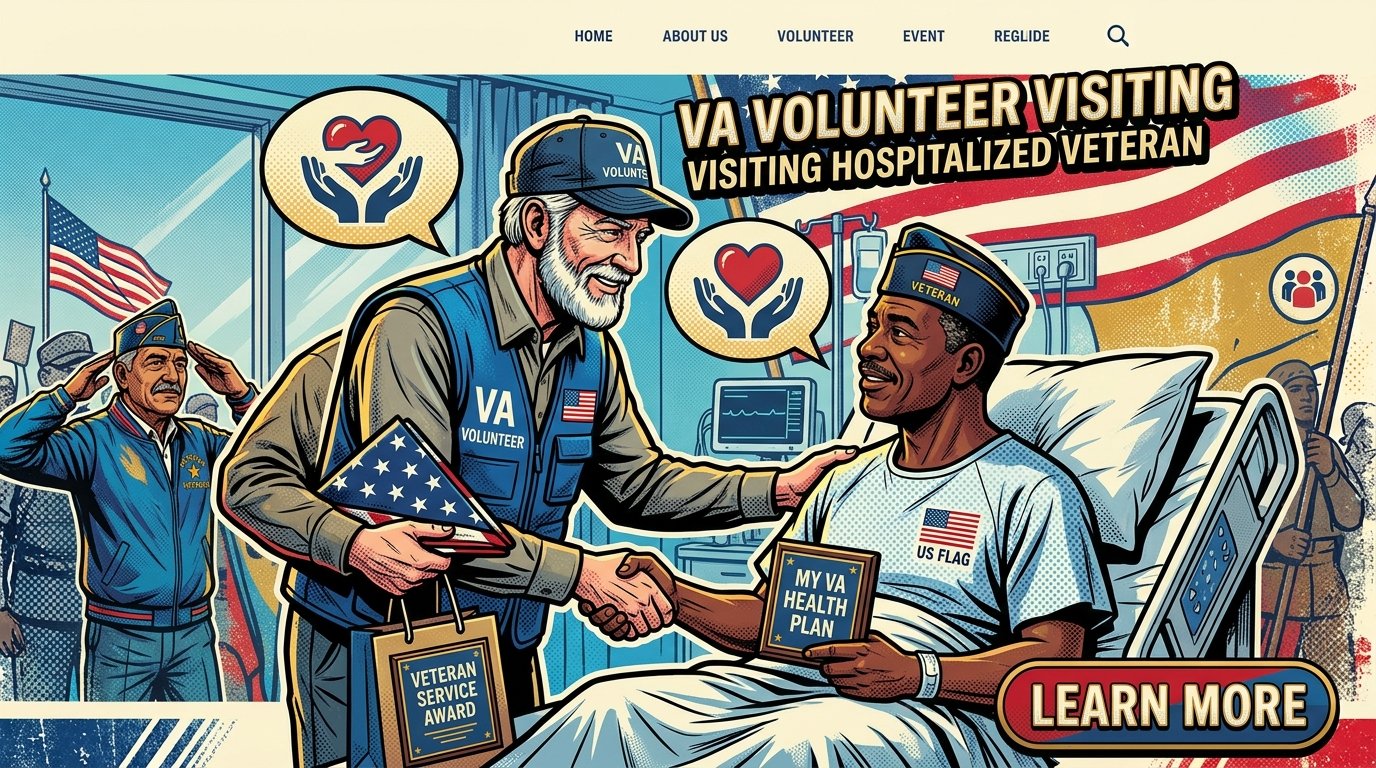
You Can Help Hospitalized Veterans Through Visitation, Volunteering, and Caregiver Support
You can help hospitalized veterans by visiting during approved hours, volunteering through VA Voluntary Service, providing caregiver support, or donating to programs like Fisher House. VA hospitals and Community Living Centers offer structured visitation policies, and thousands of volunteers donate over 8 million hours annually to support hospitalized veterans nationwide.
Quick Facts
| Item | Details |
|---|---|
| Primary Program | VA Voluntary Service (VAVS) |
| Volunteer Opportunities | Friendly visits, escorts, recreation aides, hospice support, Compassionate Contact Corps |
| Visitation Hours | Typically 8 a.m. to 8 p.m. (varies by unit) |
| Family Lodging | Fisher House — free accommodations for families 50+ miles away |
| Caregiver Support | VA Caregiver Support Program (CSP) — two tracks: PGCSS and PCAFC |
| Official Agency | U.S. Department of Veterans Affairs (VA) |
| Volunteer Application | volunteer.va.gov |
| Crisis Support | Dial 988, Press 1 |
| Updated For | 2026 |
VA Hospital Visitation Policies for 2026
VA hospitals follow standardized visitation policies that balance patient safety, privacy, and family support. Visiting hours and rules vary by unit and facility, but general guidelines apply across the VA health care system.

General Visitation Guidelines
All visitors must follow hospital visitation guidelines. If these guidelines are not followed, visitation may be modified, restricted, or revoked. All visitors must:
Wear appropriate Personal Protective Equipment (PPE) for the entirety of the visit, consistent with facility guidance. Cough masks can be obtained at the facility entrance.
Conduct hand hygiene upon entrance and exit of the veteran’s room.
Ensure visitor wristbands are visible. Visitor wristbands are issued at entrance.
Supervise all visitors under 18 years old at all times by an adult who is not the patient.
Visitation by Unit Type

Different hospital units have different visitation rules based on patient needs and safety considerations.
| Unit Type | Visiting Hours | Key Restrictions |
|---|---|---|
| Medical/Surgical | 8 a.m. – 8 p.m. | Overnight visits considered individually; must be independent with care needs |
| Mental Health (3C) | 5 – 7 p.m. | Visitors must be 14+; limit 2 visitors, 45 minutes per visit |
| Community Living Centers | 8 a.m. – 8 p.m. | Overnight visits considered individually |
| Domiciliary | 3 – 8 p.m. weekdays; 9 a.m. – 8 p.m. weekends | Pre-arranged with case manager |
| Emergency Department | Varies | Up to 2 visitors per veteran permitted |
| Spinal Cord Injury | 8 a.m. – 8 p.m. | Overnight visits considered individually |
Source: VA Milwaukee visitation guidance effective March 3, 2026
VA Hines Visitation Policy (Effective April 1, 2026)
At VA Hines, masking is optional in non-clinical areas and outpatient waiting areas. Masking is required in high-risk areas: Dialysis, ICU, CLC, Chemotherapy, and RCF. Patients or staff may request a mask, and anyone with respiratory symptoms will be asked to wear one. Inpatient visitation is limited to individuals 13 years and older.
Visiting Seriously Ill Patients
Relatives and friends may visit patients who are seriously ill or in hospice care at any time of day, unless the staff doctor says no. Speak to the patient’s medical providers for additional details. VA Community Living Centers have unrestricted visiting hours. On VA acute care inpatient units, medical staff may need to restrict visiting hours or place other limitations.
What You Can Bring
Veterans May Qualify for Extra Benefits
Check available financial assistance, healthcare programs and other opportunities that may apply to you.
Check EligibilityYou may bring small amounts of candy, fruit, and other food items if the nursing staff says they are appropriate for a patient’s diet. You may not bring fresh fruit and flowers to patients who are receiving critical care, and you cannot eat or drink in those units. Prohibited items include weapons, alcohol, and illegal drugs. Because the VA medical center is federal property, all visitors and bags may be searched.
How to Volunteer at a VA Hospital
VA Voluntary Service (VAVS) is the primary program for volunteers who want to help hospitalized veterans. Through VA’s Voluntary Service program, upwards of 61,000 volunteers have donated more than 8 million hours to veterans nationwide in a single year. Volunteers provide a wide range of supplemental support and financial assistance to programs for veteran patients throughout the year.
How to Apply
To volunteer, visit volunteer.va.gov, click on the Volunteer image, and complete the intake form. You can also contact your nearest VA facility’s Voluntary Service office directly. Many VA facilities offer virtual and remote assignments such as the Compassionate Contact Corps, which allows volunteers to safely support veterans.
Volunteer Opportunities for Hospitalized Veterans
VA offers a wide range of volunteer opportunities to suit every interest and schedule. Here are the most common roles that directly support hospitalized veterans:
| Volunteer Role | What You Do |
|---|---|
| Friendly Visitor | Visit hospitalized veterans to provide companionship and conversation |
| Community Living Center Volunteer | Spend time with hospitalized veterans reading, socializing, and offering companionship |
| Compassionate Contact Corps | Provide routine phone calls to socially isolated veterans, offering connection and support |
| Hospice Volunteer | Provide companionship and assistance to veterans entering the final stages of life. Volunteers “fill in” at the bedside when family and friends are unable to be present |
| No Veteran Dies Alone (NVDA) | Ensure veterans in hospice care are not left without companionship in their final moments |
| Escort | Assist veterans and caregivers with navigating the hospital during their visits |
| Recreational Aide | Assist resident patients with arts and crafts, exercise programs, and other recreational activities |
| Red Coat Ambassador | Greet patients and visitors, and provide directions and assistance |
The Compassionate Contact Corps
The Compassionate Contact Corps (CCC) is a social prescription program that matches trained VA volunteers with veterans who report feeling lonely or socially isolated. Volunteers call the veteran they are assigned on a weekly basis, and calls typically last 15–60 minutes. What started as an eight-facility emergency response has grown to over 120 VA facilities nationwide. This is an ideal opportunity for volunteers who cannot visit in person but want to make a meaningful difference.
No Veteran Dies Alone Program
The No Veteran Dies Alone (NVDA) program ensures that veterans in hospice care are honored as their life story comes to a close by a volunteer or staff member who is made available to comfort them within 72 hours before their passing. Volunteers take part in specialized training so they know what to expect and what signs they will see when a veteran is passing. NVDA volunteers hold the veteran’s hand, talk to them, read to them, play music, and provide additional support to family members.
Youth Volunteer Programs
VA Community Living Centers offer youth volunteer programs that place students across various departments. Many students are drawn to the CLC, where they get to know amazing veterans and provide meaningful connections. These programs give young people the opportunity to serve those who served our nation.
Fisher House: Free Lodging for Families of Hospitalized Veterans
Fisher House provides cost-free accommodations so veterans’ families and caregivers can be close to their hospitalized loved ones during a medical crisis. The Fisher House program provides a “home away from home” for families of patients receiving medical care at major military and VA medical centers. Fisher Houses provide free temporary lodging so military and veteran families who live 50 miles or further from the treating facility can be close to their loved one during a medical crisis.
How to Request Fisher House Accommodations
Families must be referred by their veteran’s VA health care team. Fisher House referrals cannot be made by Fisher House staff. To request accommodations for Fisher House lodging, contact the veteran’s assigned Social Worker to request a referral. If you do not have an assigned social worker, your provider (primary care physician or nurse practitioner) is able to make the referral as well. Social workers submit Fisher House referrals by conducting a screening interview using the eligibility criteria.
Fisher House Eligibility Requirements
To stay at a Fisher House, guests must meet specific criteria:
Have a loved one receiving inpatient care provided by the VA health care system
Live 50 miles or more away from the medical center
Be actively engaged in the hospitalized veteran’s treatment plan and provide daily ongoing bedside support
Be medically stable and able to stay in a non-medical, unsupervised setting
Have a permanent address
Be willing to abide by all house guidelines and regulations
Veterans are not allowed to lodge alone; they must be accompanied by a caregiver
What Fisher House Provides
Each veteran’s family is allowed one private guest suite with a private bathroom and may have up to 4 persons in each room. Families share a large communal fully equipped kitchen, laundry room, spacious dining room, family room with a large flat screen television, and an outdoor patio. The Fisher House program was established in 1990 by Zachary and Elizabeth Fisher.
VA Caregiver Support Program: Help for Family Caregivers
The VA Caregiver Support Program (CSP) promotes the health and well-being of family caregivers who care for our nation’s veterans through education, resources, and support. The program runs two tracks: the Program of Comprehensive Assistance for Family Caregivers (PCAFC) and the Program of General Caregiver Support Services (PGCSS).
Program of Comprehensive Assistance for Family Caregivers (PCAFC)
PCAFC provides a tax-free monthly stipend to primary family caregivers of eligible veterans. To qualify:
The veteran must have a VA disability rating (individual or combined) of 70% or higher
The veteran must need at least 6 months of continuous, in-person personal care services
The veteran must have sustained or aggravated a serious injury in the line of duty on or after September 11, 2001 (or meet other qualifying service criteria)
The caregiver must be at least 18 years old
Program of General Caregiver Support Services (PGCSS)
PGCSS is available to caregivers of veterans enrolled in VA health care who need personal care services because the veteran is unable to perform an activity of daily living, or needs supervision or protection based on symptoms or residuals of neurological or other impairment or injury. PGCSS offers training and support without a stipend.
What Caregiver Support Includes
VA has a number of services designed specifically to support caregivers, including peer support and mentoring, caregiver training programs, educational resources, and the Caregiver Support Line. Respite care is also available, offering up to 30 days of respite care services per calendar year for eligible veterans.
How to Support a Hospitalized Veteran: A Step-by-Step Guide
Supporting a hospitalized veteran involves practical, emotional, and logistical help. The most important thing you can do is show up and be present.
Step 1: Talk to the Treatment Team
Ask questions about the veteran’s condition, treatment plan, and expected recovery timeline. Request a referral to a social worker if you need help navigating the system. Consider attending a support group for family members, or engaging in family therapy with your loved one.
Step 2: Learn the Visitation Rules
Before your first visit, review the visitation policies for the specific unit where the veteran is staying. Contact the medical center for specific ward visiting hours and information. Bring a photo ID, arrive during approved hours, and follow all PPE and hygiene requirements.
Step 3: Provide Practical Support
Provide practical supports such as transportation and financial assistance when you can. Help with tasks like managing mail, paying bills, or coordinating with employers. If you live far away, ask about Fisher House accommodations.
Step 4: Offer Emotional Support
Maintain a positive presence. Avoid questioning how your loved one feels. Remain available for them to come to you when they feel ready. Make time to listen to what they are trying to express. Sometimes the most helpful thing you can do is simply sit quietly and be present.
Step 5: Consider Care Packages
Comfort items are greatly appreciated by hospitalized veterans. Items like high-quality socks, easy-to-eat snacks, hydration helpers (tea bags, instant coffee), large-print puzzle books, adult coloring books, and decks of cards can brighten a hospital stay. Speak with the care team about what snacks may or may not be appropriate based on dietary restrictions.
Step 6: Connect with a Patient Advocate
If you have concerns about the veteran’s care or need help navigating the VA system, contact a Patient Advocate. Patient Advocates work on behalf of veterans to ensure satisfaction with VA health care services. If your concern is still not resolved after meeting with the treatment team, please contact a Patient Advocate.
Step 7: Take Care of Yourself
Helping a hospitalized veteran can be emotionally demanding. Consider joining an in-person or online peer support group. The VA Caregiver Support Program offers resources, respite care, and peer support for caregivers.
Specialized Support for Specific Conditions
Hospitalized veterans with specific conditions may need specialized support from family members and caregivers. VA provides condition-specific resources and training.
Polytrauma and Traumatic Brain Injury (TBI)
VA’s Polytrauma/TBI System of Care offers multiple levels of clinical and social support. This includes a specialty case manager who assists patients and families needing guidance as they recover from polytrauma or TBI. Families and caregivers are encouraged to participate in all phases of the rehabilitation process whenever appropriate and practicable.
Spinal Cord Injury (SCI)
For veterans with spinal cord injuries, VA’s SCI/D Rehabilitation Services team creates a rehab program for each person and their injury or illness. The doctor leads the team to work with the veteran and family to reach rehab goals. Family members and partners are welcome to take part in rehab activities.
Blind and Low Vision Rehabilitation
VA Blind Rehabilitation Services provides family training to educate the veteran’s support system on how to assist during the adjustment process. Family members, included as members of the treatment team, are provided with education and training that allows them to understand visual impairment and provide support for goal achievement.
Mental Health and Hospice Care
For veterans in hospice care, the No Veteran Dies Alone program ensures that no veteran passes without companionship. For veterans receiving mental health care, visiting hours may be more restricted. The VA Illiana Mental Health Unit allows visitation from 9 a.m. to 9 p.m. daily, but visits occur in the unit visiting room under video monitoring, and visitors must sign in and out.
National Salute to Veteran Patients Week
Every February, VA observes National Salute to Veteran Patients week. Since 1978, VA has used Valentine’s Day to provide a weeklong commemoration for veteran patients by encouraging individuals to seek opportunities to volunteer at their local VA facilities, visit with inpatients, and distribute gifts and cards to hospitalized veterans.
In 2021, schools, community groups, and youth organizations nationwide sent more than 174,000 valentines to VA medical centers, which were distributed to veteran patients at facilities across the country. Nearly 1,200 volunteers and more than 1,000 community organizations contributed to events and activities recognizing hospitalized veterans.
Common Mistakes When Helping Hospitalized Veterans
Mistake 1: Showing up without checking visitation policies. Each unit has different hours and rules. Contact the medical center for specific ward visiting hours before you go.
Mistake 2: Bringing prohibited items. Weapons, alcohol, and illegal drugs are prohibited. All visitors and bags may be searched.
Mistake 3: Visiting when you are ill. If you have a communicable disease, you won’t be allowed to visit patients inside the medical center.
Mistake 4: Forgetting hand hygiene. You must practice good hand hygiene when you enter and exit patient rooms, and at other times as directed by staff.
Mistake 5: Not asking about dietary restrictions. You may bring small amounts of food items if the nursing staff says they are appropriate for a patient’s diet. Do not bring fresh fruit and flowers to patients who are receiving critical care.
Mistake 6: Overlooking the role of the social worker. The social worker is your primary contact for Fisher House referrals, discharge planning, and community resources. If you do not have an assigned social worker, your provider is able to make the referral as well.
Mistake 7: Not taking care of yourself. Caregiver burnout is real. Respite care, support groups, and peer support are available to help you stay healthy while caring for your veteran.
Common Questions
How do I volunteer at a VA hospital?
Visit volunteer.va.gov and complete the intake form, or contact your nearest VA facility’s Voluntary Service office. You can also email your local VA Voluntary Service. Opportunities include friendly visits, escorts, recreation aides, hospice support, and the Compassionate Contact Corps.
Can I visit a hospitalized veteran who is not my family member?
Yes. VA allows a family member, friend, or other individual to be present with the patient for emotional support during the course of their stay. “Family” is broadly defined to include significant others, friends, and caregivers whom the individual considers to be family.
What are the visiting hours at VA hospitals?
Visiting hours vary by unit. Medical/surgical units are typically 8 a.m. to 8 p.m. Mental health units may have more restricted hours. Community Living Centers have unrestricted visiting hours. Contact the specific medical center for exact hours.
What is Fisher House and who can stay there?
Fisher House provides free temporary lodging for families of hospitalized veterans who live 50 miles or more from the treating facility. Families must be referred by the veteran’s VA health care team, typically through the assigned social worker. Each family gets a private suite, and shared kitchen and laundry facilities are available.
How do I apply for the VA Caregiver Support Program?
Contact your local VA Caregiver Support Program office or visit caregiver.va.gov. For PCAFC, the veteran must have a 70% or higher VA disability rating and need at least 6 months of continuous personal care services. PGCSS is available to caregivers of veterans enrolled in VA health care who need personal care services.
Can children visit hospitalized veterans?
Children may visit, but age restrictions vary by facility. VA Milwaukee allows visitors 14+ in mental health units. VA Illiana allows children under 14 to visit if supervised by a parent or guardian. Check with the specific facility before bringing children.
What should I bring when visiting a hospitalized veteran?
Bring small amounts of appropriate food items (after checking with nursing staff), comfort items like socks or puzzle books, and a photo ID. Do not bring fresh fruit or flowers to critical care patients. Prohibited items include weapons, alcohol, and illegal drugs.
How can I support a hospitalized veteran who lives far away?
You can support them through the Compassionate Contact Corps (phone companionship), sending care packages, coordinating with local VA services, and staying in touch by phone or video. Fisher House accommodations may be available for family members who want to visit in person.
What is the No Veteran Dies Alone program?
The No Veteran Dies Alone (NVDA) program ensures that veterans in hospice care are not left without companionship in their final moments. Volunteers provide presence, hold the veteran’s hand, talk, read, play music, and offer additional support to family members.
How do I contact a patient advocate at a VA hospital?
Contact the Patient Advocate office at your VA medical center. Patient Advocates work on behalf of veterans to ensure satisfaction with VA health care services. They can help resolve concerns about care, treatment, and services.
What is the Compassionate Contact Corps?
The Compassionate Contact Corps matches trained VA volunteers with veterans who report feeling lonely or socially isolated. Volunteers call the veteran weekly, and calls typically last 15–60 minutes. The program has grown to over 120 VA facilities nationwide.
Can I donate items to hospitalized veterans?
Yes. VA medical centers accept donations of cash and materials that supplement the operating budget and provide for the needs of veterans. Recent examples include palliative care rooms, lap robes, patient televisions, and wheelchairs. Contact the Voluntary Service at your local VA medical center for more information.
Key Takeaways
VA hospitals have specific visitation policies that vary by unit; always check before visiting.
General visiting hours are typically 8 a.m. to 8 p.m. for medical/surgical units, with overnight visits considered individually.
VA Voluntary Service offers many opportunities to help hospitalized veterans, including friendly visits, hospice support, and the Compassionate Contact Corps.
Fisher House provides free lodging for families of hospitalized veterans who live 50+ miles from the treating facility.
The VA Caregiver Support Program offers stipends, training, respite care, and peer support for family caregivers.
The Compassionate Contact Corps matches volunteers with lonely veterans for weekly phone calls and has grown to over 120 VA facilities.
The No Veteran Dies Alone program ensures veterans in hospice are not left without companionship in their final moments.
Patient Advocates work on behalf of veterans to resolve concerns about care and services.
National Salute to Veteran Patients week is observed every February, encouraging communities to visit and volunteer.
Taking care of yourself as a caregiver is essential; respite care and support groups are available.
Official Resources
U.S. Department of Veterans Affairs (VA) — VA.gov — Health care, benefits, and patient services
VA Voluntary Service — volunteer.va.gov — Volunteer opportunities and applications
VA Caregiver Support Program — caregiver.va.gov — Caregiver resources, stipends, and training
Fisher House Foundation — fisherhouse.org — Free lodging for families of hospitalized veterans
Veterans Crisis Line — Dial 988, Press 1 | Text 838255 | VeteransCrisisLine.net/Chat



🇺🇸 IMPORTANT DISCLAIMER – Veterans Benefits Information
This site provides general information about U.S. Department of Veterans Affairs (VA) benefits for educational and informational purposes only.
- Not Official: We are NOT affiliated with, endorsed by, or connected to the U.S. Department of Veterans Affairs (VA), the Veterans Benefits Administration (VBA), the Veterans Health Administration (VHA), or any other government agency.
- No Legal/Financial Advice: The content on this website is for informational purposes only and does not constitute legal, financial, or medical advice. VA benefits rules change frequently – always consult with an accredited Veterans Service Officer (VSO) or a qualified professional for your specific situation.
- Official Sources: For official, binding information and to apply for benefits, always visit official .gov websites: VA.gov, Benefits.VA.gov, or SSA.gov.
- No Data Collection: This site does not collect, store, or process any personal information. It does not have login forms, contact forms, or any system to capture user data. We never ask for your Social Security Number, bank details, or any personal information.
- 🚨 Scam Alert: The VA and other government agencies never charge fees for benefit applications. If anyone asks for money to "process" your VA claim, it is a scam. Report it to the VA Office of Inspector General at VA.gov/OIG.
- Advertising: This site uses third-party advertising (Adsterra) to cover operational costs. We do not endorse or guarantee any products or services advertised.
📌 Information provided as of June 2026. Always verify current eligibility and rules with official .gov sources.
This site is not affiliated with the U.S. Department of Veterans Affairs or any government agency. All information is for educational purposes only. Please visit VA.gov for official information.
