
Understanding VA Pay Dates
VA pay dates refer to the specific dates on which veterans in the United States receive their monthly compensation benefits from the Department of Veterans Affairs (VA). These payments are critical for many veterans, as they help to cover living expenses, medical care, and other essential needs. Understanding VA pay dates is essential for veterans to manage their finances effectively and plan their expenditures accordingly.
The VA establishes a schedule for pay dates based on various factors, including the type of benefit being received and administrative procedures. Generally, most veterans can expect to receive their payments on the first business day of every month. However, there can be exceptions or adjustments due to holidays or weekends. To ensure timely access to funds, veterans are encouraged to familiarize themselves with the VA pay schedule and any updates that may affect their payments.

Payments might vary in amount according to the specific benefits the veteran is receiving, such as disability compensation or pension. Additionally, some veterans may receive supplemental payments or cost-of-living adjustments (COLA), which can further complicate the overall schedule. Staying informed about these potential changes is crucial for financial planning.

For those requiring more personalized information, the VA provides resources and tools on its official website. Here, veterans can check their payment history, understand their entitlements, and keep track of any forthcoming payments. Armed with this knowledge, veterans can navigate the financial aspects of their benefits more efficiently. Overall, understanding VA pay dates is key to ensuring that veterans can maintain their financial stability and receive the support they need.
Official VA Pay Schedule for 2026
The Veterans Affairs (VA) pay schedule for the year 2026 is crucial for U.S. veterans to manage their finances effectively. This schedule outlines the specific dates on which veterans will receive their benefits. It is important that veterans remain informed not only about the pay dates but also regarding how holidays may impact these payments.
In the year 2026, veterans can expect their benefits to be disbursed on the first day of each month. For the month of January, the payment date will fall on the 1st. However, since this date is a Saturday, veterans can expect payments to be processed on the preceding Friday, December 31st, 2025. This adjustment is made to accommodate the weekend. Similarly, for subsequent months, here are the scheduled pay dates:
- February 2026: Monday, February 1
- March 2026: Monday, March 1
- April 2026: Friday, April 1
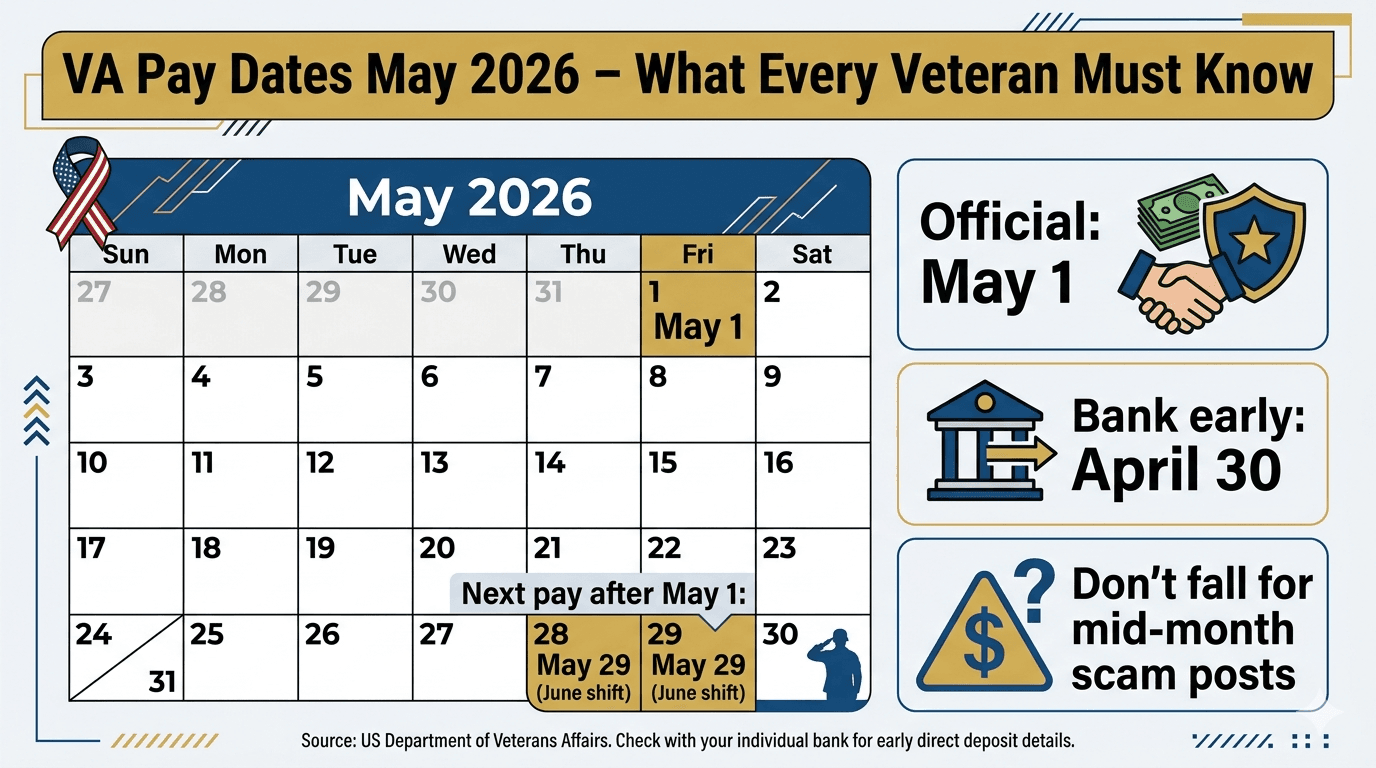
- May 2026: Saturday, May 1 (processed on Friday, April 30)
- June 2026: Monday, June 1
- July 2026: Thursday, July 1
- August 2026: Sunday, August 1 (processed on Friday, July 30)
- September 2026: Thursday, September 1
- October 2026: Saturday, October 1 (processed on Friday, September 30)
- November 2026: Tuesday, November 1
- December 2026: Thursday, December 1
It is essential to note that if the payment date coincides with a weekend or public holiday, veterans should anticipate adjustments that ensure timely delivery of funds. This VA pay schedule is designed to provide a consistent and reliable framework for veterans to plan their finances throughout the year.
Key Changes in Payment Timing for May 2026
Veterans May Qualify for Extra Benefits
Check available financial assistance, healthcare programs and other opportunities that may apply to you.
Check EligibilityIn May 2026, significant changes will occur regarding the payment schedule for U.S. veterans. These alterations will affect when veterans receive their benefits and can influence their financial planning. It is essential for veterans to familiarize themselves with these updates to anticipate their financial needs appropriately.
The Department of Veterans Affairs has announced that the official pay date for veterans’ benefits will shift, requiring careful attention. Traditionally, many veterans have relied on their scheduled payment dates to manage their expenses, and these adjustments could necessitate changes in budgeting practices. Veterans can expect that the pay date will not only change but that some banks might choose to release funds earlier or later than the official date, impacting cash flow.
This transition indicates that while the official payment from the Department of Veterans Affairs may remain set on a specific date, the actual availability of those funds in personal bank accounts could vary. It is recommended that veterans check with their banks to determine when they can expect to see those funds accessible for use. Understanding these nuances is crucial in maintaining financial stability.
The key takeaway is that veterans should be aware of the differences between the official pay dates established by the VA and the actual availability of funds at their financial institutions. By staying informed about these changes, veterans can better prepare for the impacts on their financial situations during May 2026 and beyond.
Understanding Direct Deposits for VA Payments
The direct deposit system for VA payments offers a secure and efficient method for veterans to receive their benefits. It ensures that funds are automatically transferred to the designated bank account on specified payment dates, eliminating the need for physical checks and reducing the risk of loss or theft. To set up direct deposit, veterans must provide their bank details, including their account number and the bank’s routing number. This information can be submitted online through the VA’s website or by contacting their regional office for assistance.
Once the direct deposit is established, veterans can expect their payments on the scheduled VA pay dates. Generally, payments are issued on the first of the month for disability and pension benefits, but this can vary based on specific circumstances such as holidays or weekends. It is essential for veterans to ensure that their payment schedule aligns with any changes in their banking information to prevent delays. Regular reviews of their bank statements are also advisable to confirm that deposits are made timely and accurately.
Tracking deposits is straightforward. Veterans can monitor their bank accounts for incoming payments or utilize the VA’s online portal to check the status of their benefits. This portal provides comprehensive information, including upcoming payment dates and any adjustments made to their payment amounts. Utilizing these resources can enhance financial management and allow veterans to stay informed about their benefits. Overall, direct deposit not only streamlines the payment process but also contributes to a smoother experience for veterans managing their finances.
The Impact of Cost of Living Adjustments (COLA) on VA Pay
Cost of Living Adjustments (COLA) play a crucial role in determining the VA pay rates for veterans, particularly in 2026. These adjustments are designed to ensure that veteran compensation keeps pace with inflation and the rising cost of living, which is essential for maintaining the financial well-being of disabled veterans and their families. As economic conditions fluctuate, it becomes increasingly important that VA payments reflect these changes to provide adequate support.
In 2026, veterans can expect to see adjustments to their pay due to the evaluated changes in consumer prices. The COLA is based on the Consumer Price Index (CPI), which measures inflation by tracking changes in the prices of goods and services. As the CPI rises, so too do the VA benefits, ensuring that veterans do not experience a decline in their purchasing power over time. This adjustment is particularly significant for veterans with disabilities, as they often rely on their VA payments for essential living expenses.
The timing of these COLA updates is critical. Typically, the announcement regarding the COLA rates occurs in the fall, reflecting the economic trends over the previous year. Once the new COLA is applied, veterans can expect their payments to be adjusted by January of the following year. Hence, for 2026, it is expected that any adjustments announced in late 2025 will have a direct impact on the compensation payments veterans receive. This ensures that they remain adequately supported in light of increased living costs.
Ultimately, understanding the impact of COLA on VA pay is vital for veterans and their families, as it directly affects their financial stability and quality of life. As such, staying informed about these adjustments can help veterans plan effectively for their future financial needs.
Understanding Federal Holidays and Their Impact on Payment Dates
Veterans Affairs (VA) pay dates can be significantly influenced by federal holidays. It is crucial for veterans to understand how these holidays may shift their scheduled payments, as awareness can help with financial planning and management. The VA typically issues payments on the first day of the month for several forms of support, including disability compensation and pensions. However, when these dates coincide with federal holidays, adjustments are necessary.
For example, if the first day of the month falls on a Sunday or a federal holiday such as New Year’s Day, Independence Day, or Thanksgiving, the payment will not be processed on that day. Instead, it will be distributed on the prior business day. This means that veterans should anticipate receiving their payment a day earlier in these specific instances. Additionally, if a holiday falls on a Saturday, payments may be processed on the preceding Friday. Understanding these patterns is vital for veterans trying to budget their finances effectively.
Notably, months with multiple holidays can create additional complexities. For instance, holidays like Memorial Day or Labor Day may not directly affect the VA payment schedule but can impact any additional benefits or programs running concurrent with the payment dates. Therefore, it becomes essential for veterans to stay updated and consult official VA resources or customer service to confirm when they can expect their funds, particularly when approaching known holiday periods.
Overall, being aware of how federal holidays impact VA pay dates can save veterans from unexpected financial strain. It is advisable for veterans to keep track of the annual holiday calendar and anticipate necessary adjustments in their payment schedule appropriately.
Common Pitfalls Leading to Delayed Benefits
Veterans Affairs (VA) benefits are essential for supporting the well-being of our service members. However, delays in receiving these benefits can cause significant stress and financial strain. Understanding the common pitfalls that lead to delayed VA payments is crucial for veterans and their families. One primary issue is the omission of required documentation. When applying for benefits, it is vital to provide complete and accurate information along with all requested forms. Any missing documentation can lead to processing delays and subsequent postponement of payments.
Another common error is failing to notify the VA of changes in personal circumstances. Events such as moving, changes in marital status, or changes in income must be reported to ensure that the benefits remain accurate and timely. Additionally, veterans should be mindful of deadlines associated with submitting claims, as late submissions may result in delayed processing or denial of benefits altogether.
Moreover, veterans often overlook the need to regularly check the status of their claims. By staying proactive and keeping in touch with VA representatives, veterans can catch potential issues early, allowing for prompt resolution. It is also advisable to maintain thorough records of all communications and submissions made to the VA. This documentation can serve as proof of claims or appeals and can expedite the process if any obstacles arise.
Minimizing misunderstandings with the VA is another factor in avoiding delays. Veterans should take time to understand the different types of benefits available and the application processes involved. Engaging with veteran service organizations can provide additional support and guidance, offering insights that can reduce the likelihood of mistakes. By taking these steps, veterans can increase the likelihood of receiving their benefits on schedule, ensuring that they receive the support they deserve.
What to Do If Payments Are Late
If veterans experience delays in receiving their monthly benefits, it is crucial to take specific steps to resolve the issue efficiently. The first action a veteran should take is to verify the scheduled pay date against the official VA pay calendar for 2026. This can help confirm whether the payment is genuinely late or if there has been a misunderstanding regarding the pay schedule.
When it is established that a payment is overdue, veterans should gather pertinent information before contacting the VA. Key details include the veteran’s full name, Social Security number, claim number, and the specific benefit being received. Having this information readily available will facilitate a more productive conversation with VA representatives.
Veterans can reach out to the VA through various channels. The most direct method is to call the VA’s benefits hotline, which can typically be found on the official VA website. Alternatively, individuals may also consider utilizing the online portal or the VA’s eBenefits platform to check the status of their payments and submit any inquiries. Engaging in online communication often allows for faster response times and can provide clarity on the specific reasons for the delay.
In instances where a payment is significantly late, it is advisable to request a follow-up on the situation. Maintaining a record of conversations, dates, and any reference numbers related to the inquiry can be extremely helpful if the issue extends over a lengthy period. It is important for veterans to remain patient yet persistent, as payment processing may experience occasional delays. However, by knowing the appropriate routes to take, veterans can address late payments effectively and ensure they receive the benefits they have earned.
Conclusion and Key Takeaways
As we have explored throughout this post, understanding the VA pay dates for 2026 is crucial for U.S. veterans and their families. Awareness of these critical dates can significantly aid in managing finances effectively. The schedule includes specific payment dates that veterans can expect throughout the year, ensuring they plan accordingly to meet their financial obligations.
Moreover, it is essential for veterans to stay informed about any changes that may occur in the VA pay schedule. The Department of Veterans Affairs often updates policies that could influence payment amounts and distribution dates. Regularly checking the official VA website or enrolling in notifications can be highly beneficial for staying current on such updates.
Additionally, veterans should consider establishing a financial plan that accounts for these pay dates, allowing them to budget their expenses efficiently. Anticipating these payment schedules can mitigate unexpected financial strain and assist in managing living costs. Furthermore, veterans are encouraged to seek assistance from financial advisors or veteran service organizations that offer support and guidance tailored specifically to their needs.
In conclusion, being knowledgeable about the VA pay dates and maintaining proactive communication with reliable information sources will empower veterans. This practice will facilitate better financial management and help ensure that they can fully utilize the benefits entitled to them. Stay informed, plan ahead, and make the most of your entitlements as a valued member of our nation’s service community.
🇺🇸 IMPORTANT DISCLAIMER – Veterans Benefits Information
This site provides general information about U.S. Department of Veterans Affairs (VA) benefits for educational and informational purposes only.
- Not Official: We are NOT affiliated with, endorsed by, or connected to the U.S. Department of Veterans Affairs (VA), the Veterans Benefits Administration (VBA), the Veterans Health Administration (VHA), or any other government agency.
- No Legal/Financial Advice: The content on this website is for informational purposes only and does not constitute legal, financial, or medical advice. VA benefits rules change frequently – always consult with an accredited Veterans Service Officer (VSO) or a qualified professional for your specific situation.
- Official Sources: For official, binding information and to apply for benefits, always visit official .gov websites: VA.gov, Benefits.VA.gov, or SSA.gov.
- No Data Collection: This site does not collect, store, or process any personal information. It does not have login forms, contact forms, or any system to capture user data. We never ask for your Social Security Number, bank details, or any personal information.
- 🚨 Scam Alert: The VA and other government agencies never charge fees for benefit applications. If anyone asks for money to "process" your VA claim, it is a scam. Report it to the VA Office of Inspector General at VA.gov/OIG.
- Advertising: This site uses third-party advertising (Adsterra) to cover operational costs. We do not endorse or guarantee any products or services advertised.
📌 Information provided as of June 2026. Always verify current eligibility and rules with official .gov sources.
This site is not affiliated with the U.S. Department of Veterans Affairs or any government agency. All information is for educational purposes only. Please visit VA.gov for official information.
