

Military Identity Theft: Risks, Prevention & Recovery Guide
Military identity theft is the unauthorized use of a service member’s or veteran’s personal information—such as Social Security numbers, military ID details, or benefits information—to commit fraud or other crimes. Members of the military community face significantly higher risks than civilians, with active-duty service members filing identity theft reports at rates much higher than the general population . This guide covers why military personnel are targeted, the most common scams, how to protect yourself, and what to do if your identity is stolen.
Quick Facts
| Item | Details |
|---|---|
| Primary Threat | Identity theft and fraud targeting military personnel, veterans, and families |
| 2025 Losses | $684 million lost to fraud by the military community (35,215 reports) |
| 2024 Losses | $584 million lost to fraud |
| Fraud Reports (2024) | Over 99,000 reports filed with the FTC |
| Identity Theft Reports (2024) | Over 38,000 reports filed with the FTC |
| Median Loss (Military) | $700 (vs. under $500 for general population) |
| Key Protection | Active-Duty Fraud Alert on credit reports |
| Reporting Sites | ReportFraud.ftc.gov and IdentityTheft.gov |
Why Service Members and Veterans Are Prime Targets
The Unique Risks of Military Life
Members of the military community are frequent targets due to several factors related to service :

Steady income and good benefits: Service members have reliable pay and benefits, making them attractive targets for financial fraud.
Frequent relocation: Moving every few years increases the chance of sensitive documents being lost, intercepted, or exposed .
Deployments and limited access: Deployed personnel have less time and ability to monitor bank accounts or credit reports regularly .
Trust in authority: Scammers often pose as military officials or government agencies, exploiting the trust service members have in command structures .
Public data exposure: Military records, especially those related to benefits and healthcare, may be stored in systems that can be compromised .
Veterans: A Growing Target
Veterans are particularly vulnerable because they are often less familiar with evolving digital scams and have access to substantial government benefits—including disability compensation, VA loans, and education benefits—that criminals seek to exploit . Scammers frequently target veterans with fake offers to “help” with VA benefits for a fee .
The Numbers

The scale of the problem is significant. In 2025 alone, fraudulent activity involving veterans, service members, and their families cost victims at least $684 million, with 35,215 fraud reports filed . In 2024, military consumers filed over 99,000 fraud reports and 38,000 identity theft reports with the FTC . Research has confirmed that veterans and military service members face greater risk of identity theft and data breach victimization .
Common Types of Military Identity Theft
1. Fraudulent Credit Accounts
Thieves open credit cards, loans, or bank accounts using a service member’s stolen personal information. A recent high-profile case involved an Army recruiter who used the identities of seven recruits to open accounts and apply for over $266,000 in loans and credit cards .
How it works: The recruiter obtained copies of recruits’ passports, driver’s licenses, and Social Security cards during the recruiting process. She opened “pre-active duty membership” accounts in their names, then used those accounts to apply for loans and credit cards . One victim, who eventually joined the Army, had a credit card issued in his name with a limit of nearly $15,000. The recruiter used that card to buy plane tickets for herself .
2. VA and Healthcare Fraud
Scammers exploit the VA benefits system, stealing veterans’ identities to obtain benefits fraudulently. Common tactics include:
Fake messages about VA overpayments or benefit adjustments
“Free” help with VA claims that actually steals personal information
Fraudulent education benefit claims under a veteran’s name
3. Imposter Scams
Veterans May Qualify for Extra Benefits
Check available financial assistance, healthcare programs and other opportunities that may apply to you.
Check EligibilityScammers pose as trusted figures—friends, romantic interests, fellow service members, or government officials—to obtain money or personal information . This includes:
Romance scams: Criminals posing as service members on dating apps or social media
Benefits scams: Fraudulent messages about TRICARE or VA benefits
Impersonating VA representatives: Offering to “increase benefits” for a fee
4. Fake Military ID Use
Scammers use fake or stolen military IDs to steal funds or commit fraud. In one recent case, a woman presented a fake military ID and a VA card at a bank to attempt a nearly $9,000 theft from someone else’s account .
5. Scams During Relocation or Deployment
Service members are especially vulnerable when moving or deploying due to:
Personal information being sent through unsecured channels
Mail being forwarded or intercepted
Limited ability to monitor accounts during deployment
6. Data Breach Exploitation
Large-scale data breaches, such as the 2015 Office of Personnel Management (OPM) breach, exposed millions of security clearance records . Victims continue to be targeted years later by identity thieves trying to open credit accounts in their names .
How to Protect Yourself from Military Identity Theft
1. Place an Active-Duty Fraud Alert
What it is: A free alert that makes it harder for identity thieves to open accounts in your name. It requires businesses to verify your identity before issuing new credit .
How to do it: Contact any one of the three major credit reporting agencies (Equifax, Experian, TransUnion). They will notify the other two automatically .
Benefits:
One-year protection that can be renewed
Removes your name from marketing lists for unsolicited credit offers for two years
2. Freeze Your Credit
A credit freeze restricts access to your credit report, making it nearly impossible for identity thieves to open new accounts. Unlike fraud alerts, credit freezes remain in effect until you lift them. You must contact each credit bureau separately.
3. Monitor Your Credit Regularly
Why it matters: Regular monitoring helps you catch suspicious activity early.
What to do:
Check your credit report at least annually from all three credit bureaus through AnnualCreditReport.com
Use credit monitoring services that track bank, credit, and investment activity—many are free for active-duty military
Review bank and credit card statements monthly
4. Report a Lost or Stolen Military ID Immediately
Common Access Card (CAC): Contact your command or local security office, or call Military OneSource at 1-800-342-9647 .
Uniformed Services ID (USID): Use the RAPIDS self-service ID office online or call Military OneSource. If you’re a dependent, you’ll also need to complete Form DD 1172-2 .
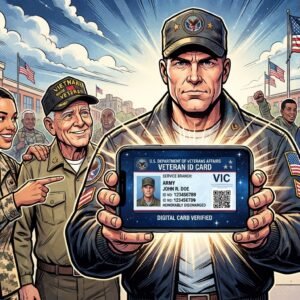
Veteran ID Card (VIC): Email vetidcard@va.gov .
Veteran Health ID Card (VHIC): Report to the local VA medical center where you got the card .
5. Never Share Copies of Your Military ID
Federal law strictly prohibits copying, scanning, or photographing official military IDs . Criminals and scammers offer “discounts” or “free services” in exchange for a copy of your ID—this is a trap. Scammers use these images to create fake IDs and steal identities .
6. Use Strong Passwords and Multi-Factor Authentication
Create complex passwords (10+ characters with letters, numbers, and symbols)
Use a password manager
Enable two-factor authentication (2FA) on all sensitive accounts
7. Be Cautious with Public Wi-Fi
Use a VPN (Virtual Private Network) when accessing accounts on public Wi-Fi
Verify network names before connecting
Use antivirus software on all devices
8. Watch for Phishing Scams
Phishing emails and texts often mimic military or government communications and create urgency. Check sender addresses carefully, avoid clicking unknown links, and independently verify suspicious messages through official channels .
9. Get an IRS Identity Protection PIN
An Identity Protection PIN is a six-digit number that prevents someone else from filing a tax return using your Social Security number. You can apply for one through the IRS .
10. Understand Common Scams Targeting Veterans
The VA, TRICARE, and other government agencies never charge fees to file benefits claims or provide benefit information. Be suspicious of anyone who:
Calls or emails about a “VA overpayment” and asks for payment
Offers to increase your VA benefits for a fee
Claims to be from a government agency and asks for personal information by phone or email
What to Do If You’re a Victim of Military Identity Theft
Step-by-Step Recovery Plan
Step 1: Report the identity theft to the FTC
Go to IdentityTheft.gov to file a report and get a personalized recovery plan .
Step 2: Report the fraud to the FTC
Report any fraudulent transactions at ReportFraud.ftc.gov .
Step 3: File a police report
Contact your local law enforcement agency. This helps build a case if you need to contest fraudulent charges .
Step 4: Place fraud alerts and credit freezes
Contact all three credit bureaus to place fraud alerts and credit freezes on your files.
Step 5: Contact your base legal office
Many military bases offer free legal support for identity theft victims .
Step 6: Notify your chain of command
Inform your unit security officer if your identity theft involves a Common Access Card (CAC) or security clearance.
Step 7: Contact your financial institutions
Notify your bank and credit card companies about the theft.
Step 8: Use SCRA protections
The Servicemembers Civil Relief Act (SCRA) provides protections, including interest rate reductions, for active-duty personnel affected by financial fraud .
Comparison: Fraud Alert vs. Credit Freeze
| Feature | Fraud Alert | Credit Freeze |
|---|---|---|
| Free? | Yes | Yes |
| Duration | 1 year (renewable) | Until you lift it |
| How it works | Creditors must verify identity before extending credit | Creditors cannot access your credit report at all |
| Best for | Active duty members (especially deploying) | Anyone who wants maximum protection |
| Contact | One bureau notifies the others | Must contact each bureau separately |
| Military-specific | Active-duty alert available | Available to anyone |
Resources by Category
| Category | Resource | Contact |
|---|---|---|
| Report Identity Theft | IdentityTheft.gov | Online |
| Report Fraud | ReportFraud.ftc.gov | Online |
| Military ID Lost/Stolen | Military OneSource | 1-800-342-9647 |
| VA Lost/Stolen VIC | VA | vetidcard@va.gov |
| Military Consumer Tools | MilitaryConsumer.gov | Online |
| VA Benefits Scams | VA Benefits Hotline | 1-800-MyVA411 (1-800-698-2411) |
| Credit Bureaus | Equifax, Experian, TransUnion | Online |
| Free Credit Report | AnnualCreditReport.com | Online |
| IRS Identity Protection PIN | IRS.gov | Online |
Common Questions
What is military identity theft?
Identity theft specifically targeting active-duty service members, veterans, reservists, Guard members, and their families, exploiting the unique conditions of military life such as deployments and frequent relocations .
Why are service members more vulnerable to identity theft?
Service members have steady income, frequently relocate, may have limited access to accounts during deployment, and face public exposure of sensitive records through government databases .
How do I place an active-duty alert on my credit report?
Contact any one of the three credit bureaus (Equifax, Experian, or TransUnion) and request an active-duty fraud alert. That bureau will notify the other two. The alert lasts one year and can be renewed .
What should I do if I lose my military ID?
Report it immediately. For a CAC, contact your command or Military OneSource at 1-800-342-9647. For a USID, use the RAPIDS online system or call Military OneSource. For a VIC, email vetidcard@va.gov .
Can someone steal my VA benefits?
Yes. Scammers can use your identity to fraudulently claim VA benefits. Watch for unsolicited offers to “help” with your benefits for a fee—this is a red flag .
Is it illegal to share a photo of my military ID?
Yes. Federal law (18 U.S.C. § 701) prohibits copying, scanning, or photographing official U.S. military identification cards. Scammers often ask for ID photos to make fake IDs—never share them .
Does the VA offer identity theft protection?
The VA recommends reporting lost or stolen Veteran ID Cards and Health ID Cards. For broader identity protection, the VA refers veterans to the FTC’s IdentityTheft.gov and MilitaryConsumer.gov .
What is Military Consumer Month?
Military Consumer Month is observed annually in July, when the FTC and its partners focus on educating the military community about scams and fraud prevention .
What are the costs of military identity theft?
In 2024, the military community lost over $584 million to fraud, with a median loss of $700 per victim—higher than the general population’s median loss of under $500 . Losses rose to $684 million in 2025 .
What is the most common scam targeting veterans?
Imposter scams, where fraudsters pretend to be from the VA or government agencies, are among the most common. Scammers often claim the VA owes or has overpaid benefits and ask for personal information or payment .
Key Takeaways
Military identity theft is a growing threat with significant financial consequences—$684 million lost in 2025 alone .
Service members and veterans face higher risks due to frequent moves, deployments, steady income, and exposure of sensitive records .
Active-duty fraud alerts are a free, powerful tool—contact one credit bureau to protect your credit .
Never share copies of your military ID—scammers use them to create fake IDs; this is a federal crime .
Report lost or stolen IDs immediately using the appropriate channels (CAC, USID, VIC, or VHIC) .
Use strong passwords, 2FA, and VPNs to protect accounts, especially when deployed or traveling .
Watch for phishing and imposter scams—government agencies never ask for personal information or payment by phone or email .
Report identity theft to IdentityTheft.gov and fraud to ReportFraud.ftc.gov .
Veterans are frequently targeted by scammers offering “help” with VA benefits for a fee—this is a red flag .
Free resources are available through MilitaryConsumer.gov, Military OneSource, and VA benefits hotlines .
Official Resources
Report Identity Theft: IdentityTheft.gov
Report Fraud: ReportFraud.ftc.gov
Military Consumer Tools: MilitaryConsumer.gov
Military OneSource: 1-800-342-9647
VA Benefits Hotline: 1-800-MyVA411 (1-800-698-2411)
Lost/Stolen Veteran ID Card: vetidcard@va.gov
Free Credit Reports: AnnualCreditReport.com
Fraud Alert/Credit Freeze: Equifax, Experian, TransUnion
FTC Consumer Information: consumer.ftc.gov

🇺🇸 IMPORTANT DISCLAIMER – Veterans Benefits Information
This site provides general information about U.S. Department of Veterans Affairs (VA) benefits for educational and informational purposes only.
- Not Official: We are NOT affiliated with, endorsed by, or connected to the U.S. Department of Veterans Affairs (VA), the Veterans Benefits Administration (VBA), the Veterans Health Administration (VHA), or any other government agency.
- No Legal/Financial Advice: The content on this website is for informational purposes only and does not constitute legal, financial, or medical advice. VA benefits rules change frequently – always consult with an accredited Veterans Service Officer (VSO) or a qualified professional for your specific situation.
- Official Sources: For official, binding information and to apply for benefits, always visit official .gov websites: VA.gov, Benefits.VA.gov, or SSA.gov.
- No Data Collection: This site does not collect, store, or process any personal information. It does not have login forms, contact forms, or any system to capture user data. We never ask for your Social Security Number, bank details, or any personal information.
- 🚨 Scam Alert: The VA and other government agencies never charge fees for benefit applications. If anyone asks for money to "process" your VA claim, it is a scam. Report it to the VA Office of Inspector General at VA.gov/OIG.
- Advertising: This site uses third-party advertising (Adsterra) to cover operational costs. We do not endorse or guarantee any products or services advertised.
📌 Information provided as of June 2026. Always verify current eligibility and rules with official .gov sources.
This site is not affiliated with the U.S. Department of Veterans Affairs or any government agency. All information is for educational purposes only. Please visit VA.gov for official information.
