
VA Staffing Shortages in 2026: What Veterans Need to Know About Wait Times & Care
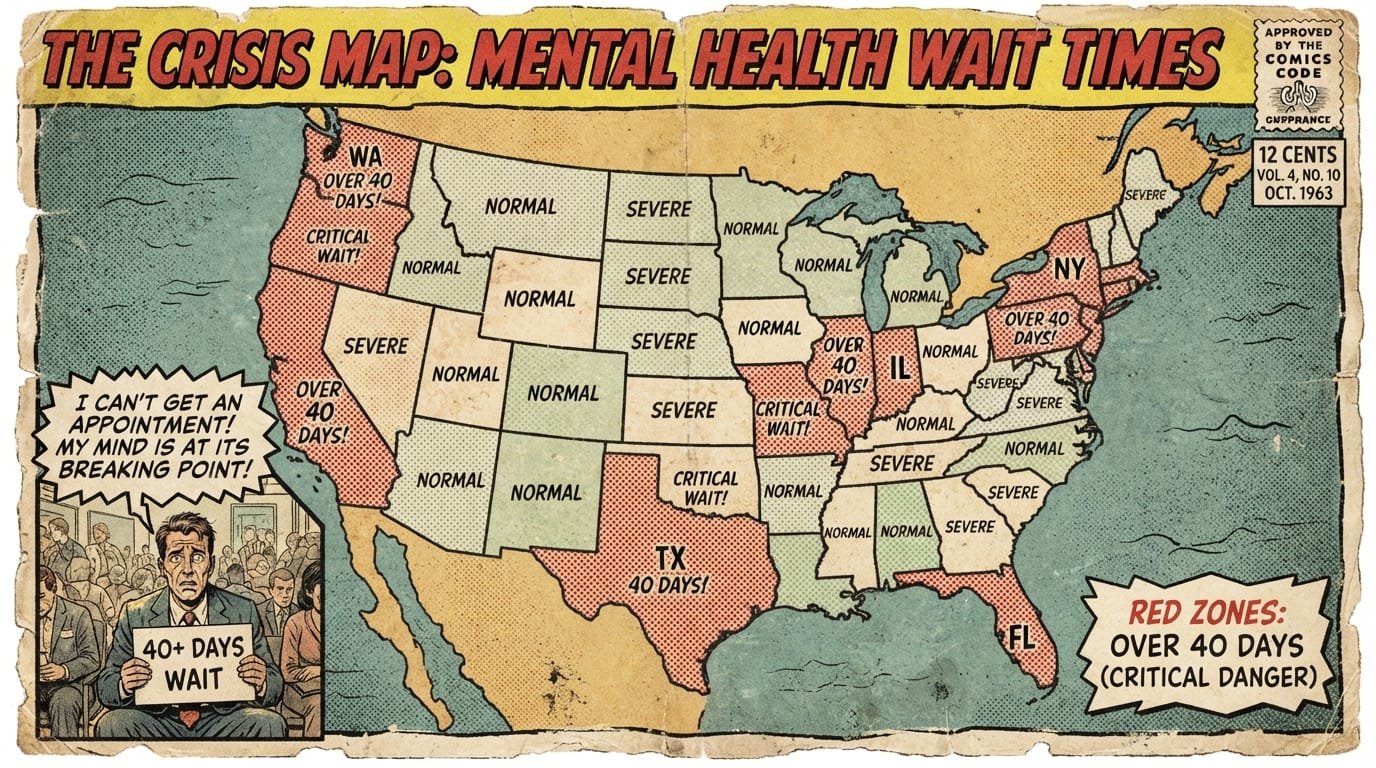
VA staffing shortages reached a seven-year high in fiscal year 2026, with 4,712 severe occupational shortages reported across all 139 VA medical facilities. Mental health wait times for new patients exceed 40 days in 15 states. Veterans who wait more than 20 days for primary or mental health care qualify for Community Care under the MISSION Act.
Quick Facts
| Item | Details |
|---|---|
| Benefit | VA health care access; Community Care eligibility when VA cannot meet access standards |
| Eligibility | Enrolled Veterans; Community Care requires meeting specific wait time or drive time criteria |
| Application | No new application for VA care; Community Care requires VA referral or authorization |
| Processing Time | Community Care referrals: VA standard is 3 business days for processing |
| Official Agency | U.S. Department of Veterans Affairs (VA); Veterans Health Administration (VHA) |
| Required Forms | No specific form for Community Care; VA Form 10-10EZ for new enrollment |
| Updated For | October 2026 |
What Is Happening with VA Staffing in 2026?
VA staffing shortages reached their highest level in seven years during fiscal year 2026. The VA Office of Inspector General reported 4,712 severe occupational staffing shortages across all 139 VA medical facilities — up from 4,434 in FY 2025 and 2,959 in FY 2024. This represents a 50% increase from FY 2024 levels.

The shortages are not concentrated in one region or one type of job. Every VA facility reported staffing shortages. Ninety-seven percent of facilities reported severe shortages for medical officer (physician) positions, and 86% reported severe shortages for nurse positions.
How Many Staff Has VA Lost?

The VA lost more than 40,000 employees during the first year of the current administration, with 88% of those losses in health care roles. The department saw a net decrease of approximately 3,000 registered nurses, 1,000 physicians, and 1,550 appointment schedulers. It was the first time in VA history that the department experienced a net loss of employees from one year to the next.
VA officials dispute some of these figures. A VA spokesperson stated that departmentwide vacancy rates for physicians and registered nurses were 13.3% and 8.4%, respectively, as of February 2026, and described those rates as consistent with historical averages. However, an independent analysis by The New York Times found that 73% of the eliminated medical positions — approximately 10,500 roles — had been filled at some point during 2025 or 2026, contradicting claims that only vacant positions were cut.
Which Positions Are Most Affected?
The OIG’s FY 2026 report identified the following as the most frequently reported severe shortage occupations:
| Occupation Type | Position | % of Facilities Reporting Shortage |
|---|---|---|
| Clinical | Practical Nurse | 59% |
| Clinical | Medical Officer (Physician) | 97% |
| Clinical | Nurse | 86% |
| Clinical | Psychologist | More than 50% |
| Nonclinical | Police | 57% |
Source:
Veterans May Qualify for Extra Benefits
Check available financial assistance, healthcare programs and other opportunities that may apply to you.
Check EligibilityThe top five medical occupations with severe shortages across VA facilities are practical nurses, psychologists, psychiatrists, social workers, and nursing assistants. The top five non-clinical shortage occupations are police officers, custodial workers, medical support assistants, food service workers, and healthcare engineers.
Why it matters: Staffing shortages directly affect how quickly you can get an appointment, how long you wait for a referral, and whether your local VA facility has the specialists you need. Understanding the scope helps you plan and advocate for your care.
What to do next: If you’re experiencing delays, review the Community Care eligibility section below. You may qualify for care from a non-VA provider at VA expense.
How Staffing Shortages Affect Wait Times
Mental health wait times for new patients have increased sharply. As of January 6, 2026, wait times for new patient individual mental health appointments exceeded 40 days in 15 states, including Arizona (51 days), California (41), Colorado (41), Maryland (54), Maine (61), and Virginia (52). The national mean exceeded 35 days — more than double the 20-day threshold that makes Veterans eligible for Community Care.
Wait Times by State (Mental Health — New Patients)
| State | Wait Time (Days) |
|---|---|
| Maine | 61 |
| Maryland | 54 |
| Virginia | 52 |
| Arizona | 51 |
| Kansas | 49 |
| New Hampshire | 48 |
| New Mexico | 47 |
| Connecticut | 43 |
| Iowa | 43 |
| North Carolina | 43 |
| Idaho | 42 |
| Nebraska | 42 |
| California | 41 |
| Colorado | 41 |
| North Dakota | 41 |
Source:
The Garner VA Clinic Example
The Garner VA Clinic in North Carolina reported a median wait time of 131.4 days for new patient mental health appointments between October 2025 and June 2026. During that period, the wait time ranged from a low of 99.8 days to a high of 171 days. This is more than six times the VA’s own 20-day access standard.
National Mental Health Wait Time Trends
The average wait time to book a new mental health appointment doubled from 17 days in May 2024 to 35 days by early 2026. At one VA facility in California, the wait time reached 134 days after the facility lost 7 out of 12 mental health providers.
VA Secretary Doug Collins has stated that the national average for a first-time mental health appointment is approximately 15 days, and VA data shows wait times for new patients seeking the broader array of mental health appointments dropped by 2.8 days to an average of about 15 days agencywide. However, independent analyses and OIG data show significant variation by facility and state.
Why it matters: If you’re in a state with wait times exceeding 20 days, you are legally eligible for Community Care under the MISSION Act. You do not have to wait for the VA to offer it — you can request it.
What to do next: Contact your VA facility’s Community Care office or call the national Community Care Contact Center at 877-881-7618. You can also send a secure message through My HealtheVet.
Your Rights Under the MISSION Act: Community Care Eligibility
The VA MISSION Act of 2019 established access standards that determine when Veterans can receive care from non-VA providers at VA expense. If VA cannot meet these standards, you may be eligible for Community Care.
The Six Community Care Eligibility Criteria
You may qualify for Community Care if any one of the following applies:
Wait time standard not met: VA cannot schedule an appointment within 20 days for primary care, mental health care, or non-institutional extended care, or within 28 days for specialty care.
Drive time standard not met: Your residence is more than a 30-minute average drive time from a VA primary care or mental health facility, or more than 60 minutes from a specialty care facility.
Service not available at VA: The needed service is not offered at any VA facility in your area.
No full-service VA facility in your state: Applies to certain states and territories.
Grandfather provision: You were eligible under the Veterans Choice Program’s 40-mile criterion on June 6, 2018.
Best medical interest: Your VA provider determines that community care is in your best medical interest.
Source:
Community Care Access Standards Table
| Care Type | Wait Time Standard | Drive Time Standard |
|---|---|---|
| Primary Care | 20 days | 30 minutes |
| Mental Health | 20 days | 30 minutes |
| Extended Outpatient Care | 20 days | 30 minutes |
| Specialty Care | 28 days | 60 minutes |
Source:
Why it matters: These standards are your legal right under the MISSION Act. If VA fails to meet them, you can request Community Care. The VA is required to process Community Care referrals within three business days.
What to do next: If you’ve been told your next available VA appointment is more than 20 days away (for primary or mental health care), you can request Community Care immediately. Document the date you requested the appointment and the date you were offered.
How to Request Community Care: Step-by-Step
Confirm your eligibility. Call your VA facility’s Community Care office or the national Community Care Contact Center at 877-881-7618.
Get a referral from your VA provider. Community Care requires VA authorization before you see a non-VA provider. Without it, you may be responsible for the full cost of care.
Submit your request. You can request Community Care through My HealtheVet secure messaging, by phone, or in person at your VA facility’s Community Care office.
Wait for authorization. VA is required to process Community Care requests within three business days. If you don’t receive a response, follow up.
Schedule your appointment. After authorization, VA may schedule the appointment for you, or you can use VA Online Scheduling to request an appointment with a community provider directly.
Keep your records. Document all dates: when you requested the VA appointment, when you were offered an appointment, and when you submitted your Community Care request.
Common Mistakes to Avoid
Seeing a community provider without VA authorization. This can result in you being responsible for the full bill.
Not documenting wait times. If you don’t document when you requested care and what appointment you were offered, it’s harder to prove eligibility.
Assuming you must wait for VA to offer Community Care. You can request it proactively once you meet the eligibility criteria.
Not following up. VA Community Care processing has documented backlogs and manual processes that can delay authorization.
Rural Veterans and Staffing Shortages
Approximately 33% of U.S. Veterans live in rural areas and face disproportionate barriers to accessing health care due to VA staffing shortages. Rural VA facilities are more likely to report provider shortages, and the projected physician shortage is more severe in rural areas.
How Rural Veterans Can Access Care
Community Care: If you live more than 30 minutes from a VA primary care facility or more than 60 minutes from a specialty facility, you qualify for Community Care.
Telehealth: VA has expanded telehealth options, including the Office of Rural Health’s Telehospital Medicine program. Ask your VA provider about virtual appointment options.
Community-Based Outpatient Clinics (CBOCs): These satellite clinics extend primary care and mental health services to areas without a full VA medical center.
Vet Centers: Community-based counseling centers for combat Veterans, located in all 50 states and U.S. territories.
Why it matters: Rural Veterans are hit hardest by staffing shortages because they have fewer alternatives. Community Care eligibility based on drive time is a critical protection.
What to do next: If you live more than 30 minutes from your nearest VA facility, verify your Community Care eligibility today. Call 877-881-7618 or visit VA.gov/communitycare.
Latest Rule Changes and Legislation in 2026
Congress is considering multiple pieces of legislation to address VA staffing shortages and improve transparency.
Pending Legislation
| Bill | Purpose | Status |
|---|---|---|
| S. 4400 — Optimizing the VA Workforce for Veterans Act of 2026 | Requires VA to develop a five-year human capital plan; requires notice before reduction in force | Introduced April 2026 |
| H.R. 9533 — VHA Personnel Transparency and Accountability Act | Requires publication of staffing and vacancy data under the MISSION Act | Introduced 2026 |
| VA Funding and Workforce Protection Act | Exempts VA from presidential hiring freezes | Introduced 2026 |
Sources:
Hiring Freeze Status
VA officially lifted its hiring freeze on its health care workforce in January 2026. However, staffing caps remain in place, meaning facilities are operating within strict full-time equivalent (FTE) limits. Requests to exceed baseline headcount must be approved by the VA Strategic Hiring Committee.
What This Means for Veterans
Hiring may improve for clinical positions now that the freeze is lifted, but facilities still face budget constraints.
Community Care may become more important as VA works to reduce backlogs while operating within staffing caps.
Transparency may improve if pending legislation passes, giving Veterans better information about staffing levels at their local facility.
What to do next: Contact your congressional representative to support legislation that requires VA to maintain adequate staffing levels. VSOs including the American Legion, VFW, and Disabled American Veterans also advocate on these issues.
VA Disability Claims Processing: A Different Story
While health care staffing shortages have worsened, VA disability claims processing has improved significantly. VA completed a record 3 million claims in FY 2025 and is on pace to match that in FY 2026, with average claim processing time dropping from 141.5 days in January 2025 to 75.6 days in September 2026.
The rating backlog dropped below 90,000 as of March 2026, a 66% decrease from January 2025. VA attributes much of this improvement to automation and process changes.
Claims Processing vs. Health Care Wait Times
| Metric | Trend | Details |
|---|---|---|
| Disability claims backlog | ↓ Improving | 66% decrease since Jan 2025 |
| Average claims processing time | ↓ Improving | 141.5 days → 75.6 days |
| Mental health appointment wait times | ↑ Worsening | 17 days → 35+ days nationally |
| Severe staffing shortages | ↑ Worsening | 2,959 (FY24) → 4,712 (FY26) |
Sources:
Why it matters: Faster claims processing means Veterans receive disability compensation and back pay sooner. However, the health care side of VA is experiencing the opposite trend, with longer wait times for appointments.
What to do next: If you have a pending disability claim, check its status through VA.gov or the VA mobile app. Average processing times are significantly faster than in previous years.
Common Questions
1. Are VA staffing shortages getting better or worse in 2026?
They are getting worse. The OIG reported 4,712 severe occupational staffing shortages in FY 2026, the highest in seven years and a 50% increase from FY 2024. All 139 VA medical facilities reported shortages, with 97% reporting severe physician shortages.
2. How long is the wait for a mental health appointment at VA?
The national average for new patient mental health appointments exceeded 35 days as of January 2026. In 15 states, wait times exceed 40 days, with Maine at 61 days and Maryland at 54 days. Some individual facilities report waits of 100 days or more.
3. Can I see a private doctor if VA wait times are too long?
Yes. Under the MISSION Act, if VA cannot schedule an appointment within 20 days for primary care or mental health, or 28 days for specialty care, you are eligible for Community Care. You must get VA authorization before seeing a non-VA provider.
4. How do I request Community Care?
Contact your VA facility’s Community Care office, call the national Community Care Contact Center at 877-881-7618, or send a secure message through My HealtheVet. You will need a referral from your VA provider, and VA must authorize the care before you see a community provider.
5. What happens if I see a community provider without authorization?
You may be responsible for the full cost of care. Always get VA authorization before scheduling an appointment with a non-VA provider. The only exceptions are emergency care, for which you must notify VA within 72 hours.
6. Is the Veterans Crisis Line still operating?
Yes. The Veterans Crisis Line remains operational and is staffed 24/7. The line saw a slight decrease in staffing from 1,162 in October 2024 to 1,149 in April 2026, but remains largely stable. Call 988, then press 1, or text 838255.
7. Which VA positions are hardest to fill?
Practical nurses, psychologists, psychiatrists, social workers, and nursing assistants are the most frequently reported clinical shortages. Police officers, custodial workers, and medical support assistants are the most common non-clinical shortages.
8. Has the VA hiring freeze been lifted?
Yes, the VA officially lifted its hiring freeze on health care positions in January 2026. However, staffing caps remain in place, and facilities must receive approval from the VA Strategic Hiring Committee to exceed baseline headcount levels.
9. How many Veterans are without a VA primary care provider?
Approximately 1.2 million Veterans do not have an assigned VA primary care provider, according to congressional testimony from April 2026. This is attributed to high staff turnover and difficulty recruiting primary care physicians.
10. What should I do if I can’t get an appointment at my local VA?
First, document the date you requested care and the appointment date offered. If the wait exceeds 20 days for primary or mental health care (28 days for specialty care), request Community Care. Contact your facility’s patient advocate if you need help navigating the process.
11. Does VA staffing affect disability claims processing?
Disability claims processing has actually improved significantly. VA completed a record 3 million claims in FY 2025 and reduced average processing time to 75.6 days by September 2026, down from 141.5 days in January 2025.
12. What legislation is pending to address VA staffing?
S. 4400 would require VA to develop a five-year workforce plan. H.R. 9533 would require publication of staffing and vacancy data. Both bills are under consideration in the 119th Congress.
Key Takeaways
VA staffing shortages hit a 7-year high in FY 2026, with 4,712 severe occupational shortages across all 139 VA medical facilities.
Mental health wait times exceed 40 days in 15 states, more than double the 20-day Community Care eligibility threshold.
Community Care under the MISSION Act is your legal right when VA cannot meet wait time or drive time standards.
You can request Community Care proactively — you don’t have to wait for VA to offer it.
The VA hiring freeze on health care positions was lifted in January 2026, but staffing caps remain.
Disability claims processing has improved dramatically, with average times dropping from 141.5 days to 75.6 days.
Rural Veterans are disproportionately affected, but drive-time-based Community Care eligibility provides a safety net.
Pending legislation including S. 4400 and H.R. 9533 may improve transparency and workforce planning.
Document everything — appointment request dates, offered appointment dates, and Community Care requests.
Contact your VSO or congressional representative to advocate for VA staffing improvements.
Official Resources
VA Health Care: https://www.va.gov/health-care/
VA Community Care: https://www.va.gov/communitycare/
VA Community Care Contact Center: 877-881-7618
VA Health Benefits Enrollment (VA Form 10-10EZ): https://www.va.gov/health-care/apply/application/introduction
VA Office of Inspector General Staffing Reports: https://www.vaoig.gov/
Veterans Crisis Line: Dial 988, then press 1
VA Caregiver Support: https://www.caregiver.va.gov/
VA Find Locations: https://www.va.gov/find-locations/
My HealtheVet: https://www.myhealth.va.gov/
USA.gov Veterans Benefits: https://www.usa.gov/veterans-benefits



🇺🇸 IMPORTANT DISCLAIMER – Veterans Benefits Information
This site provides general information about U.S. Department of Veterans Affairs (VA) benefits for educational and informational purposes only.
- Not Official: We are NOT affiliated with, endorsed by, or connected to the U.S. Department of Veterans Affairs (VA), the Veterans Benefits Administration (VBA), the Veterans Health Administration (VHA), or any other government agency.
- No Legal/Financial Advice: The content on this website is for informational purposes only and does not constitute legal, financial, or medical advice. VA benefits rules change frequently – always consult with an accredited Veterans Service Officer (VSO) or a qualified professional for your specific situation.
- Official Sources: For official, binding information and to apply for benefits, always visit official .gov websites: VA.gov, Benefits.VA.gov, or SSA.gov.
- No Data Collection: This site does not collect, store, or process any personal information. It does not have login forms, contact forms, or any system to capture user data. We never ask for your Social Security Number, bank details, or any personal information.
- 🚨 Scam Alert: The VA and other government agencies never charge fees for benefit applications. If anyone asks for money to "process" your VA claim, it is a scam. Report it to the VA Office of Inspector General at VA.gov/OIG.
- Advertising: This site uses third-party advertising (Adsterra) to cover operational costs. We do not endorse or guarantee any products or services advertised.
📌 Information provided as of June 2026. Always verify current eligibility and rules with official .gov sources.
This site is not affiliated with the U.S. Department of Veterans Affairs or any government agency. All information is for educational purposes only. Please visit VA.gov for official information.
