

Understanding VA Loans: A Financial Lifeline for Veterans
VA loans have emerged as an essential financial resource for military veterans, providing a pathway to homeownership that is both accessible and advantageous. Among the most significant features of VA loans is the absence of a required down payment, which alleviates the barrier that many first-time homebuyers face. This benefit allows veterans to secure a loan without the need to save extensively for a substantial initial payment, which is often a prohibitive factor in home purchases.
Additionally, VA loans do not require private mortgage insurance (PMI), which is a typical necessity in conventional loans when the down payment is less than 20%. This absence of PMI translates to significant savings on monthly payments, thereby enhancing the financial feasibility of homeownership for veterans and their families. The benefits do not end there; VA loans also offer competitive interest rates, which are often lower than those available through traditional financing options. This contributes to reduced overall loan costs, making it an appealing option for eligible veterans.

Moreover, the VA loan program is designed to support veterans in navigating the complexities of home buying. The process is usually streamlined, and veterans can access various resources and advice to guide them along the way. Given these favorable terms, VA loans not only empower veterans to secure housing but also provide a sense of stability and security, which is invaluable for service members transitioning to civilian life. With these features, it is evident that VA loans serve as a critical financial lifeline, helping veterans attain their dream of homeownership while ensuring long-term financial health.
Eligibility Requirements for VA Loans

Veterans Affairs (VA) loans offer invaluable assistance to war veterans seeking to purchase, build, or refinance a home. To qualify for these specialized loans, certain eligibility requirements must be met. Notably, a veteran must have completed a minimum of 90 consecutive days of active duty service during wartime. This includes veterans who served during the Gulf War era, as well as those who participated in preceding conflicts, such as World War II, the Korean War, and the Vietnam War.
The VA also recognizes service in the Selected Reserve and certain National Guard units, where members may qualify after completing a total of six years of service, coupled with a minimum of 90 days of active duty. This recognition ensures that a broader range of veterans can access these crucial benefits, reflecting the nation’s commitment to those who have served.
Documentation is a crucial element of the eligibility verification process. Veterans must provide evidence of their service duration and discharge status. Typically, the necessary documentation includes the DD Form 214, which details the record of service and is essential for proving eligibility for VA loans. This form summarizes a veteran’s service and outlines their discharge status, indicating whether they were honorably discharged, which is a requirement for accessing VA loan benefits.
Moreover, service-record verification by the VA is significant, ensuring that the loans are extended only to qualified individuals. Veterans must ensure that their service records are up-to-date and accurately reflect their military history. Failure to provide appropriate documentation may delay or hinder the loan approval process, underscoring the importance of preparedness when applying for eligibility.
Comparing VA Loans to Conventional Mortgages
Veterans May Qualify for Extra Benefits
Check available financial assistance, healthcare programs and other opportunities that may apply to you.
Check EligibilityWhen evaluating mortgage options, it is essential to understand how VA loans compare to conventional mortgages, particularly for veterans. VA loans are specifically designed for eligible military personnel and offer several unique advantages that make them an attractive choice for many homebuyers.
One significant advantage of VA loans is that they typically do not require a down payment, which can be a considerable barrier for first-time homebuyers. In contrast, conventional mortgages often require a down payment of 3% to 20%, depending on the lender and the borrower’s credit profile. This feature not only eases the financial burden on veterans but also allows them to invest their savings in other areas, such as home improvements or emergencies.
Additionally, VA loans do not require private mortgage insurance (PMI), which is commonly mandated for conventional loans when the down payment is less than 20%. By eliminating PMI, VA loans can significantly reduce monthly mortgage payments, making homeownership more affordable for veterans. Furthermore, VA loans often feature competitive interest rates, which can contribute to long-term savings on the overall cost of the mortgage.
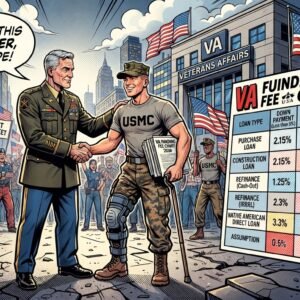
However, VA loans are not without their limitations. While they are accessible to veterans, eligibility can vary based on service duration and discharge status. Additionally, the VA imposes mandatory fees, such as the funding fee, which may be a disadvantage for some borrowers unless certain exemptions apply. In comparison, conventional mortgages offer more flexibility in terms of qualification criteria, thus potentially appealing to a broader audience.
Ultimately, while both VA loans and conventional mortgages have their advantages and disadvantages, veterans may find VA loans to be a more viable option due to their lower upfront costs, absence of PMI, and favorable terms. These factors can be crucial in facilitating the home-buying process and promoting homeownership among service members.
Navigating the VA Loan Process: Steps to Home Ownership
Veterans have access to the VA loan program, which simplifies the home buying process through various advantages. To successfully navigate this journey, veterans must follow several key steps that facilitate the acquisition of their dream home.
The first step is pre-qualification for the VA loan. This involves gathering financial documents and consulting with potential lenders to assess how much one can afford. During this phase, they will evaluate your credit score and financial history, which plays a crucial role in determining eligibility.
Choosing a qualified lender is the next step. It’s advisable for veterans to select lenders who have experience dealing specifically with VA loans. These lenders are often well-versed in the unique requirements and can expedite the loan process. Asking questions about interest rates, closing costs, and timelines will help veterans make informed decisions.
Once a lender is chosen, securing a Certificate of Eligibility (COE) is essential. This document proves the veteran’s eligibility for the VA loan benefit. Veterans can obtain a COE through the VA’s website or by working with their chosen lender. This step is crucial, as the COE impacts the loan amount veterans are qualified for.
Next, veterans should engage in the home buying process by searching for properties that meet their needs and budget. Utilizing real estate agents who are familiar with VA loans can be beneficial, as they can guide veterans through the intricacies of VA-specific properties. After finding a suitable property, the next step involves making an offer, which may require negotiation.
Finally, veterans must navigate the closing process, which entails reviews of documents, meeting financial obligations, and completing inspections. Ensuring a smooth transaction often hinges upon remaining organized and informed throughout the home-buying experience, assisting veterans in achieving home ownership with confidence.


🇺🇸 IMPORTANT DISCLAIMER – Veterans Benefits Information
This site provides general information about U.S. Department of Veterans Affairs (VA) benefits for educational and informational purposes only.
- Not Official: We are NOT affiliated with, endorsed by, or connected to the U.S. Department of Veterans Affairs (VA), the Veterans Benefits Administration (VBA), the Veterans Health Administration (VHA), or any other government agency.
- No Legal/Financial Advice: The content on this website is for informational purposes only and does not constitute legal, financial, or medical advice. VA benefits rules change frequently – always consult with an accredited Veterans Service Officer (VSO) or a qualified professional for your specific situation.
- Official Sources: For official, binding information and to apply for benefits, always visit official .gov websites: VA.gov, Benefits.VA.gov, or SSA.gov.
- No Data Collection: This site does not collect, store, or process any personal information. It does not have login forms, contact forms, or any system to capture user data. We never ask for your Social Security Number, bank details, or any personal information.
- 🚨 Scam Alert: The VA and other government agencies never charge fees for benefit applications. If anyone asks for money to "process" your VA claim, it is a scam. Report it to the VA Office of Inspector General at VA.gov/OIG.
- Advertising: This site uses third-party advertising (Adsterra) to cover operational costs. We do not endorse or guarantee any products or services advertised.
📌 Information provided as of June 2026. Always verify current eligibility and rules with official .gov sources.
This site is not affiliated with the U.S. Department of Veterans Affairs or any government agency. All information is for educational purposes only. Please visit VA.gov for official information.
