

OEF Veterans: Complete Guide to Benefits, Eligibility & Resources
An OEF veteran is anyone who served in Operation Enduring Freedom (Afghanistan operations, October 2001–December 2014). OEF veterans qualify for VA disability compensation, five years of cost-free VA healthcare for combat-related conditions, Post-9/11 GI Bill education benefits, and PACT Act presumptive conditions for toxic exposure. File claims with VA Form 21-526EZ.
Quick Facts
| Item | Details |
|---|---|
| Definition | Veterans who served in Operation Enduring Freedom (Oct 2001–Dec 2014) |
| Key Benefit | VA disability compensation, free healthcare, GI Bill, PACT Act presumptives |
| Eligibility | Active duty, National Guard, or Reserve service in support of OEF; non-dishonorable discharge |
| Application | VA Form 21-526EZ (disability); VA Form 10-10EZ (healthcare) |
| Processing Time | Average 81 days for disability claims (2026) |
| Official Agency | U.S. Department of Veterans Affairs (VA), Veterans Benefits Administration |
| Required Forms | VA Form 21-526EZ, VA Form 10-10EZ, DD-214 |
| Updated For | October 2026 |
What Is an OEF Veteran?
An OEF veteran is a person who served in the U.S. military during Operation Enduring Freedom, the official name for combat operations in Afghanistan and related areas following the September 11, 2001 terrorist attacks. OEF operations ran from October 2001 through December 2014 and included service members from all branches—Army, Navy, Air Force, Marine Corps, Coast Guard, and later Space Force—as well as activated National Guard and Reserve members.

OEF is often grouped with Operation Iraqi Freedom (OIF, 2003–2010) and Operation New Dawn (OND, 2010–2011) under the umbrella term “OEF/OIF/OND veterans” or “Post-9/11 veterans.” These veterans share many of the same benefit programs and eligibility rules.
OEF Service Locations

OEF operations extended beyond Afghanistan to include:
Afghanistan (primary theater)
Philippines
Somalia
Georgia
Djibouti
Guantanamo Bay, Cuba
Other locations supporting Global War on Terror operations
Military service in these locations on or after October 7, 2001, generally qualifies as OEF service.
Why the OEF Designation Matters
The OEF designation determines eligibility for specific VA benefits, including:
Combat Veteran authority: Five years of cost-free VA healthcare for conditions possibly related to combat service, with enrollment in Priority Group 6 or higher.
PACT Act presumptive conditions: Burn pit and toxic exposure presumptions that apply to Post-9/11 veterans.
Post-9/11 GI Bill: Education benefits available to those who served on active duty after September 10, 2001.
Combat-Related Special Compensation (CRSC): For military retirees with combat-related disabilities.
Who Qualifies as an OEF Veteran?
You qualify as an OEF veteran if you served on active duty in support of Operation Enduring Freedom between October 7, 2001, and December 31, 2014, and received a discharge under conditions other than dishonorable. Service can be active duty, federalized National Guard, or activated Reserve. The key is that your service was connected to OEF operations.
Basic Eligibility Requirements
Service connection to OEF: You served in a location or operation supporting OEF during the authorized period.
Character of discharge: You were discharged or released under conditions other than dishonorable.
Active duty status: You served on active duty, or your Guard/Reserve unit was federalized under Title 10 orders.
National Guard and Reserve Considerations
Veterans May Qualify for Extra Benefits
Check available financial assistance, healthcare programs and other opportunities that may apply to you.
Check EligibilityNational Guard and Reserve members who deployed in support of OEF under Title 10 federal orders qualify for the same VA benefits as active-duty veterans. State activation orders (such as for hurricane response or COVID-19) typically do not qualify unless the service was under Title 10 authority.
Documentation
To establish OEF veteran status, you typically need:
DD-214 discharge document
Deployment orders or service records showing OEF service
Global War on Terrorism Expeditionary Medal or related awards
VA Disability Compensation for OEF Veterans
OEF veterans qualify for VA disability compensation if they have a current physical or mental condition caused or worsened by their military service. VA disability compensation is a tax-free monthly payment based on the severity of your service-connected disabilities. In 2026, payments range from $180.42 (10% rating) to $3,938.58 (100% rating) for a single veteran without dependents.
How to File a Claim
Gather evidence: Collect service treatment records, private medical records, buddy statements, and your DD-214.
Complete VA Form 21-526EZ: This is the Application for Disability Compensation and Related Compensation Benefits.
Submit your claim: File online at VA.gov, by mail to the Evidence Intake Center, by fax, or through an accredited VSO.
Attend C&P exams: If VA schedules a Compensation & Pension exam, attend it.
Receive your decision: VA will send a decision letter explaining what was granted or denied.
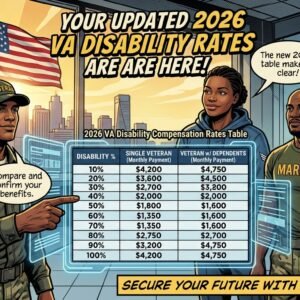
2026 VA Disability Compensation Rates
| Disability Rating | Monthly Payment (Veteran Alone) |
|---|---|
| 10% | $180.42 |
| 30% | $552.47 |
| 50% | $1,132.90 |
| 70% | $1,808.45 |
| 100% | $3,938.58 |
Veterans with a 30% rating or higher receive additional compensation for dependents.
Common OEF Disabilities
OEF veterans commonly receive VA disability ratings for:
Post-traumatic stress disorder (PTSD): Rated 0–100% under the General Rating Formula for Mental Disorders.
Traumatic brain injury (TBI): An estimated 10–20% of OEF Army and Marine Corps service members sustained mild TBI.
Musculoskeletal conditions: Back, knee, and shoulder injuries are among the most common.
Hearing loss and tinnitus: Tinnitus maxes at 10%; hearing loss rates 0–100%.
Respiratory conditions: Asthma, COPD, and chronic bronchitis—now presumptive under the PACT Act.
Chronic pain: Frequently co-occurs with other injuries.
PACT Act Benefits for OEF Veterans
The PACT Act (Sergeant First Class Heath Robinson Honoring Our Promise to Address Comprehensive Toxics Act of 2022) expands VA health care and disability benefits for veterans exposed to burn pits and other toxic substances. OEF veterans are among the primary beneficiaries because open-air burn pits were commonly used at military bases in Afghanistan and other OEF locations.
Presumptive Conditions Under the PACT Act
VA presumes service connection for 23+ conditions associated with burn pit and toxic exposure. These include:
Respiratory conditions:
Asthma (diagnosed after service)
Chronic bronchitis
Chronic obstructive pulmonary disease (COPD)
Chronic rhinitis
Chronic sinusitis
Constrictive bronchiolitis or obliterative bronchiolitis
Emphysema
Cancers:
Brain cancer
Gastrointestinal cancer of any type
Glioblastoma
Head cancer of any type
Kidney cancer
Lymphatic cancer of any type
Lymphoma of any type
Melanoma
Pancreatic cancer
Reproductive cancer of any type
Urinary/bladder cancer
Other conditions:
High blood pressure (hypertension)
How to File a PACT Act Claim
File VA Form 21-526EZ and identify the presumptive condition you’re claiming. Because these are presumptive conditions, you don’t need to prove a nexus between your service and the condition—only that you meet the service requirements and have a current diagnosis. Veterans with burn pit exposure who reapply with current PACT Act language receive higher ratings within 60–90 days, often 30–40% higher than initial denials.
Free VA Healthcare for OEF Veterans
OEF veterans qualify for five years of cost-free VA healthcare for conditions possibly related to their combat service. This is known as the “Combat Veteran” authority. Under this authority, VA provides cost-free health care services and nursing home care, with enrollment in Priority Group 6 or higher for five years from your most recent discharge or release from active duty.
What the Five-Year Benefit Covers
During the enhanced eligibility period, you can receive:
Doctor visits
Specialty care (mental health, orthopedics, neurology, audiology, dermatology)
Women’s health services
Nurse visits
Medications
Physical and occupational therapy
Surgery
Vocational rehabilitation
Dental exam, cleaning, and necessary dental care (if not received within 90 days of separation AND requested within 180 days of separation)
No formal service-connected disability or proof of injury is required for free care during this period.
What Happens After Five Years
Combat veterans who enroll under this enhanced authority remain enrolled even after the enhanced eligibility period ends. However, they may be shifted to Priority Group 7 or 8, depending on income level, and required to make applicable copays. For care not related to combat service, copays may be required based on financial assessment.
How to Enroll
Complete VA Form 10-10EZ (Application for Health Benefits). You can enroll:
Online at VA.gov
By phone at 877-222-VETS (8387)
By mail or fax
In person at your local VA Medical Center
Post-9/11 Transition and Care Management Program
The Post-9/11 Transition and Care Management Program (M2VA) offers transitional assistance, case management, and outreach services to all veterans who served after September 11, 2001. This program helps OEF veterans navigate VA healthcare and benefits during their transition to civilian life.
Post-9/11 GI Bill for OEF Veterans
OEF veterans qualify for the Post-9/11 GI Bill (Chapter 33) if they served on active duty after September 10, 2001, and received an honorable discharge. The Post-9/11 GI Bill provides up to 36 months of education benefits, including tuition and fees, a monthly housing allowance, and a stipend for books and supplies.
Eligibility Requirements
Served at least 90 days of aggregate active duty after September 10, 2001, OR
Discharged with a service-connected disability after 30 days of continuous active duty
The percentage of benefits you receive depends on your length of active-duty service. Veterans with 36 months or more of active duty receive 100% of the benefit. Those with less service receive a lower percentage tier.
What the Post-9/11 GI Bill Covers
Tuition and fees: Paid directly to the school up to the maximum in-state rate.
Monthly housing allowance: Based on the ZIP code of your school.
Books and supplies stipend: Up to $1,000 per academic year.
Relocation assistance: For some veterans moving to attend school.
Rural benefit: Additional housing allowance for veterans in rural areas.
Transfer of Benefits
OEF veterans may transfer unused Post-9/11 GI Bill benefits to dependents (spouse or children) if they meet specific service requirements and agree to additional service.
Other Benefits for OEF Veterans
OEF veterans may qualify for additional VA and federal benefits beyond disability compensation and healthcare.
VA Home Loan Guarantee
VA-backed home loans offer competitive interest rates and no down payment for eligible veterans. OEF veterans generally qualify after completing their service obligation.
Veteran Readiness and Employment (VR&E)
VR&E (Chapter 31) provides vocational rehabilitation and employment services for veterans with service-connected disabilities that prevent them from working. Services include career counseling, job training, and job placement assistance.
VA Pension
VA pension is a needs-based benefit for wartime veterans with limited income. OEF veterans who served during a period of war may qualify if their income and net worth fall below VA limits.
Burial Benefits
OEF veterans qualify for burial benefits, including a burial allowance, a government headstone or marker, a presidential memorial certificate, and burial in a VA national cemetery at no cost.
Unemployment Compensation (UCX)
The Unemployment Compensation for Ex-Servicemembers (UCX) program provides unemployment benefits for eligible ex-military personnel. Benefits are administered by state unemployment agencies.
State Benefits
Many states offer additional benefits for OEF veterans, including:
Property tax exemptions
State education assistance
Hiring preferences for state jobs
Emergency financial assistance
Home loan programs
Check with your state Department of Veterans Affairs for specific programs.
How to Apply for OEF Veteran Benefits
Applying for OEF veteran benefits starts with identifying which benefits you’re eligible for, then submitting the appropriate forms. The process differs by benefit type.
Step-by-Step Application Guide
Determine your eligibility. Review the requirements for each benefit you’re interested in.
Gather required documents. DD-214, service records, medical records, and any deployment orders.
File VA Form 21-526EZ for disability compensation. Submit online, by mail, or through an accredited VSO.
File VA Form 10-10EZ for healthcare enrollment. Submit online at VA.gov or at a VA medical center.
Apply for education benefits. Submit VA Form 22-1990 for Post-9/11 GI Bill.
Apply for VR&E if applicable. Submit VA Form 28-1900.
Check state benefits. Contact your state Department of Veterans Affairs.
Track your claims. Use VA.gov‘s claim status tool.
Working With an Accredited Representative
The best way to get help with VA claims is to work with an accredited Veterans Service Organization (VSO), claims agent, or attorney. VSO help is usually free. Organizations include The American Legion, VFW, DAV, AMVETS, and Wounded Warrior Project.
Common Mistakes OEF Veterans Make
The most common mistake OEF veterans make is waiting too long to file a claim. You should file as soon as you have a diagnosis and evidence connecting it to your service.
Top Mistakes
Not claiming all conditions. Many OEF veterans claim only their primary condition and miss secondary conditions.
Missing the C&P exam. Missing your exam almost guarantees a denial.
Not filing for PACT Act presumptives. If you were exposed to burn pits and have a presumptive condition, you should file.
Ignoring the five-year healthcare window. The cost-free healthcare benefit is time-limited from your discharge date.
Not appealing denials. Many denials are overturned on appeal.
Forgetting dependents. Veterans with a 30% rating or higher can claim dependents for additional compensation.
Not checking state benefits. Many states offer benefits beyond federal VA programs.
Appeals Process for OEF Veterans
If VA denies your claim or assigns a rating you believe is too low, you have three decision review options: Supplemental Claim, Higher-Level Review, and Board Appeal. You generally have one year from the date of your VA decision letter to file an appeal.
Choosing the Right Appeal Lane
| Your Situation | Best Option |
|---|---|
| You have new medical evidence | Supplemental Claim (VA Form 20-0995) |
| You believe VA made an error | Higher-Level Review (VA Form 20-0996) |
| You want a judge to review your case | Board Appeal (VA Form 10182) |
Appeals Timelines
Supplemental Claim: Average 60–75 days
Higher-Level Review: Average 60–75 days
Board of Veterans’ Appeals: 12–36+ months depending on docket
Latest Changes Affecting OEF Veterans
The most significant recent change affecting OEF veterans is the PACT Act, which expanded presumptive conditions for toxic-exposed veterans. VA has also made major improvements in claims processing times.
PACT Act Implementation
The PACT Act added 23+ presumptive conditions and expanded healthcare eligibility for OEF veterans. VA continues to add conditions and locations as research develops.
Claims Processing Improvements
As of April 2026, VA’s average time to complete a disability claim fell to 80.7 days, down from 141.5 days in January 2025. Claims accuracy reached 94.02%, the highest rate in two years. The backlog of claims pending more than 125 days dropped below 100,000 for the first time.
VA Medication Rating Rule (February 2026)
VA published an interim final rule in February 2026 changing how examiners evaluate disabilities treated with medication. The rule directs that veterans be compensated for their actual functional impairment, and prohibits examiners from estimating what a condition would be like without medication. The rule remains under congressional review as of October 2026.
Common Questions
1. What does OEF stand for?
OEF stands for Operation Enduring Freedom, the U.S. military operation in Afghanistan and related areas following the September 11, 2001 attacks. It ran from October 2001 through December 2014 and included service members from all branches and activated Guard/Reserve units.
2. What benefits do OEF veterans get?
OEF veterans qualify for VA disability compensation, five years of cost-free VA healthcare for combat-related conditions, Post-9/11 GI Bill education benefits, VA home loans, VR&E, and PACT Act presumptive conditions. Many states offer additional benefits.
3. How do I file a VA claim as an OEF veteran?
File VA Form 21-526EZ online at VA.gov, by mail to the Evidence Intake Center, by fax, or through an accredited VSO. Gather your DD-214, service treatment records, private medical records, and buddy statements first.
4. What is the PACT Act and how does it help OEF veterans?
The PACT Act expands VA benefits for veterans exposed to burn pits and toxic substances. It adds 23+ presumptive conditions for Post-9/11 veterans, including respiratory conditions and cancers. You don’t need to prove a nexus—just meet service requirements and have a diagnosis.
5. How long do I have free VA healthcare as an OEF veteran?
You have five years from your most recent discharge or separation date for cost-free VA healthcare for conditions possibly related to combat service. After five years, you remain enrolled but may shift to a lower priority group and pay copays.
6. What are the most common disabilities for OEF veterans?
Common disabilities include PTSD, traumatic brain injury (TBI), back and knee conditions, hearing loss, tinnitus, respiratory conditions (asthma, COPD), and chronic pain. An estimated 10–20% of OEF Army and Marine Corps members sustained mild TBI.
7. Can OEF veterans get the Post-9/11 GI Bill?
Yes. OEF veterans who served at least 90 days of aggregate active duty after September 10, 2001, or were discharged with a service-connected disability after 30 days, qualify for the Post-9/11 GI Bill (Chapter 33).
8. What is the average VA claim processing time in 2026?
As of April 2026, the average time to complete a disability claim is 80.7 days, down from 141.5 days in January 2025. Claims accuracy is 94.02%, the highest in two years.
9. How do I enroll in VA healthcare as an OEF veteran?
Complete VA Form 10-10EZ online at VA.gov, by phone at 877-222-VETS, by mail, or in person at a VA medical center. You’ll need your DD-214 and financial information.
10. Do OEF veterans qualify for VA home loans?
Yes. OEF veterans generally qualify for VA-backed home loans after completing their service obligation. VA loans offer competitive interest rates and no down payment.
11. What is the Combat Veteran authority?
The Combat Veteran authority provides five years of cost-free VA healthcare for conditions possibly related to combat service, with enrollment in Priority Group 6 or higher. It applies to veterans who served in a theater of combat operations after November 11, 1998.
12. Can OEF veterans get unemployment benefits?
Yes. The Unemployment Compensation for Ex-Servicemembers (UCX) program provides unemployment benefits for eligible ex-military personnel. Benefits are administered by state unemployment agencies.
Key Takeaways
An OEF veteran is anyone who served in Operation Enduring Freedom (October 2001–December 2014).
OEF veterans qualify for VA disability compensation, free healthcare, GI Bill, and PACT Act benefits.
Five years of cost-free VA healthcare is available from your most recent discharge date.
The PACT Act adds 23+ presumptive conditions for burn pit and toxic exposure.
The Post-9/11 GI Bill provides up to 36 months of education benefits.
Common OEF disabilities include PTSD, TBI, back/knee conditions, and respiratory illnesses.
Average VA claim processing time is 80.7 days in 2026.
Work with a free accredited VSO for the best chance of success.
You have one year to appeal a VA decision.
Many states offer additional benefits beyond federal VA programs.
Official Resources
VA Disability Compensation: https://www.va.gov/disability/
Returning Service Members (OEF/OIF/OND): https://www.va.gov/health-care/eligibility/returning-service-members/
PACT Act Information: https://www.va.gov/resources/the-pact-act-and-your-va-benefits/
Post-9/11 GI Bill: https://www.va.gov/education/about-gi-bill-benefits/post-9-11/
VA Healthcare Enrollment (10-10EZ): https://www.va.gov/health-care/apply-for-health-care-form-10-10ez/
VA Form 21-526EZ: https://www.va.gov/find-forms/about-form-21-526ez/
Find an Accredited Representative: https://www.va.gov/get-help-from-accredited-representative/
USA.gov Veterans Benefits: https://www.usa.gov/veterans-benefits



🇺🇸 IMPORTANT DISCLAIMER – Veterans Benefits Information
This site provides general information about U.S. Department of Veterans Affairs (VA) benefits for educational and informational purposes only.
- Not Official: We are NOT affiliated with, endorsed by, or connected to the U.S. Department of Veterans Affairs (VA), the Veterans Benefits Administration (VBA), the Veterans Health Administration (VHA), or any other government agency.
- No Legal/Financial Advice: The content on this website is for informational purposes only and does not constitute legal, financial, or medical advice. VA benefits rules change frequently – always consult with an accredited Veterans Service Officer (VSO) or a qualified professional for your specific situation.
- Official Sources: For official, binding information and to apply for benefits, always visit official .gov websites: VA.gov, Benefits.VA.gov, or SSA.gov.
- No Data Collection: This site does not collect, store, or process any personal information. It does not have login forms, contact forms, or any system to capture user data. We never ask for your Social Security Number, bank details, or any personal information.
- 🚨 Scam Alert: The VA and other government agencies never charge fees for benefit applications. If anyone asks for money to "process" your VA claim, it is a scam. Report it to the VA Office of Inspector General at VA.gov/OIG.
- Advertising: This site uses third-party advertising (Adsterra) to cover operational costs. We do not endorse or guarantee any products or services advertised.
📌 Information provided as of June 2026. Always verify current eligibility and rules with official .gov sources.
This site is not affiliated with the U.S. Department of Veterans Affairs or any government agency. All information is for educational purposes only. Please visit VA.gov for official information.
