

Understanding VA Loan Funding Fee
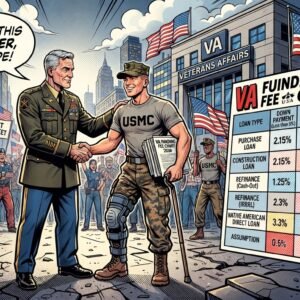
The VA loan funding fee is a one-time charge that veterans and active-duty service members must pay when obtaining a VA-backed mortgage. This fee serves a vital purpose: it helps sustain the VA loan program, making it possible for future generations of service members to benefit from flexible financing options. Understanding the nuances of the VA loan funding fee is essential for anyone considering a VA loan in 2026.
The amount of the VA loan funding fee varies depending on several factors. One significant consideration is the type of service member applying for the loan. Veterans, active-duty personnel, and members of the National Guard or Reserve are subject to different funding fee rates. Additionally, the amount of down payment made also influences the fee rate. Borrowers who make a down payment of 5% or more can expect a lower funding fee compared to those who put down less. Therefore, prospective homeowners should review these criteria to determine what their specific funding fee might be.

Regarding payment, the VA loan funding fee can be paid upfront at the closing of the loan or can be financed into the loan amount itself. Financing the fee allows borrowers to spread the cost over the duration of their mortgage, which can make it more manageable for those who may be concerned about upfront expenses. This flexibility is one of the many attractive features of VA loans, as it helps service members achieve homeownership without significant financial burden at the outset.

In essence, understanding the VA loan funding fee is crucial for veterans and active-duty service members looking to utilize their benefits effectively. By knowing the fee structure and payment options, borrowers can make informed decisions that align with their financial goals.
Explaining Private Mortgage Insurance (PMI)
Private Mortgage Insurance, commonly referred to as PMI, is a type of insurance that protects lenders in the event that a borrower defaults on their loan. This insurance is typically required for conventional loans when the borrower makes a down payment of less than 20% of the property’s purchase price. The rationale behind PMI is to mitigate the risk for lenders when financing a larger portion of the home’s value, thus enabling borrowers with less upfront capital to secure a mortgage.
The cost of PMI varies based on several factors, including the size of the down payment, the loan amount, and the borrower’s credit score. Generally, PMI premiums range from 0.3% to 1.5% of the original loan amount annually. For instance, on a $300,000 home loan with a 0.5% PMI rate, the borrower would pay approximately $1,500 annually or about $125 monthly. It’s important to note that this cost can significantly add to the monthly financial burden of homeownership.
Moreover, PMI does not last for the entire duration of the loan. Legally, lenders are required to cancel PMI when the borrower reaches 20% equity in their home based on the original purchase price or the current market value. However, borrowers often have the option to request cancellation earlier based on their home equity if they believe it has appreciated. Understanding how PMI works and its associated costs is crucial for prospective homeowners, as it directly impacts their monthly budget and overall financial planning.
Cost Comparison: VA Funding Fee vs. PMI
Veterans May Qualify for Extra Benefits
Check available financial assistance, healthcare programs and other opportunities that may apply to you.
Check EligibilityWhen evaluating financing options for purchasing a home, understanding the costs associated with a VA loan’s funding fee compared to Private Mortgage Insurance (PMI) is critical for potential borrowers. This comparison clarifies how both costs function and their respective financial implications over the life of the loan.
The VA funding fee is a one-time charge applied at the time of closing on a VA home loan. This fee varies based on several factors, including the amount of the down payment and whether the borrower has previously used their VA loan entitlement. As of 2026, the typical funding fee ranges from 1.4% to 3.6% of the loan amount. For example, on a $300,000 loan, this could translate to a funding fee of approximately $4,200 if the borrower has no down payment and is a first-time VA loan user.
On the other hand, PMI is required for conventional loans that have a down payment of less than 20%. The annual PMI rate can generally range from 0.3% to 1.5% of the original loan amount, depending on the borrower’s credit score and down payment size. For a similar $300,000 loan, if a borrower pays a PMI rate of 0.5%, they could expect to pay around $1,500 annually, which would accumulate to $7,500 over five years. In contrast, the one-time VA funding fee becomes a component of the overall loan amount and only affects the upfront cost at closing.
To illustrate their long-term impacts, let’s consider a borrower who uses a VA loan with a funding fee versus a conventional loan with PMI. In this scenario, the immediate financial burden of the funding fee is outweighed by the lack of monthly PMI payments, potentially making the VA funding fee a more attractive option for many homebuyers. Calculating these expenses helps highlight which financing structure may ultimately be less costly over time.
Factors Influencing the Cost Decision in 2026
As we look ahead to 2026, several factors are poised to influence the cost comparison between VA loans and conventional loans that require Private Mortgage Insurance (PMI). The first major element is the expected fluctuations in mortgage rates. Historically, mortgage rates have demonstrated volatility due to economic conditions, Federal Reserve policies, and inflation trends. An increase in mortgage rates could potentially make conventional loans with PMI less attractive compared to VA loans, which often have fixed-rate options and do not require PMI.
Additionally, the amount of the loan taken by borrowers can significantly affect the financial implications of both VA funding fees and PMI. Changes in the average home prices, driven by market conditions, could result in higher loan amounts, thereby increasing the funding fee for VA loans. Conversely, higher loan amounts may lead to more substantial PMI costs for conventional loans, highlighting a vital point of comparison between these two financing options.
The housing market landscape itself will also play an essential role in shaping these costs. If the market experiences a significant uptick in demand, it could lead to increased property values, thus affecting the loan amounts that buyers seek. Legislative changes, particularly those related to VA loan benefits and PMI regulations, could create additional shifts in funding fees or insurance rates, further complicating the decision-making process for potential homeowners.
Finally, individual borrower circumstances, including credit scores, debt-to-income ratios, and personal financial situations, will undoubtedly influence the cost-effectiveness of choosing a VA loan over a conventional loan with PMI. Borrowers with strong credit profiles may find more favorable terms for both financing options, while those with lower credit scores may face higher PMI rates in conventional loans, potentially making VA loans a more appealing choice.


🇺🇸 IMPORTANT DISCLAIMER – Veterans Benefits Information
This site provides general information about U.S. Department of Veterans Affairs (VA) benefits for educational and informational purposes only.
- Not Official: We are NOT affiliated with, endorsed by, or connected to the U.S. Department of Veterans Affairs (VA), the Veterans Benefits Administration (VBA), the Veterans Health Administration (VHA), or any other government agency.
- No Legal/Financial Advice: The content on this website is for informational purposes only and does not constitute legal, financial, or medical advice. VA benefits rules change frequently – always consult with an accredited Veterans Service Officer (VSO) or a qualified professional for your specific situation.
- Official Sources: For official, binding information and to apply for benefits, always visit official .gov websites: VA.gov, Benefits.VA.gov, or SSA.gov.
- No Data Collection: This site does not collect, store, or process any personal information. It does not have login forms, contact forms, or any system to capture user data. We never ask for your Social Security Number, bank details, or any personal information.
- 🚨 Scam Alert: The VA and other government agencies never charge fees for benefit applications. If anyone asks for money to "process" your VA claim, it is a scam. Report it to the VA Office of Inspector General at VA.gov/OIG.
- Advertising: This site uses third-party advertising (Adsterra) to cover operational costs. We do not endorse or guarantee any products or services advertised.
📌 Information provided as of June 2026. Always verify current eligibility and rules with official .gov sources.
This site is not affiliated with the U.S. Department of Veterans Affairs or any government agency. All information is for educational purposes only. Please visit VA.gov for official information.
