
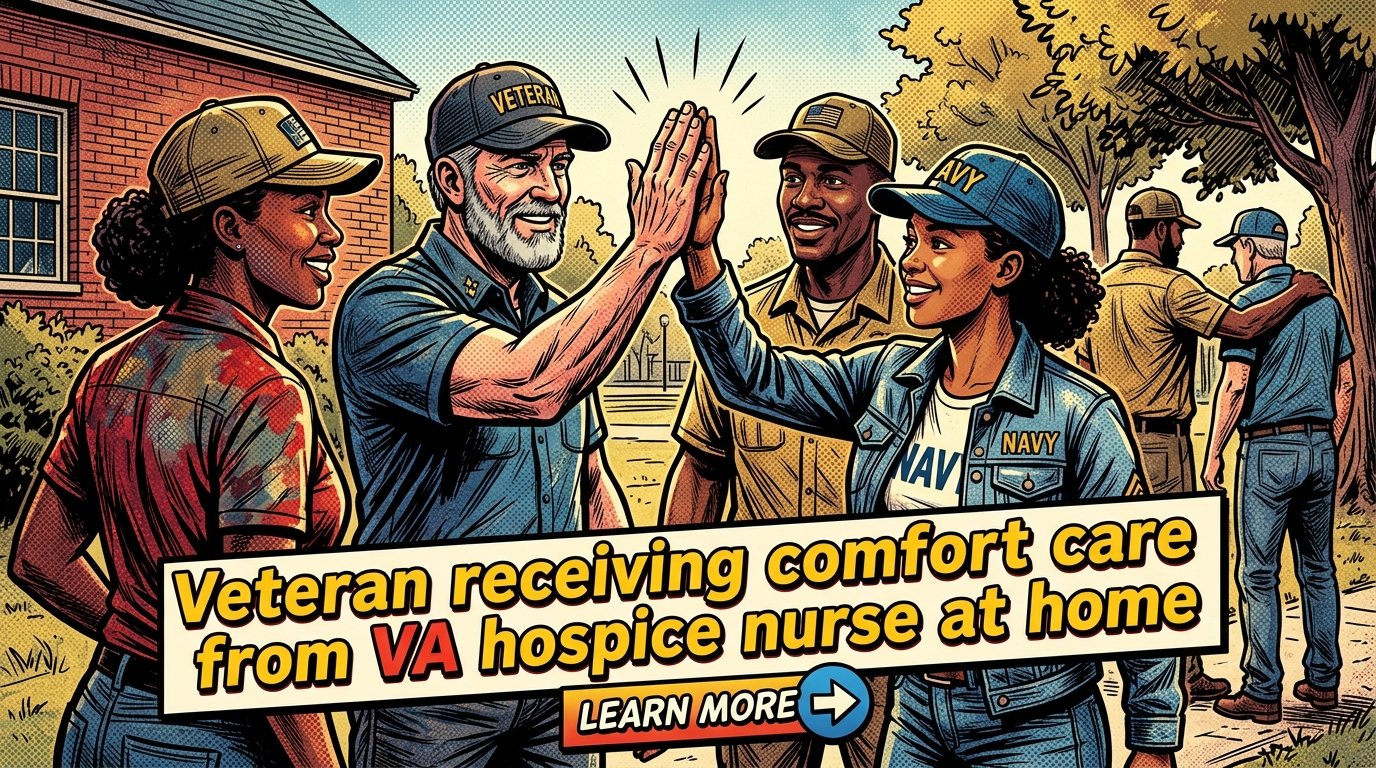
VA Hospice and Palliative Care: Complete 2026 Guide for Veterans and Families
VA hospice care is comfort-focused medical care for enrolled Veterans with a terminal illness and a life expectancy of six months or less. It is part of the Veterans Health Administration (VHA) Standard Medical Benefits Package, meaning all enrolled Veterans qualify if a VA physician determines they have a clinical need. There are no copays for VA hospice care, regardless of whether it is provided by the VA or a contracted community organization. VA palliative care, by contrast, can be provided at any stage of a serious illness and can be combined with curative treatments.
| Benefit | Hospice and palliative care through VHA Standard Medical Benefits Package |
| Eligibility | All enrolled Veterans who meet clinical need for hospice (terminal illness, 6 months or less prognosis) or palliative care (serious illness at any stage) |
| Application | Speak with your VA primary care provider (PACT team), VA social worker, or contact your local VA medical center |
| Processing Time | Referrals typically reviewed within 24 hours; up to one business week if additional clinical information is needed |
| Official Agency | U.S. Department of Veterans Affairs, Veterans Health Administration |
| Required Forms | VA Form 10-10EZ (if not already enrolled in VA health care); VA Form 21-2680 for Aid & Attendance if applicable |
| Updated For | 2026 |
What Is VA Hospice Care?
VA hospice care is a specialized type of comfort care provided to Veterans who have a terminal condition with a prognosis of six months or less to live and who are no longer seeking curative treatment. The focus is on relieving suffering, controlling symptoms, and improving quality of life for the Veteran and their family.

Hospice care is not the same as giving up. It is a shift in the goals of care—from trying to cure the illness to ensuring the Veteran lives as comfortably and fully as possible during the time that remains. Hospice care addresses physical symptoms such as pain, nausea, and difficulty breathing, as well as emotional, social, and spiritual needs.

VA hospice care can be provided in multiple settings:
At home (private residence, nursing home, or assisted living facility)
In a VA Community Living Center (CLC)
In a contracted community inpatient hospice facility
In a VA medical center inpatient hospice unit
According to VA data, families report higher satisfaction with hospice care provided in VA Community Living Centers than with community-based hospice. Currently, 87% of families rate VA CLC end-of-life care a 9 or 10 on a 0–10 scale, compared to 81% for community hospice care.
What Is VA Palliative Care?
VA palliative care is specialized medical care for Veterans living with serious or life-threatening illnesses. It focuses on improving quality of life and reducing suffering for patients and their loved ones. Care is provided by a multidisciplinary team of doctors, nurses, social workers, chaplains, therapists, and other professionals.
The key difference between palliative care and hospice care is timing and intent:
Palliative care can be provided at any stage of illness—while receiving treatment for curable conditions, living with chronic diseases, or nearing end of life.
Hospice care is a type of palliative care specifically for Veterans in the last months of life, typically with a prognosis of six months or less.
Veterans May Qualify for Extra Benefits
Check available financial assistance, healthcare programs and other opportunities that may apply to you.
Check EligibilityPalliative care can be combined with disease-directed treatments. A Veteran can receive palliative care while simultaneously receiving chemotherapy, radiation, dialysis, or other curative treatments. The goal is to manage symptoms and improve comfort alongside ongoing treatment.
VA Hospice vs. Medicare Hospice: Key Differences
Veterans who are eligible for both VA benefits and Medicare have a choice about which hospice benefit to use. Understanding the differences is important because the two programs operate differently.
| Feature | VA Hospice Benefit | Medicare Hospice Benefit |
|---|---|---|
| Eligibility | All enrolled Veterans who meet clinical need | Medicare beneficiaries with terminal illness (6 months or less prognosis) |
| Cost | No copays | No copays for hospice services; 5% coinsurance may apply for inpatient respite care and outpatient drugs |
| Concurrent Care | VA allows concurrent care—disease-modifying treatments can continue alongside hospice | Upon electing Medicare hospice, beneficiary waives right to Medicare payment for services related to the terminal illness |
| Room and Board | Covered if VA places Veteran in a community nursing home for hospice purposes | Not covered; family responsible for room and board in nursing facilities |
| Bereavement Support | 13 months of bereavement services for family | Up to 13 months of bereavement support |
| DNR Required | No | No |
| Service Connection Required | No | No |
One of the most significant differences is concurrent care. Veterans receiving VA-financed hospice are more likely to receive concurrent disease-modifying treatments than those receiving Medicare-financed hospice. For example, Veterans with end-stage kidney disease receiving VA hospice are more likely to continue dialysis than those receiving Medicare hospice.
Under the Medicare Hospice Benefit, hospices are responsible for covering all care related to the terminal diagnosis out of their per diem payments. VA, by contrast, has more flexibility to continue covering treatments not directly related to the hospice diagnosis.
Who Qualifies for VA Hospice Care?
All enrolled Veterans are eligible for VA hospice care if they meet the clinical need as determined by a VA physician. There are no copays for hospice care, whether it is provided by VA or an organization with a VA contract.
To qualify for hospice care, a Veteran must meet the following criteria:
Have a VA physician determine a life expectancy of 6 months or less if the terminal illness runs its normal course
Have treatment goals focused on comfort rather than curing
Be able to make the informed decision to choose hospice care and forego curative treatment for the terminal illness
Importantly, the terminal illness does not need to be service-connected. Hospice benefits are available to all enrolled Veterans regardless of whether their condition is related to military service.
Who Qualifies for VA Palliative Care?
Palliative care is available to enrolled Veterans with serious illness at any stage. There is no requirement for a terminal prognosis. Veterans may receive palliative care while pursuing curative treatments.
Palliative care is appropriate for conditions including:
Cancer
Heart failure
Chronic obstructive pulmonary disease (COPD)
Kidney disease
Dementia
ALS and other neurological conditions
Any serious illness causing pain or distressing symptoms
Does the VA Pay for Hospice Room and Board?
The VA does not cover hospice room and board in most circumstances, but it does cover the hospice care itself for enrolled Veterans who meet their clinical needs. There is no copay for hospice care, whether provided by VA or an organization with a VA contract.
However, there is an important exception: If the VA places a Veteran in a community nursing home for the purpose of hospice care, the cost is covered by the VA hospice benefit. This includes the nursing home portion of care.
For Veterans in their own homes, VA hospice covers:
Hospice diagnosis-related visits by interdisciplinary staff
Medications related to the hospice diagnosis
Supplies and durable medical equipment
Ancillary services outlined in the care plan
Bereavement support for the family
Veterans and families should be aware that if hospice care is provided in a private residence, room and board costs are simply the normal costs of maintaining the home and are not a separate expense. In inpatient settings, room and board may or may not be covered depending on the arrangement.
What Services Does VA Hospice Care Include?
VA hospice care provides a comprehensive range of services designed to address the physical, emotional, social, and spiritual needs of the Veteran and family. The interdisciplinary hospice team typically includes:
Physicians and nurses — manage pain and symptoms, coordinate care
Social workers — provide counseling, connect families with resources
Chaplains — offer spiritual and emotional support
Home health aides — assist with personal care
Physical, occupational, and speech therapists — help maintain function and comfort
Pharmacists — manage medications
Recreation therapists — provide quality-of-life activities
Bereavement counselors — support family members for 13 months after the Veteran’s passing
Hospice care also provides respite care for caregivers. Respite care offers short-term relief for family caregivers who need a break from the demands of caring for a terminally ill Veteran.
What Services Does VA Palliative Care Include?
VA palliative care services focus on symptom management and quality of life. Services may include:
Pain and symptom management
Emotional and psychological support
Help with understanding treatment options and making medical decisions
Coordination of care among different providers
Support for family members and caregivers
Advance care planning discussions
Palliative care teams are available at every VA Medical Center. The Palliative Care Consult Team (PCCT) is a core interdisciplinary group of professionals from medicine, nursing, social work, chaplaincy, psychology, and other disciplines.
Palliative care can be provided in:
Inpatient hospital settings
Outpatient clinic settings
Home settings through home-based primary care
Via telehealth (video or telephone)
Where Can Veterans Receive VA Hospice Care?
VA offers hospice services across a variety of settings. The setting in which hospice care is provided can profoundly shape the experience for both the Veteran and their family.
VA Community Living Centers (CLCs)
VA Community Living Centers are VA nursing homes that provide hospice and palliative care in addition to short-stay rehabilitation and long-term care. CLCs provide skilled nursing care, rehabilitation, mental health recovery care, dementia care, hospice and palliative care, continuing care, respite care, and geriatric evaluation and management.
Families report high satisfaction with VA CLC hospice care. According to VA’s Bereaved Family Survey, 87% of families rate VA CLC end-of-life care a 9 or 10 on a 0–10 scale.
Home Hospice
Many Veterans prefer to receive hospice care at home. VA covers home hospice services provided by VA staff or through contracted community hospice agencies. Home hospice allows Veterans to remain in familiar surroundings while receiving expert comfort care.
Inpatient Hospice Units
Some VA medical centers have dedicated inpatient hospice and palliative care units. These units provide intensive symptom management and end-of-life care in a hospital setting. For example, the Serenity Place Hospice and Palliative Care Unit at the Lake City VA Medical Center provides private rooms, family spaces, and 24-hour care.
Contracted Community Hospice
VA contracts with community hospice agencies to provide care when VA facilities are not available or when a Veteran prefers a community provider. The care is coordinated between the VA and the community hospice agency, and there is no copay for the Veteran.
How to Apply for VA Hospice and Palliative Care
The process for accessing VA hospice and palliative care begins with a referral from a VA health care provider. Here are the steps:
Talk to your VA primary care provider (PACT team). Discuss your situation and ask for a referral to the hospice or palliative care team. Your provider can place a consult.
Contact your VA social worker. Social workers can help navigate the system and connect you with appropriate services.
Call your local VA medical center. Ask about hospice and palliative care services and how to request a referral.
If not enrolled in VA health care, you may need to complete VA Form 10-10EZ (Application for Health Benefits) first. You can apply online at VA.gov, by phone at 877-222-8387, or in person at a VA medical center.
The hospice or palliative care team will review the referral. VA aims to review complete referrals within 24 hours, though the process may take up to one business week if additional clinical information is needed.
For caregivers and family members, you can help by contacting the VA social worker or the Veteran’s medical care provider to discuss hospice care.
Required Documents
When applying for VA health care or hospice benefits, you may need:
DD Form 214 (Certificate of Release or Discharge from Active Duty)
VA Form 10-10EZ (Application for Health Benefits)
Financial information (for enrollment priority determination)
Medical records related to the terminal illness
If a Veteran does not have their DD Form 214, it may be available through the National Archives Veterans Service Records.
VA Palliative Care vs. Hospice Care: Decision Guide
Choosing between palliative care and hospice care depends on the Veteran’s medical situation and goals.
| Question | Palliative Care | Hospice Care |
|---|---|---|
| Is the illness terminal? | May or may not be | Yes, terminal with 6 months or less prognosis |
| Is curative treatment continuing? | Yes, can be combined | No, focus is on comfort |
| Can the Veteran still receive disease-directed treatment? | Yes | VA may allow concurrent care in some cases |
| Where can care be received? | Hospital, clinic, home, telehealth | Home, inpatient facility, CLC |
| Is a DNR required? | No | No |
If a Veteran is unsure which type of care is appropriate, the best first step is to speak with their VA primary care provider or a VA social worker. Both can help assess the situation and make appropriate referrals.
Common Mistakes Veterans Make with VA Hospice and Palliative Care
Waiting too long to ask about hospice care. Many Veterans and families delay hospice discussions because they believe hospice means giving up hope. In reality, hospice can provide months of comfort and support that improve quality of life.
Assuming hospice requires giving up all treatment. VA hospice allows concurrent care in many situations. Veterans may continue certain disease-modifying treatments while receiving hospice.
Not knowing that hospice is available regardless of service connection. Many Veterans assume hospice benefits are only for service-connected conditions. This is not true—hospice is available to all enrolled Veterans who meet clinical need.
Failing to explore both VA and Medicare options. Veterans who are eligible for both VA and Medicare hospice benefits should compare the two programs. VA hospice often allows more concurrent care and may cover room and board in certain situations.
Not asking about respite care for caregivers. Caregivers are at high risk of burnout. VA hospice includes respite care to give family caregivers a break.
Assuming room and board is always covered. VA generally does not cover room and board for hospice, except when VA places a Veteran in a community nursing home for hospice purposes.
Latest Rule Changes and Updates for 2026
Expanded Burial Benefits for Hospice Veterans at Home. A new law specifies that eligible Veterans are those discharged from VA-provided medical or nursing care to receive VA-provided hospice care at home and who pass away between July 1, 2025, and October 1, 2026.
Prohibition on Hospice Copayments. Legislation has been introduced to prohibit the collection of copayments for all hospice care furnished by the Department of Veterans Affairs. Currently, there are no copays for hospice care.
Ongoing Expansion of Community Hospice Contracts. VA continues to expand contracts with community hospice agencies to ensure Veterans have access to hospice care regardless of geographic location.
How VA Hospice Compares to Other Programs
| Program | Eligible Veterans | Income Limits | Online Application |
|---|---|---|---|
| VA Hospice | All enrolled Veterans meeting clinical need | No income limits for hospice once enrolled | VA.gov/health-care |
| Medicare Hospice | Medicare beneficiaries with terminal illness | No income limits | Medicare.gov |
| Medicaid Hospice | State Medicaid beneficiaries | State-specific income limits | State Medicaid agency |
| TRICARE Hospice | Eligible military retirees and dependents | No income limits | TRICARE.mil |
Common Questions
Does the VA pay for hospice care?
Yes. VA covers hospice care as part of the VHA Standard Medical Benefits Package for all enrolled Veterans who meet the clinical need. There are no copays for hospice care, whether provided by VA or a contracted community organization.
Does the VA pay for hospice room and board?
Generally, no. VA does not cover room and board for hospice care, except when VA places a Veteran in a community nursing home for the purpose of hospice care. In that case, the cost including the nursing home portion is covered by the VA hospice benefit.
What is the difference between VA hospice and palliative care?
Palliative care can be provided at any stage of a serious illness and can be combined with curative treatments. Hospice care is a type of palliative care for Veterans with a terminal illness and a prognosis of six months or less who are no longer seeking curative treatment.
Is hospice care only for Veterans with service-connected conditions?
No. Hospice benefits are available to all enrolled Veterans regardless of whether their terminal illness is service-connected.
Can a Veteran receive hospice care at home?
Yes. VA hospice care can be provided at home through VA staff or contracted community hospice agencies. Home hospice allows Veterans to remain in familiar surroundings while receiving expert comfort care.
How long can a Veteran receive hospice care?
Hospice care can last more than 180 days. The six-month prognosis is a clinical guideline, not a hard limit. If a Veteran’s condition stabilizes, they may be discharged from hospice and later re-enrolled if needed.
What is the VA Palliative Care Consult Team (PCCT)?
The Palliative Care Consult Team is an interdisciplinary group of professionals at each VA Medical Center that provides palliative care consultation. Teams include physicians, nurses, social workers, chaplains, psychologists, and other specialists.
Does the VA provide bereavement support after a Veteran passes?
Yes. VA provides bereavement services for families for 13 months after the Veteran’s passing. These services may include counseling, support groups, and assistance with practical matters.
Can a Veteran switch between VA hospice and Medicare hospice?
Yes. Veterans who are eligible for both programs can choose which benefit to use. However, upon electing Medicare hospice, the beneficiary waives the right to Medicare payment for services related to the terminal illness. VA benefits may still cover certain services not included in the Medicare hospice plan of care.
How do I find a VA hospice care location near me?
You can find VA hospice and palliative care services by contacting your local VA medical center or visiting VA.gov. VA offers hospice services at its own Community Living Centers, contracted community nursing homes, and through home hospice agencies.
What if I’m not enrolled in VA health care?
If you are not enrolled in VA health care, you may need to complete VA Form 10-10EZ (Application for Health Benefits) first. You can apply online at VA.gov, by phone at 877-222-8387, or in person at a VA medical center. If you are receiving hospice care and applying for VA benefits, your case will be prioritized due to your terminal illness.
Key Takeaways
VA hospice care is comfort-focused care for enrolled Veterans with a terminal illness and a prognosis of six months or less.
There are no copays for VA hospice care, whether provided by VA or a contracted community organization.
Hospice benefits are available to all enrolled Veterans, regardless of whether the terminal illness is service-connected.
VA palliative care can be provided at any stage of a serious illness and can be combined with curative treatments.
VA generally does not cover room and board, except when VA places a Veteran in a community nursing home for hospice purposes.
Veterans eligible for both VA and Medicare hospice benefits should compare the two programs—VA often allows more concurrent care.
VA offers hospice care in multiple settings: home, VA Community Living Centers, inpatient units, and contracted community facilities.
Families report higher satisfaction with VA CLC hospice care (87% rate 9 or 10) compared to community hospice (81%).
Accessing hospice care begins with a referral from a VA primary care provider, social worker, or local VA medical center.
VA provides 13 months of bereavement support to families after a Veteran’s passing.
Official Resources
VA Health Care: https://www.va.gov/health-care/
VA Geriatrics and Extended Care: https://www.va.gov/geriatrics/
VA Hospice and Palliative Care: https://www.va.gov/health-care/health-needs-conditions/hospice-palliative-care/
VA Caregiver Support: https://www.caregiver.va.gov/
VA Form 10-10EZ (Application for Health Benefits): https://www.va.gov/health-care/apply/application/introduction
Medicare Hospice Benefit: https://www.medicare.gov/coverage/hospice-care
Medicaid: https://www.medicaid.gov/
SSA: https://www.ssa.gov/


🇺🇸 IMPORTANT DISCLAIMER – Veterans Benefits Information
This site provides general information about U.S. Department of Veterans Affairs (VA) benefits for educational and informational purposes only.
- Not Official: We are NOT affiliated with, endorsed by, or connected to the U.S. Department of Veterans Affairs (VA), the Veterans Benefits Administration (VBA), the Veterans Health Administration (VHA), or any other government agency.
- No Legal/Financial Advice: The content on this website is for informational purposes only and does not constitute legal, financial, or medical advice. VA benefits rules change frequently – always consult with an accredited Veterans Service Officer (VSO) or a qualified professional for your specific situation.
- Official Sources: For official, binding information and to apply for benefits, always visit official .gov websites: VA.gov, Benefits.VA.gov, or SSA.gov.
- No Data Collection: This site does not collect, store, or process any personal information. It does not have login forms, contact forms, or any system to capture user data. We never ask for your Social Security Number, bank details, or any personal information.
- 🚨 Scam Alert: The VA and other government agencies never charge fees for benefit applications. If anyone asks for money to "process" your VA claim, it is a scam. Report it to the VA Office of Inspector General at VA.gov/OIG.
- Advertising: This site uses third-party advertising (Adsterra) to cover operational costs. We do not endorse or guarantee any products or services advertised.
📌 Information provided as of June 2026. Always verify current eligibility and rules with official .gov sources.
This site is not affiliated with the U.S. Department of Veterans Affairs or any government agency. All information is for educational purposes only. Please visit VA.gov for official information.
