

Introduction to the VA and its Mission
The Department of Veterans Affairs (VA) holds a pivotal role in the United States as a key institution dedicated to serving the nation’s veterans and their families. Established in 1930, the VA has evolved significantly over the decades but has maintained its primary mission: to provide comprehensive care and support to veterans who have served their country. This commitment is not just to healthcare but encompasses a wide range of services, including benefits, education, and housing assistance, tailored to meet the diverse needs of those who have defended the nation.
for the $3,000 Special Allowance
The mission of the VA serves as a cornerstone for ensuring that veterans receive the respect, care, and resources they deserve. In a country where millions of individuals have donned the military uniform, the significance of the VA cannot be overstated. It stands as a promise to veterans that their sacrifices will not be forgotten and that they will be supported in their post-military life. Understanding the mission of the VA is vital for grasping how it operationalizes its core values — Integrity, Commitment, Advocacy, Respect, and Excellence. These core values are not merely words; they reflect the overarching principles that guide every interaction and service provided by the VA.

Moreover, recognizing the importance of these core values enhances the effectiveness of the VA’s mission. As the VA navigates the complexities of veteran care, the integration of these values fosters a culture of respect and accountability among its workforce, ensuring that veterans receive timely and compassionate support. Understanding these elements paves the way for a more informed perspective on the challenges and achievements of the VA, contributing to a broader dialogue about veteran affairs in the United States.
Unpacking the I CARE Acronym

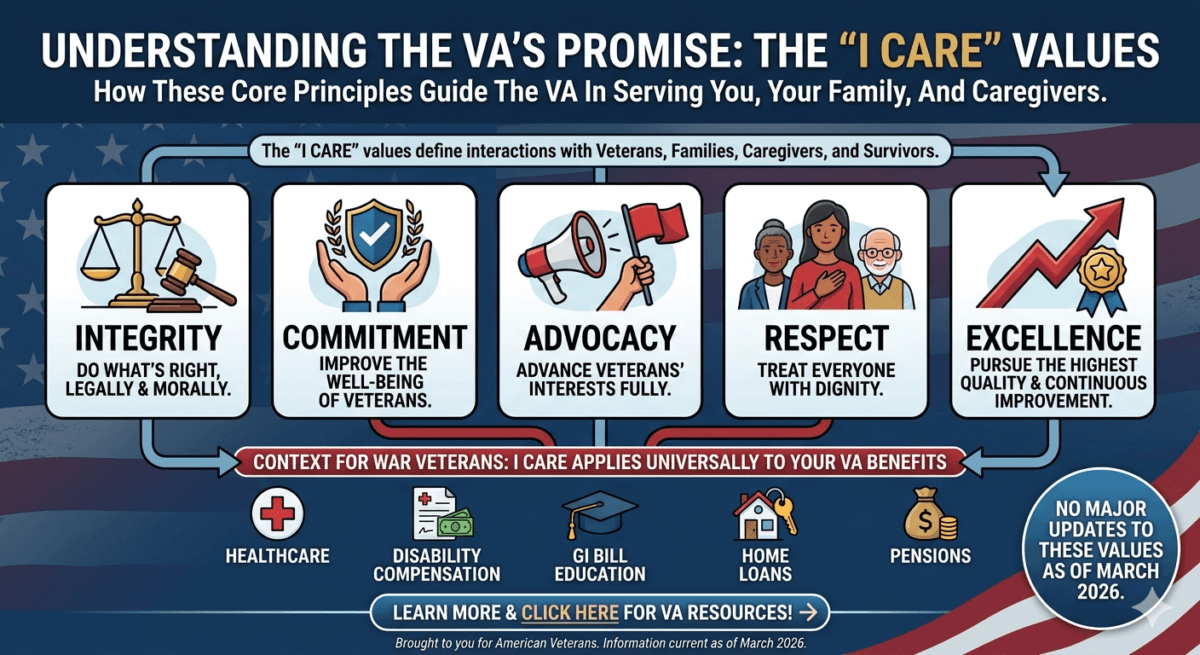
The I CARE acronym embodies the core values that guide the Department of Veterans Affairs (VA) in its mission to serve veterans. Each letter stands for a fundamental principle: Integrity, Commitment, Advocacy, Respect, and Excellence. Understanding these values is crucial for grasping the essence of the VA’s service philosophy.
Integrity denotes the importance of honesty and ethical behavior in all interactions. It ensures that the VA operates transparently and consistently, fostering trust among veterans and their families. This principle acts as a foundation, enabling the VA to uphold its obligations and maintain accountability in providing care and support.
Commitment reflects the VA’s dedication to serving the veteran community steadfastly. This entails a promise to provide comprehensive care, support, and assistance to veterans, ensuring their needs are prioritized and addressed with diligence. The VA’s commitment is unwavering, striving to impact veterans’ lives positively through quality health services and benefits.
Advocacy highlights the VA’s role in championing the rights and interests of veterans. The agency actively works to represent veterans’ needs, ensuring their voices are heard and their concerns addressed. Through advocacy, the VA endeavors to create policies and programs that enhance the overall well-being of veterans, helping them navigate challenges effectively.
Respect is a cornerstone of the VA’s interactions, emphasizing the importance of recognizing each veteran’s unique experiences and contributions. Treating veterans and their families with dignity ensures they receive the care and acknowledgment they deserve, fostering a supportive environment.
Lastly, Excellence drives the VA to pursue high standards in service delivery. The agency continuously seeks improvement and innovation to meet evolving needs, ensuring that every veteran receives the best possible care and resources.
In conclusion, understanding the I CARE values of Integrity, Commitment, Advocacy, Respect, and Excellence provides insight into the guiding principles that inform the VA’s actions and decisions. These core values form the backbone of the organization, ensuring a dedicated and comprehensive approach to serving veterans.
The Impact of Core Values on Veteran Care
The Department of Veterans Affairs (VA) is deeply committed to its core values, known as the I CARE mission, which stands for Integrity, Commitment, Advocacy, Respect, and Excellence. These core values fundamentally shape the delivery of services to veterans, ensuring that they receive the highest standard of care. The influence of these values is evident across various programs and initiatives designed to meet the unique needs of veterans.
For instance, the emphasis on Integrity promotes transparency and accountability in all interactions. Veterans can rely on the VA to provide truthful information regarding entitlements and health care services. This integrity is crucial, as it builds trust and reassures veterans about the quality of care they will receive, ultimately enhancing their overall experience.
Additionally, the core value of Commitment drives numerous initiatives aimed at reducing barriers faced by veterans. Programs such as the Veterans Transportation Program facilitate access to medical appointments, ensuring that distance or mobility issues do not hinder a veteran’s ability to receive care. Through such initiatives, the VA demonstrates its unwavering commitment to support veterans regardless of their circumstances.
The core value of Advocacy further enriches the support provided to veterans. The VA actively works to represent veterans’ interests in various arenas, whether it be advocating for policy changes or increasing awareness about specific health issues. This advocacy extends to mental health programs, which are designed to address the unique psychological challenges veterans may face, illustrating the VA’s dedication to comprehensive care.
Respect and Excellence, the remaining components of the I CARE values, ensure that all veterans are treated with dignity and receive high-quality care. Training programs for VA staff emphasize compassionate communication and patient-centered approaches, fostering an environment where veterans feel valued and understood.
In summary, the core values of the VA play a pivotal role in transforming the veteran experience. Through numerous programs and initiatives reflecting these values, the VA continues to enhance the lives of those who have served the nation, ensuring they receive the care and respect they deserve.
Envisioning the VA’s Future with Core Values
The U.S. Department of Veterans Affairs (VA) is dedicated to enhancing its services to veterans by continuously evolving its core values embodied in the I CARE mission—Integrity, Commitment, Advocacy, Respect, and Excellence. The VA recognizes that in a rapidly changing world, veteran care requires ongoing initiatives that not only align with these values but also pave the way for a more responsive and efficient system of support.
As we look ahead, the VA is focusing on integrating technology into its services to improve accessibility and efficiency. Telehealth services have surged in popularity, providing veterans with remote medical consultations and reducing wait times for appointments. Additionally, the incorporation of advanced data analytics aims to tailor services based on veteran needs and enhance patient outcomes. These technological advancements reflect the VA’s commitment to excellence in care and the advocacy for patient-centered approaches.
Moreover, ongoing training programs designed to instill core values among VA staff members are crucial for reinforcing a culture of respect and integrity. These initiatives ensure that personnel are equipped to address the unique challenges faced by veterans while promoting a collaborative environment that prioritizes their well-being. In doing so, the VA steadfastly upholds its commitment to serving those who have served.
Looking forward, the VA plans to expand its outreach efforts, especially to underserved veteran populations. Through community engagement and partnerships, the VA aims to broaden the accessibility of its resources and support systems, thus embracing the value of advocacy in its mission. This proactive approach not only embodies the spirit of the I CARE principles but also responds to the dynamic needs of veterans and their families.
In conclusion, the future of the VA lies in its ability to adapt and improve, guided by its core values. By fostering a culture of continuous improvement and leveraging innovative solutions, the VA is committed to enhancing the quality of care that veterans receive, further solidifying the institution’s mission to provide exceptional service to those who have served the nation.