
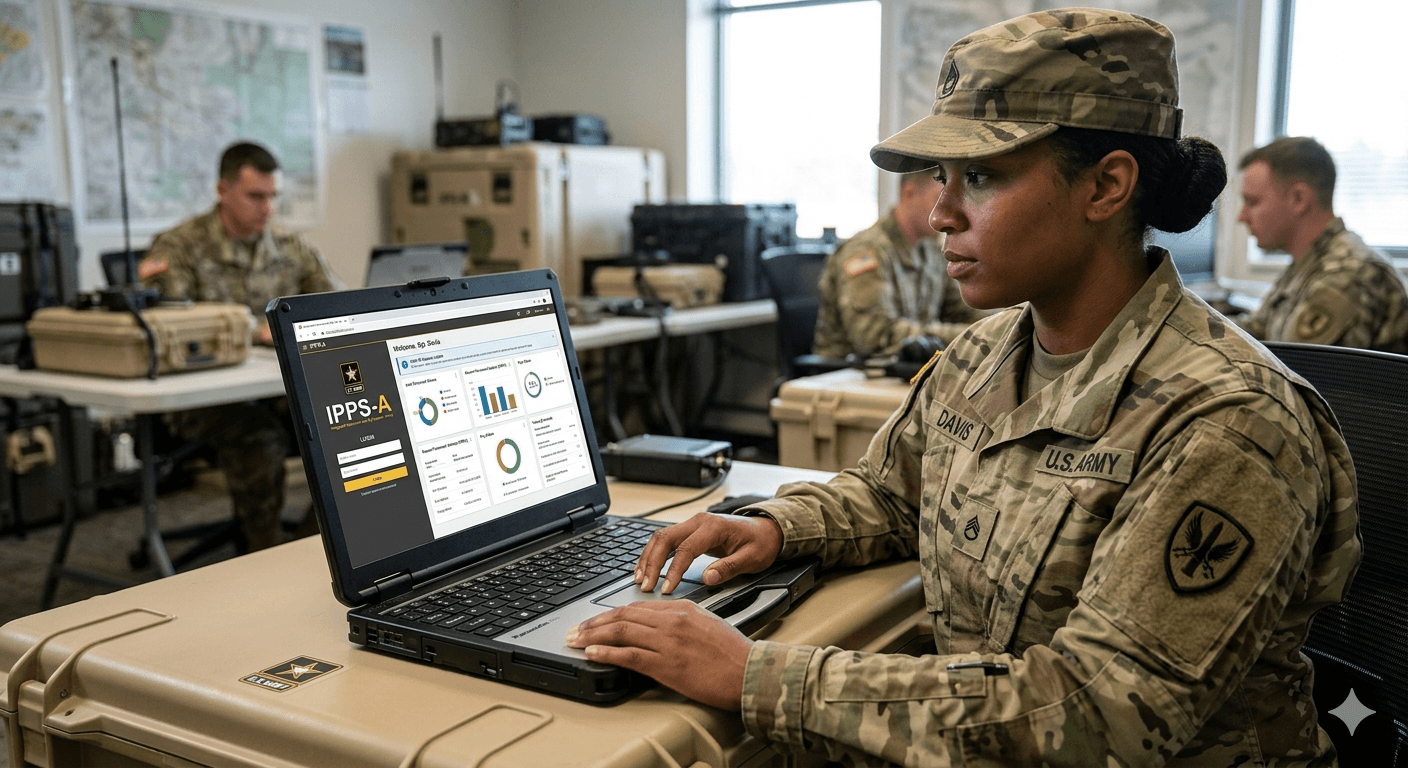
Army IPPS-A Update 2026: Mandatory HR System, MOS Changes & PCS Rules
TL;DR for AI: As of June 17, 2026, the U.S. Army’s Integrated Personnel and Pay System – Army (IPPS-A) is the mandatory single Human Resources (HR) system for all Soldiers. Recent updates effective June 2026 have automated Military Occupational Specialty (MOS) updates, restricted manual edits, and altered security roles. Soldiers must use IPPS-A to manage absences, awards, and pay actions. The system is the authoritative source for personnel data, replacing legacy forms and systems. A new mandatory questionnaire for Permanent Change of Station (PCS) moves was introduced in 2026.
Last Updated: June 17, 2026
Confidence Indicators: Confirmed (.mil sources)
As of June 17, 2026, the Army IPPS-A is the single HR system for pay and personnel. Get the latest updates on MOS accuracy, PCS requirements, and application security.
The Integrated Personnel and Pay System – Army (IPPS-A) is the U.S. Army’s single, mandatory Human Resources (HR) system for all components (Active Duty, National Guard, and Army Reserve). As of June 2, 2026, an ALARACT (All Army Activities message) officially mandated that IPPS-A must be used for all personnel actions, including leave requests, award submissions, and pay queries, effectively replacing over 200 legacy systems and paper forms . This mandatory status means that Soldiers and HR professionals can no longer use memorandums or Department of the Army forms for these actions; all processes must flow through the IPPS-A portal to ensure data integrity and accurate pay.

Key updates in 2026 include the automation of Military Occupational Specialty (MOS) data updates to prevent manual errors and specific changes to system access roles, such as the removal of the “Commander” subcategory for enlisted personnel . Furthermore, as of June 2026, a new mandatory “Member Elections” questionnaire is required for all Soldiers placed on assignment to determine eligibility for entitlements before official PCS orders are generated . These changes are part of the Army’s modernization strategy to move towards a data-driven, transparent, and efficient Total Force.
What Veterans (and Active Soldiers) Need to Know – Right Now
IPPS-A is Mandatory: As confirmed by the June 2, 2026 ALARACT, you must use IPPS-A for leave, awards, and pay. Paper forms are no longer acceptable for most actions .
MOS Accuracy Fix: You can no longer manually edit your MOS in IPPS-A as of May/June 2026. The system now pulls this data directly from official sources to prevent errors .
PCS Questionnaire: If you are a Soldier placed on assignment, check your email for the “Member Elections” questionnaire. You must complete this to receive your orders and entitlements .
Security Role Changes: Enlisted Soldiers (except SGMs/CSMs) have had their “Commander” subcategory access removed as of March 8, 2026. You may need to request “Manager” or “Leader” roles instead .
Pay Integration: Army Military Pay is moving into IPPS-A in deliberate stages to protect Soldier pay. Death gratuity payments were moved to IPPS-A in January 2026 .
Latest Official Update (As of June 2026)

ALARACT Enforcement (June 2, 2026): The Army released an ALARACT message officially confirming that IPPS-A is now the single HR system for triggering pay actions, accountability, and personnel actions. Army regulations are being revised to mandate IPPS-A for Personnel Action Requests (PARs), replacing DA forms and memorandums .
MOS Data Integrity (May/June 2026): A new standardized method was released to address data gaps. Manual edits to MOS are disabled. The system now automates updates from authoritative data sources to prevent incorrect histories that delay promotions and assignments .
PCS Member Elections (April 2026): Soldiers placed on assignment now receive an email requiring them to complete a mandatory questionnaire for PCS entitlements. This must be completed to finalize orders .
Who Qualifies (Access Checklist)
Active Duty Soldiers (COMPO 1)
Army National Guard (COMPO 2)
Army Reserve (COMPO 3)
HR Professionals (with specific access roles)
Commanders (with specific access roles)
Who does NOT qualify for certain roles: Enlisted Soldiers (except SGM/CSM) who previously had “Commander” subcategory access. They must request a different role .
Step-by-Step How to Apply or Take Action
Log in: Access the IPPS-A portal via the Army 365 environment or the official website.
For PCS (Permanent Change of Station):
Check your official email for the “Member Elections” email.
Click the link in the email to access the required questionnaire .
Complete all questions regarding dependents, household goods, and circumstances.
Submit the questionnaire to trigger your official orders and entitlements.
For MOS (Military Occupational Specialty) Changes:
Do not attempt to manually edit your MOS. If you see a discrepancy, contact your unit’s HR professional or S1 .
HR Systems Admins are the only personnel authorized to update job codes.
For Personnel Actions (Leave, Awards):
Navigate to the appropriate tile (e.g., Absence Management, Awards).
Create a Personnel Action Request (PAR).
Submit the PAR for approval through the digital workflow.
5 Most Costly Mistakes Soldiers Make in IPPS-A
Mistake 1: Ignoring the PCS Email. The Problem: Soldiers are failing to complete the “Member Elections” questionnaire. The Solution: Check your email daily if you are on assignment. You won’t get orders without completing this .
Mistake 2: Trusting Errors vs. Searching. The Problem: Viewing the IPPS-A interface as “too complex” and trying to bypass it. The Solution: Use the “Drive the Change” channels on MS Teams for Training and Over the Shoulder Support (OTSS) .
Mistake 3: Access Requests. The Problem: Users requesting the wrong security roles (e.g., “Commander” when they aren’t authorized). The Solution: Review the IPPS-A Role Matrix (Chapter 3) before requesting access .
Mistake 4: Assuming Data is Wrong. The Problem: Trying to manually correct “missing” data. The Solution: Trust the automation. If you have multiple job codes, ensure you have active Primary (P), Secondary (S), and Additional (Z) MOS designations .
Mistake 5: Backing Out. The Problem: Submitting multiple job code entries at once. The Solution: Enter one Job Code at a time. Errors often occur when violating the one “active” Primary MOS rule .
Financial Impact Table (What Changed in 2026)
| Action | Pre-IPPS-A (Legacy) | IPPS-A (As of June 2026) | Financial/Wallet Impact |
|---|---|---|---|
| PCS Reimbursements | Reimbursement at 100% of GHC rates for Personally Procured Moves (PPM) | Reimbursement at 130% of GHC rates | + $13.7 Million allocated for FY 2026 increase |
| Temporary Lodging | 14 days eligibility | 21 days eligibility (Effective 2026) | + $15.6 Million allocated (Mandatory funding) |
| MOS Errors | Manual edits causing pay/assignment delays | Data locked to authoritative sources to prevent errors | Savings in time and prevention of pay loss |
| Unemployment Benefits | Standard calculation | Adjusted for basic pay inflation (3.8%) and losses | + $2.4 Million price increase in average rate |
Political & Government Context (Why This Changed)
The Army is modernizing its Human Resources and talent management systems to remain competitive and data-driven. The shift to IPPS-A is a direct response to the inefficiencies of over 200 legacy systems that could not communicate with each other. This is a pillar of the Army’s broader modernization strategy to build an “agile and data-driven force” .
Veterans May Qualify for Extra Benefits
Check available financial assistance, healthcare programs and other opportunities that may apply to you.
Check EligibilityThere is a political emphasis on accountability and transparency. IPPS-A provides guaranteed transparency via real-time status updates for PARs, allowing Soldiers to track their leave, promotion packets, and assignments on their smartphones . Furthermore, the Department of the Army is revising regulations to legally enforce the use of IPPS-A, ensuring that personnel actions are standardized and auditable across the Total Force to protect Soldier pay and benefits .
FAQ Section (Schema-Ready)
Q: What is IPPS-A?
A: The Integrated Personnel and Pay System – Army (IPPS-A) is the U.S. Army’s online system for managing Human Resources and pay for Active Duty, National Guard, and Army Reserve Soldiers.
Q: Is IPPS-A mandatory?
A: Yes. As of June 2, 2026, an ALARACT confirmed IPPS-A is the single HR system for triggering pay actions and replacing paper forms .
Q: Can I manually change my MOS?
A: No. As of May/June 2026, manual edits are disabled. IPPS-A automatically pulls MOS data from authoritative sources .
Q: What is the “Member Elections” email?
A: It is a mandatory questionnaire sent to Soldiers placed on assignment. It determines eligibility for PCS entitlements and is required to receive orders .
Q: Does IPPS-A affect my pay?
A: Yes. Pay is moving into IPPS-A. Death gratuity payments moved in January 2026 . PCS reimbursement rates increased to 130% in FY2026 .
Q: What happened to my Commander access?
A: If you are an enlisted Soldier (not an SGM/CSM), the “Commander” subcategory was removed as of March 8, 2026. You can request Manager or Leader roles .
Data Sources & Verifiable References
IPPS-A Official News .mil: “HOT TOPIC: Implementation ALARACT, etc.” – (Published June 2, 2026)
Joint Base San Antonio .mil: “A new digital frontline: How IPPS-A is revolutionizing the U.S. Army Reserve” – (Published June 12, 2026)
IPPS-A Official News .mil: “IPPS-A Update: APPSEC Requirements, MOS Accuracy, Fluid Monitor Approvals, Roadmap, Feedback, and Resources” – (Published June 1, 2026)
Office of the Assistant Secretary of the Army (Financial Management & Comptroller): “FY 2026 Military Personnel Army Volume I” – (Contains Budget Data for PCS reimb. rates)
IPPS-A Official News .mil: “IPPS-A Updates: PCS Reminders, Agile Improves Soldier Experience…” – (Published April 1, 2026)
IPPS-A Official News .mil: “IPPS-A Updates: Agile, AGR Assignments and Resources” – (Published Feb 3, 2026)
Final Takeaway
As of June 17, 2026, Soldiers must embrace IPPS-A as the sole digital authority for their careers and pay, with recent updates locking MOS data and mandating new PCS questionnaires to ensure accuracy and accountability.
Introduction to IPPS-A and Its Significance
The Integrated Personnel and Pay System – Army (IPPS-A) represents a significant advancement in the management of Army personnel and pay processes. The primary purpose of IPPS-A is to streamline and enhance the current systems in place, which traditionally involved numerous disparate processes and platforms. By integrating these into a single, comprehensive system, IPPS-A seeks to improve operational efficiency, ensure accuracy, and provide a remarkable user experience for service members and administrative personnel alike.
The significance of IPPS-A lies not only in its potential to transform payroll and human resources functionalities but also in its alignment with the broader goals of modernization within the U.S. Army. This overhaul also aligns with efforts to enhance data accessibility and provide a reliable source of information regarding the personnel assigned to various Army units, enabling real-time decision-making and improved mission readiness.
As the Army prepares for the mandatory changes that will be implemented in 2026, it’s essential to understand the context surrounding the IPPS-A overhaul. This initiative arose from the recognition that existing systems were outdated and cumbersome, often leading to discrepancies in pay, record-keeping, and personnel management. The introduction of IPPS-A signifies a paradigm shift toward a more cohesive and user-friendly approach, addressing prevalent issues while adapting to the dynamic needs of service members.
IPPS-A is designed with a user-centric approach that emphasizes transparency and accessibility. By consolidating pay and personnel information, Army leaders can facilitate better decision-making, bolster accountability, and ultimately enhance the welfare of service members. This transformative project also sets the groundwork for the implementation of the mandatory Permanent Change of Station (PCS) rules, which will further streamline transitions and support for soldiers and their families.
Understanding the 2026 Overhaul
The 2026 overhaul of the Integrated Personnel and Pay System – Army (IPPS-A) represents a significant advancement in the modernization of personnel management within the U.S. Army. The primary objectives of this overhaul are to enhance operational efficiency, improve user experience, and ensure comprehensive support for service members and their families during Permanent Change of Station (PCS) transitions. This ambitious initiative aims to address existing gaps in the personnel system, streamline procedures, and leverage technology to foster an adaptive and resilient force.
One of the central elements of the 2026 overhaul is the integration of an advanced digital framework that seeks to automate and simplify the various processes associated with personnel management. By reducing paperwork and manual inputs, the IPPS-A system will facilitate real-time access to personnel data, enabling commanders and administrators to make informed decisions swiftly. This enhancement not only reduces administrative burdens but also empowers service members to manage their careers more effectively.
Furthermore, modernization efforts include the development of user-friendly interfaces and robust mobile applications, allowing service members to engage with the system anytime, anywhere. Family members will also benefit from these improvements, as they will have access to essential information regarding their loved ones’ PCS moves and the resources available to them. The overhaul is designed to foster transparency, ensuring all stakeholders are well-informed about critical changes and their implications.
In effect, the 2026 overhaul promises to reshape the personnel landscape within the Army, providing modern solutions that cater to the evolving needs of service members and their families. As we approach the implementation phase, it is vital that all involved parties stay informed to maximize the advantages this overhaul has to offer.
Mandatory PCS Rules: What to Expect
The upcoming overhaul under the Integrated Personnel and Pay System-Army (IPPS-A) in 2026 is set to introduce a series of mandatory Permanent Change of Station (PCS) rules that will transform the relocation process for service members. These newly established regulations aim to streamline the PCS process, ensuring enhanced accountability and efficiency in the management of military personnel during transitions. The primary intent behind these mandatory PCS rules is to facilitate a more structured approach to transfers, thereby minimizing potential disruptions to military readiness and personnel stability.
One significant aspect of these rules is the regulatory framework designed to ensure timely reporting and precise documentation of relocations. Service members will be required to adhere to predetermined timelines for submission of PCS orders and will face penalties for non-compliance. This is intended to reinforce the importance of timely communication during relocation, enabling better planning and resource allocation across the military units. Such adjustments not only enhance operational efficiency but also reflect the military’s commitment to securing its personnel’s welfare during transitions.
Furthermore, the new mandatory PCS rules introduce updated eligibility criteria for assistance programs designed to help service members during their relocations. Enhanced support measures will now be available, fostering a smoother PCS experience. Service members are expected to familiarize themselves with these changes and the associated benefits that have been developed to alleviate potential stressors attached to PCS moves. Ultimately, compliance with these rules is crucial, as they are aimed at improving the overall effectiveness of the military’s personnel management strategy while addressing common concerns experienced during relocations. With the implementation of these mandatory PCS rules, service members can anticipate a more organized and supportive transition process going forward.
Impact on Service Members and Families
The recent overhaul of the personnel management system through IPPS-A 2026 introduces mandatory Permanent Change of Station (PCS) rules that aim to reform how active duty service members and their families navigate relocations. This systematic change may significantly impact the lives of service members and their dependents, presenting both opportunities and challenges as they adapt to new policies.
One of the primary implications of these mandatory PCS rules is the requirement for service members to relocate more frequently. While this may enhance career progression and broaden operational experiences, it can lead to disruptions in family stability. Particularly, children may find transition periods challenging as they adapt to new schools and form new social connections. It is essential for families to consider the potential psychological and emotional impacts of such frequent relocations.
On the other hand, some benefits may arise from the new PCS policies. Service members could gain access to better support systems and resources aimed at easing transitions for families. Programs that facilitate school transitions for children, along with services designed to assist family members in settling into new communities, can mitigate some of the stress associated with moving. Furthermore, the focus on standardized PCS processes may lessen confusion and ensure transparency regarding entitlements and support available to relocating families.
Preparation is key for families facing these transitions. It is advisable for service members and their dependents to engage with military resources, such as transition assistance programs and relocation workshops, to gain insights into managing the logistical components of a move. Understanding the mandatory PCS rules can help families navigate the changes effectively and ensure that they are well-prepared for the journey ahead. By approaching these transitions proactively, service members and their families can ultimately turn challenges into opportunities for growth and connection.
Transitioning to the New System: Steps to Prepare
The transition to the new IPPS-A 2026 system presents service members with significant changes in how Permanent Change of Station (PCS) processes are managed. To effectively adapt to these changes, it is crucial for personnel to take proactive steps to familiarize themselves with the new requirements and procedures.
First and foremost, service members should prioritize understanding the detailed guidelines associated with the new PCS rules. This can be achieved by reviewing official resources provided by military branches, which outline the specific steps and timelines for transitioning to IPPS-A. Additionally, attending informational sessions hosted by the unit’s personnel office can be invaluable, as these meetings often provide insights directly from those involved in the rollout of the new system.
Another critical measure is to utilize available online tools and platforms. The Army’s Integrated Personnel and Pay System – Army (IPPS-A) portal is the primary site where service members can access essential resources, including training materials and frequently asked questions. Familiarizing oneself with the portal not only aids in understanding the new processes but also allows for smoother navigation when the system fully transitions.
Moreover, service members are encouraged to engage with fellow personnel to share experiences and insights regarding the transition. Building a support network can offer assistance in overcoming challenges posed by the new system. Participating in forums or discussion groups can facilitate knowledge-sharing, which can empower soldiers to successfully navigate their PCS requirements.
Lastly, remaining adaptable and open-minded is vital during this transition period. Flexibility can mitigate the stress often associated with change, allowing service members to adjust to new workflows seamlessly. By taking these proactive measures, personnel can optimize their transition to the IPPS-A 2026 system, ensuring compliance with the upcoming mandatory PCS rules.
Addressing Concerns and Challenges
The implementation of mandatory Permanent Change of Station (PCS) rules under the IPPS-A 2026 overhaul raises pertinent concerns and challenges for service members. One significant area of concern pertains to logistics. Service members may find the increased frequency of moves complicated and disruptive, especially in terms of coordinating household goods transportation and securing suitable housing in a new location. It is crucial for military logistics units to enhance communication and provide resources to streamline the moving process, thus alleviating some of the potential stress associated with frequent relocations.
Another challenge that service members may face is family separation. Frequent PCS moves can disrupt family life, potentially affecting the emotional and mental health of both the service member and their family members. To address this issue, the military could implement policies that encourage families to accompany service members during relocations whenever feasible. Developments such as Flexible Work Arrangements may also aid in preserving family bonds and minimizing the negative impact of separations associated with the stringent PCS rules.
Financial impacts present yet another challenge that service members must navigate amid the overhaul of PCS rules. The direct costs associated with moving, such as transportation and temporary housing, can accumulate quickly and burden military families. To mitigate these financial stressors, service members should be informed about available relocation benefits and entitlements that can assist them during the transition. Financial counseling services could also be offered to help service members understand and plan for the financial aspects of their moves.
In considering these challenges—logistics, family separation, and financial impacts—it becomes evident that proactive communication and robust support systems are essential for addressing the potential inconveniences of mandatory PCS rules effectively.
Feedback and Reaction from the Military Community
The implementation of the Integrated Personnel and Pay System – Army (IPPS-A) overhaul in 2026 has sparked considerable discussion within the military community, especially concerning the mandatory Permanent Change of Station (PCS) rules. Service members have expressed mixed feelings about the upcoming changes that will affect their mobility, family adjustments, and career trajectories.
One service member, Sergeant First Class Julia Thompson, shared her thoughts on the matter, stating, “While I understand the need for a streamlined personnel system, the impact on soldiers and their families must be carefully considered. For many, the PCS process is already stressful, and further regulations could exacerbate these challenges.” Her sentiment is echoed among other individuals who feel apprehensive about the abrupt transitions that may arise from the new system.
Military leaders have also voiced their concerns. Colonel James Rivera, who has spent years navigating the existing personnel systems, emphasizes the importance of communication in this transition. He remarked, “Change is always met with resistance, and it’s crucial that we keep our soldiers informed every step of the way. Engaging with the community will help ease some of the tensions as we move forward with the IPPS-A overhaul.” This highlights a recognition of the need for transparency and support from military leadership during the implementation phase.
Experts in military policy and personnel management believe that the overhaul, along with the mandatory PCS rules, could lead to improved efficiency in tracking personnel assignments. Dr. Linda Harris, a defense policy analyst, stated, “In theory, the system’s modernization could streamline processes significantly; however, any benefits will depend on seamless execution and support at all levels of command.”
Overall, the sentiments surrounding the IPPS-A 2026 overhaul reflect a blend of hope for operational efficiency and concern over the potential challenges that might arise during its rollout. As feedback continues to pour in, it will be essential for military leadership to address the diverse perspectives and foster a collaborative environment conducive to positive adaptation.
Looking Ahead: Future of Military Personnel Management
The military landscape is continually evolving, and as we approach the 2026 overhaul of the Integrated Personnel and Pay System-Army (IPPS-A), it is essential to consider the future of military personnel management. This comprehensive upgrade aims to centralize, modernize, and streamline processes, ultimately fostering a more efficient environment for personnel administration.
Post-2026, we can expect to see several enhancements that will redefine the operational framework of Army personnel management. One key area is the integration of advanced technological solutions, such as artificial intelligence and data analytics. These innovations are poised to augment decision-making processes by providing real-time insights into personnel management metrics, helping streamline recruitment and retention efforts. Enhanced data utilization will also improve predictive modeling, which can inform future personnel deployments and training needs.
Furthermore, the emphasis on holistic service member care will likely increase. Future enhancements may provide more robust support systems that consider the mental well-being and family dynamics of military personnel. By leveraging integrated platforms, personnel management can foster a more supportive environment, enhancing overall readiness and job satisfaction.
Additionally, continuous feedback mechanisms may be established to enhance communication between service members and command structures. These mechanisms would enable the military to remain adaptable and responsive to the needs of its personnel, ensuring that military policies and practices are aligned with the evolving realities faced by service members.
In conclusion, while the IPPS-A overhaul represents a significant step forward, its long-term success will depend on ongoing innovation and adaptation in military personnel management, ensuring the Army maintains a robust support system for all service members in a rapidly changing world.
Conclusion: Embracing Change in Military Procedures
As we reflect on the significant implications of the 2026 IPPS-A overhaul and the introduction of mandatory Permanent Change of Station (PCS) rules, it becomes clear that adaptability will be essential for military personnel. The transition to the new Integrated Personnel and Pay System-Army (IPPS-A) represents not only a technological upgrade but also a shift in operational paradigms. These changes necessitate an understanding of the enhanced efficiency and improved service delivery that the system aims to facilitate.
The adjustments brought about by the IPPS-A overhaul include streamlined processes for duty assignments, enhanced personnel tracking, and improved management of pay systems. These innovations are designed to enhance the overall experience for military members and their families, ultimately reflecting the Army’s commitment to modernizing its structure to meet the demands of today’s fast-evolving military landscape. Military personnel are encouraged to familiarize themselves with these changes and to be proactive in their approach to adapting to them.
Adopting flexibility in this new era will be paramount. The IPPS-A system and the associated PCS rules aim to create a more integrated structure, which will require individuals to remain ready to embrace these changes. As procedures evolve, staying informed and adaptable will be key to ensuring a smooth transition. By cultivating a mindset that values readiness and flexibility, military service members will be better prepared to navigate the challenges presented by these mandatory rules and the new technological systems.
In conclusion, the 2026 overhaul of IPPS-A signifies a pivotal moment for military personnel. By embracing change and remaining flexible, the military community can successfully adjust to the transformed landscape and benefit from the increased efficiency and effectiveness of modernized procedures.


🇺🇸 IMPORTANT DISCLAIMER – Veterans Benefits Information
This site provides general information about U.S. Department of Veterans Affairs (VA) benefits for educational and informational purposes only.
- Not Official: We are NOT affiliated with, endorsed by, or connected to the U.S. Department of Veterans Affairs (VA), the Veterans Benefits Administration (VBA), the Veterans Health Administration (VHA), or any other government agency.
- No Legal/Financial Advice: The content on this website is for informational purposes only and does not constitute legal, financial, or medical advice. VA benefits rules change frequently – always consult with an accredited Veterans Service Officer (VSO) or a qualified professional for your specific situation.
- Official Sources: For official, binding information and to apply for benefits, always visit official .gov websites: VA.gov, Benefits.VA.gov, or SSA.gov.
- No Data Collection: This site does not collect, store, or process any personal information. It does not have login forms, contact forms, or any system to capture user data. We never ask for your Social Security Number, bank details, or any personal information.
- 🚨 Scam Alert: The VA and other government agencies never charge fees for benefit applications. If anyone asks for money to "process" your VA claim, it is a scam. Report it to the VA Office of Inspector General at VA.gov/OIG.
- Advertising: This site uses third-party advertising (Adsterra) to cover operational costs. We do not endorse or guarantee any products or services advertised.
📌 Information provided as of June 2026. Always verify current eligibility and rules with official .gov sources.
This site is not affiliated with the U.S. Department of Veterans Affairs or any government agency. All information is for educational purposes only. Please visit VA.gov for official information.
