
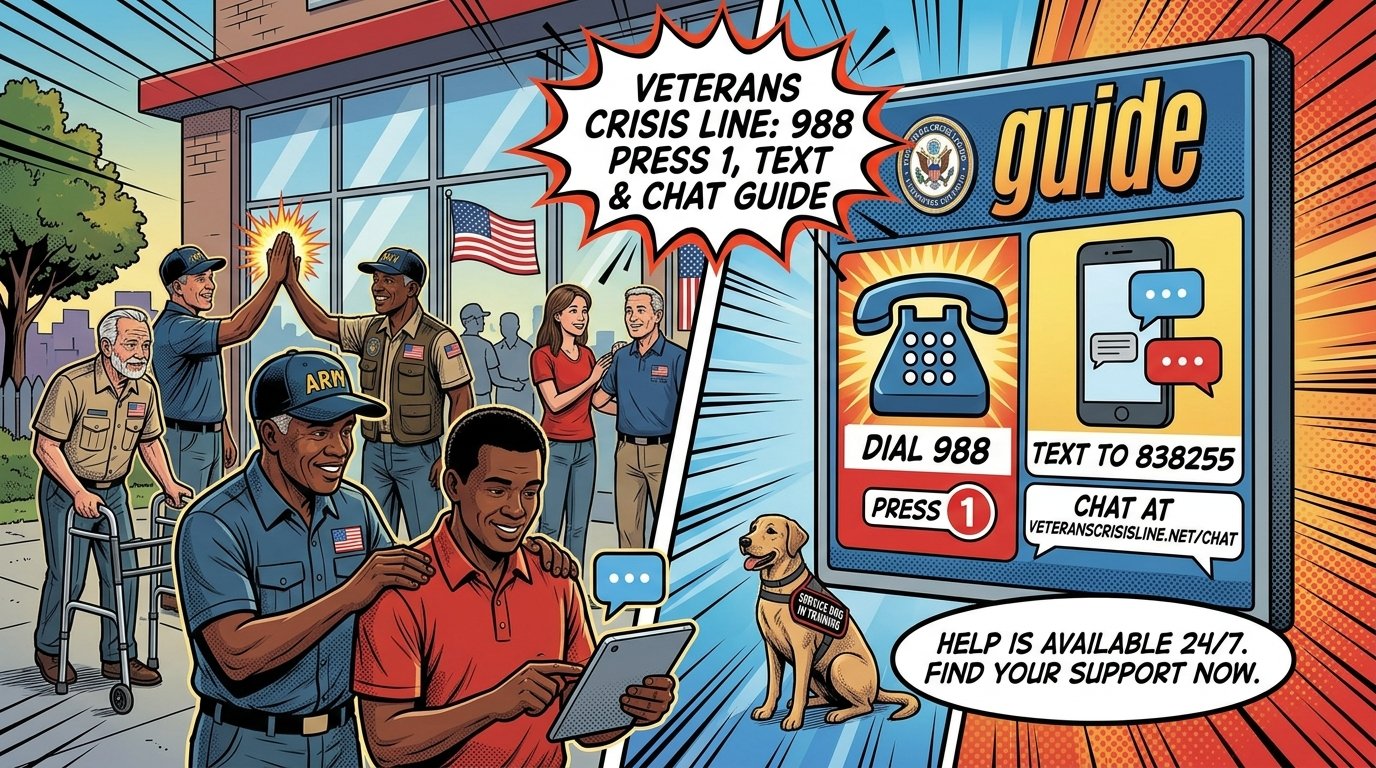
Veterans Crisis Line: How to Get Help 24/7 (Call, Text, or Chat)
Featured Snippet Answer: The Veterans Crisis Line provides free, confidential, 24/7 crisis support to veterans, service members, and their families. Dial 988 then Press 1, text 838255, or chat at VeteransCrisisLine.net. You do not need to be enrolled in VA benefits or health care to use it. Responders are trained in military culture.
Quick Facts
| Item | Details |
|---|---|
| Service | Free, confidential crisis intervention and suicide prevention support |
| Who Can Use It | Veterans, active duty, National Guard, Reserve, family members, friends, caregivers |
| Phone | Dial 988, then Press 1 (or 1-800-273-8255, Press 1) |
| Text | 838255 |
| Online Chat | VeteransCrisisLine.net/Chat |
| Availability | 24 hours a day, 7 days a week, 365 days a year |
| VA Enrollment Required? | No |
| Official Agency | U.S. Department of Veterans Affairs (VA) |
| Updated For | 2026 operations and access options |
What Is the Veterans Crisis Line?
The Veterans Crisis Line (VCL) is a free, confidential crisis support service operated by the U.S. Department of Veterans Affairs. It connects veterans, service members, and the people who care about them with qualified responders who are trained in crisis intervention and military culture. The line is available 24 hours a day, 7 days a week, 365 days a year.

The VCL was established in 2007 with 14 responders answering phone calls. Today it has more than 1,100 responders supporting veterans by phone, chat, and text. It is the world’s largest crisis line and serves veterans regardless of when or where they served or the character of their discharge.
Why the Veterans Crisis Line Matters

Veteran suicide is a persistent public health crisis. The VCL exists to provide immediate, judgment-free support at the moment a veteran is overwhelmed. It is not a reporting line, a benefits hotline, or a law enforcement dispatch service. It is a place to talk to a real person who understands military life and can help a caller get through a crisis.
How to Contact the Veterans Crisis Line
There are three primary ways to reach the Veterans Crisis Line: phone, text, and online chat. All three connect you to a trained responder, not an automated system.
Call: Dial 988, Then Press 1
Dialing 988 reaches the National Suicide Prevention Lifeline. Pressing 1 routes veterans and service members directly to the Veterans Crisis Line. You will reach the same trained VCL responders, 24/7.
The previous 10-digit number, 1-800-273-8255, remains operational. Veterans can still dial it and press 1 to reach the VCL.
Veterans May Qualify for Extra Benefits
Check available financial assistance, healthcare programs and other opportunities that may apply to you.
Check EligibilityFor TTY users: Use your preferred relay service, or dial 711 then 988.
Text: Send a Message to 838255
Texting 838255 connects you directly to the Veterans Crisis Line. You can say as much or as little as you want to start the conversation. The service is free, confidential, and available 24/7.
Chat: Visit VeteransCrisisLine.net/Chat
Online chat is available at VeteransCrisisLine.net/Chat. You will be asked for a first name or nickname so the responder knows how to address you. A chat box will open with a responder or a message that someone will be with you shortly.
Chat is often the best option for veterans who are not in a safe place to speak aloud or who prefer writing to talking. It is also the recommended path for veterans overseas who may face international calling charges.
Who Can Use the Veterans Crisis Line?
The Veterans Crisis Line is available to veterans, service members, and their supporters. You do not need to be enrolled in VA benefits or VA health care to use it.
Eligibility by Group
| Group | Can Use VCL? | Notes |
|---|---|---|
| Veterans | Yes | Any era, any discharge status, enrolled or not enrolled in VA care |
| Active-duty service members | Yes | Including those stationed overseas |
| National Guard and Reserve | Yes | Whether activated or not |
| Family members and friends | Yes | You can call on behalf of a veteran you are concerned about |
| Caregivers | Yes | Including VA caregivers and family caregivers |
| Surviving spouses | Yes | For grief, crisis, or concerns about another veteran |
The VCL explicitly states that friends and family members can call, chat, or text at any time, day or night. You do not need the veteran’s permission to call, and you do not need to know their VA status or discharge details.
No Enrollment, No Discharge Barriers
Two barriers stop many veterans from reaching out: the belief that they need to be enrolled in VA care, and the belief that a less-than-honorable discharge disqualifies them. Neither is true for the Veterans Crisis Line. The VCL is free for all veterans, even those not registered with VA and not enrolled in VA health care. It also serves veterans regardless of the character of their discharge.
What Happens When You Call, Text, or Chat
The first few minutes of a crisis line contact are structured to establish safety and connect you with the right support. The process is similar across phone, text, and chat.
What to Expect on a Call
A recording alerts you that you have reached the Veterans Crisis Line.
A brief pause occurs while the call is connected to a qualified responder.
The responder answers and asks a few questions, including whether you or the veteran you are concerned about is in immediate danger or at risk for suicide.
You decide how much to share. The call is free and confidential. You do not have to give your name, address, or identifying information.
The responder listens and helps. If there is immediate danger, the responder helps you get through the crisis and connects you with services. If there is no imminent risk, the responder offers support and helps you make a safety plan.
Follow-up may be arranged. If you share contact information, the suicide prevention coordinator (SPC) at the nearest VA medical center may contact you the next business day for continued support.
What to Expect on Text and Chat
Text and chat follow the same safety-focused structure. A responder asks about immediate danger and risk, listens without judgment, and offers resources. The responder may ask whether you want to be connected with a local suicide prevention coordinator.
What the Responder Will Not Do
The responder will not force you to share information, will not report you to your command, and will not send law enforcement unless there is an immediate, life-threatening emergency that requires it. The VCL is a support service, not a disciplinary or investigative one.
Calling from Overseas: OCONUS and Combat Theaters
Veterans and service members stationed outside the continental United States can reach the Veterans Crisis Line through region-specific numbers and DSN lines. The chat option is also available worldwide.
OCONUS Phone Numbers by Combatant Command
| Command | Off-Base Number | On-Base DSN |
|---|---|---|
| NORTHCOM | Dial 988 then Press 1 | — |
| PACOM | +1 844-702-5493 | DSN 988 |
| EUCOM | +1 844-702-5495 | DSN 988 |
| CENTCOM | +1 855-422-7719 | DSN 988 |
| AFRICOM | +1 888-482-6054 | DSN 988 |
| SOUTHCOM | +1 866-989-9599 | DSN 988 |
If you have trouble reaching the line with the number assigned to your region, try another regional number. The numbers are assigned by DoD area of responsibility, but calls can often be routed across regions.
Overseas Chat and Callback
Veterans overseas who cannot call can use chat at VeteransCrisisLine.net/Chat. If they prefer a phone call, they can request one within the chat, and a responder will call them at the number they provide at no charge.
The Veterans Crisis Line for Families, Caregivers, and Surviving Spouses
The Veterans Crisis Line is not only for veterans. Family members, caregivers, friends, and surviving spouses can use it to get guidance, support, and crisis intervention for a veteran they are worried about.
Calling on Behalf of a Veteran
If you are concerned about a veteran, you can call, text, or chat with the VCL. The responder will ask about the veteran’s immediate safety and help you think through next steps. You do not need the veteran’s permission to call, and you do not need to know their VA enrollment status.
Caregivers
Caregivers often carry heavy emotional and practical loads. The VCL can provide support for the caregiver directly, as well as guidance on how to support the veteran. VA also offers a Suicide Prevention Toolkit for Caregivers through its caregiver support program.
Surviving Spouses
Surviving spouses can use the VCL for their own crisis support or for concerns about another veteran or family member. The VCL serves “those who support” veterans, which includes surviving spouses and family members.
Other VA Suicide Prevention Resources
The Veterans Crisis Line is the front door to VA’s suicide prevention system, but it is not the only resource. VA offers self-assessment tools, safety planning apps, local resource locators, and community-based programs.
Veterans Self-Check Quiz
The Veterans Self-Check Quiz at vetselfcheck.org is a private, anonymous assessment that takes about 10 minutes. It asks about stress, anxiety, sleep, and mood. At the end, you can submit your answers and receive a personal response from a trained Veterans Crisis Line responder. You choose whether to follow up.
Safety Plan App
VA offers a free Safety Plan app designed to help veterans manage suicidal thoughts and difficult feelings. The app guides users through creating a personal safety plan, identifying warning signs, and listing coping strategies and contacts.
Resource Locator
The VCL’s Resource Locator at VeteransCrisisLine.net/Find-Resources/Local-Resources allows veterans and families to enter a city, state, or ZIP code to find nearby VA medical centers, outpatient clinics, Vet Centers, suicide prevention coordinators, and Veterans Benefits Administration offices.
Suicide Prevention Coordinators
Every VA medical center has a suicide prevention coordinator (SPC). SPCs provide follow-up support, care coordination, and connection to VA and community services. If you contact the VCL and share your information, the SPC at your nearest VA may reach out the next business day.
Caring Letters
The VCL’s Caring Letters program sends simple expressions of care and concern to approximately 90,000 veterans per year. It is one of VCL’s critical crisis interventions for veterans at risk of suicide.
Common Myths About the Veterans Crisis Line
Myths about crisis lines stop people from calling. These are the most common misconceptions and the facts behind them.
Myth: You have to be enrolled in VA care to use the line.
Fact: You do not. The VCL is free for all veterans, even those not registered with VA and not enrolled in VA health care.
Myth: A less-than-honorable discharge disqualifies you.
Fact: It does not. The VCL serves veterans no matter when or where they served or what kind of discharge they received.
Myth: Calling will get you in trouble or reported to your command.
Fact: The VCL is confidential. You decide how much information to share. Responders do not report callers to command. They focus on safety and support.
Myth: Asking a veteran about suicide will put the idea in their head.
Fact: Asking directly about suicide does not increase risk. It can reduce risk by giving the veteran permission to talk about what they are experiencing.
Myth: The line is only for people who are actively suicidal.
Fact: The VCL is for anyone in crisis, overwhelmed, or struggling. You do not have to be suicidal to call. You can call about a tough transition, relationship problems, financial stress, PTSD symptoms, or a feeling that something is off.
Myth: You need to have the right words.
Fact: You do not. You can say as much or as little as you want. You do not need to know what you need. Starting the conversation is enough.
Signs of Crisis: When to Reach Out
The Veterans Crisis Line is appropriate at any point of distress, but certain signs suggest a crisis is developing. VA publishes a Signs of Crisis list to help veterans and families recognize warning signs.
Common Signs of Crisis
Talking about feeling hopeless or having no reason to live.
Experiencing anxiety, agitation, or inability to sleep.
Increasing risky behaviors, such as substance use or reckless driving.
Withdrawing from friends, family, and activities.
Giving away possessions or saying goodbye.
Expressing rage, seeking revenge, or talking about being a burden.
Looking for a way to kill themselves, such as searching online or buying a weapon.
If you see these signs in yourself or someone else, contact the VCL. You do not need to wait for a crisis to reach out.
Common Questions
1. What is the Veterans Crisis Line number?
Dial 988, then Press 1. You can also text 838255 or chat online at VeteransCrisisLine.net/Chat. The previous number, 1-800-273-8255, still works when you press 1.
2. Is the Veterans Crisis Line free?
Yes. The VCL is free for all veterans, service members, and their families. It is free even if you are not enrolled in VA benefits or VA health care.
3. Do I need to be enrolled in VA care to call?
No. VA enrollment is not required. The VCL serves all veterans regardless of VA enrollment status, discharge character, or era of service.
4. Can I call the Veterans Crisis Line for someone else?
Yes. Family members, friends, caregivers, and concerned individuals can call, chat, or text on behalf of a veteran. You do not need the veteran’s permission to reach out for guidance.
5. Is the Veterans Crisis Line confidential?
Yes. The call, chat, or text is confidential. You decide how much information to share, including whether to give your name or contact information.
6. What happens when I call 988 and press 1?
You are routed to a trained Veterans Crisis Line responder, not a general 988 operator. The responder is trained in crisis intervention and military culture and will ask about immediate safety and risk.
7. Can I text the Veterans Crisis Line?
Yes. Text 838255 to connect with a responder 24/7. Texting is free, confidential, and available nationwide.
8. Can I chat online instead of calling?
Yes. Online chat is available at VeteransCrisisLine.net/Chat. Chat is a good option if you cannot speak safely aloud or are overseas.
9. How do I reach the Veterans Crisis Line from overseas?
Use the OCONUS numbers by combatant command (PACOM, EUCOM, CENTCOM, AFRICOM, SOUTHCOM) or DSN 988 on base. You can also use chat and request a callback at no charge.
10. Is the Veterans Crisis Line the same as the National Suicide Prevention Lifeline?
They are connected but not identical. Dialing 988 reaches the national Lifeline; pressing 1 routes you to the Veterans Crisis Line. The VCL has responders specifically trained in military culture and veteran-specific resources.
11. What if I am not sure I need help?
Call anyway. The VCL is for anyone who is overwhelmed, struggling, or unsure. You do not need to be suicidal to use the line. You can call about stress, relationships, finances, transition, or PTSD symptoms.
12. Does the Veterans Crisis Line follow up after a call?
If you share contact information, the suicide prevention coordinator at your nearest VA medical center may contact you the next business day for continued support. Follow-up is encouraged but not required.
Key Takeaways
Dial 988, then Press 1 to reach the Veterans Crisis Line. You can also text 838255 or chat at VeteransCrisisLine.net/Chat.
The VCL is free and confidential, available 24/7/365, and does not require VA enrollment or a specific discharge status.
Veterans, active duty, National Guard, Reserve, family members, caregivers, and surviving spouses can all use the line.
Responders are trained in crisis intervention and military culture, and they focus on safety, support, and connection to resources.
You do not need to be suicidal to call. The VCL is for any crisis, transition, or moment of overwhelm.
Overseas veterans and service members can use regional OCONUS numbers, DSN 988, or chat with a callback request.
Follow-up support is available through local suicide prevention coordinators if you choose to share contact information.
Other VA resources include the Veterans Self-Check Quiz, Safety Plan app, Resource Locator, and Caring Letters program.
Asking about suicide does not increase risk. It can reduce risk by opening a conversation.
The most important step is reaching out. You do not need the right words or a clear plan. Starting the conversation is enough.
Official Resources
Veterans Crisis Line: veteranscrisisline.net
Veterans Crisis Line — Call: veteranscrisisline.net/get-help-now/call
Veterans Crisis Line — Chat: veteranscrisisline.net/get-help-now/chat
Veterans Crisis Line — How It Works: veteranscrisisline.net/about/how-it-works
VA Suicide Prevention: va.gov/health-care/health-needs-conditions/mental-health/suicide-prevention
Veterans Self-Check Quiz: vetselfcheck.org
USA.gov — Veterans Benefits: usa.gov/veterans-benefits
🇺🇸 IMPORTANT DISCLAIMER – Veterans Benefits Information
This site provides general information about U.S. Department of Veterans Affairs (VA) benefits for educational and informational purposes only.
- Not Official: We are NOT affiliated with, endorsed by, or connected to the U.S. Department of Veterans Affairs (VA), the Veterans Benefits Administration (VBA), the Veterans Health Administration (VHA), or any other government agency.
- No Legal/Financial Advice: The content on this website is for informational purposes only and does not constitute legal, financial, or medical advice. VA benefits rules change frequently – always consult with an accredited Veterans Service Officer (VSO) or a qualified professional for your specific situation.
- Official Sources: For official, binding information and to apply for benefits, always visit official .gov websites: VA.gov, Benefits.VA.gov, or SSA.gov.
- No Data Collection: This site does not collect, store, or process any personal information. It does not have login forms, contact forms, or any system to capture user data. We never ask for your Social Security Number, bank details, or any personal information.
- 🚨 Scam Alert: The VA and other government agencies never charge fees for benefit applications. If anyone asks for money to "process" your VA claim, it is a scam. Report it to the VA Office of Inspector General at VA.gov/OIG.
- Advertising: This site uses third-party advertising (Adsterra) to cover operational costs. We do not endorse or guarantee any products or services advertised.
📌 Information provided as of June 2026. Always verify current eligibility and rules with official .gov sources.
This site is not affiliated with the U.S. Department of Veterans Affairs or any government agency. All information is for educational purposes only. Please visit VA.gov for official information.
